Smoked Pork Belly
This smoked pork belly is cooked low & slow in a BBQ until it turns so tender, it will melt in your mouth. A simple brine also improves the flavour & texture.
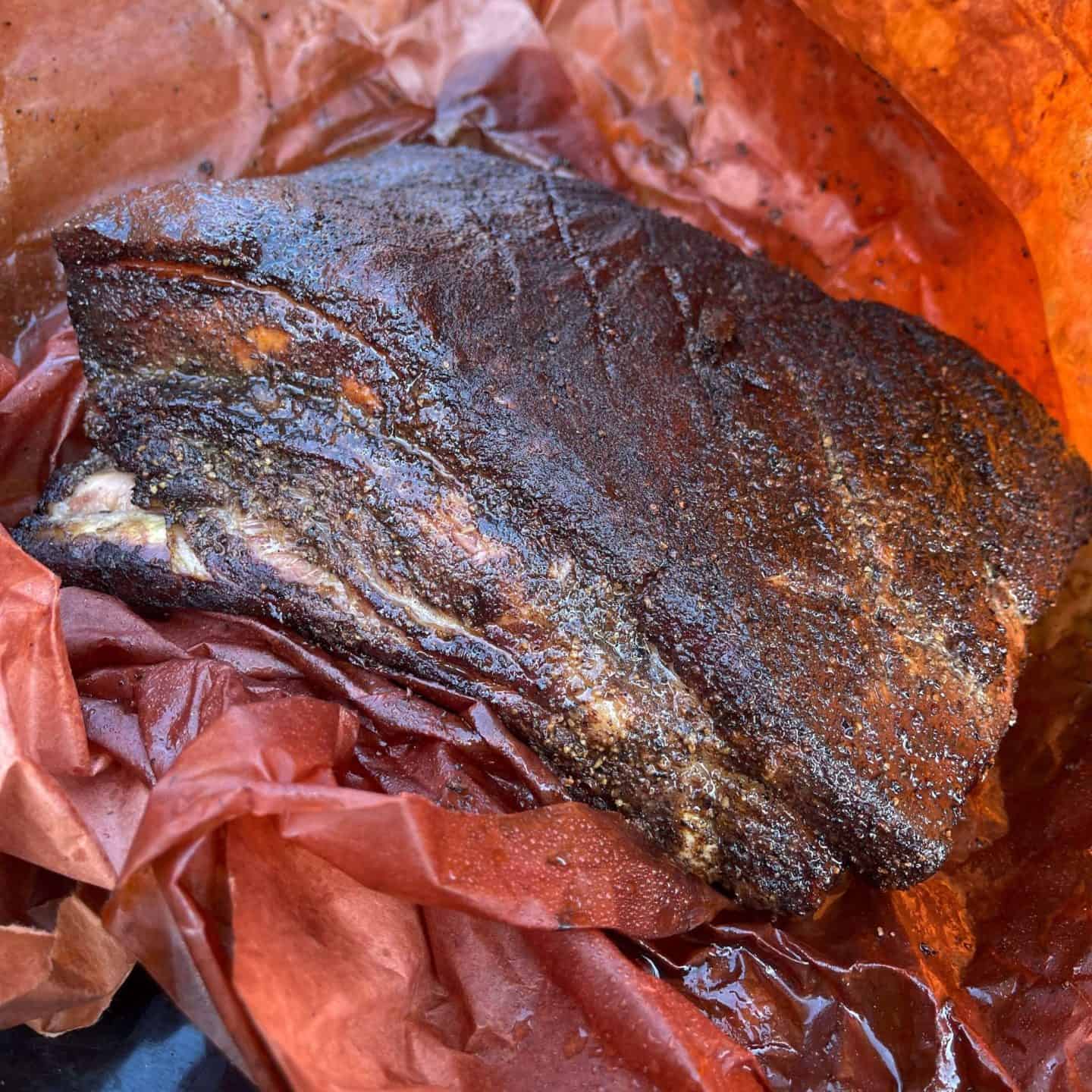
Pork belly is a fantastic cut of pork to cook on a barbecue. It’s full of well marbled meat which gives it loads of flavour and makes it ideal for a low and slow cook over wood or charcoal. It’s the meat bacon’s made of, so of course it’s going to be delicious!
This is one of my all time favourite cuts of meat to cook on a smoker, mainly because it’s so easy & forgiving. This makes it perfect for beginner, amateur & pro smokers alike! It’s also super versatile and can be used for a wide range of dishes, including sandwiches, tacos, burnt ends, smoked meat platters, nachos and loads more. You can even chill it in the fridge then once set, cut into slices and fry like bacon!
To take the flavour of this particular pork belly up a notch, we are going to be curing the meat in a wet brine made with coffee & treacle before we smoke it. These dark, intense flavours work incredibly well with the sweet smoke from the barbecue & the curing step improves the flavour & texture. This is a quick & easy way to take something good and turn it into an amazing slab of meat that’s tender, juicy and absolutely packed full of flavour.
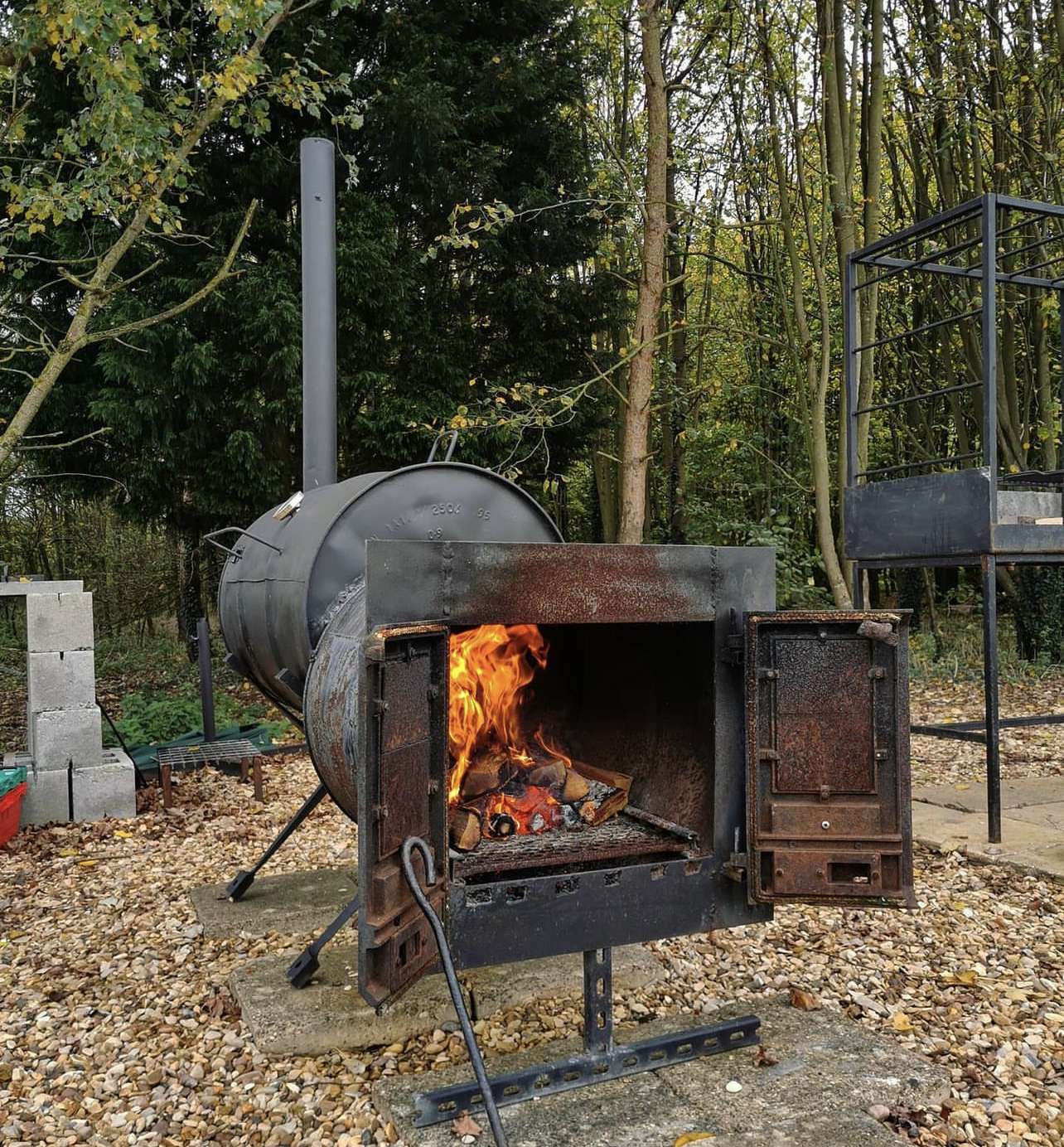
Cooking barbecue has been an interest of mine for a long time now & I’m excited to include it on my blog! I started out cooking low & slow on a homemade offset smoker made by my Dad when I was 17 & now, more than 11 years later, it’s still going strong! If you’ve ever wondered where the “salt” part of this blog’s name comes from, it’s from this style of cooking.
What Is Pork Belly?
Pork belly is a rich & fatty piece of meat, cut from the belly or underside of a pig. Traditionally pork belly is cured to make streaky bacon but if you cook it low & slow, it becomes incredibly tender & flavourful. This is also what is used to make pork burnt ends.
Ingredients Used To Make Smoked Pork Belly
- Pork Belly
A super fatty cut of pork, perfect for long, slow cooks. Ask your butcher for a 2kg, bone in pork belly with the skin removed. This method will work with any size pork belly though, so use a bigger or smaller one if you’d prefer. - Coffee Treacle Brine
Used to lightly cure the pork belly, to add flavour, add flavour & to help retain moisture. This is a 5% salt wet brine which is flavoured with instant coffee, black treacle, brown sugar, herbs & spices. - Homemade Rub
I used a homemade coffee based rub for my pork belly, to complement the flavours from the brine. As the pork is cured before cooking, we won’t be adding any extra salt into our rub. You’ll need espresso powder for this rub but you can use a ready made instead. Just make sure to use one that doesn’t contain too much salt. - Slather
A slather is used to make rub stick to meat before smoking. I like to use French’s mustard but oil, water or even mayonnaise will work as well. - Spritz
Spraying smoked meats with a spritz helps with bark formation as it attracts smoke to the surface of the meat. I like to use a mix of apple cider vinegar & water but you could apple juice, beer, cider or just water. If you use something sweet like fruit juice, it will help caramelise the bark but make sure to keep an eye on it, so that it doesn’t burn.
A Note On Charcoal, Wood And Smoke
When cooking barbecue, it’s important to view the smoke as an ingredient. Too much & it will overpower the meat. Too little & you won’t be able to tell that it’s been cooked on a barbecue.
If your cooking with a charcoal smoker, I like to only add a chunk or two of wood during the first 3-4 hours of cooking. This is when the meat will take on the most smoke flavour.
If your using an offset/wood fired smoker it’s important to keep your fire clean. You’ll be able to tell if your fire is clean when the smoke is clear or a really light blue. A dirty fire will taint the meat & will produce thick, grey smoke.
How To Cook Smoked Pork Belly – Step By Step
Here’s a step by step guide to cooking a smoked pork belly. This includes trimming the meat, brining & seasoning, how to smoke properly, resting and slicing.
Overview
- Cook Time – 8-12 hours
- Barbecue Temperature – 275°f/135°c
- Method – Low & slow smoking
- Result – Tender, sliceable pork belly
1. Trimming
If your pork belly still has the skin/rind on, it needs to be removed first. When doing this, it’s important to keep as much fat on the belly as possible, so it’s best to take your time and use a sharp knife.
Once the skin has been removed, we lightly score the fat with a sharp knife. This increases the pork’s surface area which in turn, attracts more smoke.
2. Brining
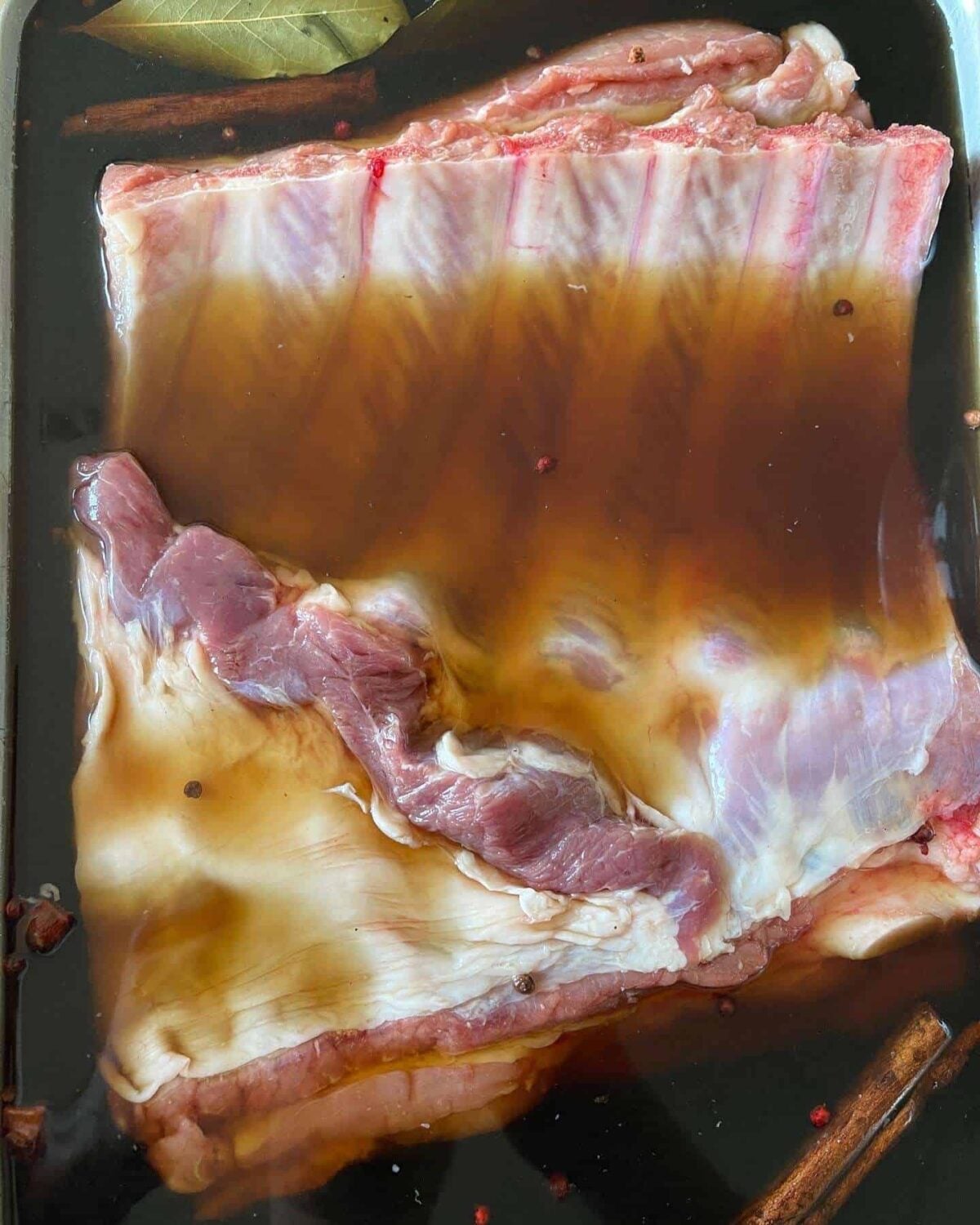
The next step is making the brine. To do this heat water up on the stove then add in salt, sugar, treacle, instant coffee, herbs & spices. You then need to let this cool completely before adding in the pork belly.
We’re only lightly curing the pork so it is only left in the brine for 4-6 hours before being rinsed under cold water. Make sure to flip the belly over halfway through the brining, to ensure an even cure.
3. Overnight Chill
After brining, leave the pork belly uncovered in the fridge overnight. This equalises the cure & dries the surface slightly which improves bark formation.
4. Applying The Rub
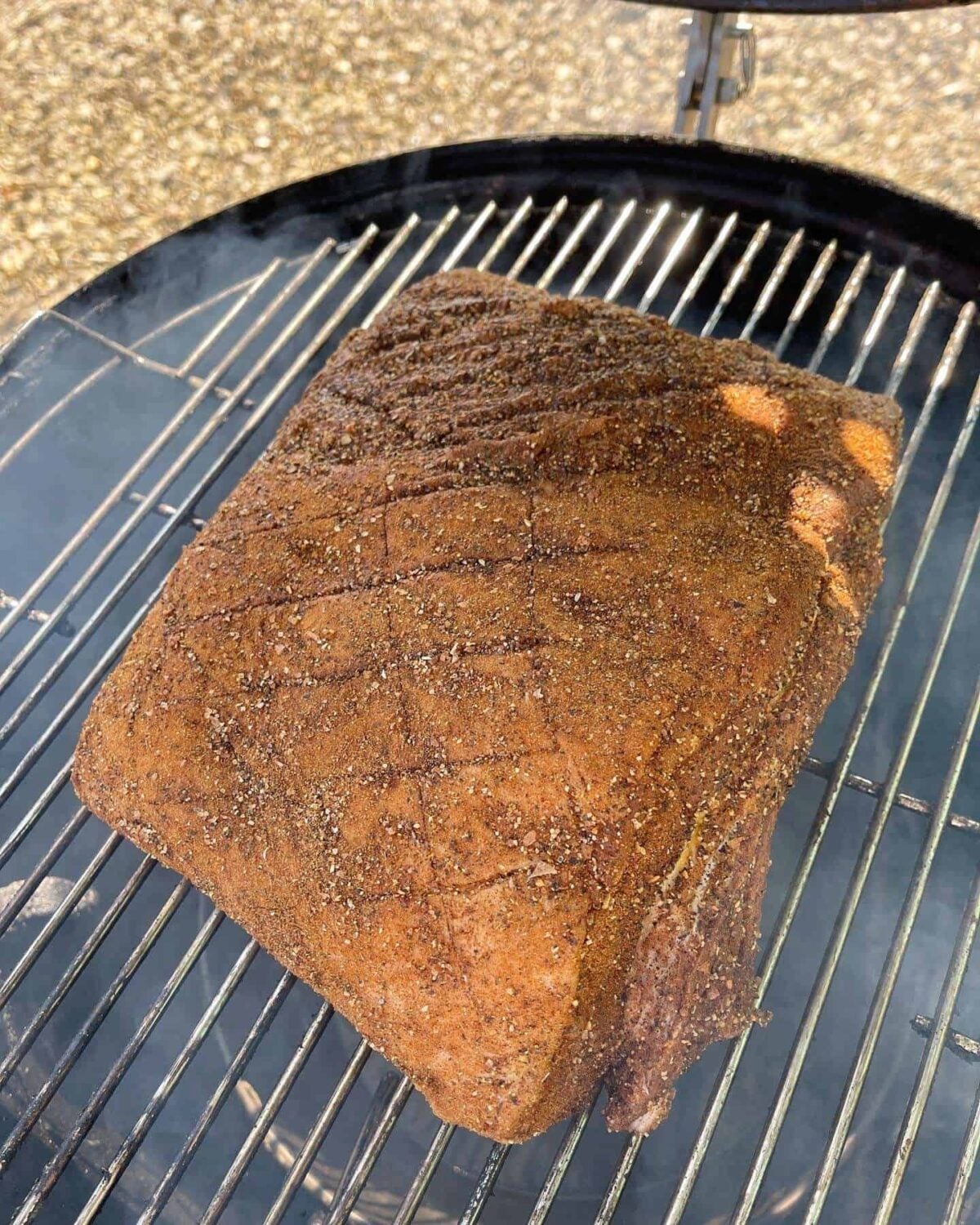
The next step is to apply the rub. To do this, coat the entire belly in a mustard (or oil) slather then coat the entire pork belly in a even layer of rub. For the best bark formation, make sure that there aren’t any gaps in the layer of rub.
Once the rub has been applied, let the meat to come to room temperature whist you light your smoker. Usually this will be around 30 minutes to an hour.
5. Smoking
To smoke the pork belly, preheat a barbecue to 275°c/135°f & set it up for indirect cooking. If you’re using a charcoal smoker, throw in a lump of wood in just before cooking the pork. We need to maintain a consistent temperature throughout the cook so make sure to keep an eye on your smoker’s vents & charcoal/wood level.
Meat will take on the most smoke flavour during the first 3-4 hours of cooking so it is important to let it cook undisturbed during this time. After this time has passed, we continue cooking the pork whilst lightly spray the surface of the meat with our vinegar spritz every 30 minutes or so, to promote bark formation.
6. Wrapping
Once a decent bark has formed, it’s time to wrap the pork in butcher’s paper. This can be found online & keeps the meat moist & stops it from taking on too much colour & smoke. For the best possible bark, it is important to use butcher’s paper as appose to foil. Foil will steam the meat whereas butcher’s paper won’t.
After being wrapped, we cook the belly until it probes as soft as butter. This will take anywhere from 3 hours to 6. Meat won’t take on anymore smoke once it’s wrapped, so you can finish the cook in the smoker or in an oven. The total cooking time will likely be around 8-12 hours & the final internal temperature will be between 195°f-200°f (90°c-93°c).
7. Resting
One of the most important parts of cooking barbecue, is the resting stave. This relaxes the meat, making it tender and moist. Slice without resting & the juices will run out of your pork belly, causing it to be dry & tough.
I’d recommend resting smoked pork belly for at least an hour. This will give the meat plenty of time to relax. Keeping the meat in the butcher’s paper then wrapping in a tea towel helps keep it warm.
8. Slicing
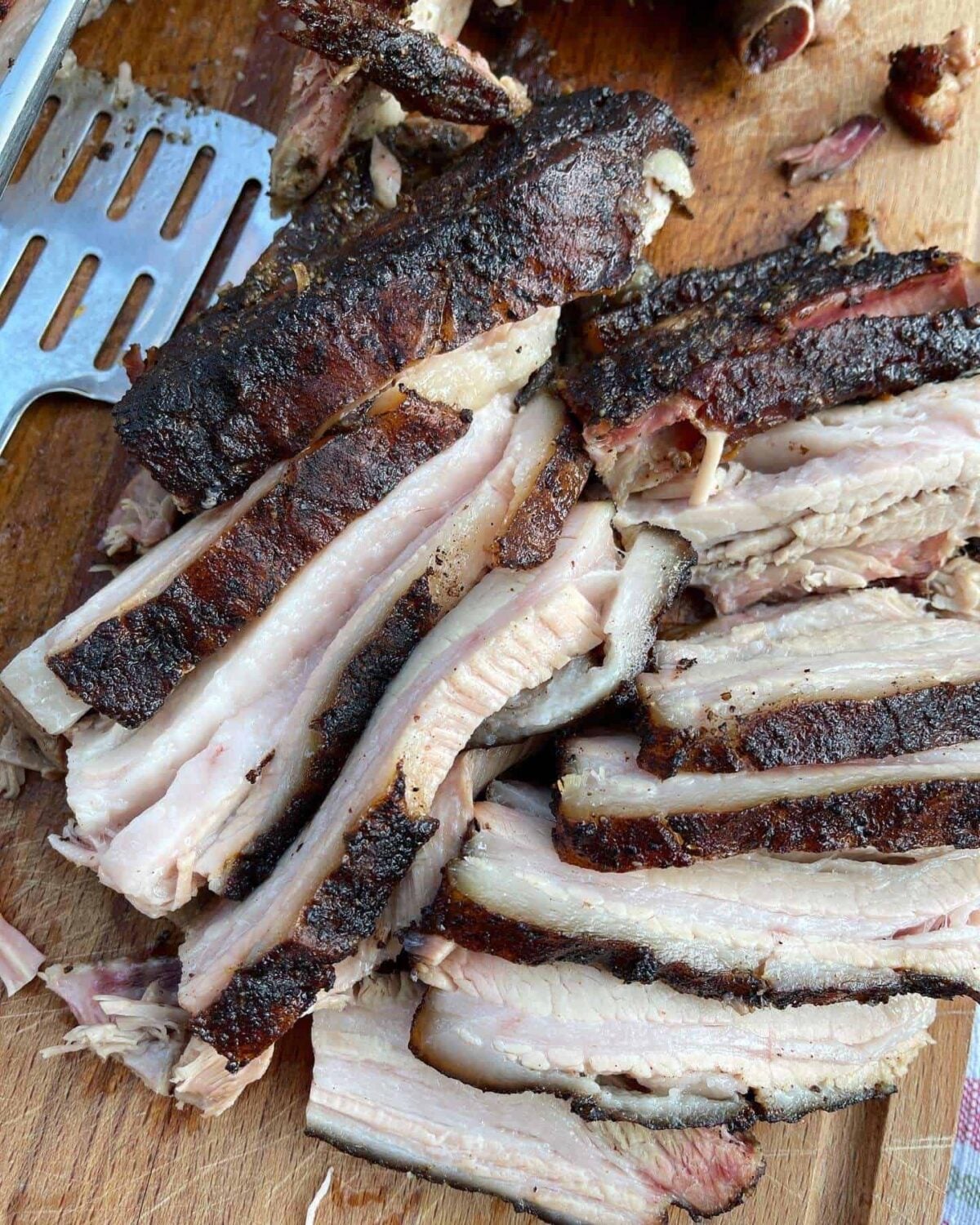
With all meats, it’s important to slice against the grain to keep it tender. As we’ve kept the bones in our belly (for flavour) we need to remove them before slicing. They should just slide out as our pork is so tender. The bones can either be discarded or saved to be used for a smoky meat stock.
I like to cut pork belly into thick slices (as shown below) but you can cut it into cubes and use it to make burnt ends or cut the meat into chunk rectangular pieces. It’s up to you!
Pork belly can also be sliced cold. Keep it as a whole piece of meat, leave to cool then wrap in clingfilm & refrigerate overnight to set. The next day, the pork will have set & will be super easy to slice.
Why Should You Brine Pork Belly?
A brine is used for pork to improve its’ flavour & texture. Think of it as a seasoning that we apply before cooking. Once cured, the pork will also have a much meatier texture & flavour.
There’s 2 types of brine that can be used to cure meat; a dry brine and a wet brine. A dry brine is a dry mix of salt, sugar & flavouring whereas a wet brine is made with water, salt, sugar & flavourings. Typically, a dry brine will take longer than a wet brine as the water helps the cure penetrate the meat quicker (via osmosis).
Both have their benefits and can be used to brine pork belly. As we’re aiming for a soft, tender texture we’re using a wet brine for this smoked pork belly. If you were looking to get a crisp texture & bacon-like flavour, a dry brine would be better.
How To Reheat Smoked Pork Belly
There’s a couple of ways that you can reheat smoked pork belly. For crisp slices like bacon, cut the pork belly into thick slices then pan fry over a medium heat for 3-4 minutes on each side.
To keep the soft, tender texture, reheat pieces of pork belly by baking at 160°c/320°f wrapped in foil, until piping hot. You can reheat pork belly like this in slices, cubes or thick pieces. To stop the pork drying out, I’d recommend cutting it just before reheating, once it’s cool.
What To Serve With Smoked Pork Belly
Smoked pork belly is super versatile & can be served with a load of different things. It’s the perfect addition to a smoked meat barbecue tray, alongside slaw, baked beans, cornbread, pickles, mac & cheese, potato salad and BBQ sauce.
Smoked pork belly also goes great with classic pork belly sides, like mashed potato, apple sauce, roasted veg or salad. You can even serve smoked pork belly as part of a roast dinner!
Frequently Asked Questions
When smoking pork belly, it’s best to remove the skin as it tends to turn rubbery & won’t crisp up once cooked. If you’d like crackling with your smoked pork belly, I’d recommend cooking the skin separately, in the oven.
It comes down to personal preference whether you wrap your smoked pork belly during the later part of the cook. Wrapping pork belly in butcher’s paper or foil keeps the meat moist & speeds up the cook. Whereas leaving pork belly unwrapped produces a thicker, darker bark.
To retain the crisp bark on the outside of a smoked pork belly, it’s best to use butcher’s paper. For a softer, braised style smoked pork, use foil.
In order to be fully cooked and perfectly tender, smoked pork belly needs to reach between 195°f-200°f (90°c-93°c). However, it’s best to go by feel to tell when smoking pork belly and the meat should feel soft like butter, when you insert a food probe into it.
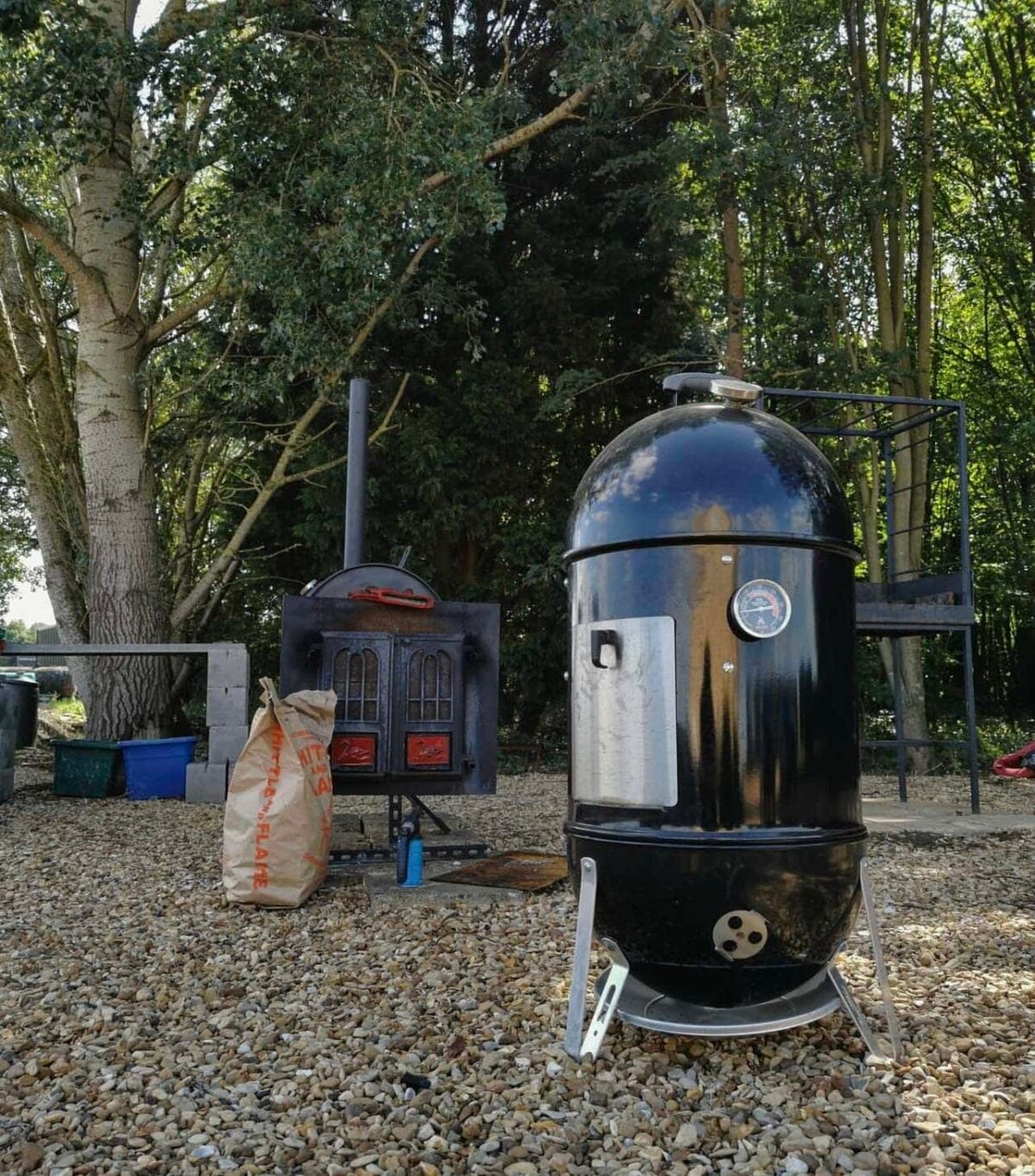
You can use any type of barbecue to cook pork belly as long as you can cook indirectly. This could be an offset smoker, kettle BBQ, ceramic grill, vertical smoker or electric smoker.
More BBQ Recipes To Try
- Irn Bru Smoked Spare Ribs
- Brisket Style Smoked Pork Belly
- Smoked Ham Hocks
- Black Garlic Hanger Steaks
- BBQ Lamb Kofta Meatballs
- Smoked Pulled Pork
If you have enjoyed this smoked pork belly recipe, it would mean a lot if you could leave a review & rating. And if you’d like to stay up to date with future recipes, follow us on Instagram & TikTok or subscribe to our newsletter!

Smoked Pork Belly
Equipment
- Smoker/Barbecue
- Large Rectangle Container
- Butcher's Paper
- Spray Bottle
Ingredients
- 2 kg Bone In Pork Belly Skin Removed
Brine
- 1½ Litres Water
- 75 g Table Salt
- 60 g Light Brown Sugar
- 1 tbsp Black Treacle
- 1 tsp Instant Coffee
- 1 tsp Pink Peppercorns
- 1 Cinnamon Stick
- 1 Star Anise
Rub
- 20 g Maldon Salt
- 15 g Coarse Ground Black Pepper
- 40 g Demerara Sugar
- 1 tsp Espresso Powder
- 1 tsp Smoked Paprika
- 1 tsp Onion Granules
- 1 tsp Garlic Granules
- 1 tsp Ground Cinnamon
- 1 tsp Ground Ginger
- 1 tsp Cumin
For The Cook
- 2 tbsp French’s Mustard
- 75 ml Apple Cider Vinegar
- 75 ml Water
Instructions
Brining The Pork Belly
- Place all of the brine ingredients (use only half of the water) into a large saucepan. Place over a medium heat & cook until the salt & sugar has completely dissolved.
- Next, remove the brine from the heat, transfer to another container & stir in the remaining water. Leave to cool completely.
- Lightly score the fat on the top of the pork belly then place into a large container. Pour over the cooled brine then leave in the fridge for 4-6 hours, turning the pork over halfway through.
- Once cured, remove the pork from the brine & rinse off under cold water. Transfer to a clean tray & leave uncovered in the fridge overnight.
Rub
- To make the rub, add all of the ingredients into a bowl then stir to combine. Set this aside for now.If you've made the rub ahead of time, store it in an airtight container.
Seasoning The Pork & Lighting The Smoker
- The next day, coat the pork belly with the French’s mustard then cover completely with the rub. Leave at room temperature whilst your barbecue gets up to temperature.Make sure that the pork belly is completely coated in a thin, even layer of rub.
- Preheat your barbecue/smoker to 275°f/135°c & set up for indirect cooking.
Smoking
- Once your BBQ is up to temperature, add in the pork belly, facing it fat side up then leave to cook undisturbed for 3 hours. In the meantime, combine the water & apple cider vinegar then place into a spray bottle.
- After 3 hours have passed, continue cooking but spray the pork with the vinegar/water every 30 minutes until a deep bark has formed. This will roughly take another 2-3 hours.
- Next, give the pork a good spray with the vinegar then wrap in a double layer of butcher’s paper. Place back in the smoker (the same way up) & continue cooking until the pork probes like butter. This will take another 3-5 hours (roughly).You can do this step in the oven if you'd prefer. The meat won't take on anymore smoke once it's been wrapped. The internal temperature of the pork should be between 195°f-200°f (90°c-93°c) once cooked but it's best to go by feel.
Resting & Slicing
- Once the pork is cooked, take it out of the smoker, leaving it wrapped in the butcher’s paper but also wrap in a tea towel. Leave to rest for a minimum of 1 hour.
- Once rested, remove the bones from the belly (they should just slide out) then slice to serve. Make sure to slice against the grain.Alternatively, leave the belly whole & chill in the fridge to set. Once set, slice thick then pan fry to heat up.
Salt Butter Smoke Magazine
Food that’s made for sharing.
The Christmas 2026 issue features 30 festive recipes, Christmas cooking guides, beautiful food photography and features on everything from the perfect cheeseboard to the art of trifle.
Discover the Christmas Issue →Notes
Enjoying This Recipe?
The Prep List is my free weekly newsletter with seasonal recipes, kitchen notes and behind-the-scenes from my kitchen. Add Salt Butter Smoke as a Google Preferred Source to see more of my recipes in Search.