
Smoked Ham Hocks
The best way to cook ham hocks is to smoke them like pulled pork. Cooking them on a barbecue makes the meat extra tender & adds a rich, smoky flavour.
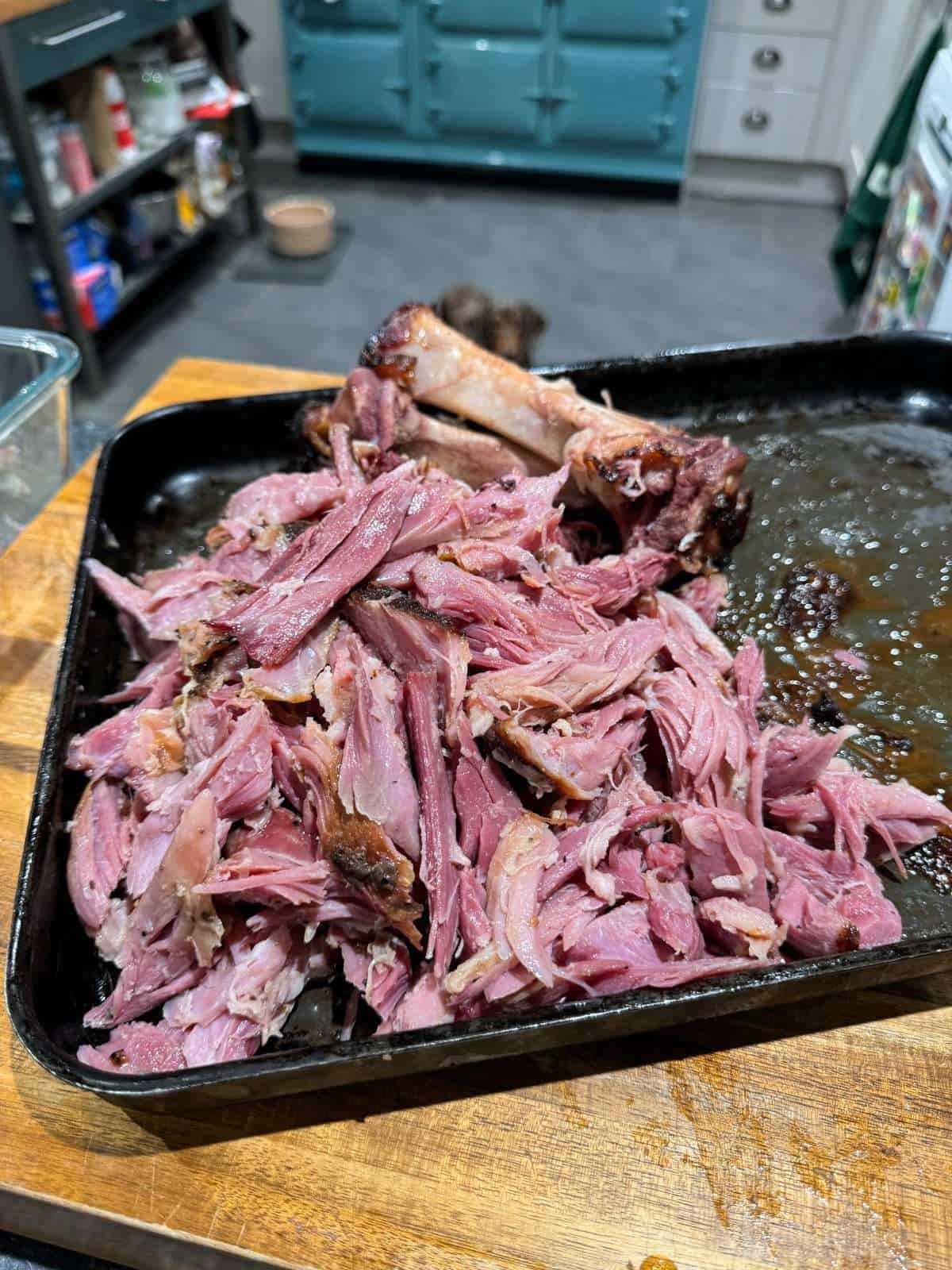
Smoking ham hocks low & slow on a barbecue turns a tough, inexpensive cut of pork into some of the best pulled pork you’ll eat! You can use the tender shredded ham to make classic pulled pork sandwiches or use it to make homemade pies, loaded nachos, salads & lots more.
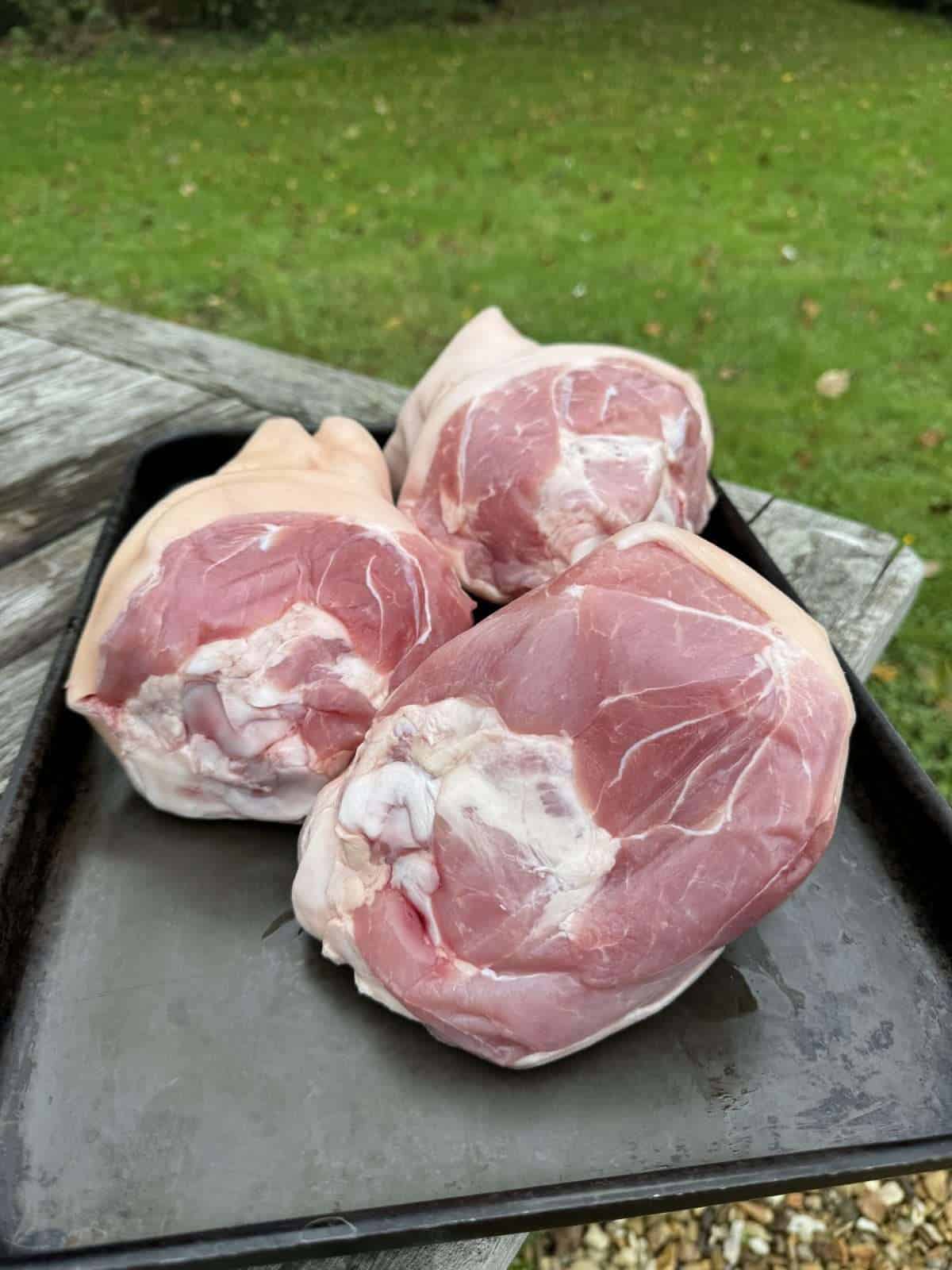
If you’ve never had ham hocks before, these are the part of a pig that connects the trotter to the leg. This cut is full of connective tissue, fat & bones so require a long, gentle cook in order to become tender.
As ham hocks are similar to pork shoulder, which is what you’d normally use to make pulled pork, they can be prepared and cooked pretty much the same way. This includes coating the meat in rub, smoking for several hours over a gentle heat, resting then shredding. This pulled pork is just as tender & flavourful as usual but takes a lot less time!
For more smoking & grilling recipes, take a look at our barbecue recipe collection! There’s lots to choose from here, from classic pulled pork & lamb to spatchcock chickens & grilled steaks. And for something to use your smoked ham hocks in, why not try our roast chicken & ham hock pies?!
Why Smoking Ham Hocks Like Pulled Pork Works
Ham hocks are a naturally tough cut of meat but smoking them low & slow breaks down the fat & connective tissue, transforming them into tender, flavourful meat that’s perfect for shredding.
- Collagen Breaks Down – Slow cooking ham hocks breaks down the collagen, turning them into a more luxurious cut of meat that’s melt in your mouth tender.
- Low & Slow Smoking Builds Flavour – The low & slow smoking adds layers of flavour that you don’t get with boiling.
- Fat Keeps The Meat Juicy – Ham hocks are naturally fatty so are suited to being slow cooked & pulled. They’ll stay moist & juicy, without drying out.
- You Get A Proper BBQ Bark – Cooking ham hocks like pulled pork creates that signature seasoned bark that you get with classic smoked meat. This adds extra texture & more smoky flavour.
- Resting Is Key – Like pulled pork, ham hocks need to be rested once cooked, in order to make the meat as tender & juicy as possible.
Ingredients For Smoked Ham Hocks
This recipe will work with both cured & uncured ham hocks. Cured ham hocks will taste salty, which is why you’ll need to soak them in cold water before using. If you use cured ham hocks, meat will stay pink once cooked as well.
- Ham Hocks – Ham hocks come from the bottom part of a pig’s leg & are the knuckle joint between the leg and the trotter. This is an inexpensive cut of pork, that is full of bones, collagen & skin so are best suited to low & slow cooking. Most ham hocks are cured, so it’s best to soak them overnight in cold water before cooking to reduce saltiness. Alternatively, you can use uncured ham hocks, just check with your butcher.
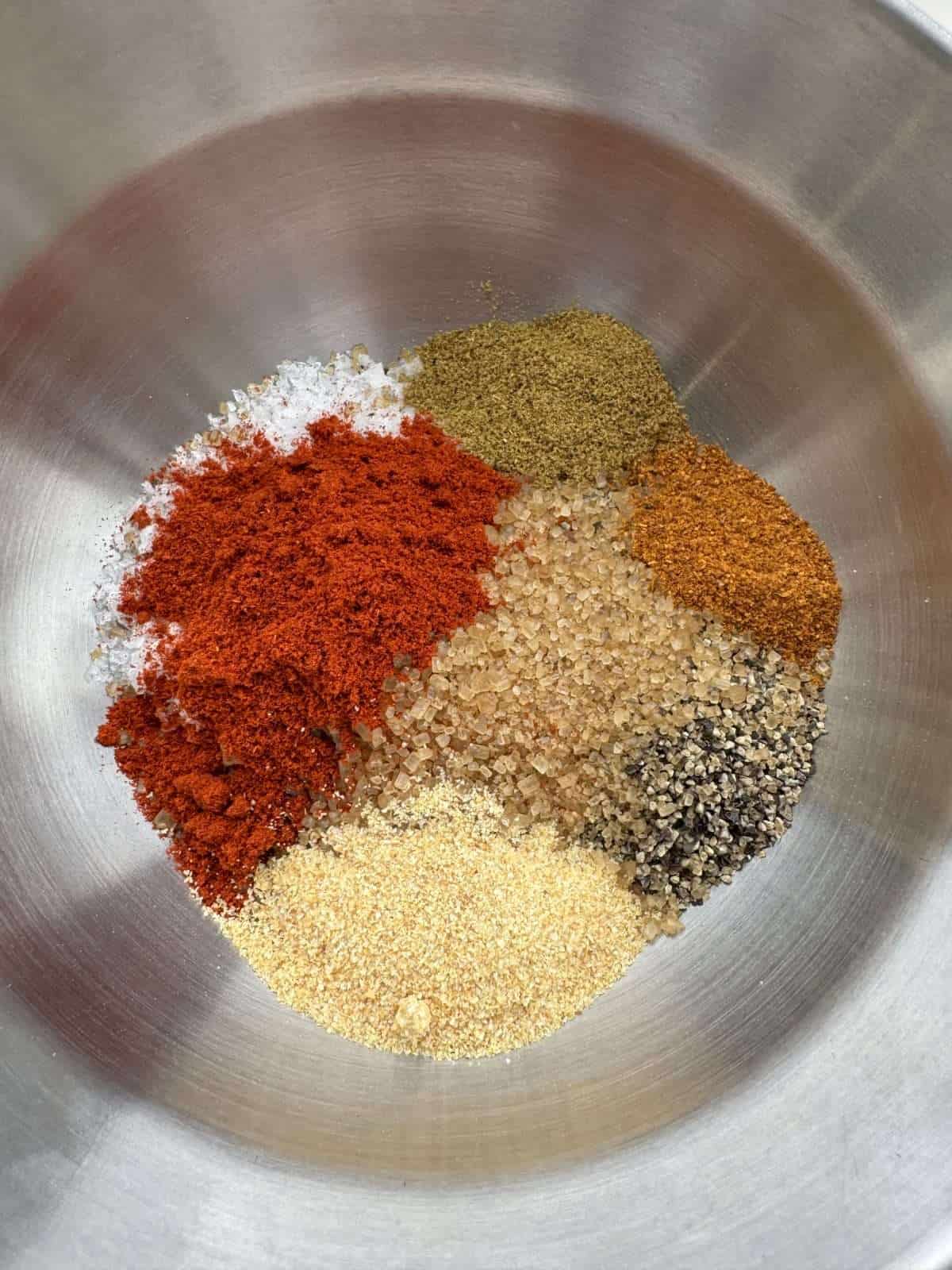
- Rub/Seasoning – We’re coating our ham hocks with a homemade barbecue rub, the same one that I use for pulled pork. Feel free to use a different rub if you’d prefer though. There’s some really good ready made BBQ rubs available to buy.
- Slather – A slather is used to make the rub stick to the meat. I like to use French’s mustard but you could use oil, water or even mayonnaise instead.
- Spritz – Spraying the meat throughout its smoke helps with bark formation. With pork, I like to use apple juice & water but you could use beer, cider, cola or water instead. Something with a high sugar content helps caramelise the outside of the meat.
A Note On Barbecues
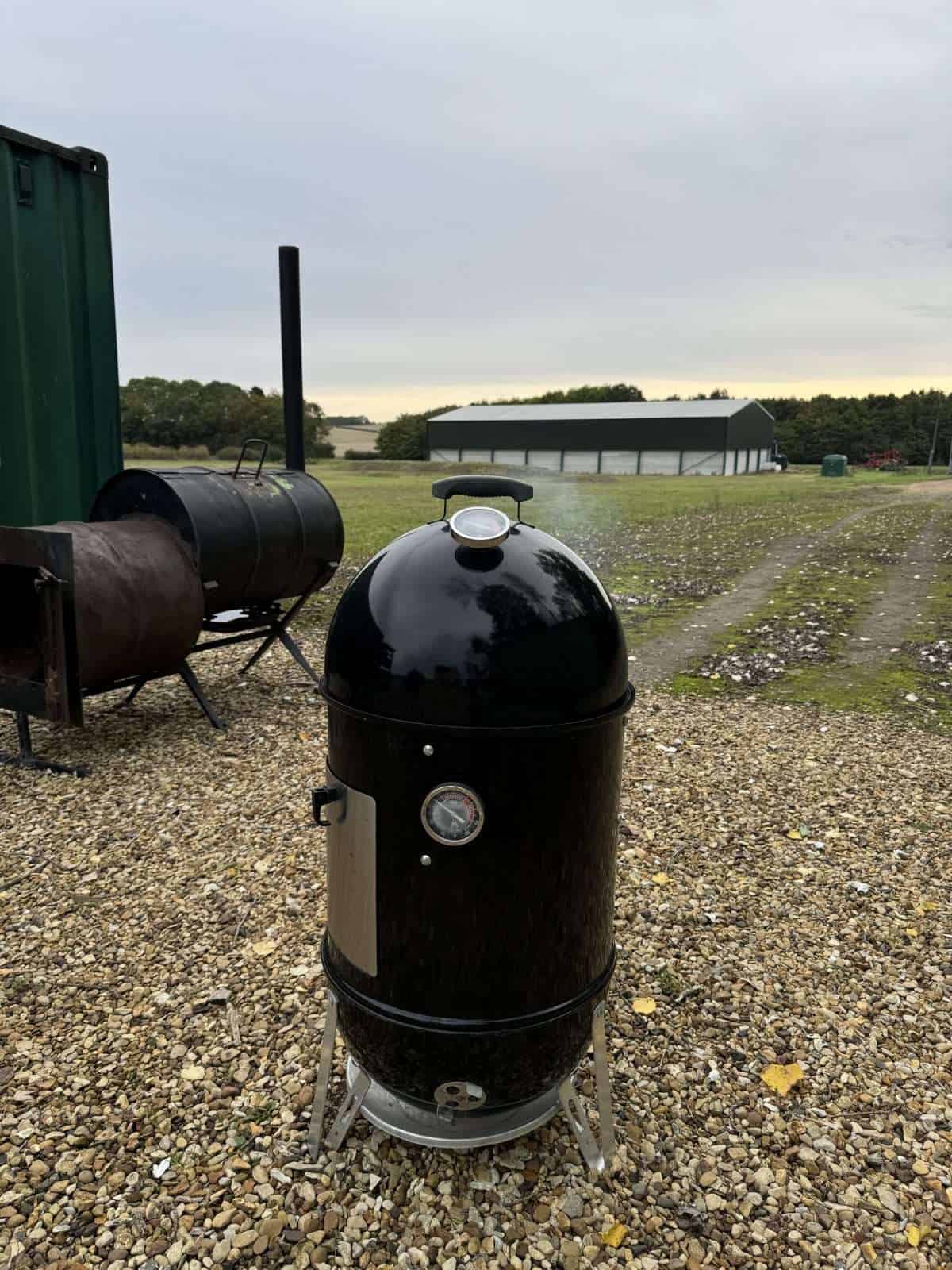
I cooked my pulled pork on my Weber smokey mountain smoker but this recipe will work on any type of barbecue, as long as you can cook on it indirectly. If you’re using a charcoal smoker like me, I’d recommend throwing in a chunk of wood just before adding in the pork. I used apple wood!
How To Smoke Ham Hocks (Pulled Pork Style)
Smoking ham hocks is a simple process but it does take time. Just like pulled pork, they’re cooked low and slow to break down the collagen, turning tender enough to shred.
The key with this style of slow cooking, is to maintain a consistent barbecue temperature, whilst building layers of smoky flavour and allowing the meat to cook until it’s tender & soft enough to shred. Once cooked, the hocks will pull apart easily & will be full of rich, smoky flavour.
Overview
- Cook Time – Between 6-10 hours
- Barbecue Temperature – 250°f/120°c
- Method – Low & slow smoking
- Result – Tender, juicy shredded meat
1. Rub & Slather
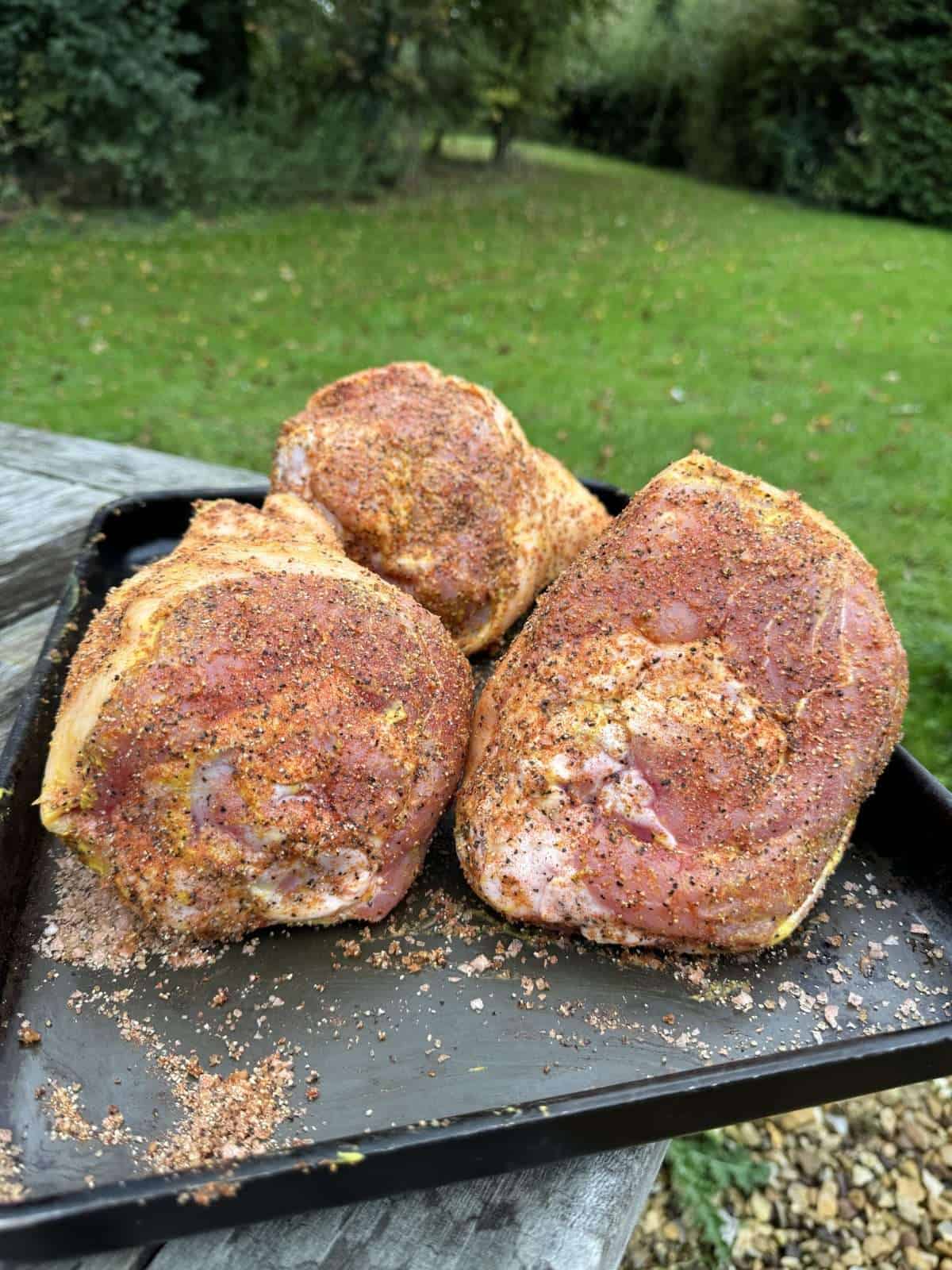
Before smoking, coat the ham hocks in a barbecue rub. This seasons the meat & helps with bark formation. You can use a homemade pulled pork rub or a ready made one.
To rub & season the meat, rub a thin layer of mustard all over the outside of the ham hocks (this is a slather and helps the rub stick) then coat with a generous amount of rub.
Place the seasoned hocks back in the fridge & let them chill uncovered, for 30 minutes whilst your smoker heats up. You can also season them several hours in advance, for a more thorough seasoning.
2. Lighting The Smoker
Light your barbecue using charcoal or wood, set it up for indirect cooking, and preheat to 120°C / 250°F.
Make sure that your smoker is fully up to temperature and producing clean smoke before adding the meat. You’re looking for a light blue smoke as thick white smoke will result in a bitter flavour. Smoke should add a sweet, subtle smoky flavour!
Clean smoke will be a light blue colour & is vital for proper bark formation & the best smoked flavour. Dirty smoke is thick & white and will make your smoked meat taste bitter.
3. Smoking The Ham Hocks
Once your barbecue is up to temperature, add in the ham hocks then let them cook undisturbed for 3 hours, making sure to maintain a consistent temperature at all times.
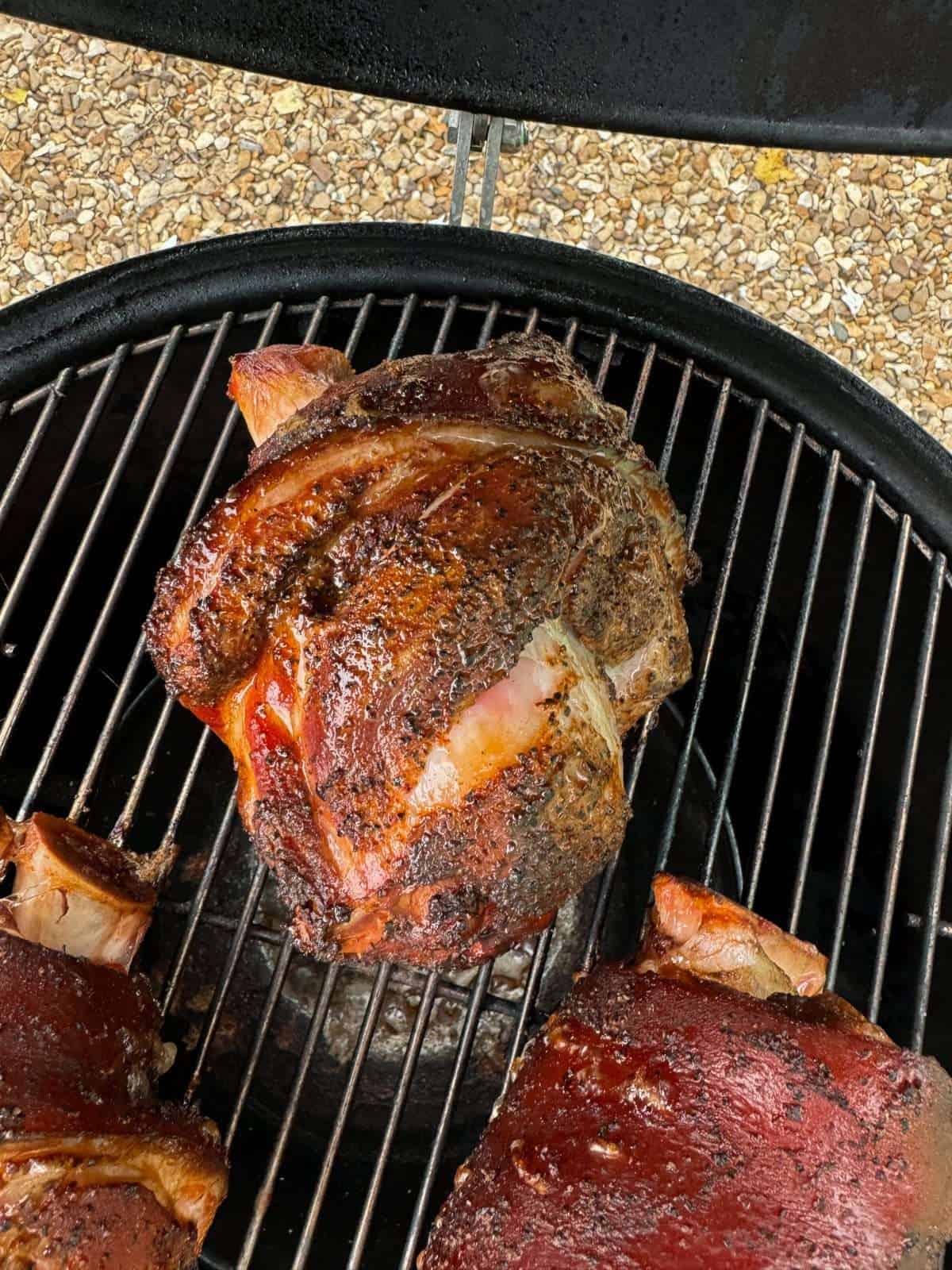
After 3 hours have passed, continue cooking the ham hocks but spray them with an apple juice & water based spritz every 45 minutes until a decent bark has formed and the internal temperature of the pork is at least 165°f/74°c. The first stage of the cook will take around 5-6 hours, including the first 3 hours.
4. Wrapping
Now that your ham hocks have got a decent amount of colour, you’ll need to wrap them in tin foil, to push them through the stall. This is known as the “Texas Crutch” in barbecue & is used to speed the latter part of the cook up & keep the meat juicy.
At this point, the pork won’t take on any more smoke so the rest of the cook can be done either in the smoker or in an oven, if you’d like to cut down on the amount of charcoal/wood used.
The Stall: This is when the internal temperature stops rising due to moisture evaporating from the surface, cooling the meat. It usually occurs around 74°C / 165°F.
5. Continue Cooking Until Tender
Return the wrapped hocks to the smoker/oven and continue cooking at 120°C / 250°F until they are fully tender.
Smoked ham hocks are done when:
- A probe slides into the meat easily (like butter).
- The internal temperature reaches 90–96°C / 195–205°F.
This stage will take around 2–3 hours, bringing total cook time to roughly 7–9 hours. It’s important to cook to temperature & feel, instead of time as the cook time can vary depending on the size of the meat, the temperature of the smoker & even the weather!
6. Rest Before Pulling
Once your ham hocks are cooked, you need to let them rest for at least an hour before pulling them. This allows the juices to redistribute through the meat, making it juicier & more tender. Don’t be tempted to skip this step as you’ll end up with dry, tough meat no matter how well you cooked the ham hocks!
7. Pulling & Serving
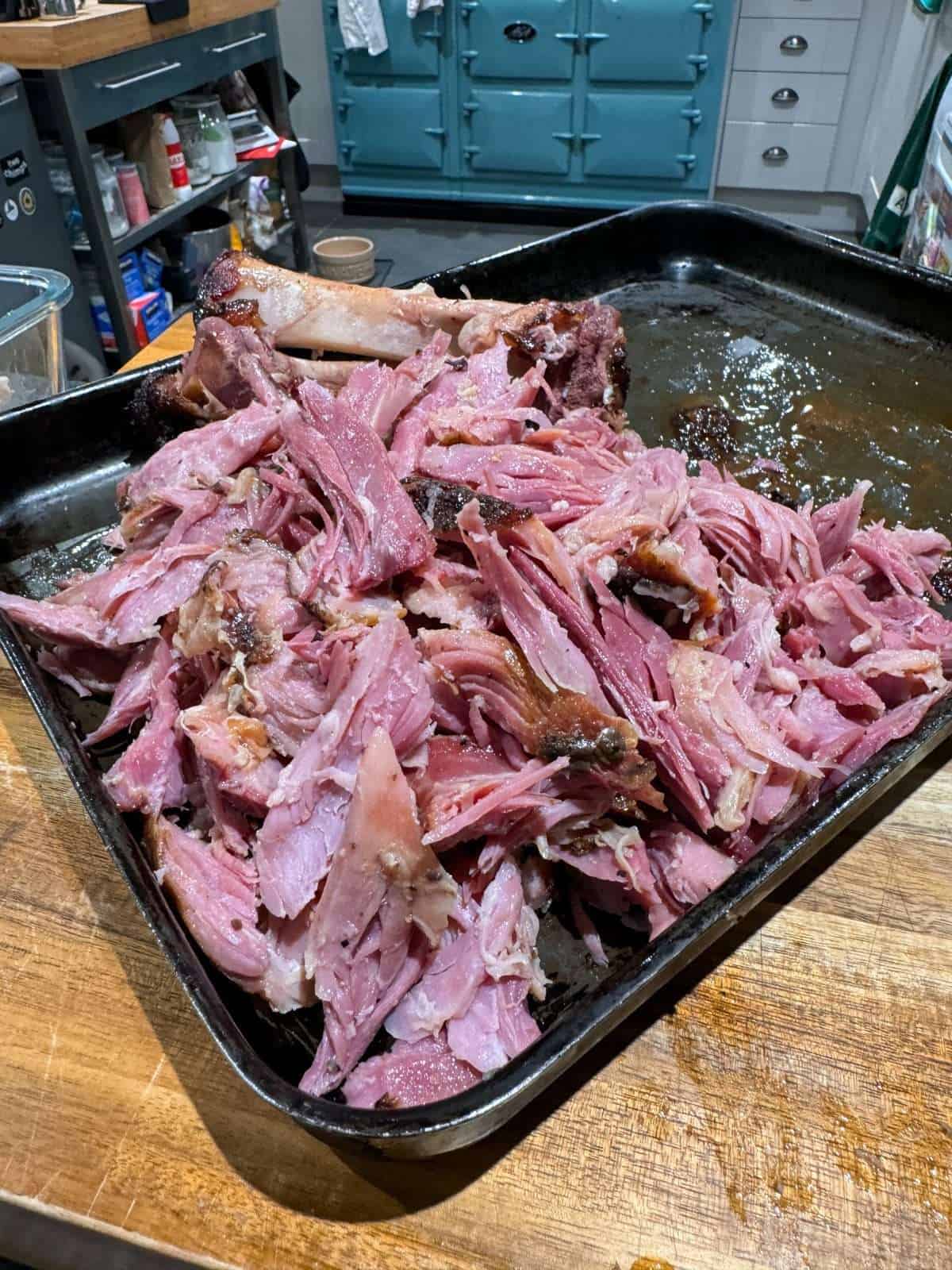
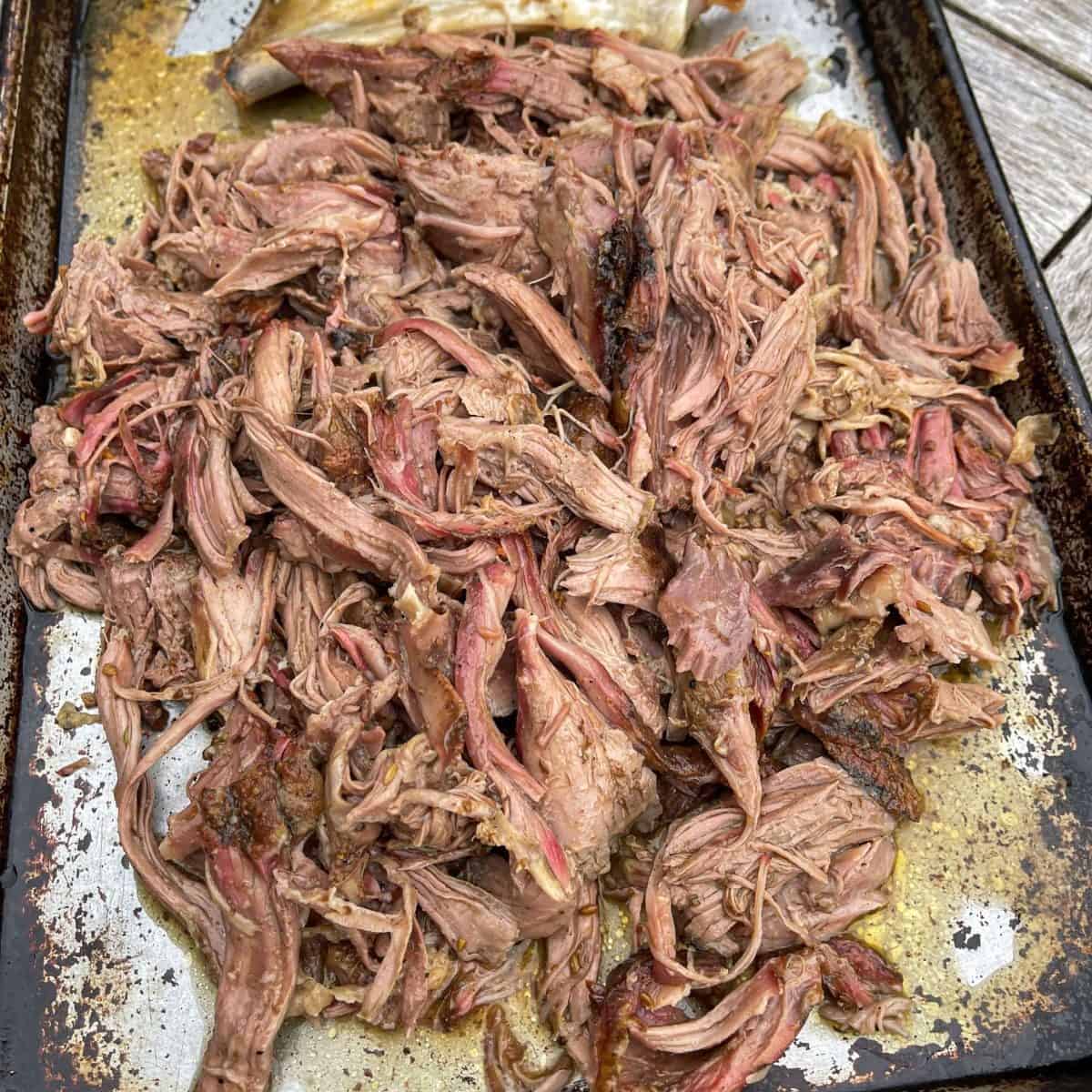
Now it’s time to pull/shred the smoked ham hocks. To do this, remove & discard the skin from the outside then pull out the bones (they should come out clean!). Next, shred the meat, mix it with the resting juices then serve. You could use the skin & bones to make a smoky gravy or broth!
A quick tip! It’s a lot easier to shred smoked meats by hand. A pair of food safe gloves come in handy here.
Pro Tips & Tricks
- Soak If Using Cured Ham Hocks
Soak your ham hocks overnight in cold water, to remove some of the salt from when they were cured. Or alternatively, use uncured ham hocks. - Maintain A Steady Temperature
Maintain a consistent barbecue temperature throughout the whole cook. This is key to proper bark formation. It also speeds up the cook time. - If You’re Looking, You Ain’t Cooking!
Let the pork smoke undisturbed. As the saying goes, if you’re looking you ain’t cooking! Try to open your smoker as little as possible as this brings the temperature down, increasing the cook time. - Spritz For Better Bark
For smoked pork, I like to spray the meat with apple juice as the sugars in the juice help caramelise the bark as the meat smokes. Apple & pork is also a classic combination! - The Texas Crutch
Wrap the ham hocks in foil towards the end of the cook. This is known as the Texas Crutch in BBQ & helps the meat retain moisture. - Check The Internal Temperature
Use a digital food probe. When cooking bbq, it’s important to be able to check the meat’s internal temperature. A good digital food probe like a Thermapen is a crucial bit of kit! - Always Rest Before Pulling
Let the ham hocks rest for at least an hour once they’ve finished cooking. This lets the meat relax & the juices redistribute which makes the pork more tender & juicier once pulled.
Troubleshooting Smoked Ham Hocks
Here are some common issues & how to avoid them when smoking ham hocks.
- Ham Hocks Are Tough
Your ham hocks haven’t been cooked for long enough. Smoked ham hocks should be cooked until a food probe slides into the meat with little to no resistance, like butter! The final internal temperature should be between 90–96°c/195–205°f. - The Meat Won’t Shred Easily
The ham hocks are undercooked. It’s best to return them to the smoker (or oven) then continue cooking them until they’re soft & tender. - The Meat Is Salty
If your ham hocks have been cured, you’ll need to soak them in cold water overnight, to remove the excess salt. Or use uncured ham hocks instead. - Bark Isn’t Forming
Poor bark formation is due to dirty wood smoke, an inconsistent barbecue temperature of if you spritz the meat too often. - The Meat Is Dry
This is commonly caused by not resting the meat, so make sure to let the ham hocks rest for 1 hour before shredding.
Serving Suggestions
Smoked ham hocks are incredibly versatile and can be used like regular ham hocks or just like pulled pork. Their rich, smoky flavour works incredibly well with a wide range of dishes, from pie fillings, sandwiches, nachos, salads & loads more.
Here’s some of my favourite ways to use smoked ham hocks…
- Sandwiches – Use smoked ham hocks in a sandwich, like pulled pork. They’d be good with homemade slaw & a tangy BBQ sauce.
- Nachos – Load nachos up with chunks of tender ham hock! The salty, smoky flavours will cut through the creamy nacho cheese.
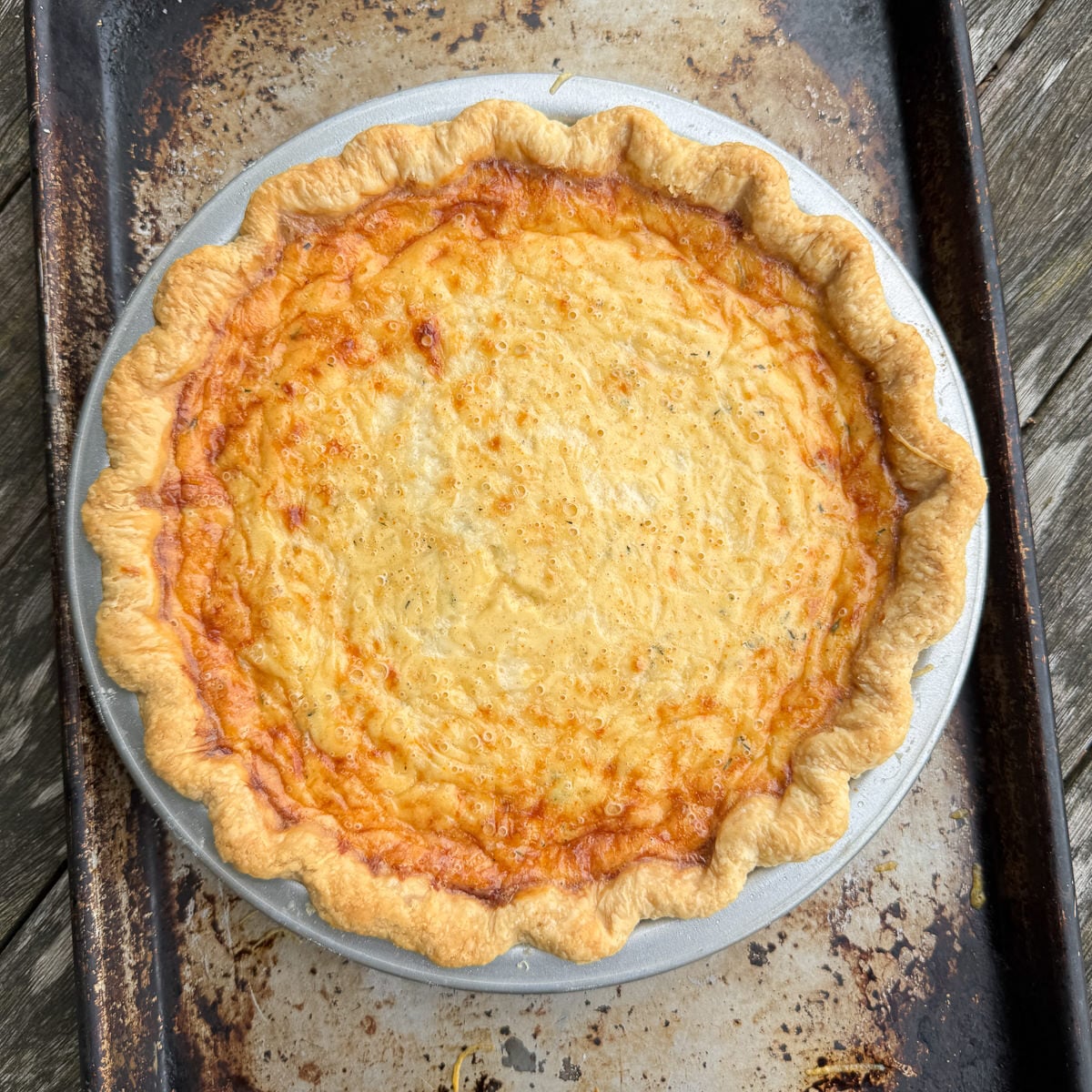
- Pie Fillings – I used my smoked ham hocks to make a creamy roast chicken & ham hock pie filling. You could even use them instead of bacon in a quiche.
- Soup – Pea & smoked ham hock soup anyone? You could save the bones from the ham hocks & make a rich, smoky stock to use for soup or broth.
- Salad – You can serve pulled ham hocks cold & they’d be really good in a salad. You could swap the bacon out in a classic Caesar salad for chunks of pulled ham hocks!
Frequently Asked Questions
Ham hocks need to be cooked low & slow in order to make them tender. They’ll take several hours to cook whether you’re boiling, braising or smoking them. You’ll know when they are done, when they probe soft, like butter or when the internal temperature reaches 90–96°c/195–205°f.
Ham hocks come from the bottom half of a pig’s leg (front or back). Ham hocks are also known as the knuckle joint & are full of fat, collagen, bone & meat. They are an inexpensive cut of meat because of this but make fantastic terrines, stews, soups & lots more!
Fruit woods like apple or cherry are best when smoking all types of pork as they have a mild & sweet smoky flavour. Oak & pecan would be some other good choices. It’s best to avoid woods that impart a strong smoky flavour, as it would be easy to overpower the flavour of the meat.
To avoid dirty smoke, make sure that you are using well seasoned wood to build your fire & that it has a good amount of air flowing through it, throughout the entire cook. Clean smoke will be a light blue colour & produces a sweet, subtle flavour.
Smoked ham hocks will still be pink once cooked, as they are typically cured with salt & nitrites to preserve the meat & improve the flavour. When you smoke meats, a pink smoke ring can appear, so even uncured ham hocks may appear slightly pink around the edges.
More BBQ Recipes To Try!
- Black Garlic Hanger Steaks
- Smoked Pulled Lamb Shawarma
- BBQ Lamb Kofta Meatballs
- Grilled Spatchcock Chicken With Chermoula Sauce
- BBQ Bangers & Mash With Caramelised Onion Gravy
- Smoked Pulled Pork
- Smoked Pork Belly
If you have enjoyed this recipe for smoked ham hocks, it would mean a lot if you could leave a review & rating. And if you’d like to stay up to date with future recipes, follow us on Instagram & TikTok or subscribe to our newsletter!
Smoked Ham Hocks
Equipment
- BBQ/Smoker
- Digital Food Probe
- Spray Bottle
Ingredients
- 3 Ham Hocks (Around 1 kg Each)
Rub & Slather
- 20 g Fine Sea Salt
- 20 g Demerara Sugar
- 10 g Coarse Ground Black Pepper
- 1 tsp Smoked Paprika
- ½ tsp Garlic Granules
- ½ tsp Ground Cumin
- ½ tsp English Mustard Powder
- ¼ tsp Cayenne Pepper
- French's Mustard (To Slather)
To Spritz
- 100 ml Apple Juice
- 100 ml Water
Instructions
- The day before cooking the ham hocks, place them into a large container & cover in cold water. Leave to soak in the fridge overnight then drain well.
Rub
- Place the ham hocks onto a baking tray & pat dry with kitchen paper.
- Add the salt, sugar, black pepper, paprika, garlic granules, cumin & cayenne into a bowl then stir to combine. Set aside for now.
- Next, rub a thin layer of French's mustard (or veg oil) all over the ham hocks then cover completely with the rub. Place the pork back in the fridge & leave to sit for 30 minutes or so, whilst your smoker heats up.
Smoking
- Light your smoker/barbecue & leave to preheat to 250°f/120°c. Make sure that your barbecue is set up for indirect cooking.
- Once up to temperature, place the ham hocks in the barbecue then leave to cook undisturbed for 3 hours. Make sure to maintain a consistent barbecue temperature throughout the whole cook!
- In the meantime, add the apple juice & water into a spray bottle then set aside. We'll be using this to spritz the hocks.
- After 3 hours have passed, continue cooking but spray the pork with the apple juice spritz every 45 minutes, until a decent bark has formed & the internal temperature is at least 165°f/74°c.This will take another 2-4 hours (roughly!).
- Next, lay down a couple of sheets of foil, overlapping them slightly then place a ham hock in the middle. Give the hock a good spritz then wrap up tightly in the foil. Repeat with the remaining ham hocks.
- Return the pork to the smoker (or into an oven) & continue cooking at 250°f/120°c until it is tender & probes like butter. The internal temperature of the pork will be between 195°f-205°f (90°c/96°c) once cooked.If you're cooking in an oven, place the wrapped pork onto a baking tray. Once wrapped, the ham hocks will need anywhere from 2-4 hours of cooking to become tender.
- Let the ham hocks rest (still wrapped in the foil) for at least an hour then shred the meat by hand, discarding the bones & skin (the bones should pull out clean!). Mix the meat with any juices then serve.
Salt Butter Smoke Magazine
Love seasonal cooking?
Issue 001 features over 20 original autumn recipes, seasonal features, preserving guides and beautiful photography.
Take a Look Inside →Notes
Enjoying This Recipe?
The Prep List is my free weekly newsletter with seasonal recipes, kitchen notes and behind-the-scenes from my kitchen. Add Salt Butter Smoke as a Google Preferred Source to see more of my recipes in Search.
I am curious about the majority of the seasoning, smoke and bark will be on the skin which is to be discarded. I use a smoked pork hock in pea soups and baked beans, and leave the skin on.
That sounds really good! For things like pies & sandwiches I like to just use the meat but it comes down to personal preference whether you use the skin or not.