Smoked Pulled Pork
The ultimate guide to cooking tender, juicy smoked pulled pork at home! Grab a pork shoulder & your favourite BBQ rub and we’ll show you how to make it.
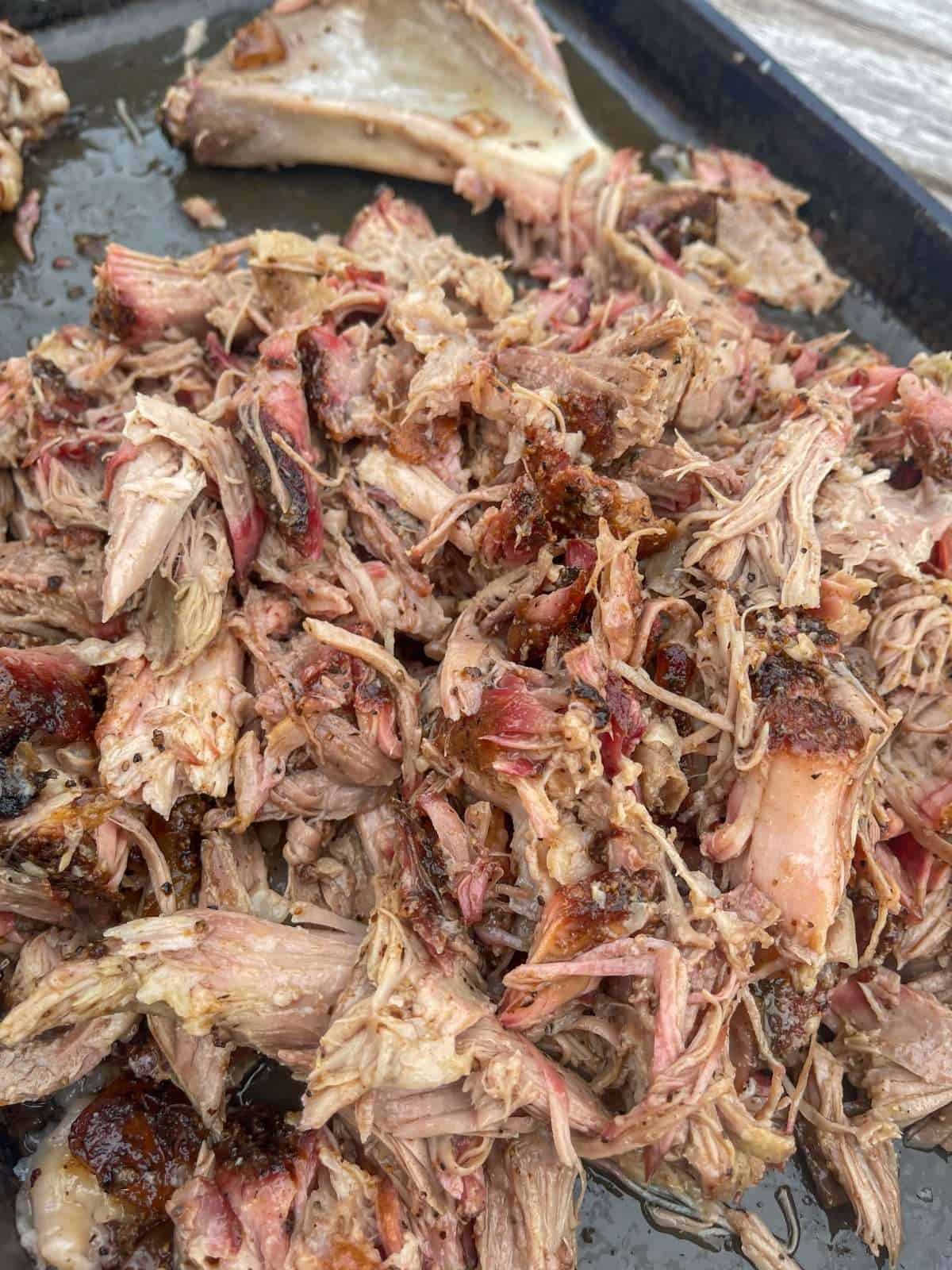
The ultimate guide on cooking smoked pulled pork at home that’s tender, juicy and packed full of flavour. If you’re new to cooking BBQ, this is the perfect recipe to start with as it’s super easy, relatively cheap and really forgiving. It’s hard to mess up!
This easy to follow recipe shows you how to cook a pork shoulder low & slow until it’s tender enough to pull apart, with a perfectly caramelised bark on the outside. You’ll learn how to trim & rub the meat, the best way to maintain a consistent barbecue temperature & the tell tale signs to look out for, to know when your pulled is ready.
Even if you haven’t got a smoker, this low & slow recipe can be used to make some seriously good oven cooked pulled pork. It’s great in sandwiches with slaw & BBQ sauce but also works really well in pies, on pizzas & even in salads.
If you’ve ever wondered where the “smoke” part of this blog’s name comes from, it’s from this style of cooking! Cooking outside, over a live fire is easily one of my absolute favourite ways to cook & it doesn’t get much better than this smoked pulled pork. For more barbecue recipes, like pulled lamb & grilled chicken, take a look at our main course recipe collection!
Smoked Pulled Pork Temperatures & Timings
- Cut Of Meat: Bone In Pork Shoulder
- Smoker Temperature: 275°f/135°c
- Target Internal Temperature: 195°f-205°f (90°c/96°c)
- Cook Time: 10-14 Hours
- Resting Time: 1 Hour +
Ingredients For Smoked Pulled Pork
- Pork Shoulder – For the best pulled pork, use a bone-in pork shoulder (also known as a Boston Butt). This cut has the ideal amount of fat & connective tissue which will break down during the low & slow cook, giving you tender fall apart pork.
Leaving the bone in adds more flavour to the meat & also acts as a doneness indicator. It should slide out cleanly if your pork has been cooked for long enough. For this recipe, we’re using a 2.5 kg joint, which will make around 8 generous portions. - Slather – A slather helps the rub stick to the meat and promotes better bark formation. French’s yellow mustard is a popular choice, but you can also use a neutral oil or even water instead as the slather doesn’t impart much flavour.
- Rub – Using a well balanced BBQ rub is key to making properly seasoned pulled pork with the best bark. I’ve included how to make your own but a ready made rub will work as well.
- Spritz – Spraying the meat throughout its smoke also helps with bark formation. With pork, I like to use apple juice & water but you could use beer, cider, cola or water instead. Something with a high sugar content helps caramelise the outside of the meat.
- Wood – When cooking barbecue, it’s best to treat your fuel (wood or charcoal) like an ingredient, as it imparts flavour to the food you’re cooking. A mild fruit wood like apple or cherry works best with pork.
A Note On Barbecues
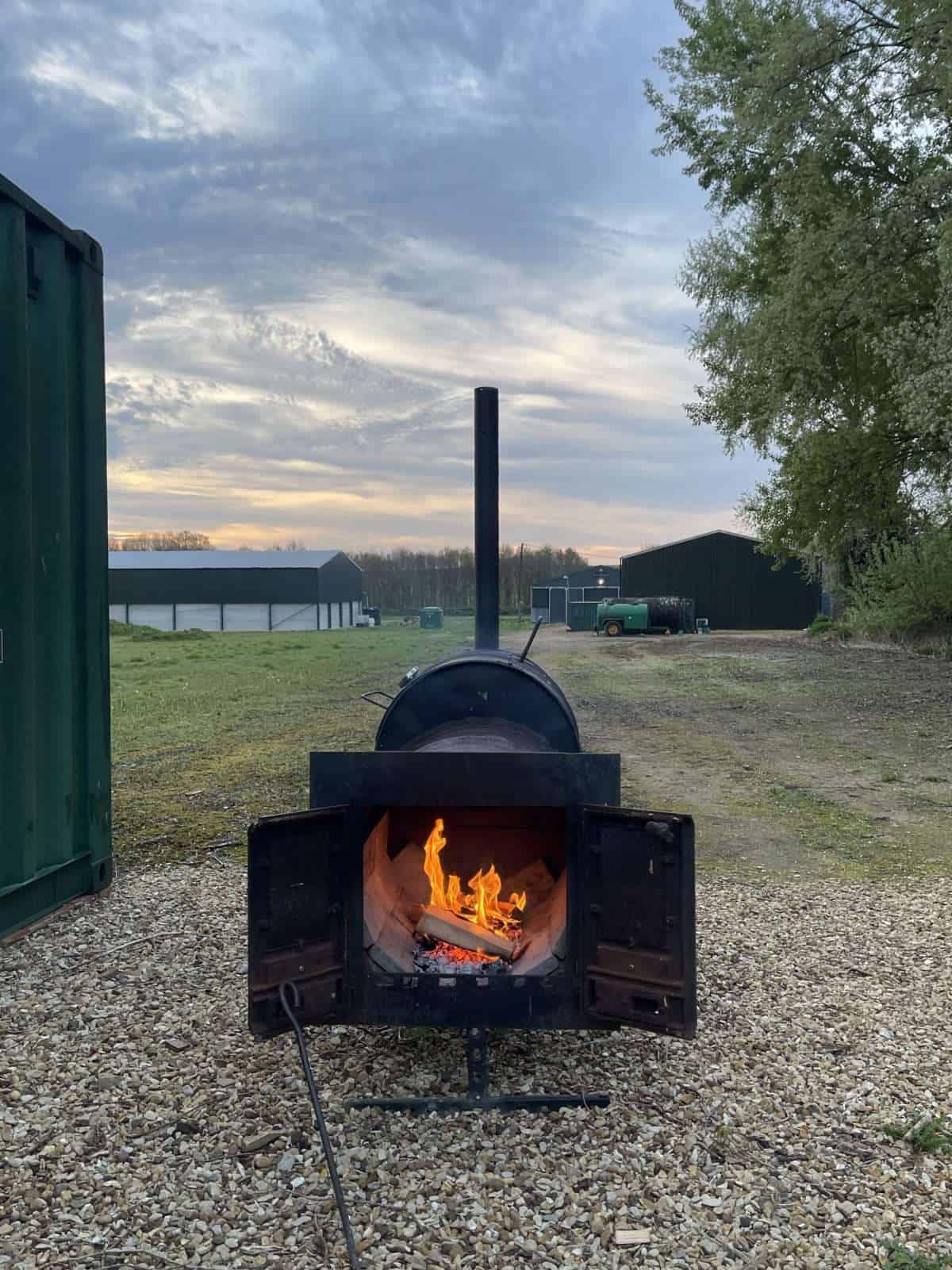
I cooked my pulled pork on my homemade offset smoker but this recipe will work on any type of barbecue, as long as you can cook on it indirectly. My smoker runs on just wood (I like to use cherry wood with pork!) but if you’re using a charcoal smoker, I’d recommend throwing in a chunk of wood just before adding in the pork.
How To Smoke A Pork Shoulder For Pulled Pork
This easy method uses a slow, gentle cook to break down a fatty pork shoulder into tender, pull-apart meat with a rich smoky flavour and the perfect bark.
1. Prepare The Pork For Smoking
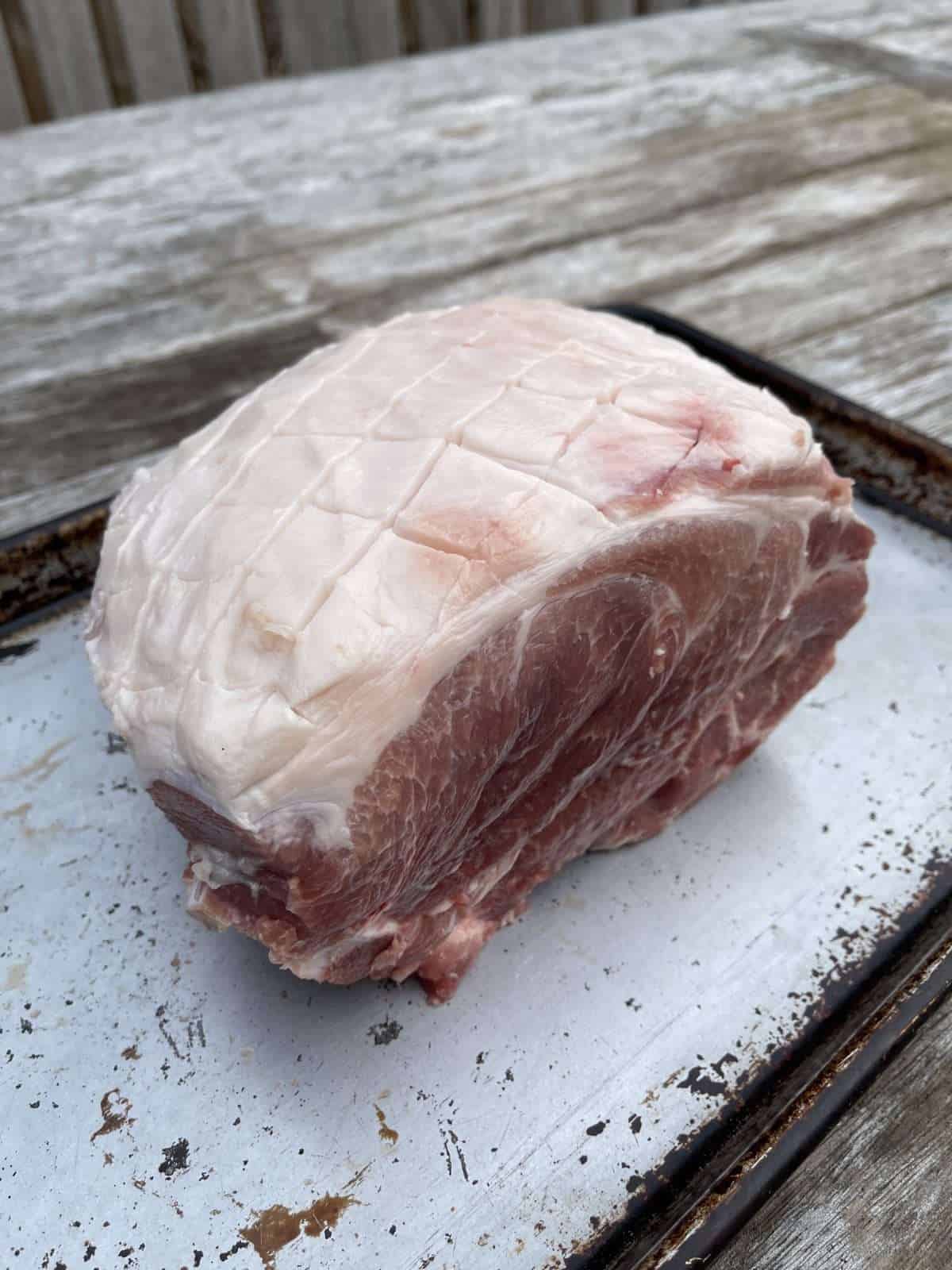
Pork prep first. If you’re starting with a pork shoulder that still has the skin on, take this off with a sharp knife. Trim the fat on top, down to a quarter inch (6mm) then score lightly in a criss cross pattern. This allows the fat to fully render throughout the cook & for more smoke & rub to get into the meat, adding more flavour.
I like to prep the pork the night before then leave it uncovered in the fridge. That way, you don’t have to worry about trimming early the next morning.
2. Rub & Slather
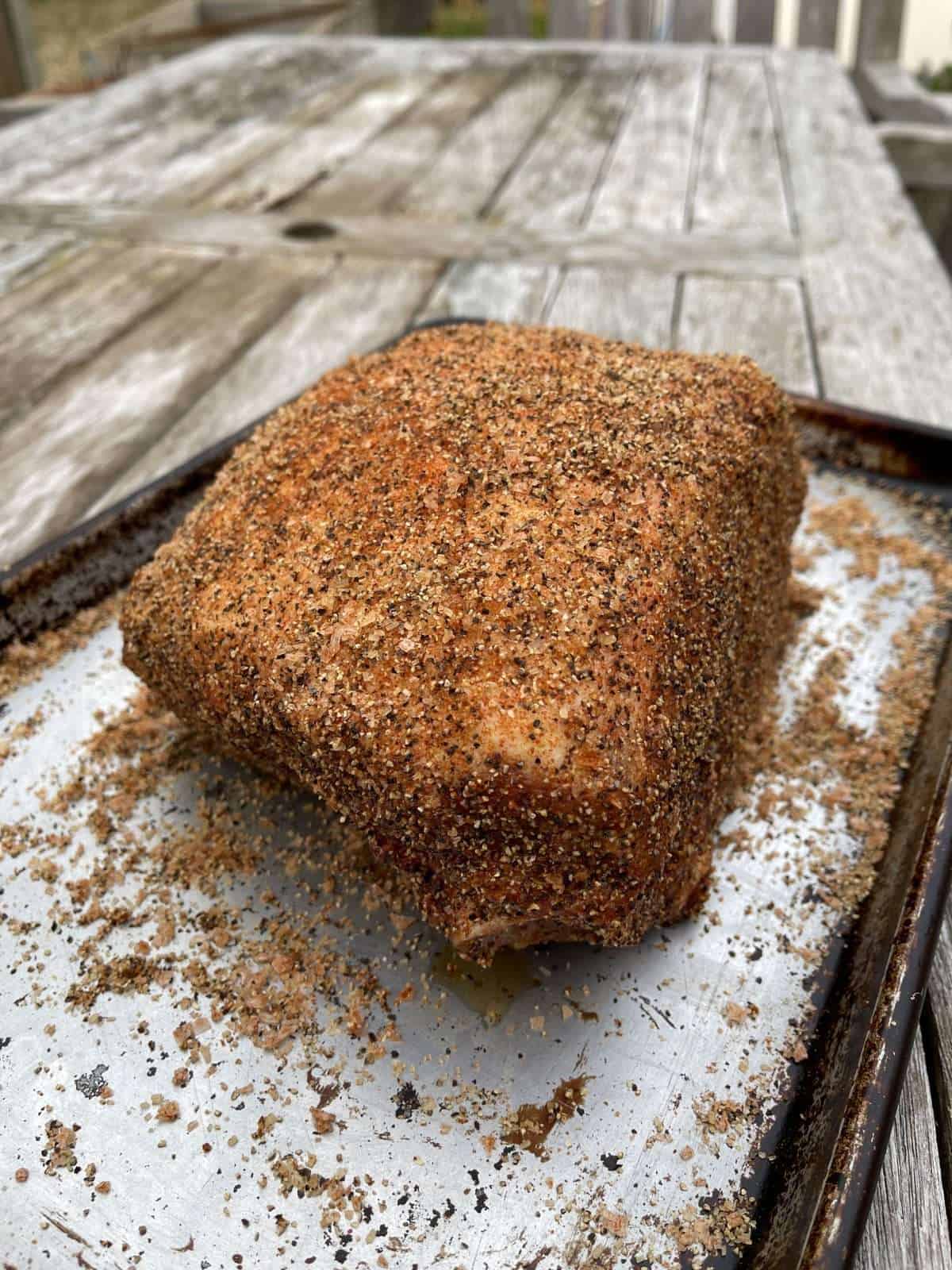
Before smoking the pork, you need to coat it in a BBQ rub; either homemade or ready made. To do this, rub a thin layer of mustard all over the outside of the shoulder (this helps the rub stick) then coat in a generous amount of rub. Pork shoulders can take a lot of seasoning, so don’t be shy with the rub!
Once seasoned, place the pork back in the fridge & let sit uncovered for 30 minutes or so, whilst your smoker heats up. Alternatively, the pork can be rubbed several hours in advance.
3. Light Your Smoker
Next, light your barbecue with charcoal or wood (depending on the type of smoker you’re using), set up for indirect cooking then leave to preheat to 275°f/135°c. Make sure that you’re barbecue is fully up to temperature & producing clean smoke before adding in the pork.
Tip – Clean smoke will be a light blue colour & is vital for proper bark formation & the best smoked flavour. Dirty smoke is thick & white and will make your smoked meat taste bitter. To produce clean smoke, your barbecue needs to have good air flow.
4. Smoke The Pork
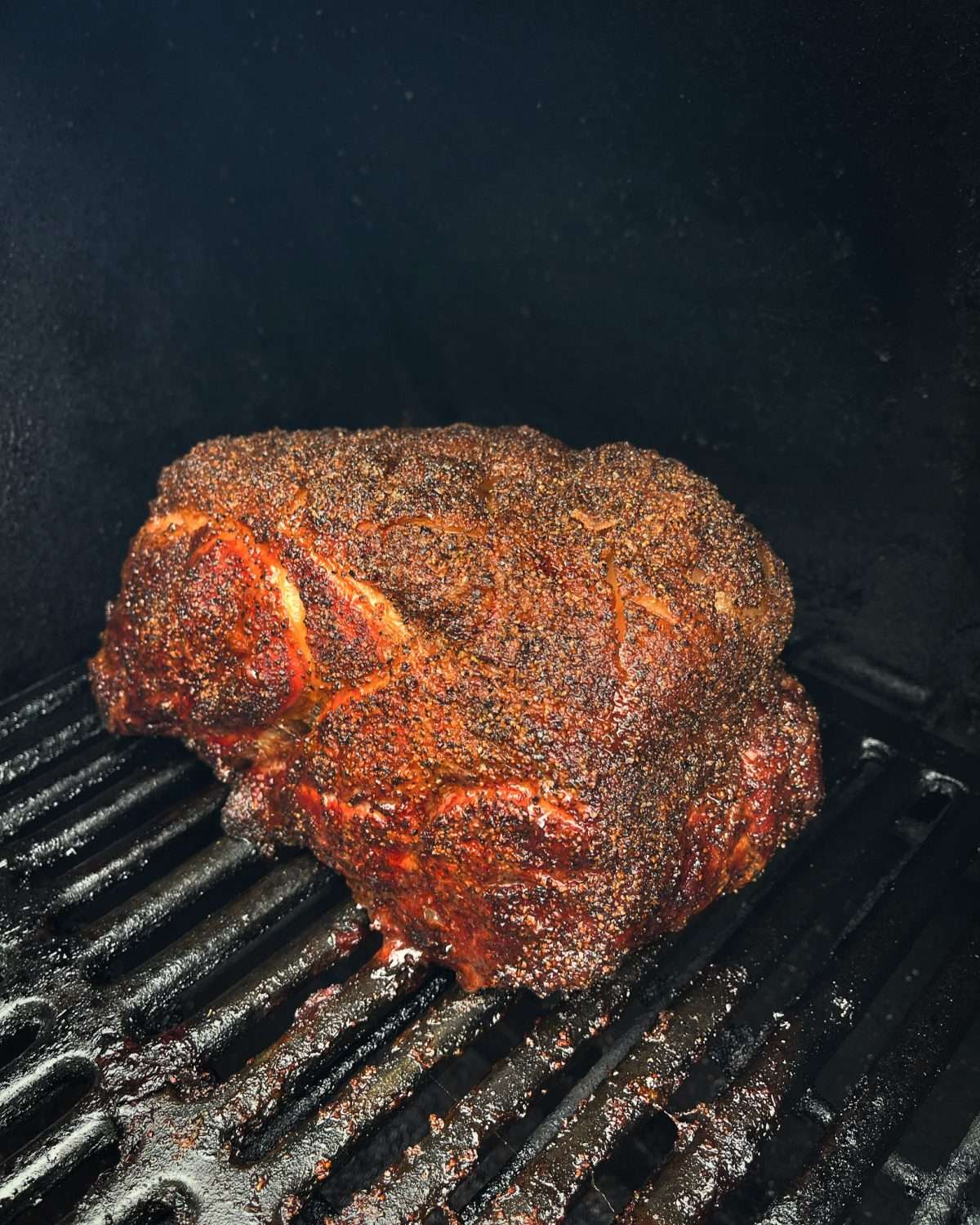
Once up to temperature, place your seasoned pork shoulder into the smoker so that it’s facing fat side up. Close the lid & leave to smoke for 3 hours without opening up the smoker. As the fat is facing upwards, it will render over the meat, essentially basting it.
After 3 hours have passed, continue cooking but spray the pork with an apple juice & water based spritz every 45 minutes until a decent bark has formed and the internal temperature of the pork is at least 165°f/74°c. A common sign of when to wrap smoked pork shoulder is when the fat has split on top.
Including the first 3 hours, this part of the cook can take anywhere from 5-9 hours. This depends on how big your pork shoulder is, how insulated your smoker is, how consistent your barbecue temperature is and even the weather.
Tip – It’s important to maintain a consistent temperature & clean quality of smoke throughout the entire cook.
5. Wrapping
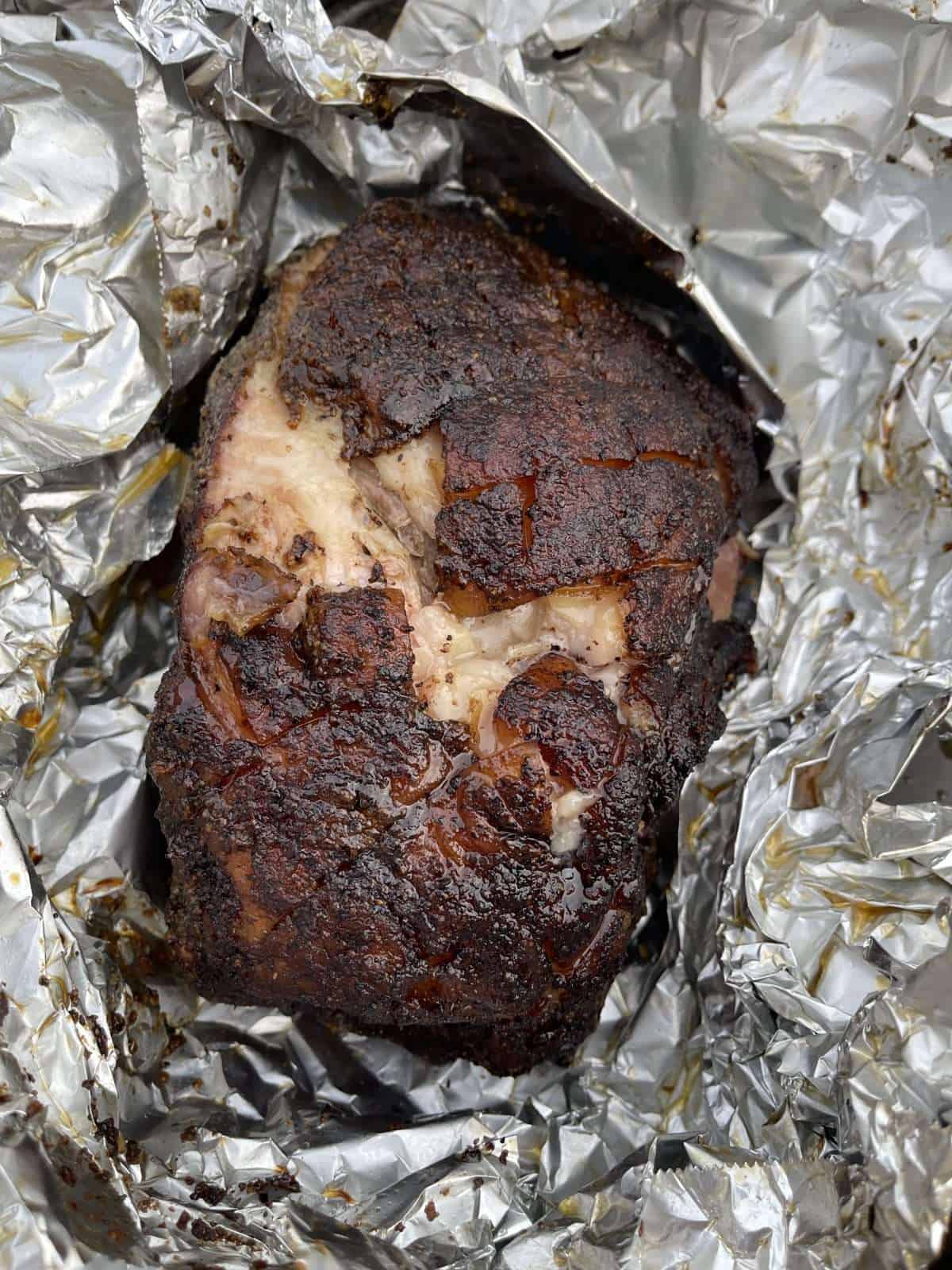
Once the pork has reached 165°f/74°c, it’s time to wrap it in foil. We do this because wrapping helps push the meat through the stall, speeding the latter part of the cook up whilst keeping the pork juicy. At this point, the pork won’t take on any more smoke so the rest of the cook can be done either in the smoker or in an oven.
Wrapping in foil is known as the “Texas Crutch” in barbecue. If you’d prefer your pork’s bark to stay as crisp as possible, with a darker colour and don’t mind a slightly longer cook, you can wrap it in butcher’s paper instead of foil.
The Stall – This is where the internal temperature of meat stops rising for a period of time whilst it is smoking. This is due to moisture loss on the meat’s surface which cools the meat down. With pork, this tends to happen when the internal temperature is around 165°f/74°c.
6. Continue Cooking
Once wrapped, continue cooking the pork it until it is soft & tender. You’ll know when your pork is cooked when you insert a probe into the meat and it feels soft like butter. The target internal temperature for pulled pork is between 195°f-205°f (90°c/96°c).
This latter stage of the cook will roughly take between 2-5 hours. On average, a pork butt smoked at 275°f/135°c will take between 7-14 hours. Always cook smoked meat to feel & internal temperature though, not time!
7. Resting
Once your pork is cooked, it needs to rest for 1-2 hours (wrapped in foil) so that the meat can relax & the juices can redistribute. This will make your pulled pork juicer & more tender than if you skipped the rest. Pull the pork too soon & all the juice will run out, making the meat dry & tough!
8. Pulling
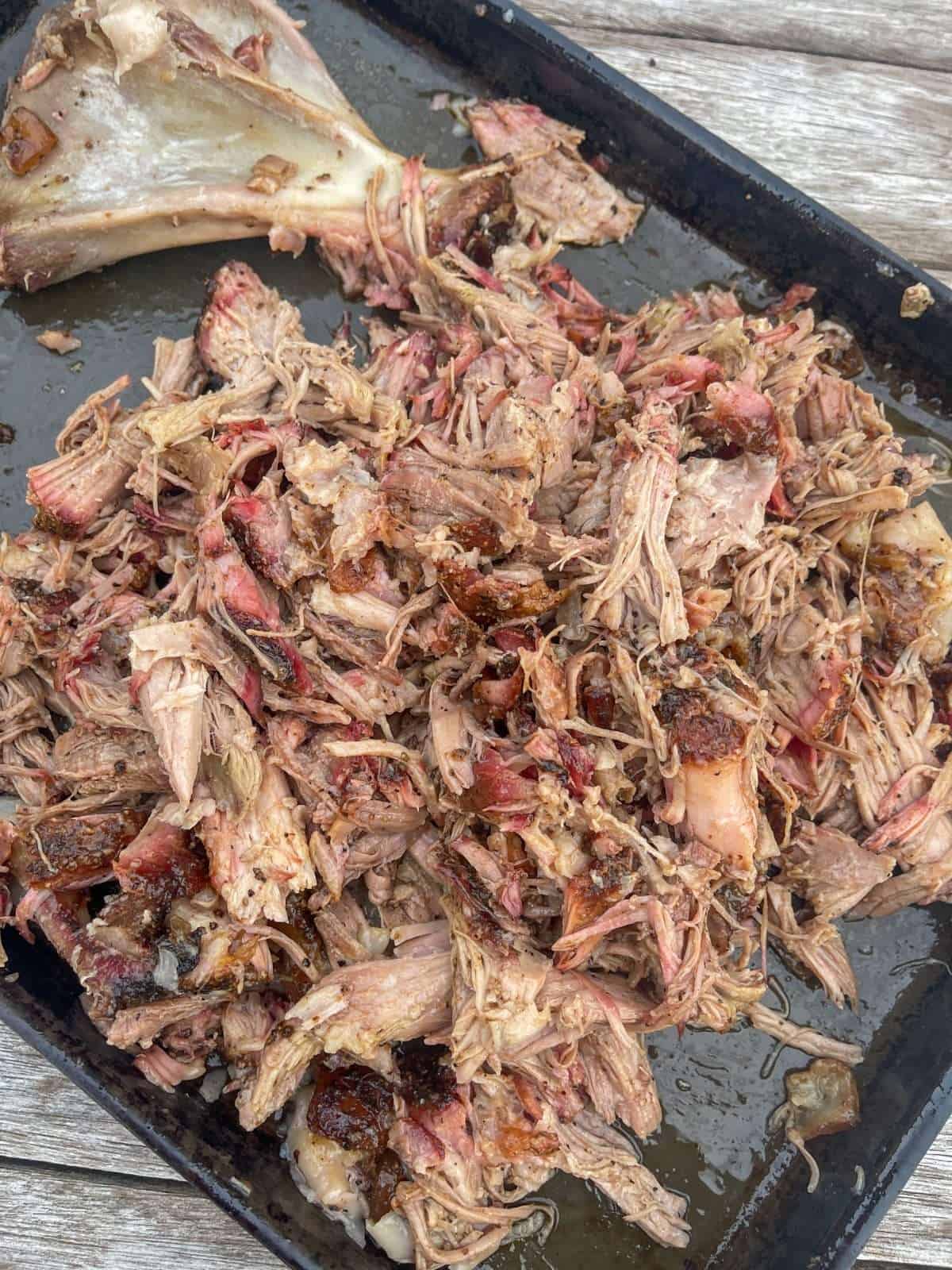
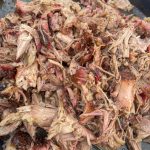
Once your smoked pork has rested, it can be pulled & served. This is best done by hand (gloves come in handy here!) or with 2 forks. As your pork will be nice & tender, you should be able to pull the bone out easily & cleanly. This is a sign of properly smoked pulled pork.
Once pulled, mix the pulled pork with any resting juices then serve immediately, whilst it’s still warm!
Serving Suggestions
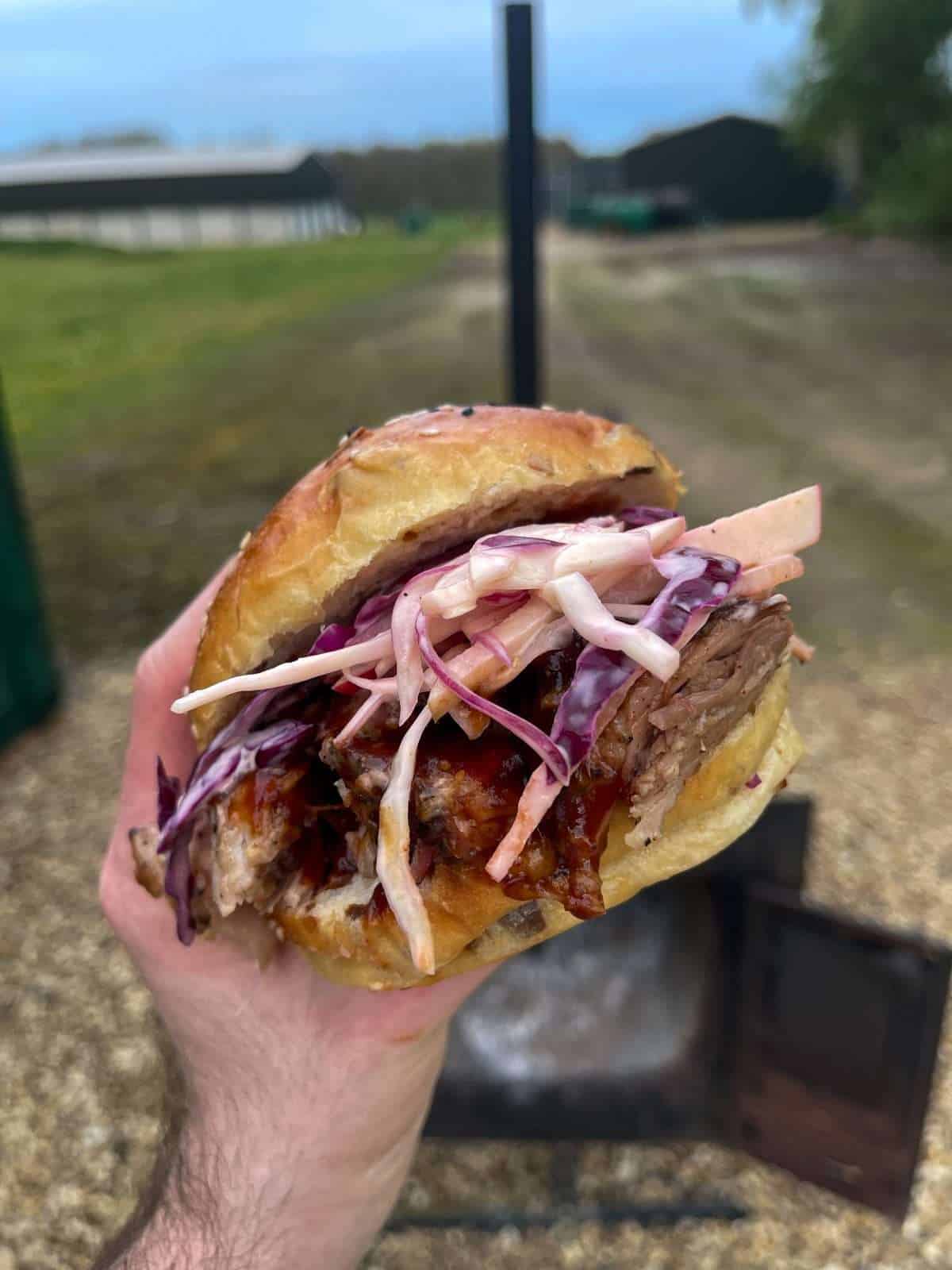
Pulled pork’s not just good in sandwiches, it also works great in mac & cheese, on top of pizzas, as a burger topping, on nachos, in quesadillas, as part of a salad and lots more. Though if you wanted to serve it in a sandwich, I’d suggest serving it with homemade slaw & BBQ sauce in a burger bun. Keeping things simple is best for pulled pork.
How To Store & Reheat Smoked Pulled Pork
Store any leftover pulled in an airtight container in the fridge for up to 3 days. If you have a vacuum sealer, sealing the pork will help extend its shelf life slightly. Alternatively, pulled pork can be stored in the freezer for up to 3 months but will need to be defrosted fully before reheating.
The best way to reheat pulled pork is to mix it up with a splash of barbecue sauce (or water), place in an ovenproof dish, cover with foil then bake in a 180°c/356°f oven until piping hot. This way, the pork won’t dry out. You can also reheat it on the stove by placing pork in a pan with some BBQ sauce, covering with a lid then warming over a medium heat until hot.
The pan method is best suited to one or two portions whereas baking is better for a larger amount of pork.
Smoked Pulled Pork Tips & Tricks
- Use a bone in pork shoulder – Cuts of meat with the bone left in are more flavourful & are ideal for low & slow cooks.
- Trim & score the fat – Trimming the fat on pork shoulder down to a quarter inch ensures that it will all render out during the cook. A thinner, scored layer of fat also helps the rub and smoke flavour the meat more thoroughly.
- Season well – A generous coating of rub is key for proper bark formation & flavour development. Fatty cuts of meat like pork shoulders can take a lot of seasoning so don’t be shy!
- Maintain a consistent temperature – One of the most important parts of cooking barbecue, is maintaining a consistent low temperature throughout the entire cook. Temperature fluctuations will affect how long the meat takes to cook & how well the bark forms.
- Leave to smoke undisturbed – As the saying goes, if you’re looking you ain’t cooking! Try to open your smoker as little as possible as this brings the temperature down, increasing the cook time.
- Spritz with apple juice – For smoked pork shoulders, I like to spray the meat with apple juice as the sugars in the juice help caramelise the bark as the meat smokes. Apple & pork is also a classic combination!
- Wrap in foil – Wrapping the pork in foil towards the end of the cook, helps it cook quicker & stay moist. In barbecue, this is known as the “Texas Crutch”.
- Use a digital food probe – When smoking meat, it’s important to be able to check the meat’s internal temperature. A good digital food probe like a Thermapen is a crucial bit of kit!
- Rest well – Once cooked, it’s best to rest the smoked pork for at least an hour before shredding. This lets the meat relax & the juices redistribute which makes the pork more tender & juicier once pulled.
Troubleshooting
Here are some common issues that can occur with pulled pork & how to avoid them. As smoking pork shoulder is a long, slow process even small mistakes can have an impact on the final result. This includes how long the pork takes to cook, the flavour of the meat & how tender it is.
Why Is My Pulled Pork Dry?
Pulled pork will be dry if it hasn’t been rested for long enough, as the juices won’t have had time to redistribute throughout the meat. To avoid dry pulled pork, make sure to let it rest for at least 1 hour before pulling.
My Smoked Pulled Pork Didn’t Develop A Proper Bark
Smoked pulled pork with poor bark formation will have been caused by spritzing the meat too often, poor airflow in the smoker or if the meat was wrapped too early.
To get the best bark on smoked meat, make sure to give it enough time to smoke before wrapping, don’t spritz too often (no more than once every 30 minutes) and make sure that your smoker is running at a consistent temperature whilst producing clean smoke.
Why Is My Pulled Pork Tough & Won’t Shred Properly?
If your pulled pork won’t shred properly, it wasn’t cooked enough then rested. Properly cooked & rested pulled pork will pull apart easily with little to no effort. If your pork feels tough or will only pull in chunks, it needs to be cooked for longer. Aim for an internal temperature of around 195°f-205°f (90°c/96°c) then rest for at least an hour.
Frequently Asked Questions
If you haven’t got a smoker, pulled pork can be cooked in an oven at 275°f/135°c, in a roasting tin. Leave the pork uncovered to begin with then wrap in foil if the pork starts to colour too much.
Apple, cherry & pecan wood smoke has a sweet & delicate fruity flavour, so works great with pork. For a slightly stronger flavour, oak would be another good choice. Or try experimenting with a mix of woods!
You don’t have to wrap smoked pork shoulder, it’s all down to personal preference. If you like a darker, crunchier bark, leave the pork unwrapped. If you’d prefer a softer bark & for the pork to cook quicker, wrap it in foil. Or if you’d like your pork somewhere in between, wrap it in butcher’s paper.
More BBQ & Smoked Meat Recipes To Try!
- Smoked Pulled Lamb Shawarma
- Brisket Style Smoked Pork Belly
- Smoked Ham Hocks
- Black Garlic Hanger Steaks
- BBQ Lamb Kofta Meatballs
- Irn Bru BBQ Sauce
- Cherry Cola Whiskey BBQ Sauce
Watch How To Make Smoked Pulled Pork
If you have enjoyed this pulled pork recipe, it would mean a lot if you could leave a review & rating. And if you’d like to stay up to date with future recipes, follow us on Instagram & TikTok or subscribe to our newsletter!
Smoked Pulled Pork
Equipment
- Barbecue/Smoker
- Digital Temperature Probe
- Spray Bottle
Ingredients
- 2.5 kg Pork Shoulder With The Bone Left In
Rub & Slather
- 30 g Fine Sea Salt
- 30 g Demerara Sugar
- 20 g Coarse Ground Black Pepper
- 1½ tsp Smoked Paprika
- 1 tsp Ground Cumin
- 1 tsp Garlic Granules
- ½ tsp English Mustard Powder
- ½ tsp Cayenne Pepper
- French's Mustard To Slather
To Spritz
- 100 ml Apple Juice
- 100 ml Cold Water
To Serve
- Burger Buns See Notes
- Slaw See Notes
- Barbecue Sauce See Notes
Instructions
Prepping The Pork
- Remove any skin/rind from the pork shoulder then trim the fat with a sharp knife so that it's a ¼" thick.
- Lightly score the fat in a criss-cross pattern then leave the pork uncovered in the fridge until ready to cook. I like to trim the pork the night before so that it's ready for the following morning.Make sure to only score the fat, don't cut all the way down to the meat!
Rub
- To make the rub, place the salt, sugar, pepper, paprika, cumin, garlic, mustard powder & cayenne pepper into a bowl then mix to combine.
- Next, rub a thin layer of French's mustard (or veg oil) all over the pork then cover completely with the rub. Place the pork back in the fridge & leave to sit for 30 minutes or so, whilst your smoker heats up. Alternatively, leave the pork in the fridge for several hours before smoking.
Smoking
- Light your smoker/barbecue & leave to preheat to 275°f/135°c. Make sure that your barbecue is set up for indirect cooking.
- Once up to temperature, place the pork shoulder fat side up in the barbecue then leave to cook undisturbed for 3 hours. Make sure to maintain a consistent barbecue temperature throughout the whole cook!
- In the meantime, add the apple juice & water into a spray bottle then set aside. We'll be using this to spritz the pork.
- After 3 hours have passed, continue cooking but spray the pork with the apple juice spritz every 45 minutes, until a decent bark has formed & the internal temperature is at least 165°f/74°c.
- Next, lay down a couple of sheets of foil, overlapping them slightly then place your pork shoulder in the middle. Give the pork a good spritz then wrap up tightly in the foil.
- Return the pork to the smoker (or into an oven) & continue cooking at 275°f/135°c until it is tender & probes like butter. The internal temperature of the pork will be between 195°f-205°f (90°c/96°c) once cooked.If you're cooking in an oven, place the wrapped pork into a roasting tin then pour in a thin layer amount of water. Once wrapped, the pork will need anywhere from 2-6 hours of cooking to become tender.
- Let the pork rest (still wrapped in the foil) for at least an hour then shred the meat by hand, discarding the bone (it should pull out clean). Mix the meat with any juices then serve!
Serving Suggestion
- Serve the pulled pork in buns with homemade barbecue sauce & slaw.Any leftover pork can be reheated with a splash of barbecue sauce (or water) in a 180°c/356°f oven.
Salt Butter Smoke Magazine
Love seasonal cooking?
Issue 001 features over 20 original autumn recipes, seasonal features, preserving guides and beautiful photography.
Take a Look Inside →Video
Notes
Enjoying This Recipe?
The Prep List is my free weekly newsletter with seasonal recipes, kitchen notes and behind-the-scenes from my kitchen. Add Salt Butter Smoke as a Google Preferred Source to see more of my recipes in Search.