Reverse Seared Fillet Steak
Learn how to reverse sear a fillet steak that’s perfectly tender & pink from edge-to-edge. Includes exact temperatures & timings for steakhouse quality results at home.
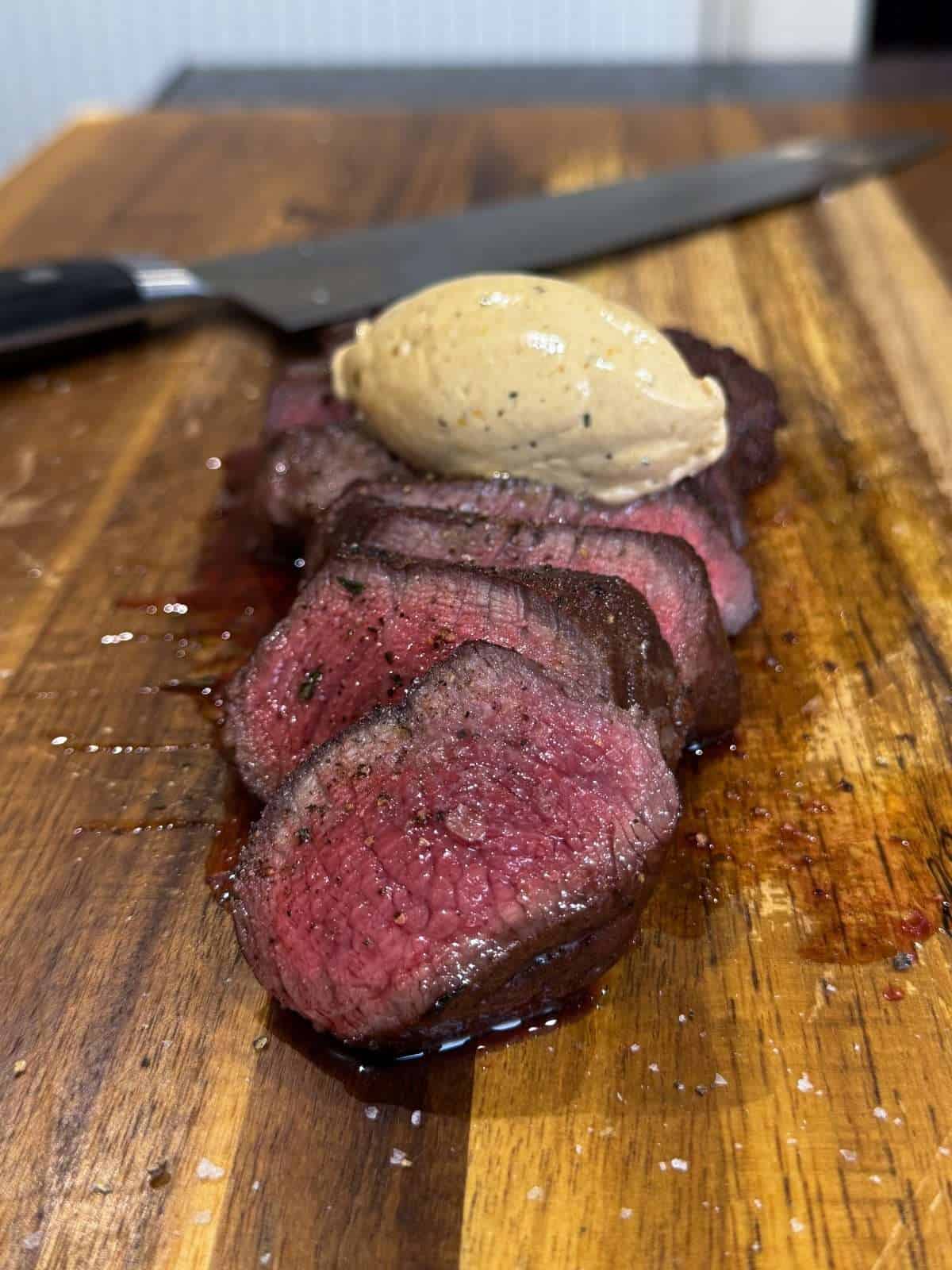
Reverse searing takes the risk out of cooking an expensive fillet steak. This method gives you incredibly tender meat that’s perfectly pink from edge to edge with a deep, well seared crust that’s crucial for flavour. We’re cooking to temperature, not time so there’s no guesswork, just restaurant quality steak at home!
Fillet is one of the most premium cuts of steak you can buy so getting it right is key. By slowly bringing the internal temperature of the beef up to your ideal doneness first before finishing with a hard sear, you get complete control over how it’s cooked whilst getting the best, caramelised crust. It’s all about the Maillard reaction! For extra beefiness, I served mine with my roasted bone marrow butter!
For sides to serve with your steak, check out our ever growing collection of side dish recipes! There’s lots to choose from here, from triple cooked chips, to salads, homemade breads & lots more…
Why This Method Works
- Evenly Cooked Meat
Reversing searing guarantees meat that’s pink all over, with no grey band of overcooked steak at the edges. - Complete Control Over Doneness
As we’re cooking to temperature, you cook your steak exactly how you like it! - Maximum Flavour
Reverse seared steak can be seared over a higher heat, which maximises the Maillard reaction & gives the meat a deeper, more flavourful crust. - Foolproof Steak
As the steaks cooks more slowly, there’s less room for error. Checking the internal temperature means that you know exactly how your steak is cooked.
Ingredients For Reverse Seared Fillet Steak
- Fillet Steaks – For reverse searing, you’ll need to use thick-cut steaks that are at least an inch thick. I used 8 ounce steaks but this method works with larger cuts of steak as well.
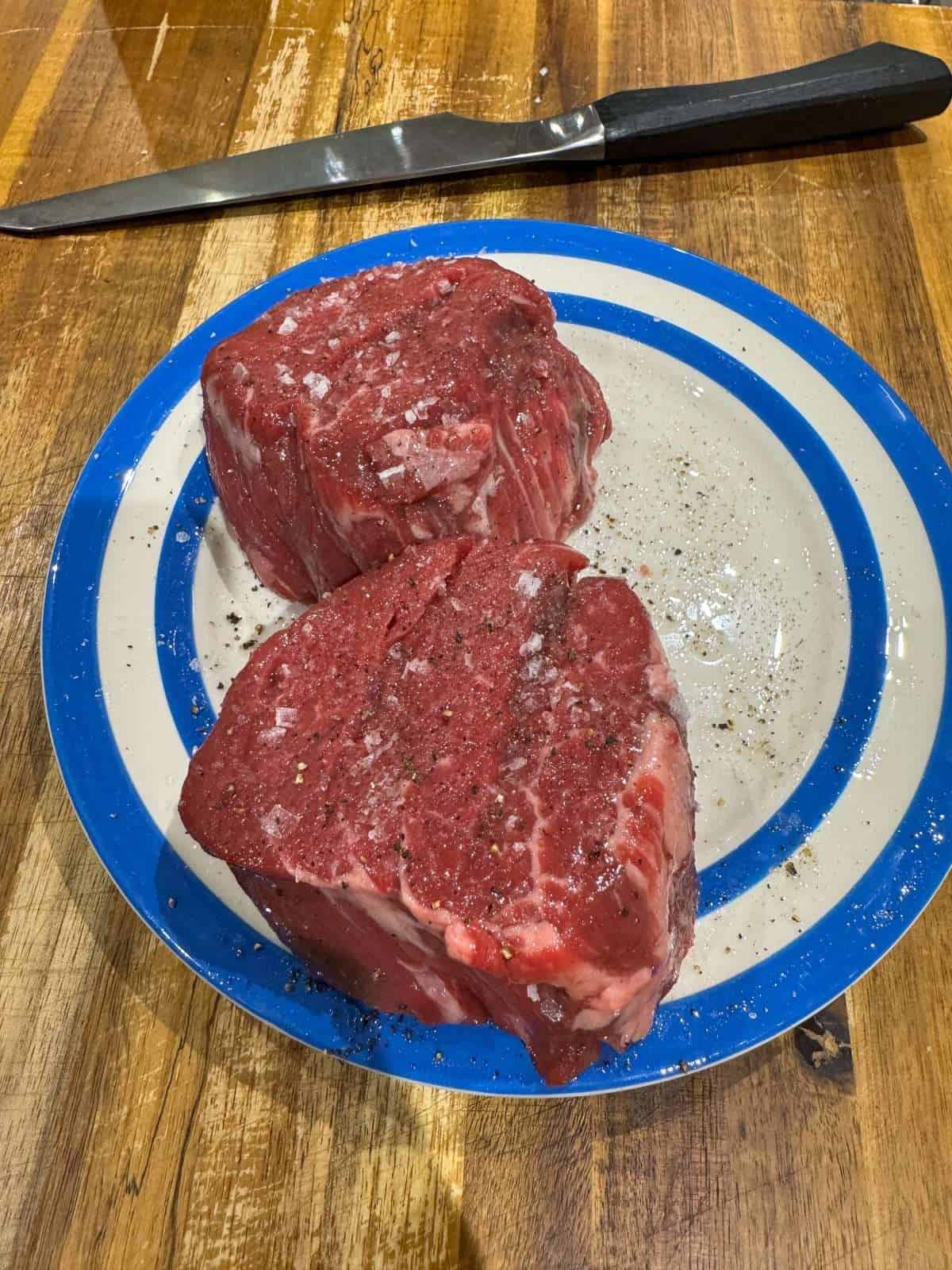
- Salt & Pepper – Used to season the steaks before & after cooking. Use table salt to season the raw steaks & sea salt to finish once cooked. Use freshly cracked black pepper for both.
- Oil – You’ll need a small amount of veg oil to sear the steaks (or any oil with a high smoke point).
- Butter – Adding butter into the pan when searing the steaks helps give them a richer, deeply browned crust. This is optional though.
- Garlic & Herbs – Adding fresh garlic, rosemary & thyme in with the butter adds extra flavour.

How To Reverse Sear Fillet Steak
Reverse searing is the best way to cook a steak when you want it to be perfectly pink from edge to edge! This method takes slightly longer to cook the steak than just pan frying them but the results speak for themselves. Steaks cooked by reverse searing are more tender & as they’re cooked more slowly, there’s less chance of the meat becoming overcooked.
For those new to reverse searing, this is where steak (or larger joints of meat) is cooked at a low temperature; either in an oven or barbecue until it reaches your desired doneness then it’s seared in a smoking hot pan to finish. This is why it’s called reverse searing, because the steak is seared at the end rather than at the beginning.
Reverse Searing Step By Step
1. Seasoning The Steak
First, take the steaks out of the fridge, season them generously with salt & pepper then let them sit at room temperature for 30 minutes. This is called tempering the steak & helps it cook more evenly. In the meantime, preheat an oven to 120°c/250°f.
2. Cooking To Temperature
To cook the steaks, place them onto a wire rack set inside a roasting tin then cook gently until it reaches our desired doneness. It’s best to flip the steaks over every 10 minutes or so, which also helps with even cooking.
I like to cook my fillet steak medium rare, so I aim for a final internal temperature of 54°c/130°f once cooked. You’ll need to take the steak out of the oven a couple degrees lower than this as the internal temperature will continue to rise after the steaks are taken out of the oven. Feel free to cook your steaks however you like though. There’s a full doneness/temperature guide below.
3. Searing
Once cooked, let the steaks rest for 5 minutes or so, whilst you heat a frying pan up over a high heat, until it is smoking hot (this is key!). Using a cast iron skillet would be even better!
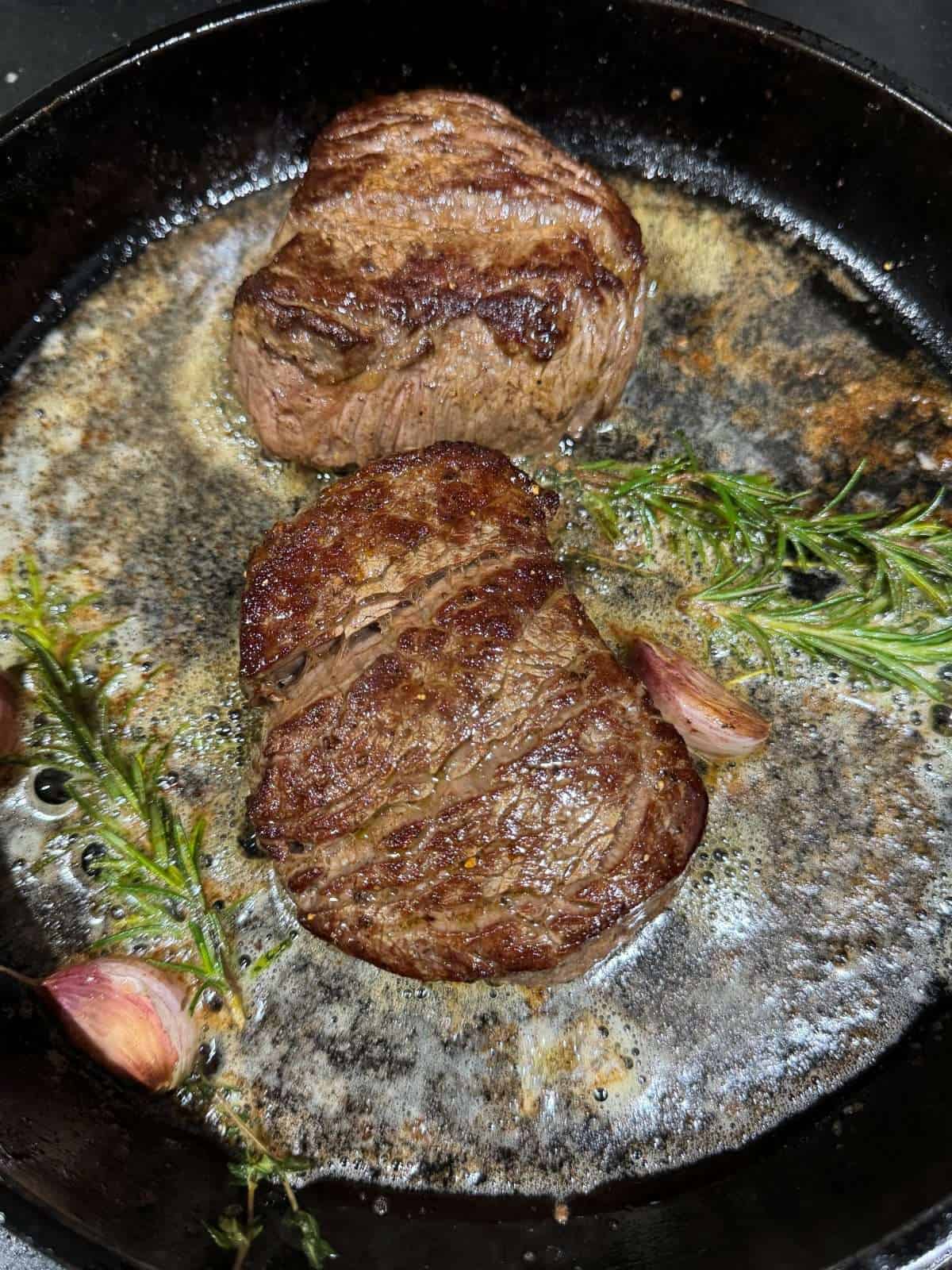
Next, add a small amount of veg oil into the pan then sear the steaks for 1 – 1½ minutes on each side, flipping them over every 30 seconds. It’s important to get your pan really hot before searing so that the steaks get a proper sear. And using a high smoke point oil means that we can get the oil hotter.
I like to throw some butter, garlic & herbs into the pan after I’ve flipped the steak over once, to add flavour and to help with browning. This is optional though!
Slicing
Once cooked, there’s no need to rest the steaks. All you need to do is slice the meat against the grain then season with sea salt & freshly cracked black pepper.
Steak Internal Temperature Guide
Fillet steak contains very little fat so is best cooked either rare or medium but feel free to cook your’s however you like! You’ll need a digital food probe to check the steak’s internal temperature but these are readily available online. I use a Thermapen.
| Steak Doneness | Internal Temperature (To Stop Cooking) | Internal Temperature (After Resting) |
|---|---|---|
| Rare | 46°c/115°f | 48°c/120°f |
| Medium Rare | 52°c/125°f | 54°c/130°f |
| Medium | 58°c/136°f | 60°c/140°f |
| Medium Well | 63°c/145°f | 65°c/150°f |
| Well Done | 68°c/154°f | 70°c/158°f |
Pro Tips For Perfectly Cooked Fillet Steaks
- Use Thick Cut Steaks
Reverse searing works best with steaks that are at least an inch thick. - Cook From Room Temperature
Let your steak sit at room temperature for at least 30 minutes before cooking. This is called tempering the steak & helps it cook more evenly. - Use A Digital Food Probe
To cook your steak perfectly, use a digital food probe to check the meat’s internal temperature. - Sear In A Smoking Hot Pan
For the best sear, get your pan smoking hot. Make sure to flip the steaks every 30 seconds to get an even. - Slice Against The Grain
When slicing your steak, make sure to cut against the grain to make each slice as tender as possible.
Troubleshooting Reverse Seared Steak
Here’s some common issues people face when cooking steak at home and how to avoid them.
There’s A Grey Band Around The Edge
With reverse seared steak, this can happen if your pan wasn’t hot enough when you seared the steak. To avoid a grey band of meat around the edge, get your pan smoking hot before adding in the steak and turn it every 30 seconds to get an even sear.
My Steak Didn’t Sear Properly
If your steak has a pale crust, your pan wasn’t hot enough to sear it properly. To avoid this, make sure to let your pan & oil heat up for at least 2 minutes.
My Steak Is Cold
If your steak is cold, you either let it rest for too long before searing or let it sit for too long once sliced. Reverse seared fillet steak will only need to rest for 5 minutes before being seared & should be sliced & served straight after being seared.
My Steak Is Tough
If your fillet steak is tough, it’s either been over cooked or sliced with grain. As fillet is a lean cut of steak it’s best cooked rare or medium rare.
Serving Suggestions
Fillet steak goes really well with flavoured butters, classic steak sauces (like peppercorn & Béarnaise), and other sides such as chips, salad, roasted veg, homemade bread & lots more! I served mine with some of my roasted bone marrow & marmite butter. We’ve got loads of really good sides to choose from over in our side dish collection.
Frequently Asked Questions
Fillet steak will roughly take between 25-45 minutes to reverse sear, depending on the thickness of the meat. However, it’s best to cook to cook to temperature, not time so it’s best to check the steak’s internal temperature to avoid overcooking it!
To reverse sear steak in an Aga, cook the steak in the simmering oven on the second from bottom set of runners. Sear the steak on the boiling plate.
Reverse seared steaks don’t really need to rest because they’ve been cooked at such a low temperature. However, I like to give my steaks a quick 5 minute rest just before searing which gives us time to get our pan smoking hot.
Fillet steaks need to be sliced against the grain, to be as tender as possible. The grain runs the same way as the visible muscle fibres & cutting across them, shortens them making each slice more tender.
Fillet steak is a lean cut of beef so is best cooked either rare or medium rare. There’s very little fat in a fillet steak so cooking beyond medium rare can make it dry out.
Although it is possible to reverse sear steak without a food probe, you’ll get the results if you do use one as you’ll be able to accurately measure the internal temperature instead of relying on feel.
More Dinner Recipes To Try!
- Black Garlic Hanger Steaks
- BBQ Lamb Kofta Meatballs
- Beef Wellington
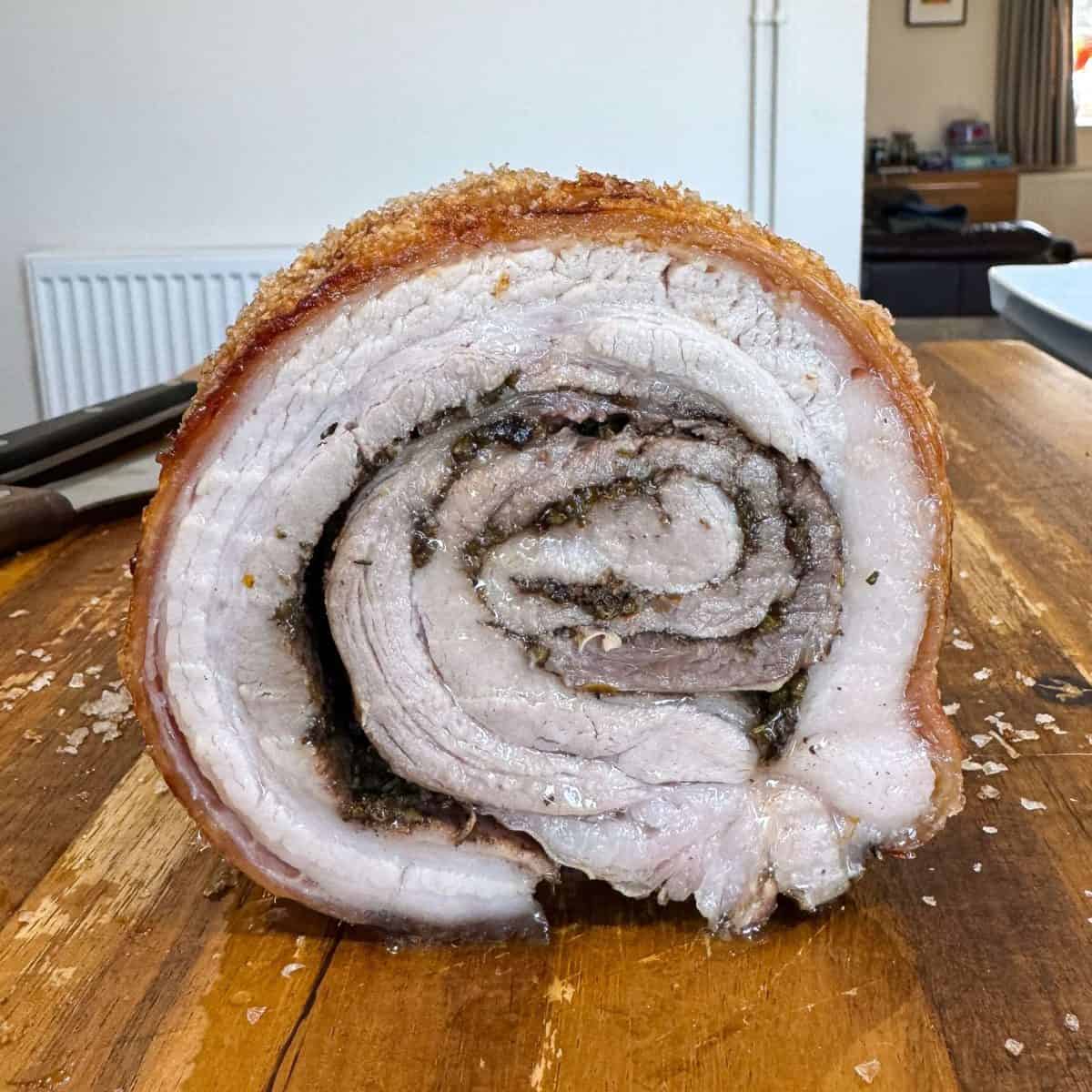
- Nduja Stuffed Porchetta
- Tex Mex Chicken Thighs
- Crispy Sriracha & Peanut Chicken Wings
If you have enjoyed this recipe for reverse seared fillet steak, it would mean a lot if you could leave a review & rating. And if you’d like to stay up to date with future recipes, follow us on Instagram & TikTok or subscribe to our newsletter!
Reverse Seared Fillet Steak
Equipment
- Roasting Tin With Rack
- Large Frying Pan
- Digital Food Probe
Ingredients
- 2 8 oz Fillet Steaks (At Least 1 Inch Thick – See Notes)
- 1 tbsp Vegetable Oil
- 50 g Butter
- 4 Garlic Cloves
- 6 Sprigs Rosemary
- 6 Sprigs Thyme
Instructions
- First, take your steaks out of the fridge & season the outside generously with table salt & freshly cracked black pepper. Place the steaks onto a rack set inside a roasting tin then leave to sit at room temperature for at least 30 minutes.
- In the meantime, preheat an oven to 120°c/100°c fan (250°f/212°f).
- Next, place the steaks into the preheated oven then cook until the internal temperature in the centre of each steak reaches 52°c/125°f. Make sure to flip the steaks over every 10 minutes or so. Total cooking time will be around 30 minutes, depending on the thickness of your steaks.This internal temperature is for medium rare steaks. If you'd prefer a different cooking method, there's a temperature guide in the post above.
- Once cooked, let your steaks rest for 5 minutes. In the meantime, set a large frying pan over a high heat. Add in a tablespoon of vegetable oil then leave to get smoking hot.
- Next, add the steaks into the pan then cook for 1 – 1½ minutes on each side, until well seared. Flip the steaks over every 30 seconds & add in the butter, garlic & herbs after the first turn. Give the steaks a baste with the butter as they sear.Make sure to give the sides a quick sear as well!
- Once seared, transfer the steaks to a chopping board then slice against the grain. Season with sea salt & freshly cracked black pepper to finish.
Salt Butter Smoke Magazine
Food that’s made for sharing.
The Christmas 2026 issue features 30 festive recipes, Christmas cooking guides, beautiful food photography and features on everything from the perfect cheeseboard to the art of trifle.
Discover the Christmas Issue →Notes
Enjoying This Recipe?
The Prep List is my free weekly newsletter with seasonal recipes, kitchen notes and behind-the-scenes from my kitchen. Add Salt Butter Smoke as a Google Preferred Source to see more of my recipes in Search.