Classic Tomato & Basil Sauce
An easy tomato & basil sauce that’s perfect for pizza and pasta. This recipe uses good quality ingredients & there’s some handy tips included for making a perfectly balanced sauce that’s full of flavour.
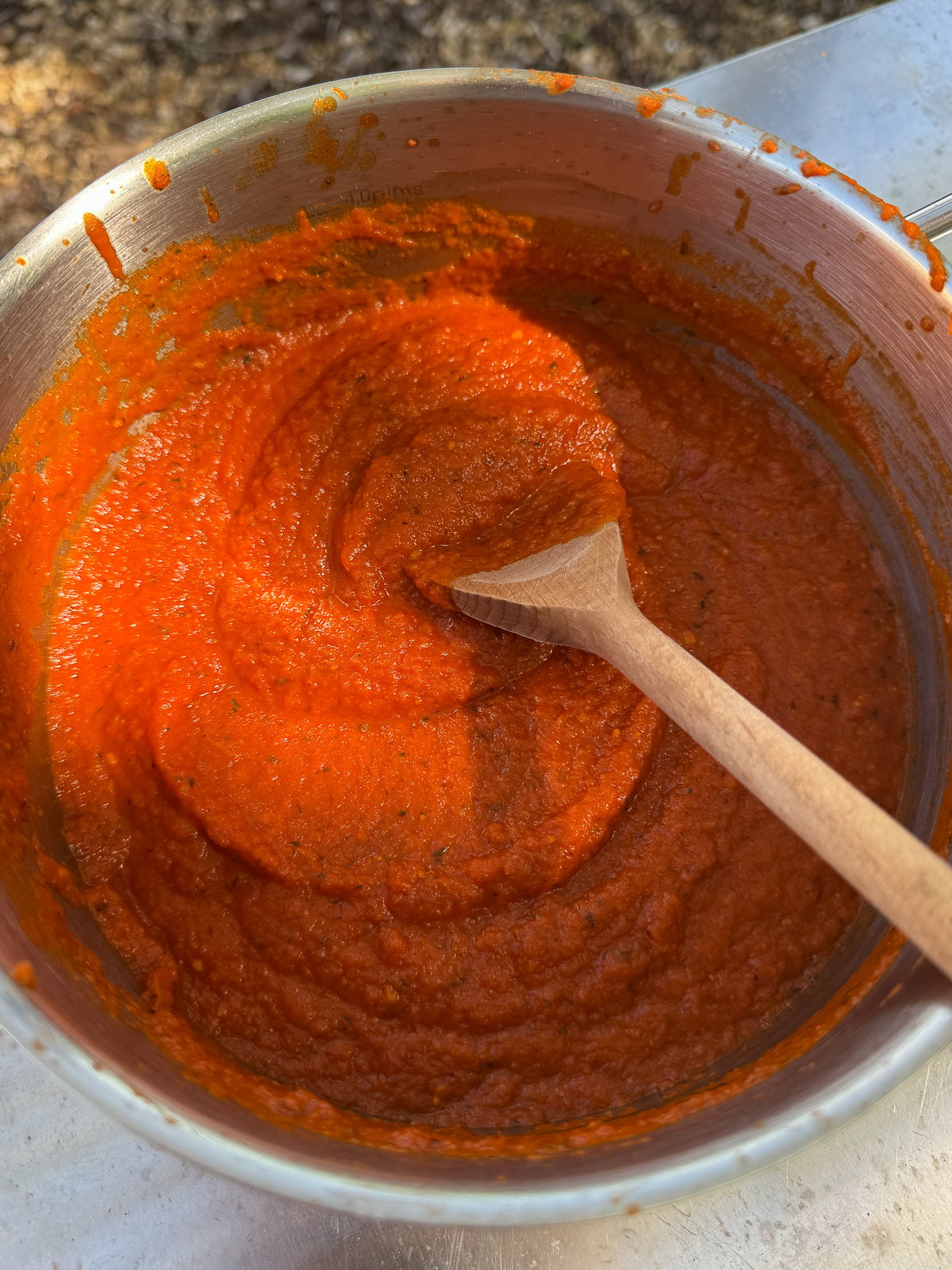
This homemade tomato sauce is flavoured with fresh basil & has a rich, well balanced flavour and a thick, luxurious texture. It’s incredibly easy to make & is perfect for pizza bases and as a pasta sauce.
The key when making tomato sauce is to use the best quality tinned tomatoes you can get your hands on, plus a few other ingredients that help balance out the acidity & add flavour. We’re talking good quality vinegar, fresh basil, a parmesan rind & plenty of garlic.
This is a cooked pizza sauce, so it needs a gentle simmer on the stove but it’s super to simple to make & you only need a few ingredients. You can make a batch in less than an hour so it’s ideal for midweek meals but can also be made ahead of time then stored in a fridge or freezer.
For more side dishes & sauces, take a look at our collection of sides! There’s lots to choose from here, from homemade chips, to cornbread, slaws, pickles & loads more. For pizza doughs to use this sauce with, check out our pizza recipe collection.
Why You’ll Love This Homemade Tomato Sauce
- It’s Quick & Easy To Make
Homemade tomato sauce is super easy to make & takes less than 30 minutes to cook on the stove. - Uses Pantry Staples
This sauce uses ingredients that you’ll probably have in your cupboard already. - Thick & Smooth
A slow simmer & a quick blend produces a sauce that has a smooth, thick texture. - Can Be Made Ahead Of Time
Tomato sauce is perfect for making in advance & can be stored in the fridge for up to 3 days or in the freezer for 3 months.
Ingredients For Tomato Pasta & Pizza Sauce
- Tomatoes – Good quality tinned tomatoes work best for this tomato sauce. This could be plum tomatoes, chopped tomatoes or San Marzano tomatoes.
- Basil – We’re adding fresh basil into our sauce. For maximum flavour, we’re using both the leaves & stalks.
- Onions – Yellow onions are the classic choice for tomato sauce. If you’re in the UK, these are often called brown onions. White onions will also work.
- Garlic – Fresh garlic adds the best flavour to homemade tomato sauce. I added in enough to add a subtle garlic flavour to complement the tomatoes. Feel free to add in as much as you like though, if you want your sauce to be extra garlicky!
- Olive Oil – Using olive oil in tomato sauce gives it a smoother texture and richer flavour that balances out the acidity from the tomatoes.
- Parmesan Rind – Adding parmesan rind to your sauce is optional but adds a savoury, umami flavour which helps balance out the acidity.
- Sugar – A small amount of sugar also helps balance out the acidity from the tomatoes. The aim isn’t to make the sauce sweet, you’ll only need to add in a tiny amount.
- Vinegar – Vinegar balances out & enhances the flavours in our sauce. I use two types of vinegar in my tomato sauce, white wine vinegar which is added in at the beginning and balsamic vinegar which is added at the end.
- Oregano – Dried oregano is added for a more peppery, savoury flavour compared to fresh.
How To Make Tomato & Basil Sauce
The key to making a really good tomato sauce is to cook it slowly over a gentle heat for at least 20 minutes until it turns a deep red colour & no longer tastes acidic. Other than it’s super straight forward. Just make sure to season throughout & give the sauce a taste to make sure it’s cooked properly & the flavours are balanced.
1. Onion & Garlic Base
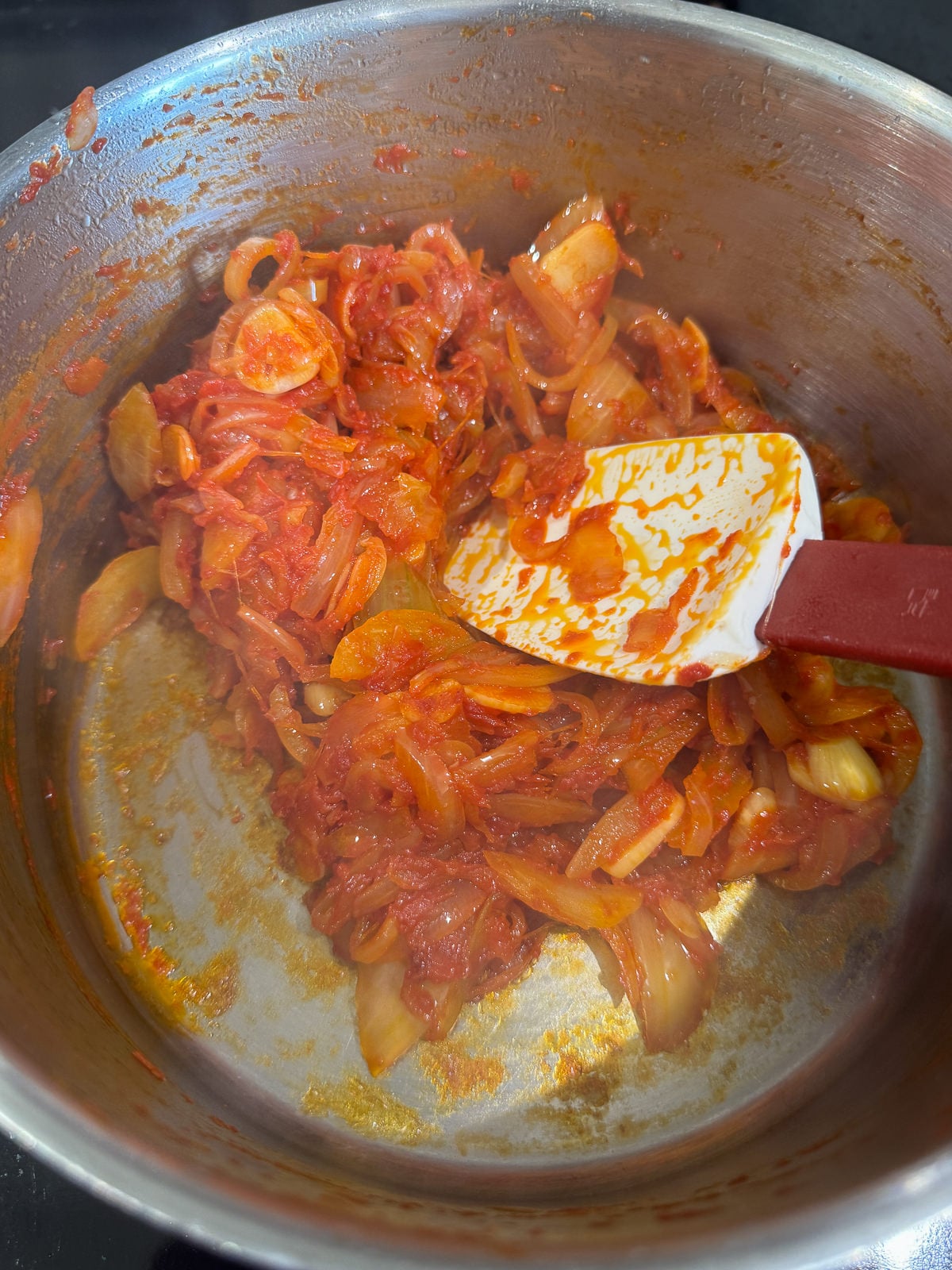
The first step when making tomato sauce is to cook thinly sliced onions in a generous amount of olive oil until they’re soft & translucent (without colour). This will take 5-10 minutes then once they’re cooked, sliced garlic is added in then cooked for another minute.
2. Caramelise Tomato Paste
Once the onions & garlic are cooked, we add tomato paste into the pan then cook for around 5 minutes, until it turns a deep red colour. This step caramelises the tomato paste, giving it a richer, deeper flavour.
3. Add Tomatoes & Simmer
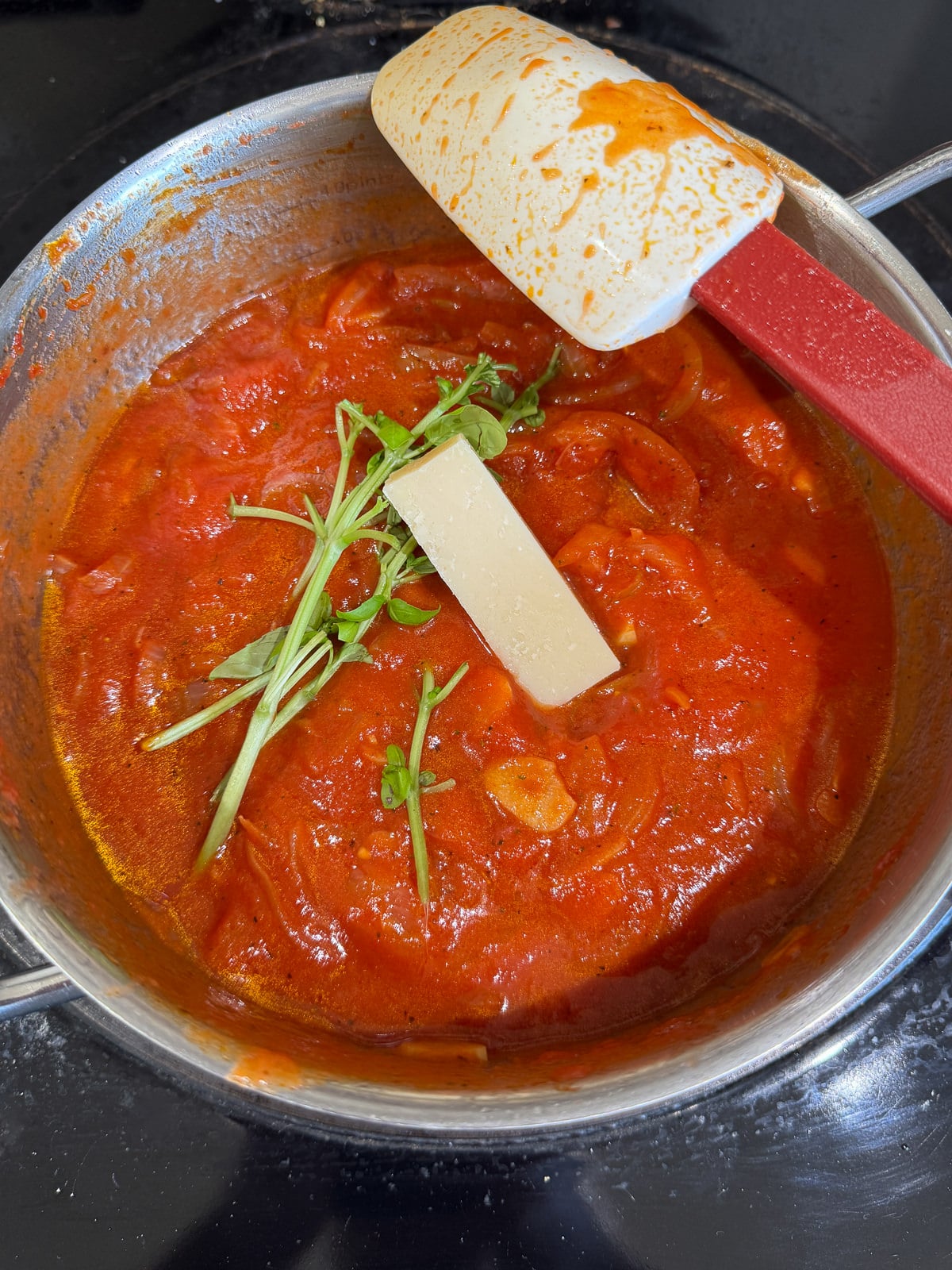
Now that the base is cooked, we can add in the tinned tomatoes, dried oregano, vinegar & sugar. To get the any remaining tomatoes out of the tins, we rinse them out with cold water then pour into the sauce.
The next step is to add basil stalks & a parmesan rind into the sauce then simmer it gently over a low heat for around 20 minutes, until it turns a deep red colour & no longer tastes bitter.
4. Blend, Season & Balance Acidity
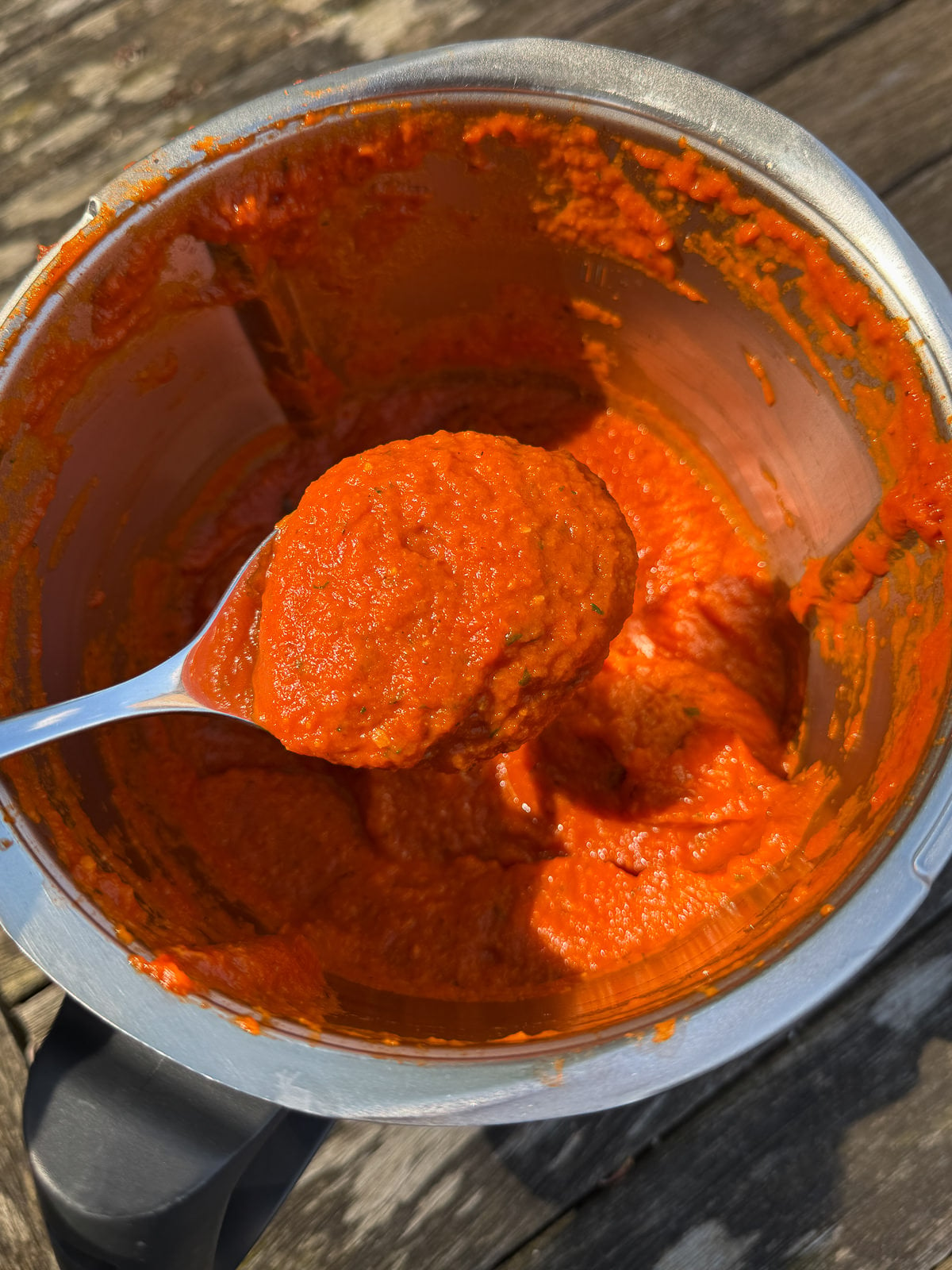
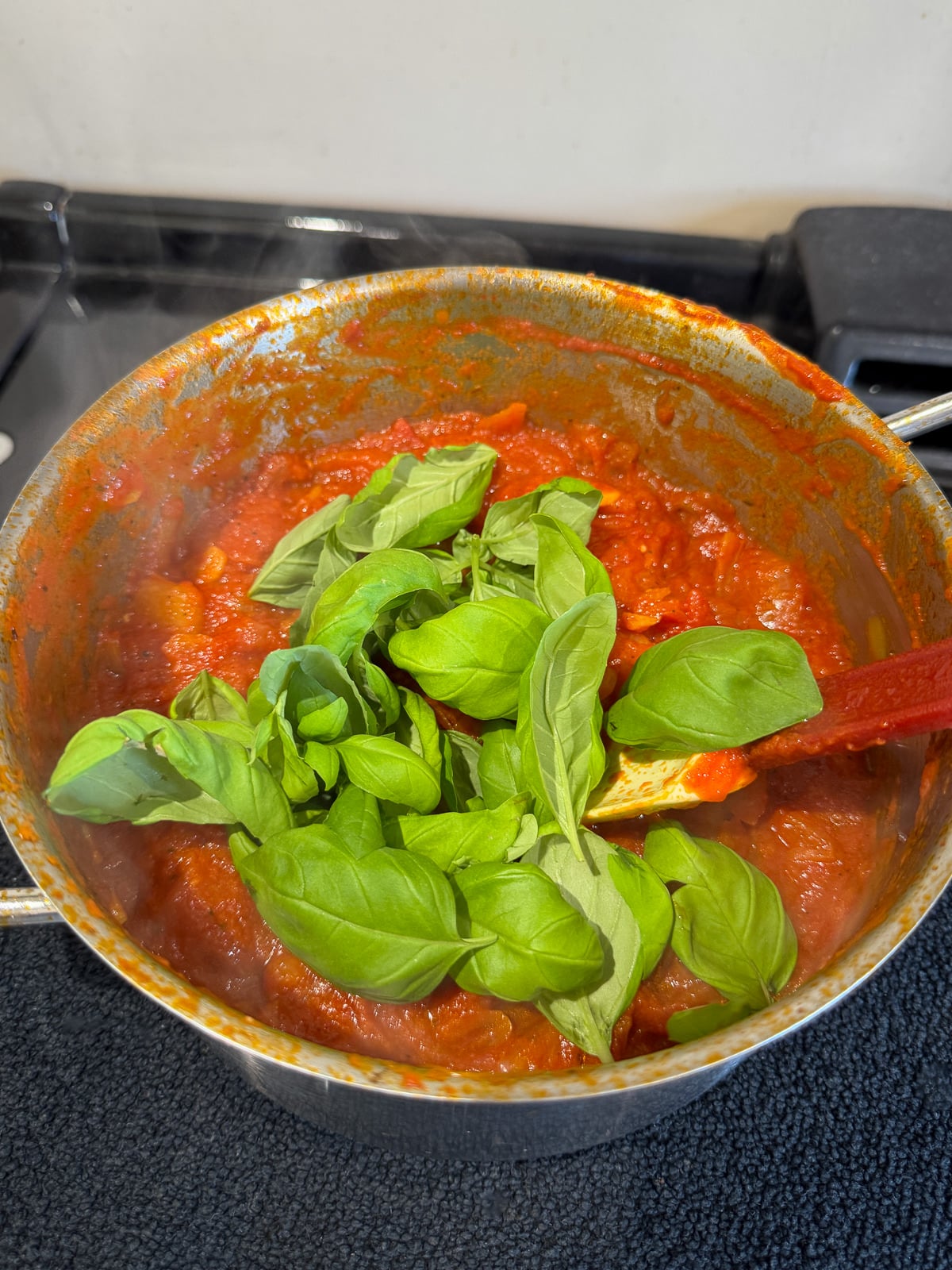
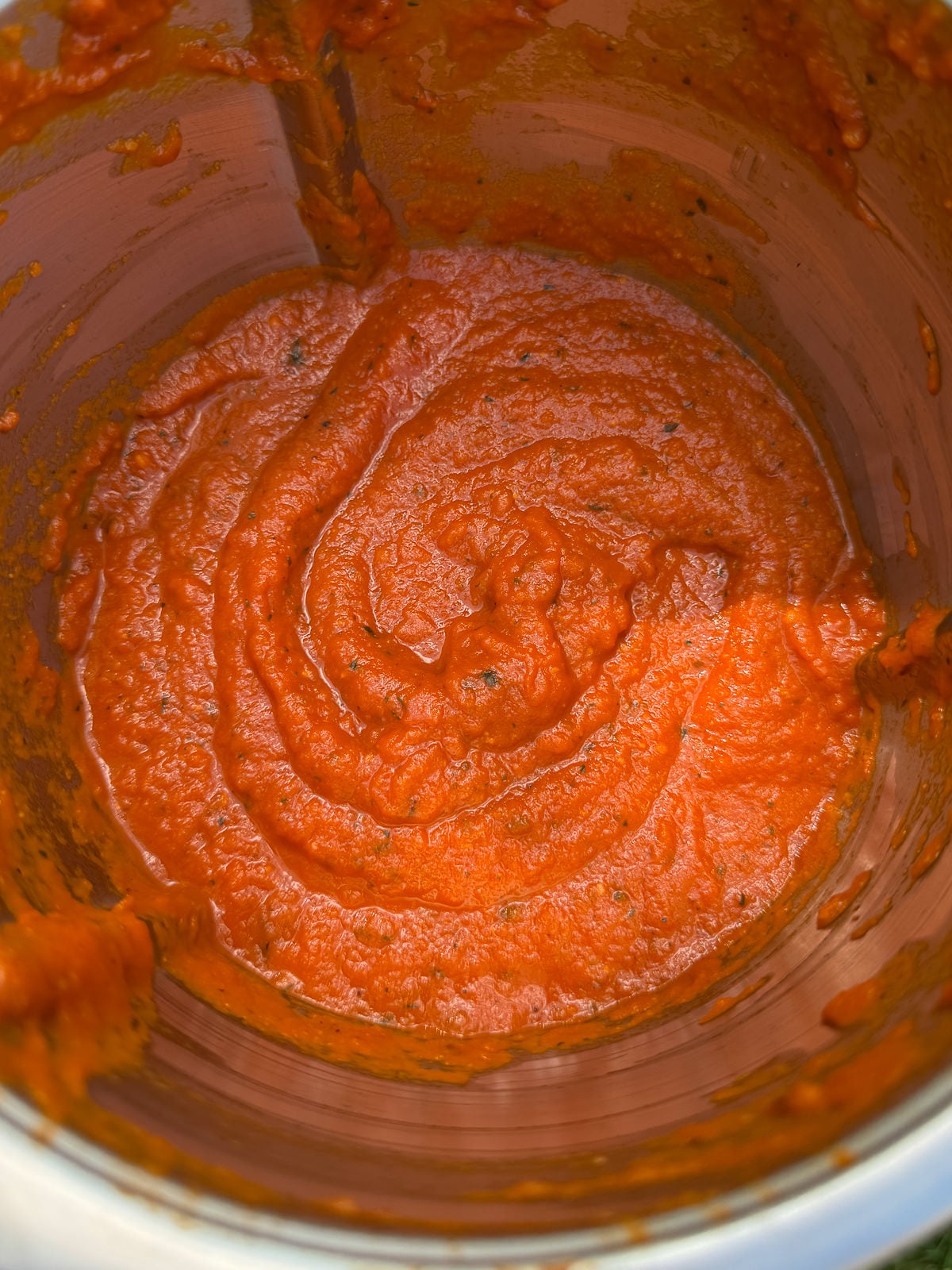
Once the sauce is cooked, take the pan off the heat then carefully remove the basil stalks & any un melted parmesan rind. Add balsamic vinegar & fresh basil leaves into the sauce then once slightly wilted, blend smooth with a stick or jug blender (don’t over blend though or your sauce will turn orange!).
Season the sauce to taste with salt & pepper to finish. If you think the sauce needs more sweetness to balance out any acidity, add another splash of balsamic vinegar in now as well.
Serving Suggestions
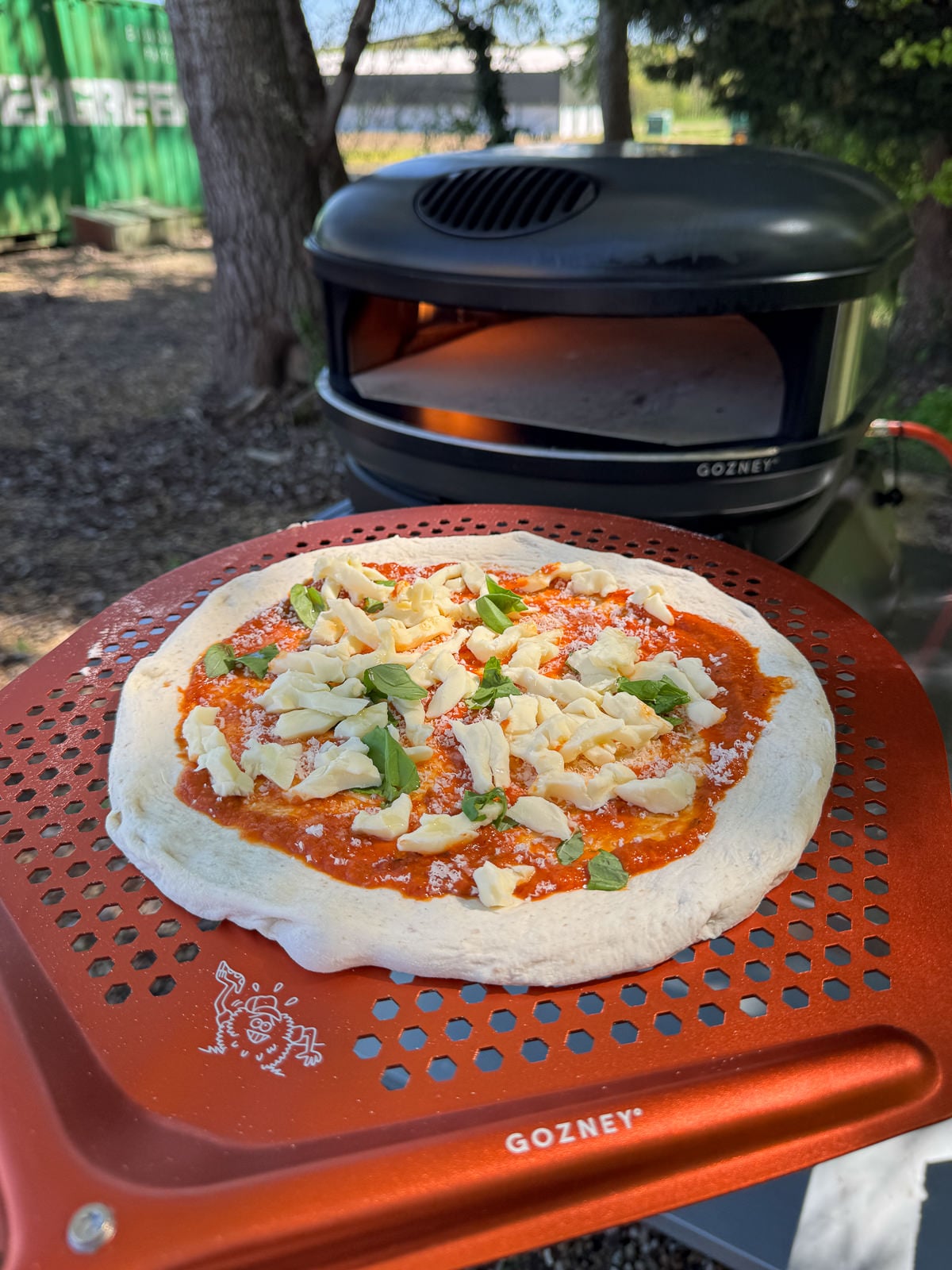
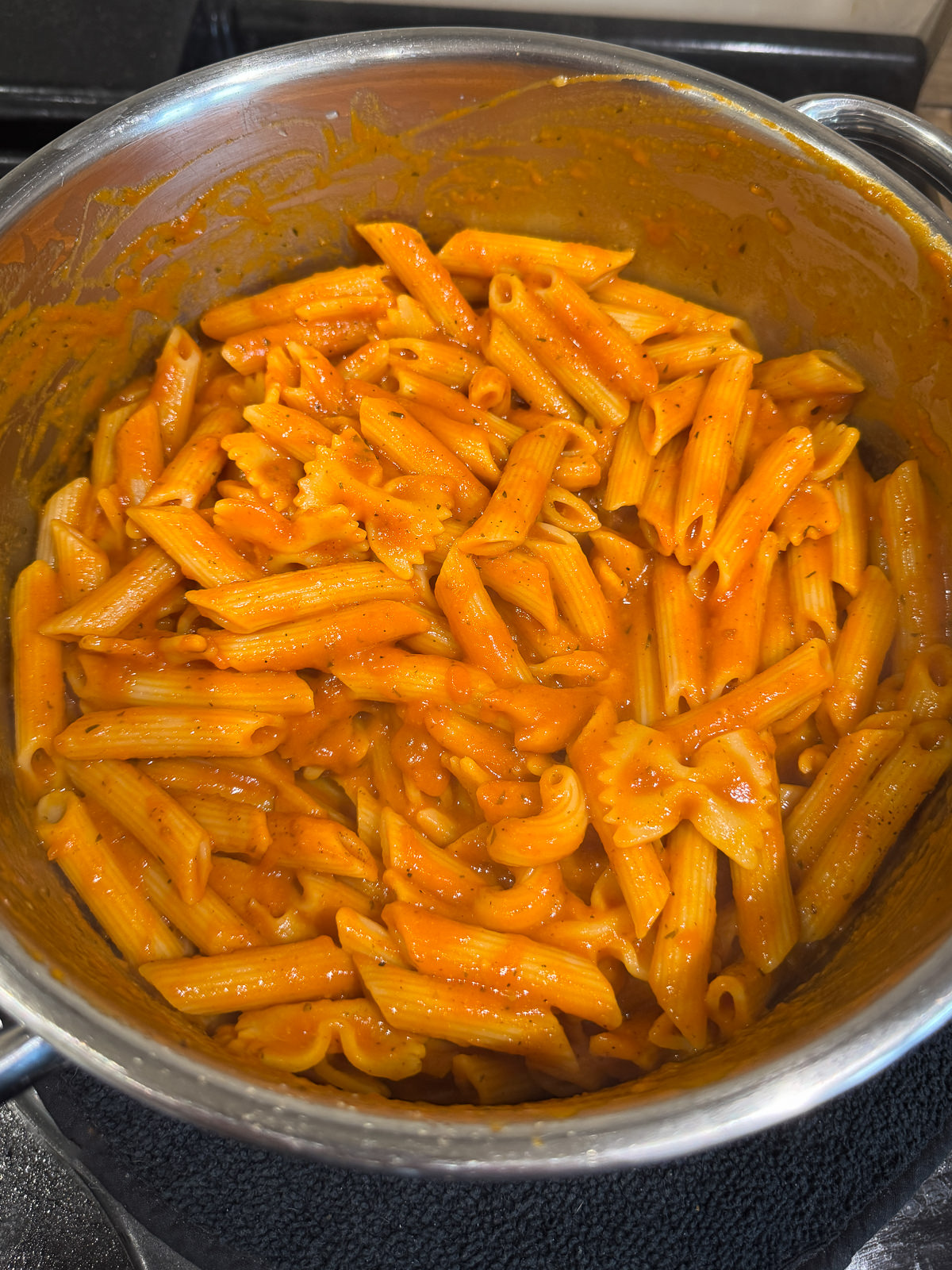
This tomato sauce has been designed so that it can be used for both pizza sauce and as a pasta sauce. If you use it for pizzas, it can be used straight from the fridge. Take a look at our pizza dough recipes for some different crusts to use with this sauce!
If you use it as a pasta sauce, I’d recommend warming it up gently in a pan then when you add the pasta in, add some pasta water in as well, to adjust the consistency so that it coats the pasta nicely. This sauce can also be used to make creamy tomato pasta, to do this simply add some double cream into the sauce as you warm it up.

Tomato Sauce Tips & Tricks
- Use Good Quality Tomatoes
Good quality tinned tomatoes have the best flavour, so use the best you can get! I used Mutti tomatoes. - Simmer Gently
For a deeper flavour, it’s key to gently cook the sauce until it’s thick with a deep red colour. - Add Basil In At The Right Time
Fresh basil is perfect for tomato sauce & adds a sweet, peppery flavour. It’s key to add the leaves in at the very end, to prevent them from turning bitter. - Add In Parmesan Rind
If you’ve got parmesan to hand, add the rind into your sauce as it cooks. This gives tomato sauce a deeper, savoury flavour. - Don’t Over Blend
Tomato sauce will turn orange (instead of deep red) if it’s been blended for too long, so it’s best to stop blending as soon as the texture is smooth.
Frequently Asked Questions
To cook tomato sauce on an Aga, cook on the simmering plate. If you don’t want to cook the sauce on the stove, you could cook it in the simmering oven instead. The sauce will take around an hour to cook this way.
For tomato sauce, good quality tinned tomatoes are ideal as they have the best flavour. This could be plum tomatoes, chopped tomatoes or San Marzano tomatoes.
Fresh basil leaves should be added into tomato sauce just as it finishes cooking. This gives the tomato sauce a fresh, sweet, mildly peppery flavour instead of bitter & wilted. Fresh basil stalks are full of flavour as well & these can be added earlier on in the cooking process, to let the flavour infuse. Make sure to take them out before blending though!
Tomato sauce will turn orange if it was blended for too long, as the added air will lighten the colour of the sauce. Don’t worry if this happens, your tomato sauce will still taste great!
Homemade tomato sauce needs to be stored in the fridge and is best eaten within 3 days of being made. Tomato sauce can also be frozen & will keep in the freezer for up to 3 months. It’s best to defrost the sauce fully before reheating.
More Sides & Sauces To Try!
- Burnt Peach & Bourbon BBQ Sauce
- Cheesy Garlic Bread Baguettes
- Nacho Cheese Sauce
- Barbecue Baked Beans
- Duck Fat Oven Chips
- Rice Krispie Fried Mozzarella Sticks With Hot Honey
If you have enjoyed this recipe for tomato & basil sauce, it would mean a lot if you could leave a review & rating. And if you’d like to stay up to date with future recipes, follow us on Instagram & TikTok or subscribe to our newsletter!
Classic Tomato & Basil Sauce (For Pizza & Pasta)
Equipment
- Large Saucepan
- Blender
Ingredients
- 2 Yellow Onions (Or Brown/White Onions – See Notes)
- 6 Garlic Cloves
- 3 tbsp Olive Oil
- 100 g Tomato Paste
- 1 tsp Dried Oregano
- 800 g Tinned Tomatoes (See Notes)
- 25 g Fresh Basil
- 1 tbsp White Wine Vinegar
- 1 tsp Caster Sugar
- Parmesan Rind (Optional – See Notes)
- 2 tsp Balsamic Vinegar
Instructions
- Peel the onions & garlic then slice thinly. Set the garlic to one side for now.
- Next, set a large saucepan over a medium heat, add in the olive oil then leave to heat up for a minute. Add in the sliced onions & a good pinch of sea salt then cook, stirring regularly until the onions are soft and translucent. This will take 5-10 minutes & the onions shouldn't take on any colour.
- Whilst the onions are cooking, pick the basil leaves from the stalks. Set the leaves & stalks to one side, keeping them separate.
- Once the onions are cooked, add in the sliced garlic & cook for another minute. Then add in the tomato paste & continue cooking for another 4-5 minutes, until the tomato paste has turned a deep red colour. Make sure to stir frequently.
- Next, add the tinned tomatoes, oregano, vinegar & sugar into the pan. Fill each empty tomato tin up ⅓ full with water. Use this water to rinse the tins out then stir it into the sauce.
- Turn the heat down slightly to medium-low, add in the basil stalks & parmesan rind then lightly season the sauce with salt & pepper.
- Bring the sauce to a gentle simmer then cook, stirring regularly until the sauce has thickened, has turned a deep red & the tomatoes no longer taste bitter. This step will take around 20-30 minutes.If you're using tinned whole tomatoes, crush them with a wooden spoon as the sauce cooks.
- Once cooked, take the pan off the heat then remove the basil stalks & any of the parmesan rind that's left (if there's any).
- Stir in the balsamic vinegar & basil leaves then let stand for 1 minutes so they can wilt.
- To finish the sauce, give it a quick blend with a stick blender or jug blender then season with salt & pepper as needed. Use straight away or transfer to a container, leave to cool down then store in the fridge.
Salt Butter Smoke Magazine
Food that’s made for sharing.
The Christmas 2026 issue features 30 festive recipes, Christmas cooking guides, beautiful food photography and features on everything from the perfect cheeseboard to the art of trifle.
Discover the Christmas Issue →Notes
Enjoying This Recipe?
The Prep List is my free weekly newsletter with seasonal recipes, kitchen notes and behind-the-scenes from my kitchen. Add Salt Butter Smoke as a Google Preferred Source to see more of my recipes in Search.