Marmalade Christmas Cake
Marmalade Christmas cake is a twist on the classic festive fruit cake. This version is flavoured with marmalade and orange liqueur then baked traybake style, for a more refined look.
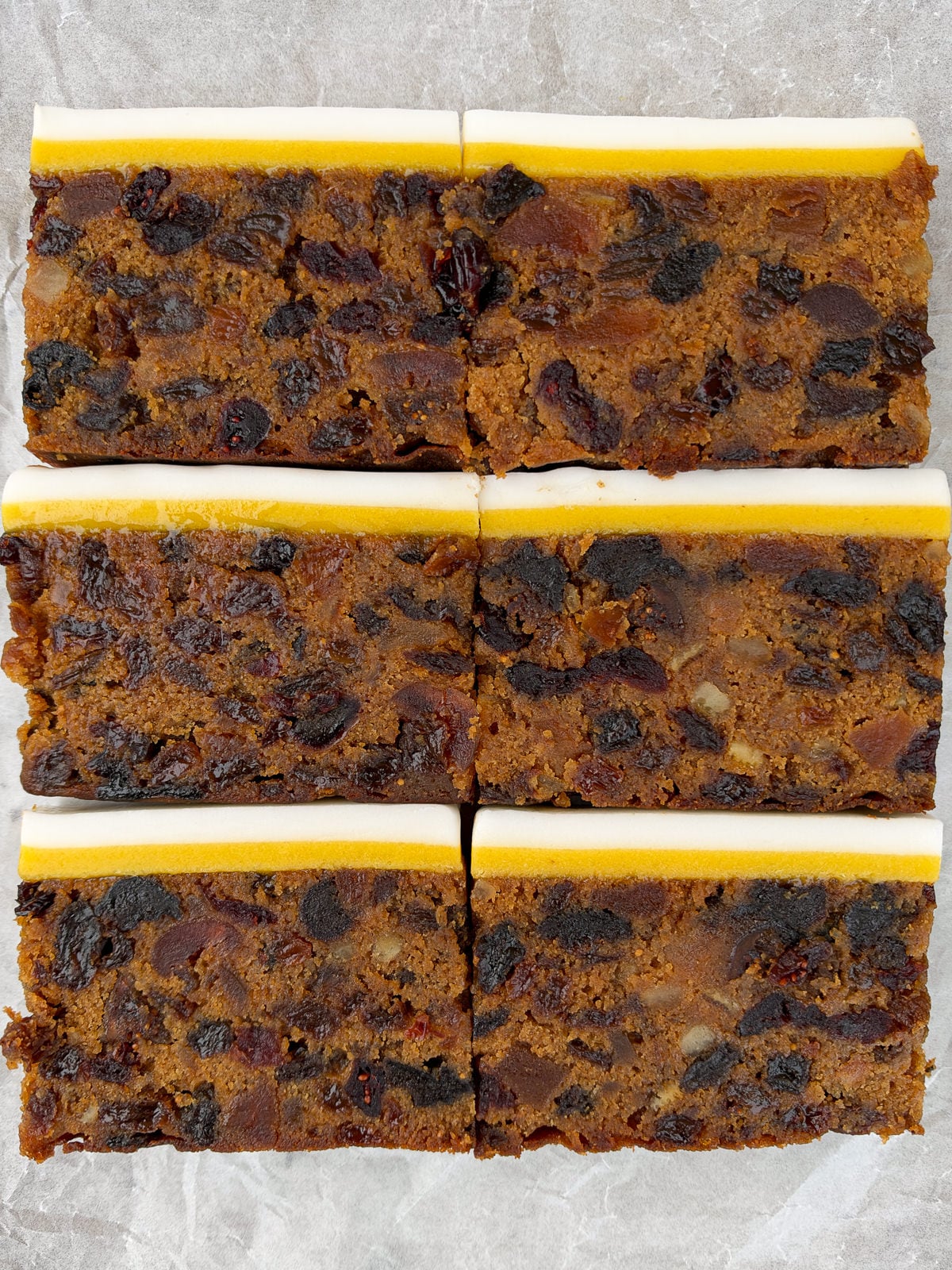
Christmas cake is one of my favourite festive bakes and this one is baked traybake style then finished with a neat layer of almond marzipan and white fondant icing, for a simple yet refined presentation. I’ve flavoured this fruit cake with sharp orange marmalade, warming festive spices, rich brown sugar, a whole load of dried fruit and a generous amount of orange liqueur. Though you can use brandy if you’d prefer.
This recipe covers everything that you’ll need to make an impressive Christmas cake from scratch. From soaking the fruit for the ideal amount of time, baking low and slow, how to feed and mature your cake during the lead up to Christmas and an easy way to finish your cake with marzipan and fondant icing. Plus I’ll be sharing my favourite way to serve this festive fruit cake too.
For more festive bakes, take a look at our Christmas baking recipes. Here you’ll find plenty of mince pie variations, classic stollen, festive cookies and lots more.
Ingredients For Marmalade Christmas Cake
- Dried Fruit – You can use pretty much whatever mix or ratio of dried fruit that you like for this Christmas cake, as long as the total weight is the same as the recipe. I used a mix of raisins, sultanas, dried cranberries, dried pears, apricots, dried figs, dates and glacé cherries. Plus some candied peel as well.
- Liqueur – As this fruit cake is flavoured with marmalade, I used Grand Marnier (orange liqueur) for soaking and feeding mine. Traditional brandy or amaretto would work great too.
- Marmalade – This orange preserve works fantastically with the flavours of a spiced Christmas cake. Any shop bought or homemade orange marmalade will work.
- Spices – I kept things traditional with the spices and used ground cinnamon, allspice and nutmeg. Plus some stem ginger, for a stronger flavour.
- Butter – You’ll need to use unsalted butter for the cake batter, as we’ll be adding salt in as well.
- Sugar – You’ll need dark brown sugar and black treacle for the batter, for the richest flavour. Light brown sugar will work instead of dark brown.
- Eggs – This recipe uses large eggs. These should weigh around 50 grams each out of the shell.
- Flour – We’re using plain flour as we’ll be adding baking powder in ourself. You get a better rise this way, though Christmas cake only needs a tiny amount of baking powder as it’s meant to be quite dense.
- Ground Almonds – Adding almonds adds flavour and moisture to this fruit cake. I like to add a splash of almond extract too, for some extra flavour.
- Baking Powder – Fruit cakes don’t need a lot of baking powder, as they’re meant to be fairly dense and squidgy. For a cake this size, we’re using 1 tsp.
- Salt – The batter for this cake is seasoned with fine table salt, as it mixes in more evenly.
- Zests – Fresh orange and lemon add another layer of flavour to this fruit cake. You’ll need one of each.
- Marzipan and Fondant Icing – The classic way to finish a Christmas cake is with marzipan (almond paste) and white fondant icing. You can get both of these from the supermarket during the festive period.
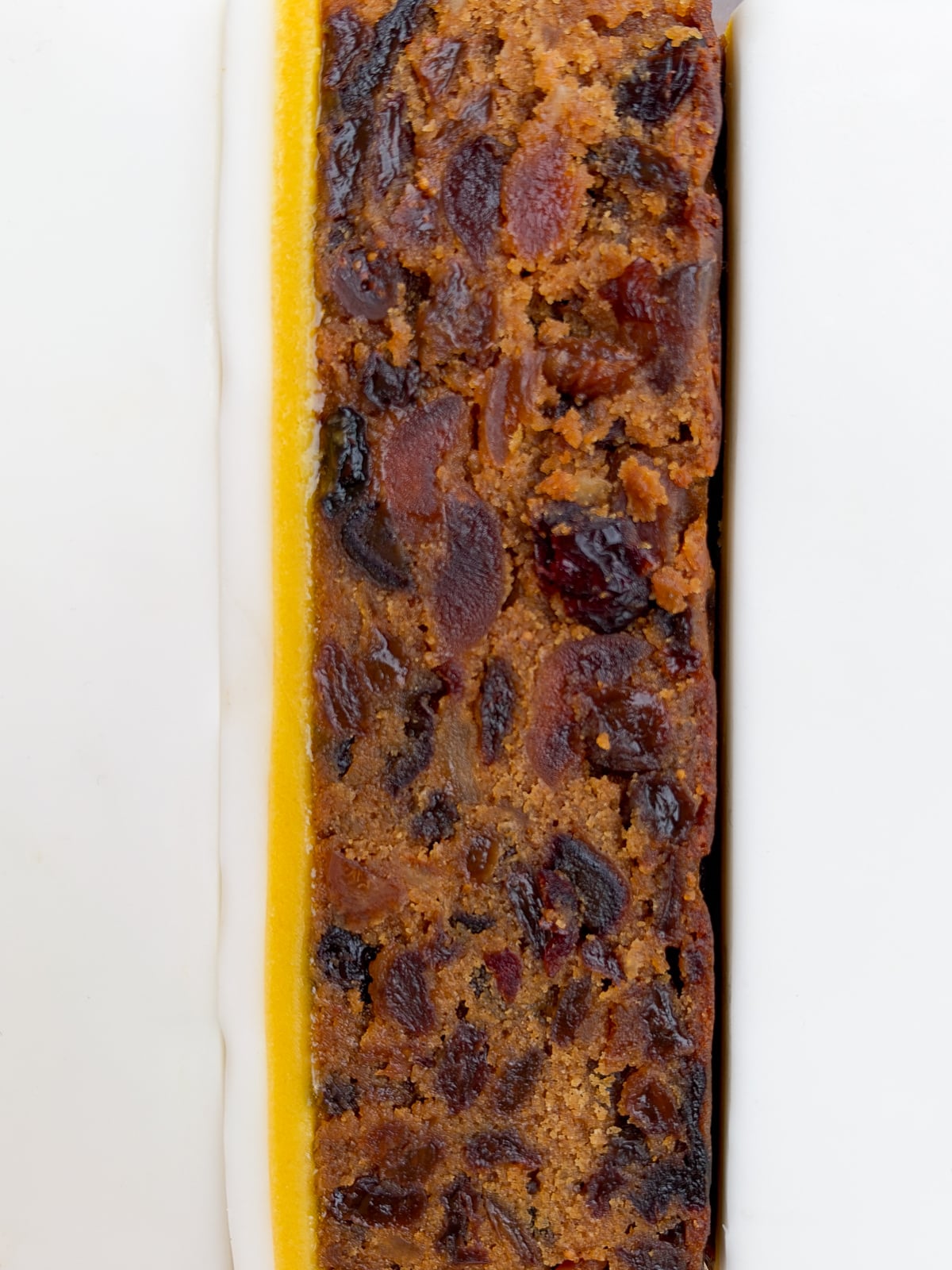
How To Make A Marmalade Christmas Cake
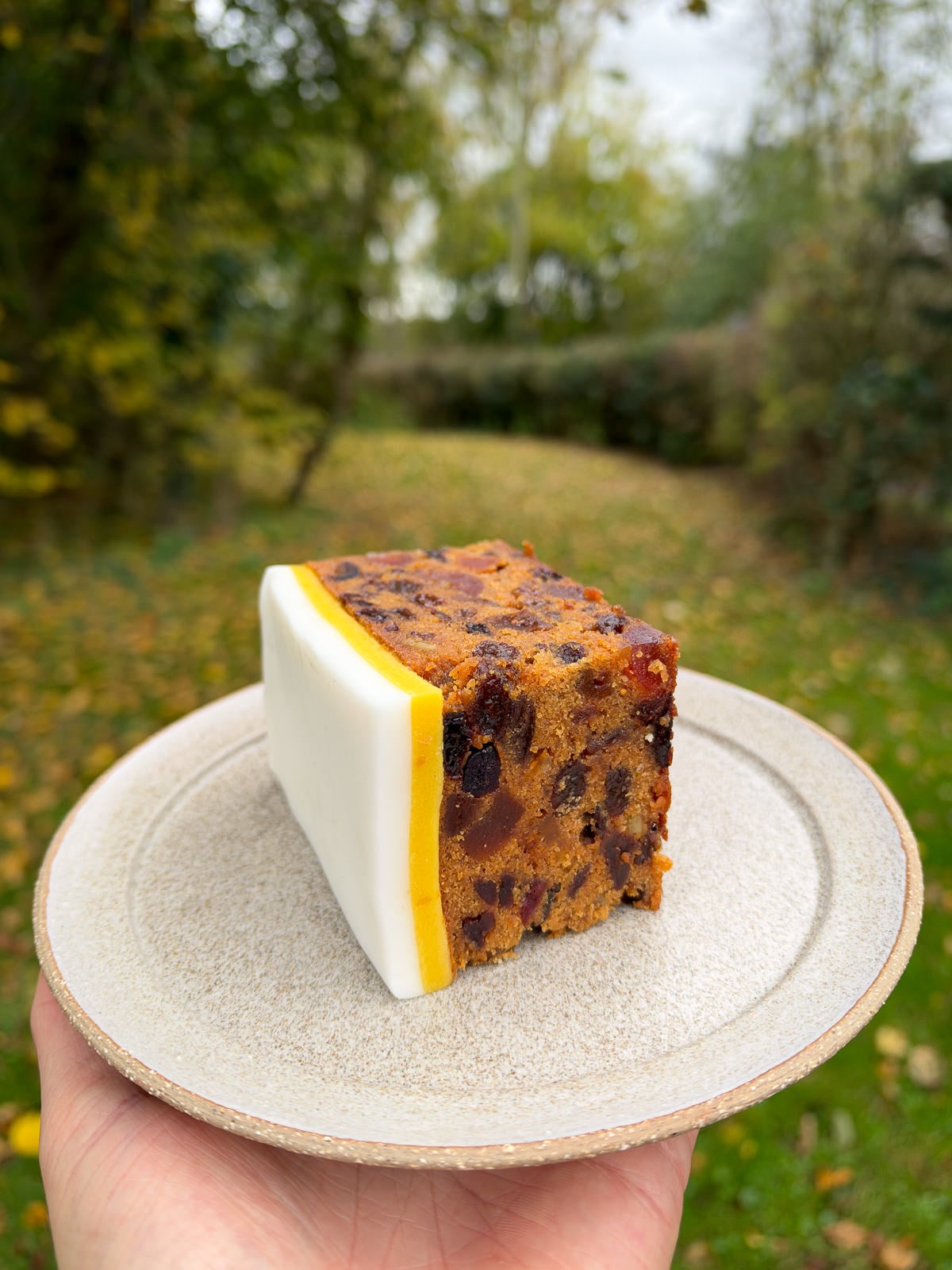
This Christmas cake is made like a traditional one, the only difference is that this one is baked in a 9″x13″ baking tin instead of a round tin. As a rectangular cake isn’t quite as deep as a round one, this Christmas cake will take around 3 hours to cook instead of 4-5. The rest of the process is still the same.
1. Liqueur Soaked Fruit
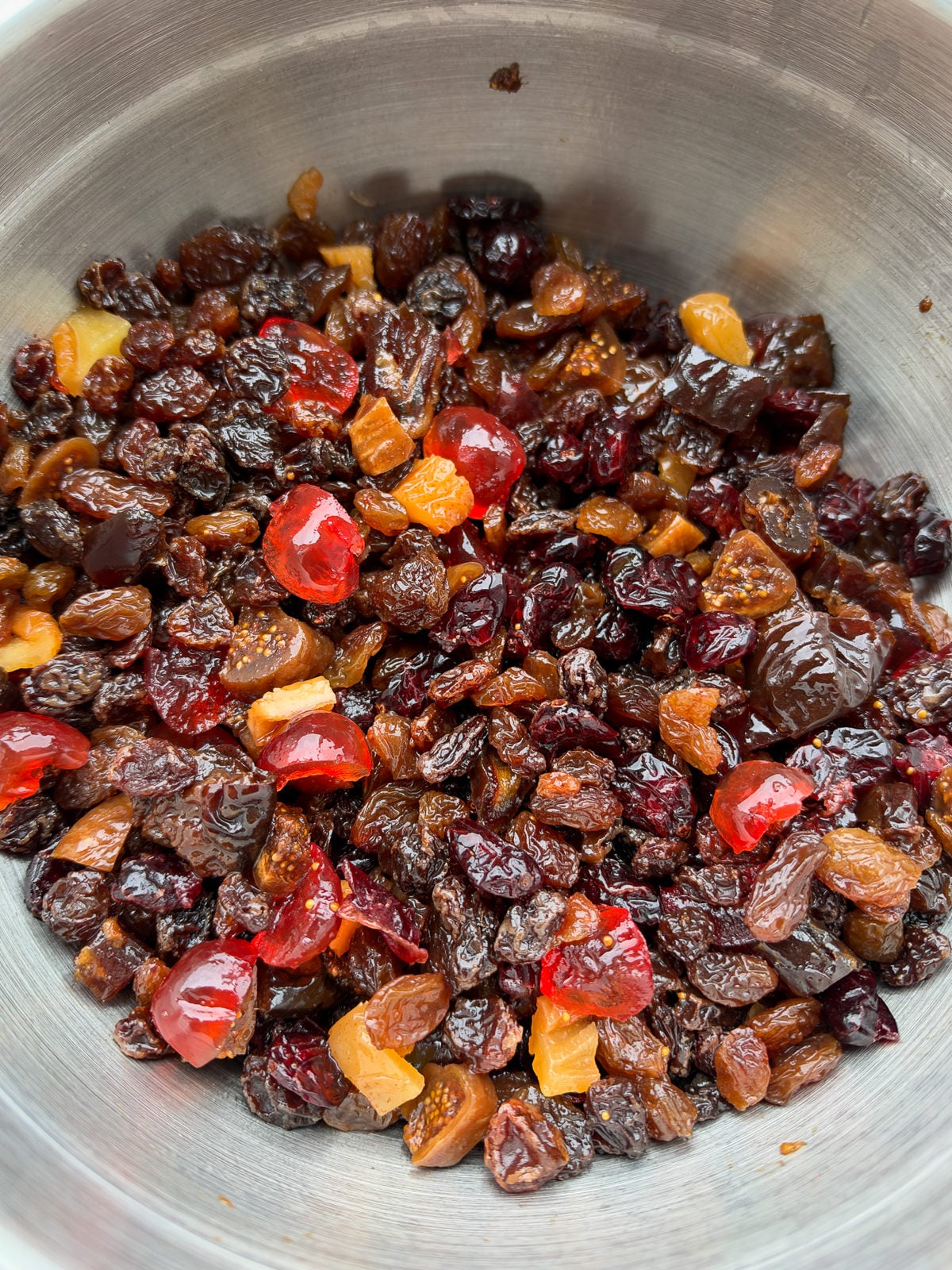
Like any Christmas cake, this one starts by soaking the dried fruit in alcohol. Any larger dried fruits (like apricots, figs, etc) will need chopping into smaller pieces, a similar size to the raisins and sultanas.
Once you’ve added all of your fruit into a bowl, you stir in your alcohol of choice (I use Grand Marnier!), cover then leave to soak overnight. Your fruit needs to absorb all of this alcohol, to avoid adding extra moisture to the cake batter so it’s best to let the fruit soak for at least 12 hours.
2. Cake Batter
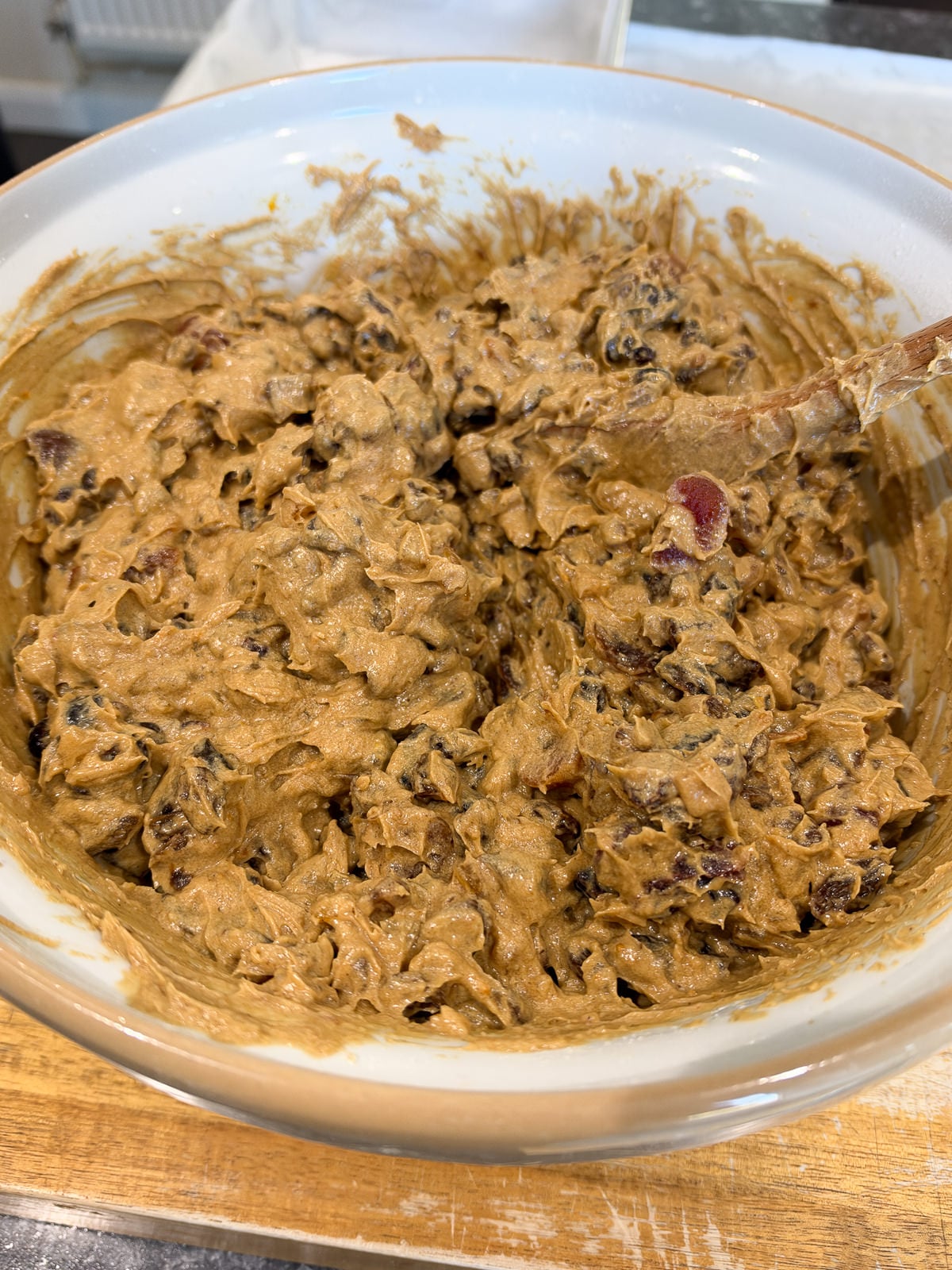
As this Christmas cake is baked in a 9″x13″ tin, it does need quite a lot of batter. Because of this, you’ll need a big bowl to mix it in. I had planned to use a stand mixer for this but settled with a wooden spoon and some elbow grease! Though you can use an electric hand mixer if you like.
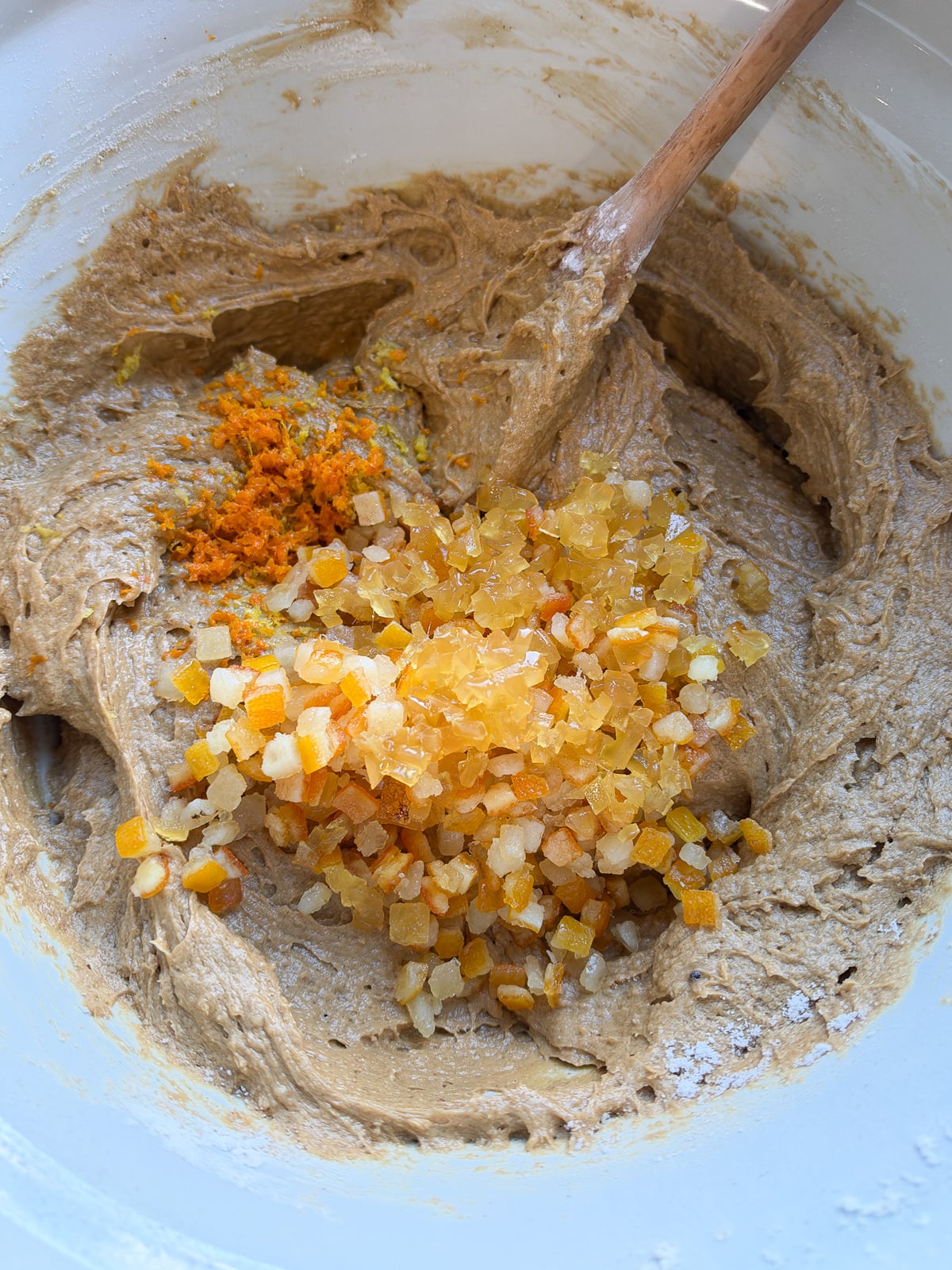
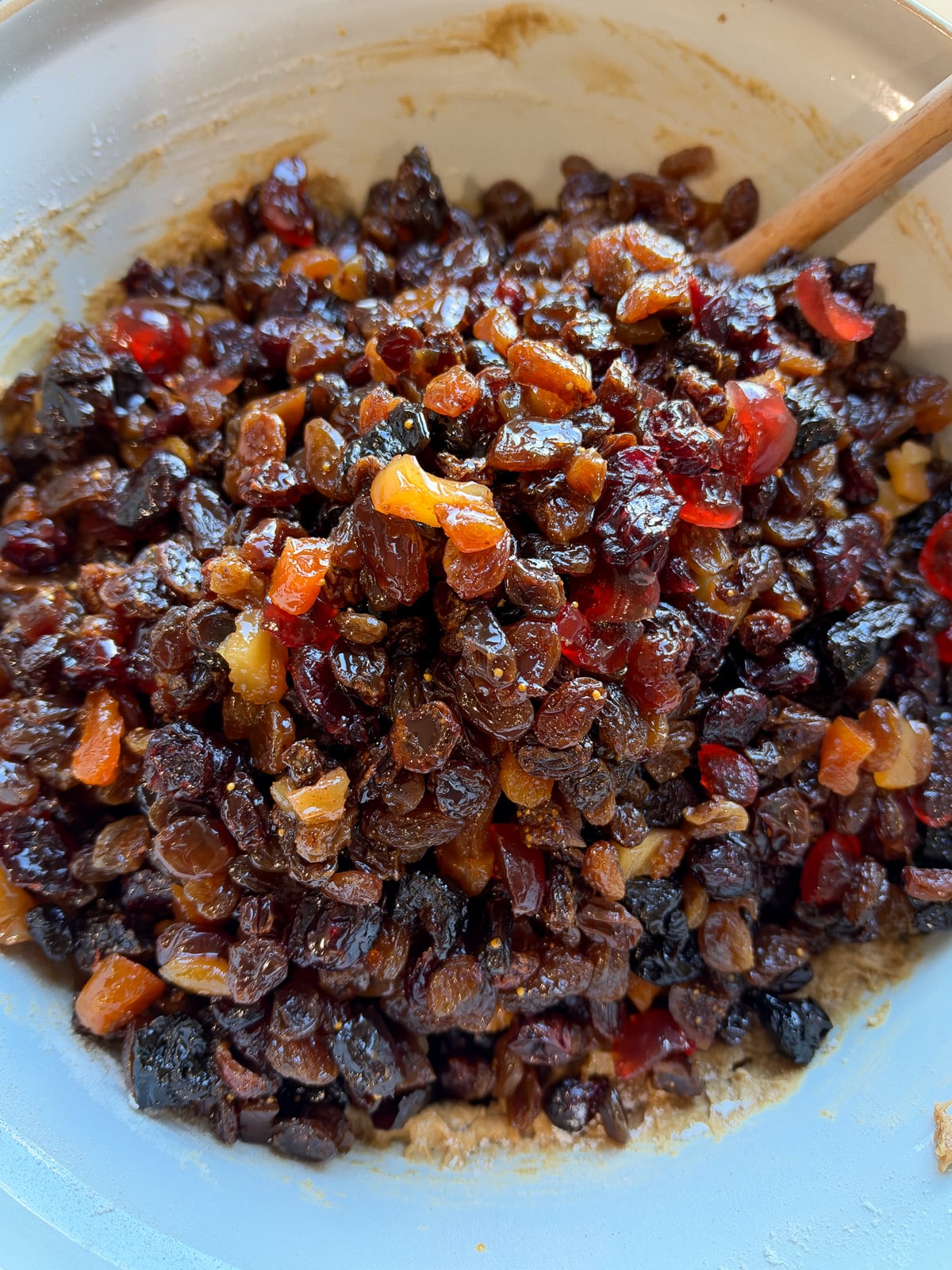
Fruit cake batter starts with creaming softened with sugar and black treacle. Once that’s light and fluffy, you beat in eggs and some almond extract then fold in the dry ingredients (flour, ground almonds, spices, baking powder & salt), followed by the soaked fruit.
3. Low and Slow Bake
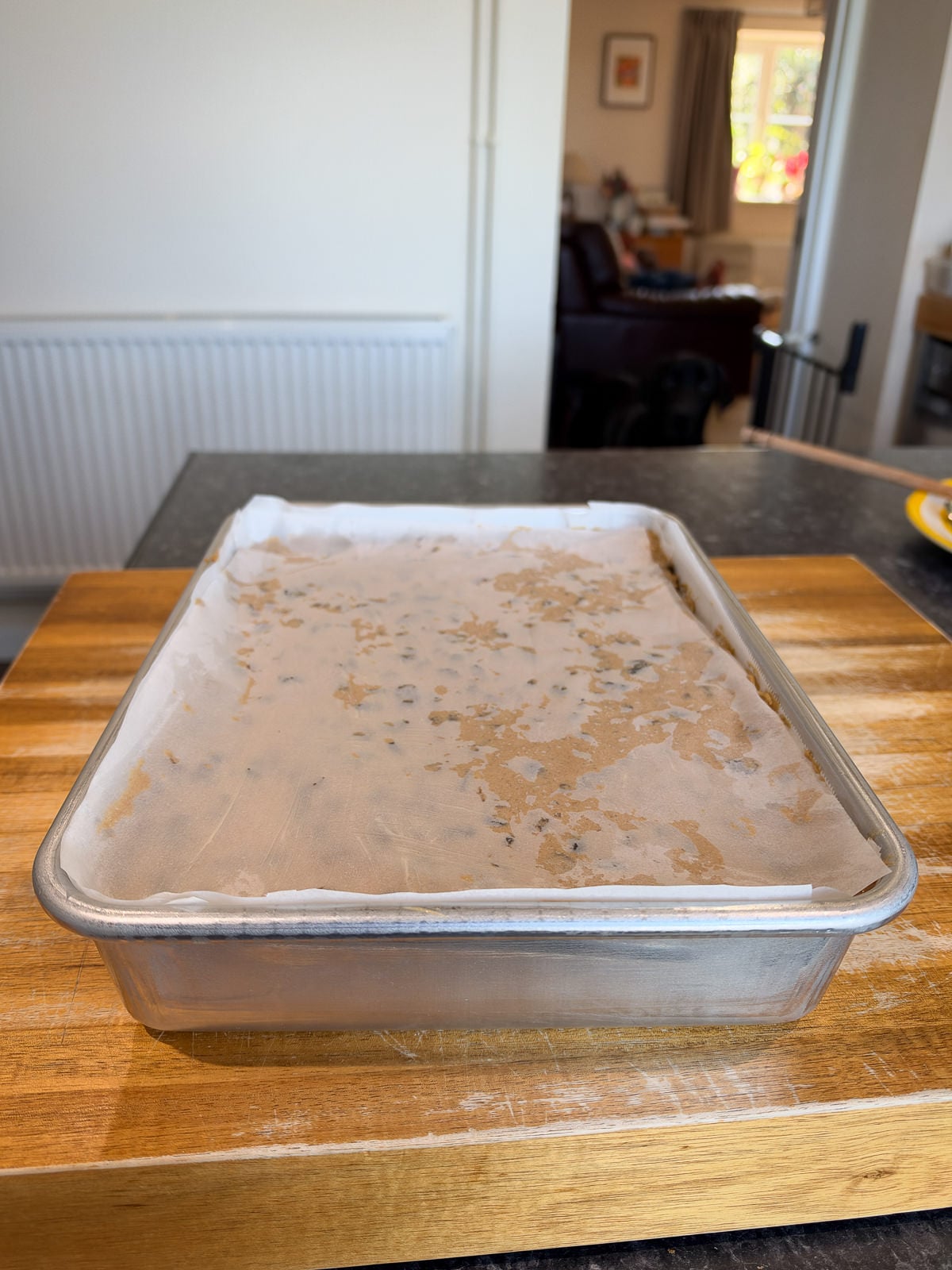
Once mixed, the cake batter needs to be transferred into a 9″x13″ baking tin that’s been greased and lined with baking paper. Make sure to use a tin that’s at least 2.5″ deep. Then once you’ve spread the batter out into an even layer, place a greased piece of baking paper on top. This prevents the top from burning and gives a more even bake.
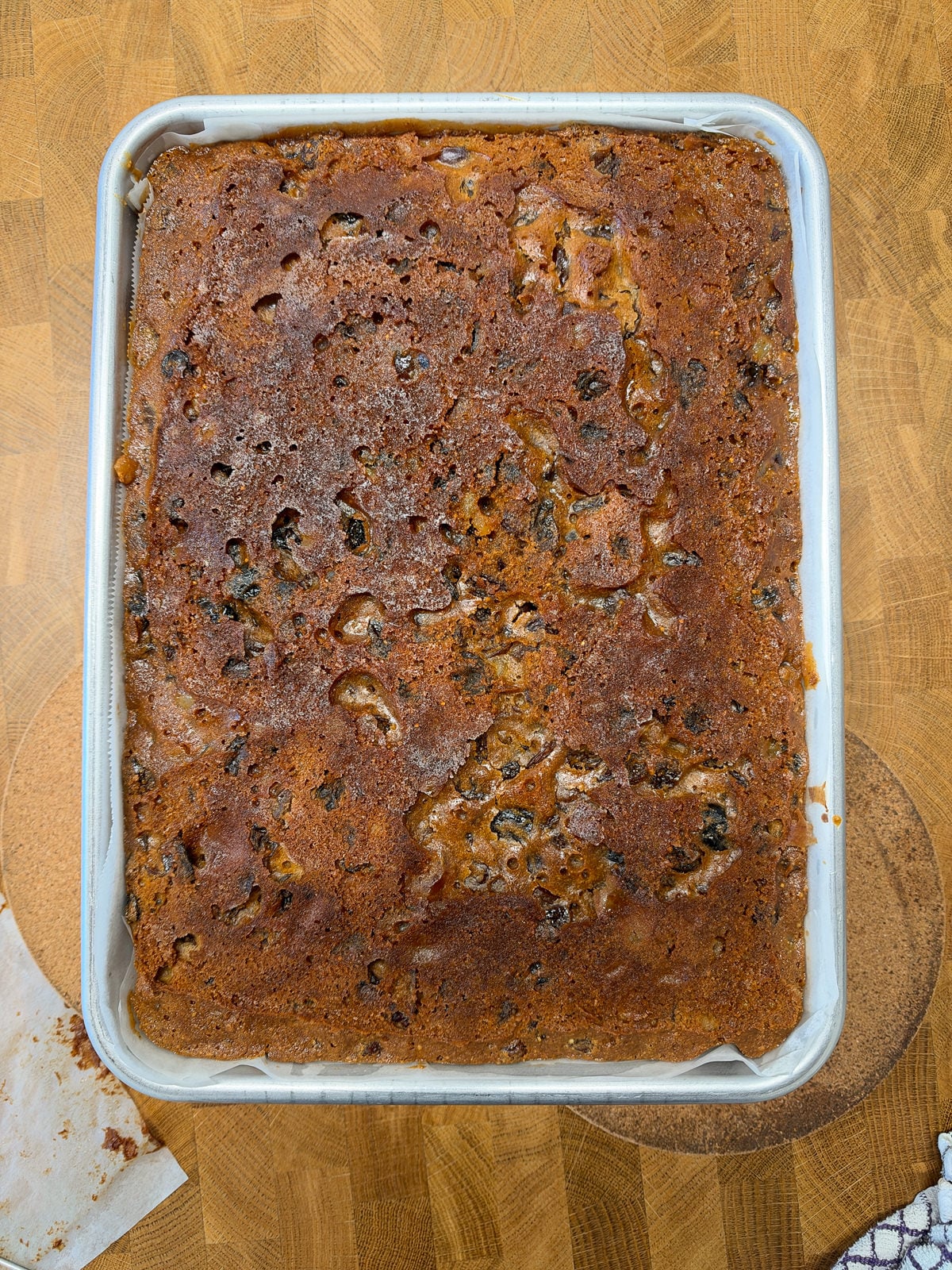
A Christmas cake of this size and depth will take 2½-3 hours to bake at 140°c/284°f. You’ll know when it’s done when a skewer inserted into the centre comes out clean.
4. Initial Feed
The first feed happens as soon as your Christmas cake comes out of the oven, whilst it’s still hot. To do this, poke a few holes in the top with a skewer then pour a generous amount of liqueur all over. The alcohol will sizzle as you do this and will soak in as the cake cools.
5. Cooling and Storage
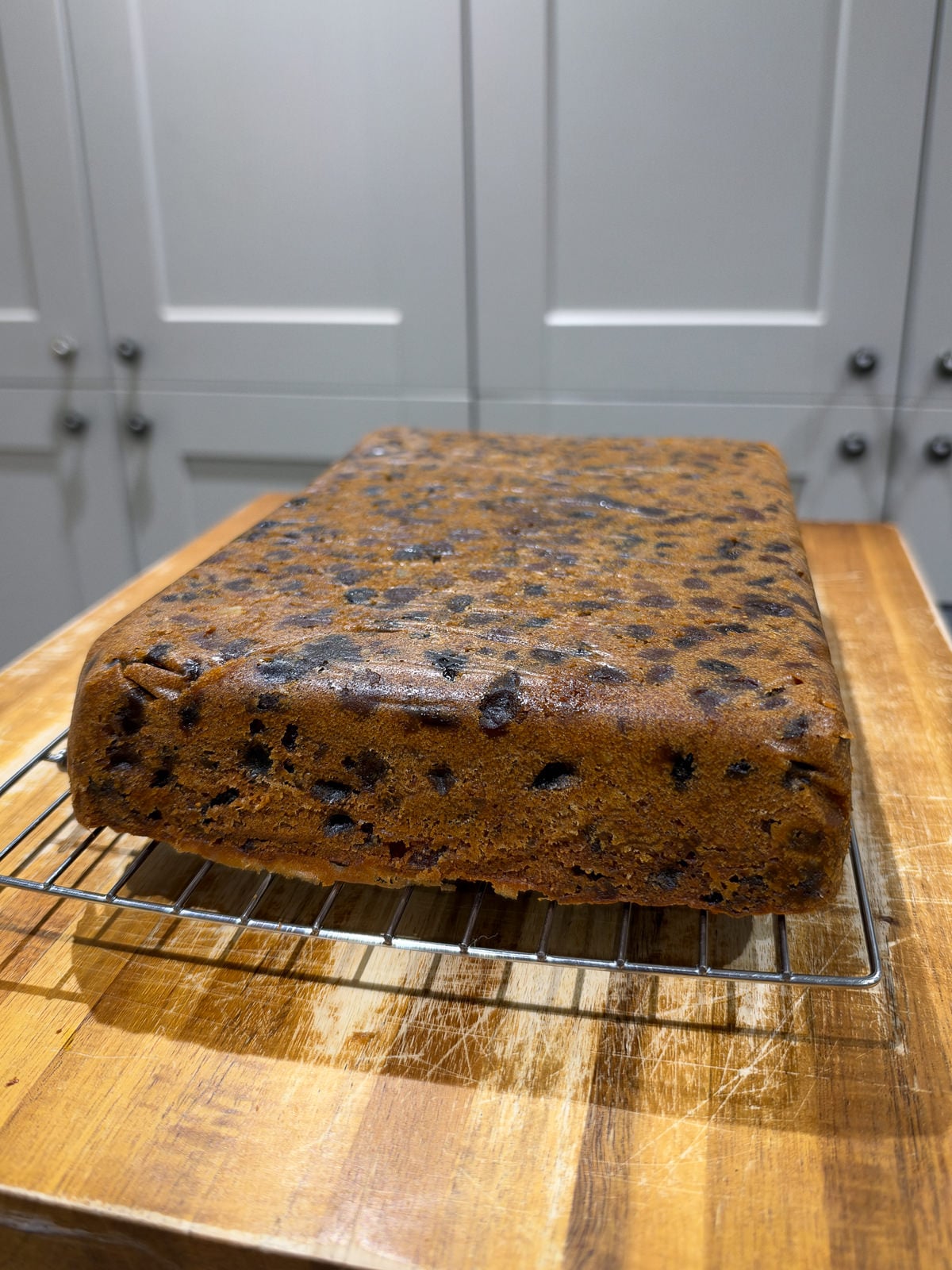
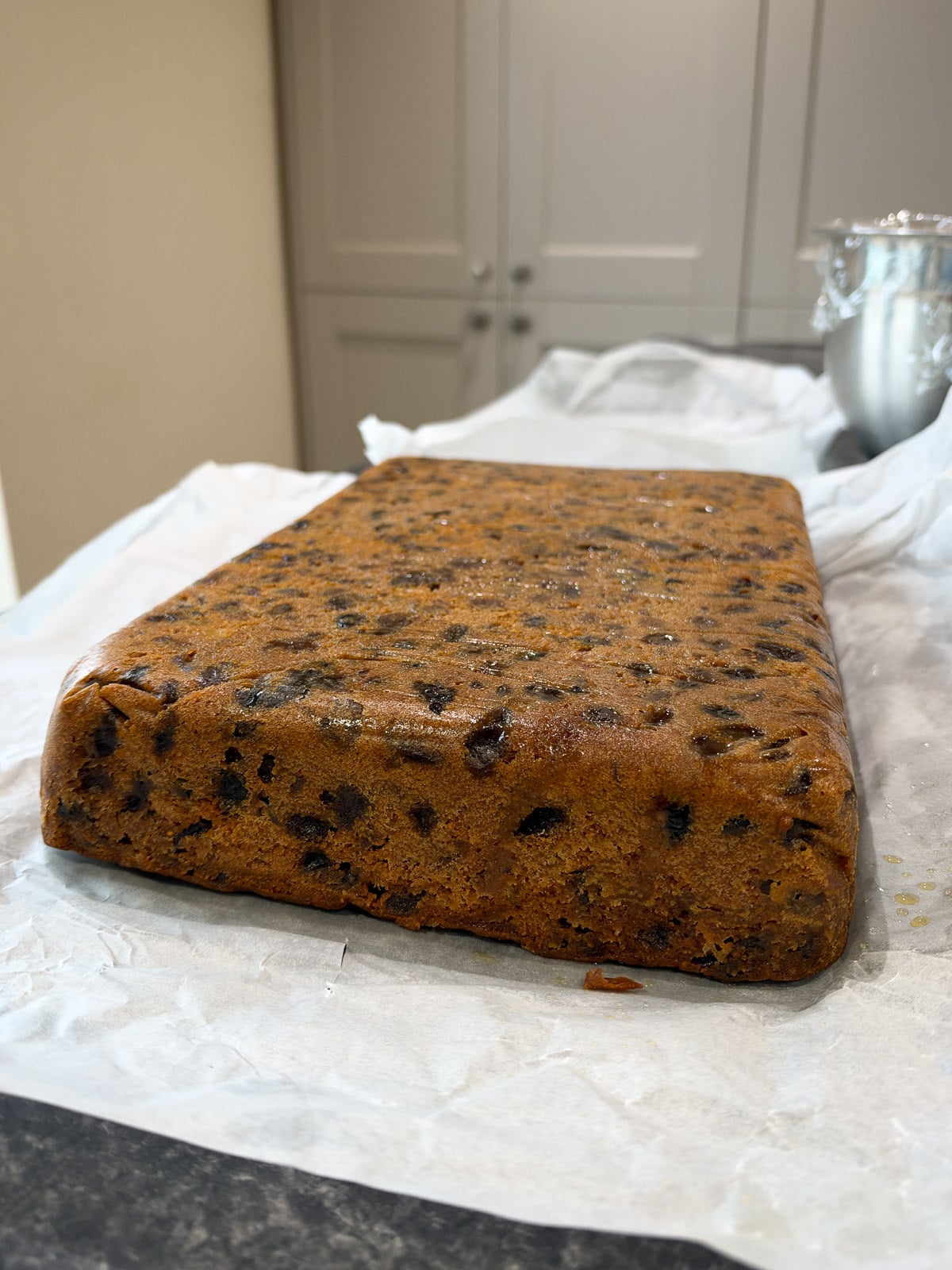
Once your fruit cake has cooled enough to handle, this will take around 1 hour, carefully invert it out onto a wire cooling rack. The bottom of the cake now becomes the top and this is the side we’ll be feeding and icing.
When your cake has cooled completely, gently wrap it in a piece of baking parchment then cover in a double layer of foil, so that it’s airtight. Due to the size and weight of this traybake Christmas cake, you need to be careful when handling it, so you don’t break it! Now your cake needs to be stored in a cool, dark place until you go to ice it.
Feeding Your Christmas Cake (With Schedule)
Christmas cakes are designed to be made ahead of time, as they need time to mature. This deepens the flavour of the cake and the crumb will get moister due to the dried fruit releasing moisture and the added alcohol that the fruit is fed with.
Ideally, you’ll want to make your Christmas cake at least 1 month before Christmas or up to 3 months before hand, so that it has plenty of time to mature. The traditional date for making your Christmas cake and pudding is Stir Up Sunday which falls on the last Sunday before Advent. Though for this recipe, I’d recommend making yours around 6 weeks before you want to serve it!
How often you feed your Christmas cake depends on how long you’re going to let it mature for. But as a general rule, the total number of feeds should be no more than 4 otherwise you risk overfeeding the cake with alcohol which will make it soggy.
Christmas Cake Feeding Schedule (6 Week Example)
For this Christmas cake, the sweet spot for maturing will be around 6 weeks. Now you don’t need to feed the Christmas cake every single week unless you want to. I’d go with a feed using 1 tbsp of liqueur every other week for this length. If you’re going with 4 weeks, for example you would feed every week.
Week 1 – Making The Cake And 1st Feed
- Initial Feed – Straight after the cake comes out of the oven.
- Wrap Once Cool – Once cool, wrap your cake in baking paper and a double layer of foil. Store in a cool dry place (like a cupboard) undisturbed for 2 weeks.
Week 2 – Second Feed
For the second feed, carefully unwrap your Christmas cake then poke a few holes on top with a thin skewer. Spoon 1 tbsp of liqueur (I use Grand Marnier or Brandy) over the top of the cake, letting it soak in. If the alcohol pools on the surface anywhere, use a pastry brush to spread it over the cake.
Once fed, wrap your cake back up with baking parchment and foil then place back into storage. If the baking paper or foil is ripped, make sure to use fresh to keep the fruit cake airtight.
Week 3-4 – Third Feed
1-2 weeks later, repeat the feeding process once more then return to storage. 3 total feeds is sometimes enough but we’ll check the Christmas cake again in 1-2 weeks time.
Week 5 – Stop Feeding Before Icing
The final feed needs to be done no later than 1 week before you plan to top it with marzipan and icing. If the cake is too moist on top, the marzipan won’t stick properly and will slide around. This gives the cake time to dry out slightly on the surface.
At this point, give your cake a look over. If it looks or feels damp on top don’t worry about another feed. If the surface already looks dry, another feed will be fine.
Week 6 – Finishing The Cake With Marzipan And Icing
You’ll need to start finishing the cake at least 1 day before you’re planning on serving it. This is so the marzipan layer can dry out overnight.
Marzipan and Fondant Icing Layers
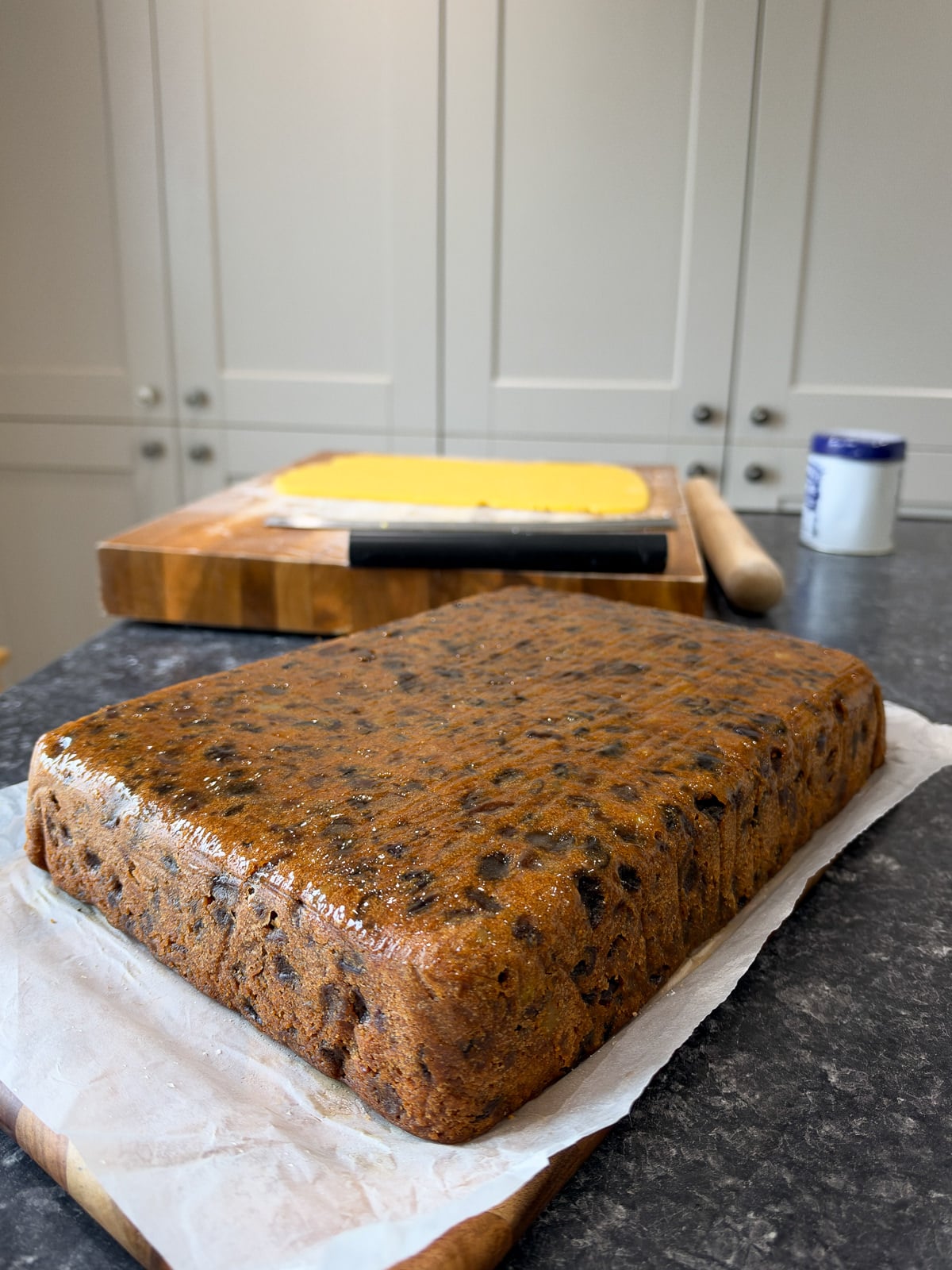
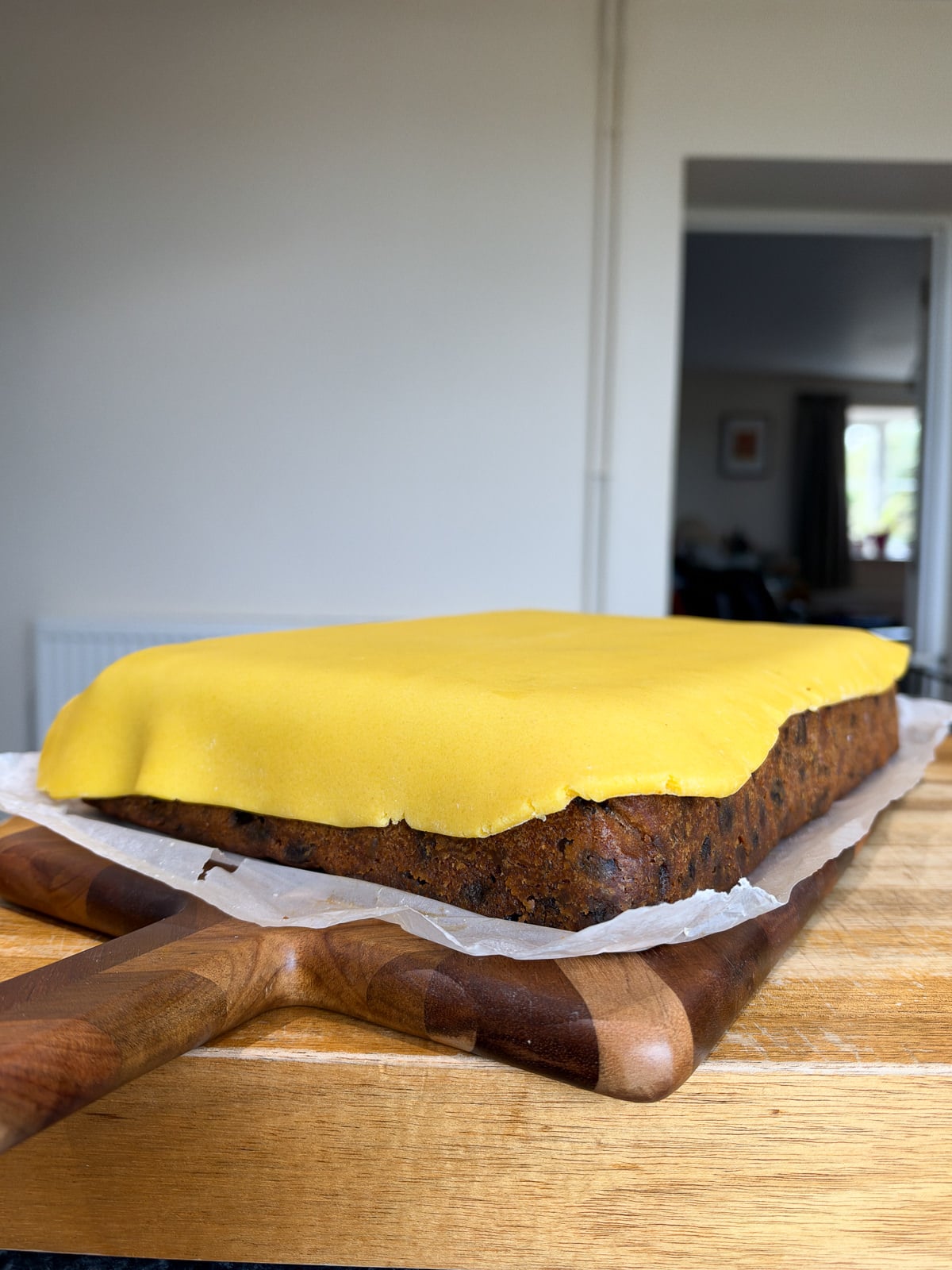
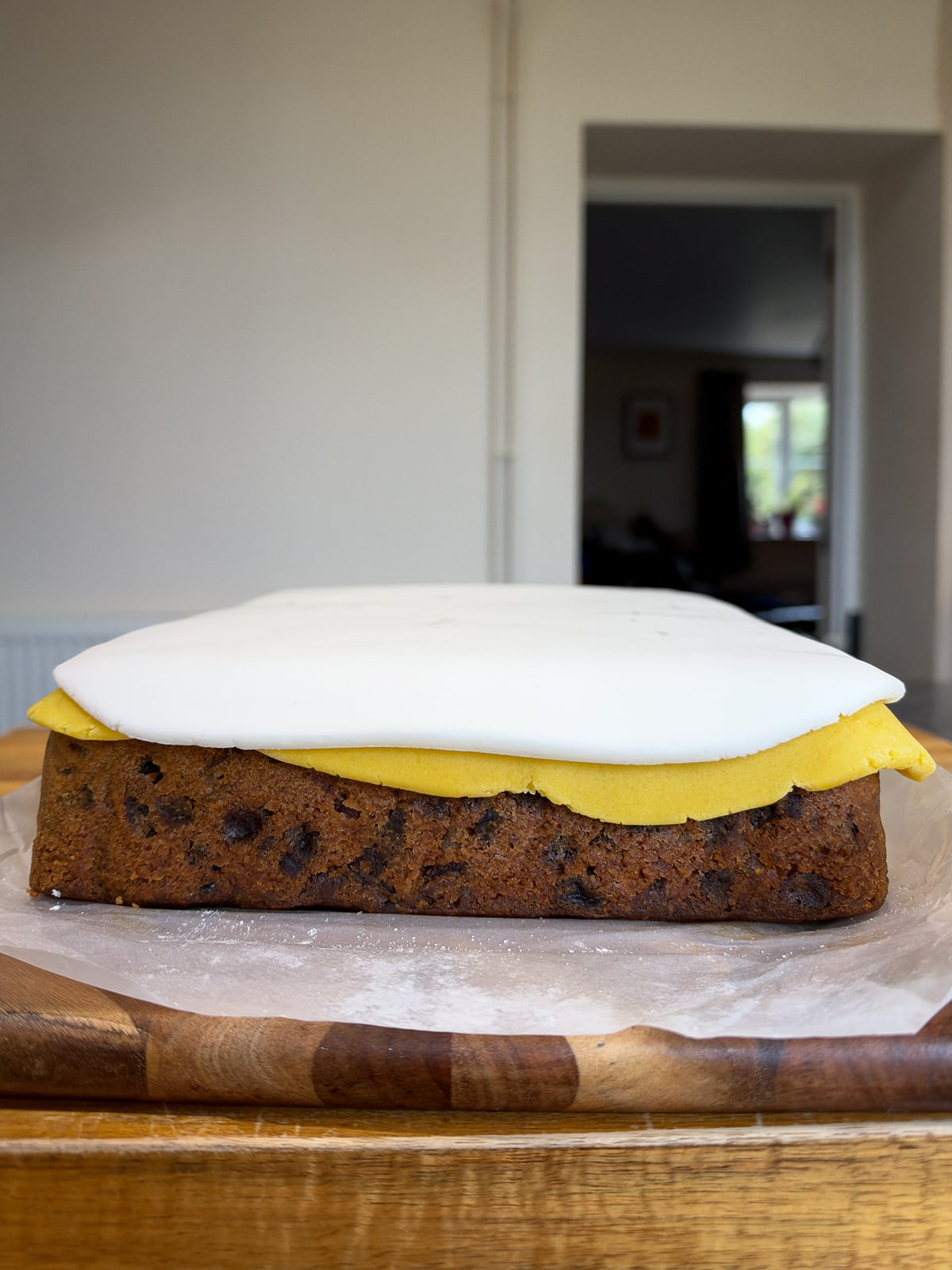
When I was planning my traybake style Christmas cake, I knew I wanted the marzipan and icing to be just on the top, instead of covering the sides like you would with a classic round one. Icing just the top of your fruit is a whole lot easier than the traditional way of finishing a Christmas cake, mainly as you don’t need to worry about the sides being neat, as the cake is trimmed before serving.
Marzipan
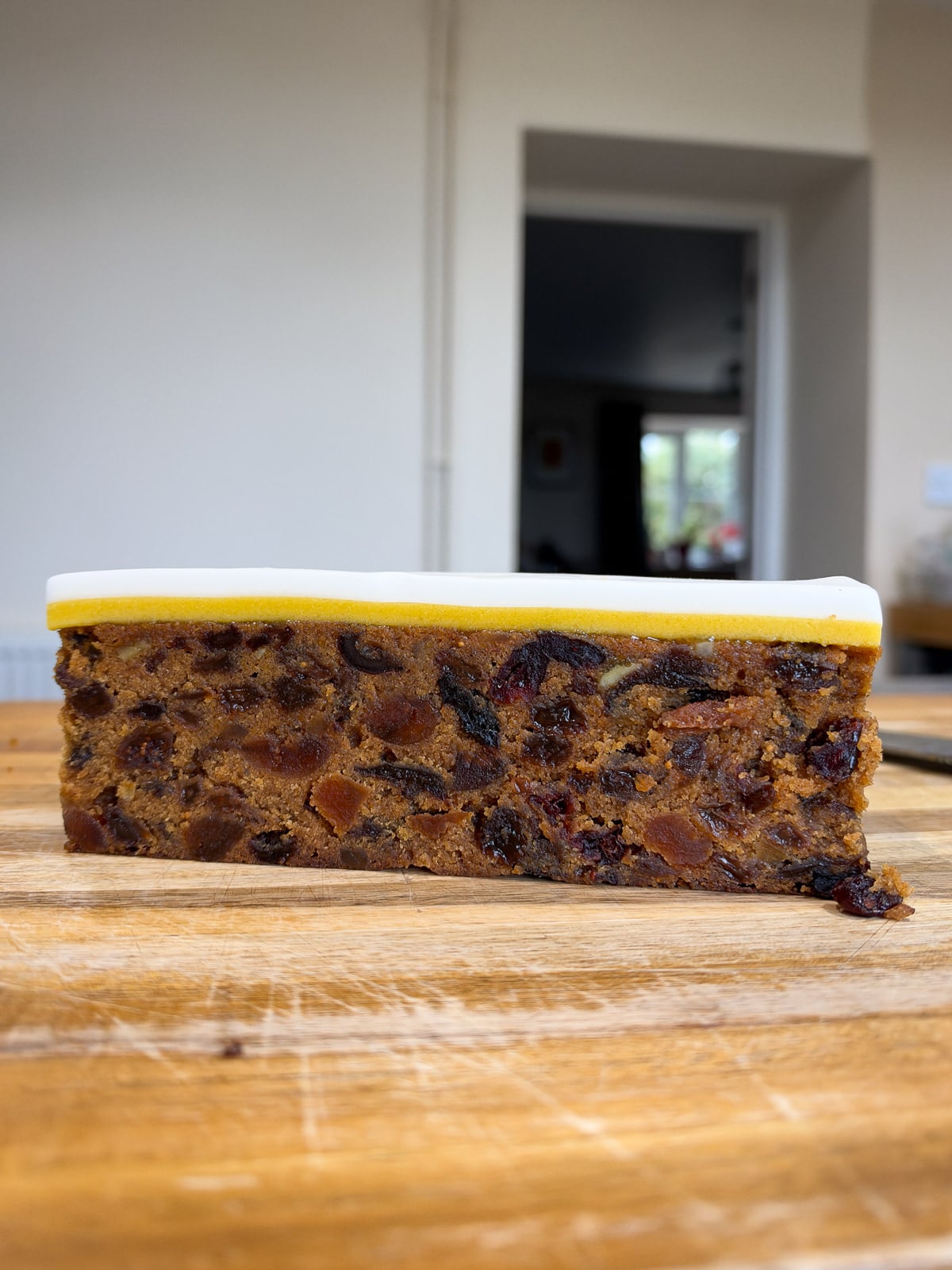
I like to use golden marzipan for my Christmas cakes as I like the contrast you get between the white fondant icing, marzipan and dark fruit cake. In order to get the marzipan to stick to the top of the cake, we’re going to spread a thin layer of marmalade on top first. You’ll need to sieve the marmalade before hand to remove the peel and possibly loosen it off with a splash of hot water if needed.
A Christmas cake of this size uses a 500g block of marzipan which is what is sold in most supermarkets. You simply roll it out on a work surface dusted lightly with icing sugar, into a 5mm thick rectangle that’s slightly bigger than the top of the cake. You gently lay the sheet of marzipan onto the cake then let it air dry for 24 hours. This stops any oil from the almonds leaking into the white icing.
White Fondant Icing
The top layer is the classic white fondant icing. Before rolling, you’ll need to give the icing a gentle knead to make it more pliable. Then the process is the same as with the marzipan. Though instead of marmalade, we brush a very thin layer of white liqueur (like vodka or white rum) or cooled boiled water onto the marzipan to make the icing stick. Once you’ve laid the icing on top of the marzipan, I like to use a small ball of excess icing to massage the top smooth. If you’ve got an icing smoothing tool, this will work too.
To Finish
The fondant icing will stick to the marzipan pretty much immediately though I like to leave it for 10 minutes just to be sure. Then it’s simply a case of lightly trimming the cake’s 4 sides, to so that they are level with the marzipan and icing.
Then you can slice it up however you like! I tend to cut the cake into smaller sections then cut into slices. I’ve found that a sharp serrated knife works best. If you wipe the blade clean after each cut, the icing will stay perfectly white on the sides. Any leftover cake should be wrapped in clingfilm so that it’s airtight.
What To Serve With Christmas Cake
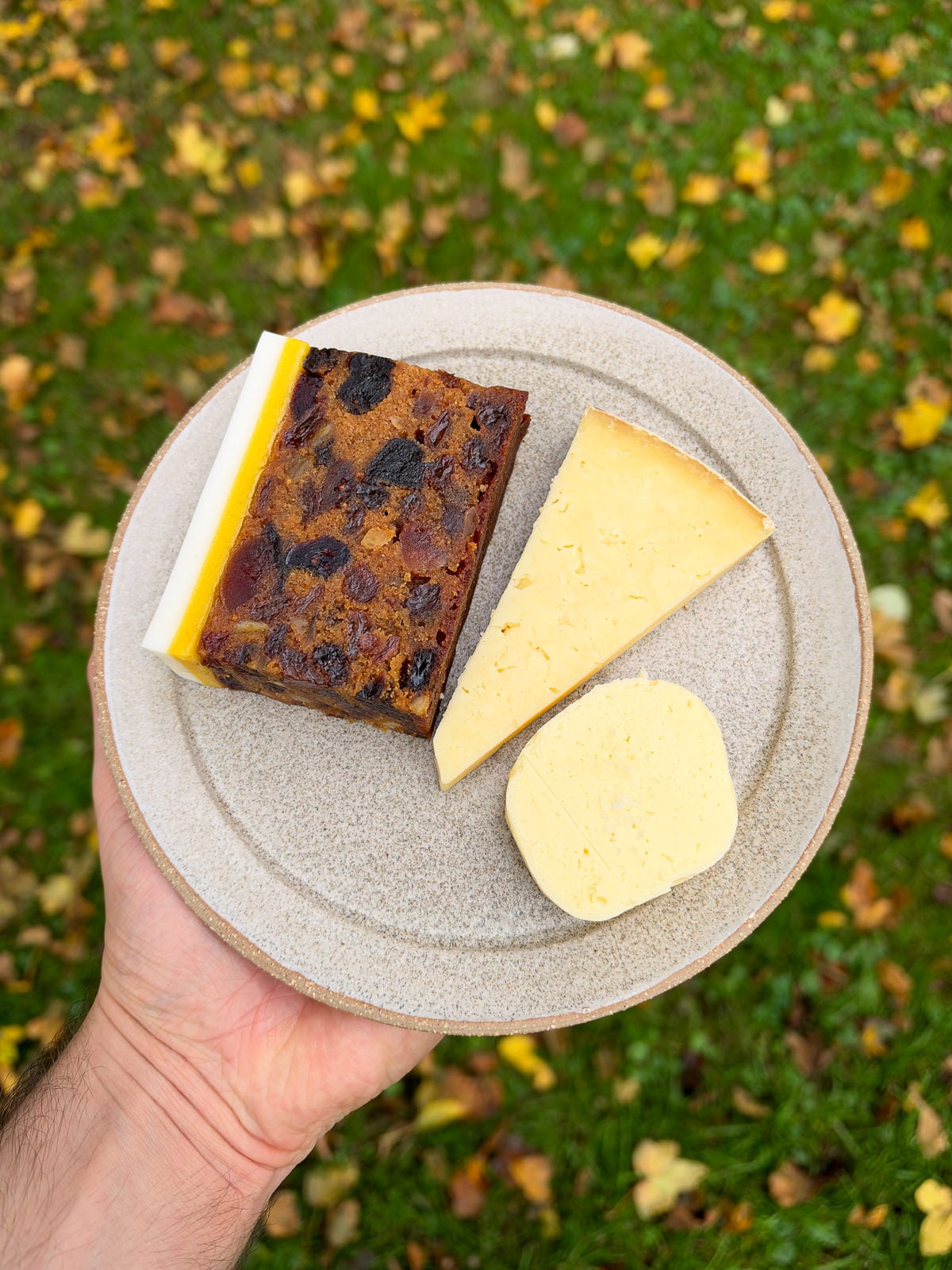
Christmas cake is great served on its own, after your Christmas dinner or as a snack during the holidays. I’m partial to serving my Christmas cakes with a wedge of Wensleydale cheese, which is a festive Yorkshire tradition! Creamy, slightly tangy cheese works perfectly with boozy fruit cake and it doesn’t have to be Wensleydale, a soft cheese like Baron Bigod or a French brie would pair fantastically with Christmas cake too. You could even serve a wedge of Christmas cake on your festive cheeseboard!
I made some cultured butter recently over on my newsletter, which was really nice when slathered onto slices of this Christmas cake. The nutty, salty butter (doesn’t have to be cultured!) helps cut through the richness and sweetness from all that fruit, booze and sugar.
Christmas Cake Tips and Tricks
- Soak the dried fruit in alcohol overnight. This gives the fruit a plumper, juicier texture and the alcohol adds flavour.
- Be careful when handling the baked fruit cake. Due to the size and shape of a tray bake style fruit cake, it’s prone to breaking if you’re not careful!
- Let your Christmas cake mature in a cool dry place (like a cupboard) for 4-6 weeks, for the best flavour. Feeding the fruit cake with liqueur every 1-2 weeks helps preserve the cake and adds flavour.
- This Christmas cake is flavoured with marmalade, so I like to use Grand Marnier (orange liqueur) to soak the fruit and to feed the cake.
- Let the marzipan layer sit uncovered for 24 hours. This dries the top of the marzipan out slightly which prevents oil from the almonds seeping into the white icing.
- Once cut/sliced, wrap your cake in clingfilm to prevent it from drying out.
Frequently Asked Questions
If you’re using an Aga to bake your Christmas cake, you’ll need to bake it on a grid shelf placed onto the floor of the simmering oven. The cake will take longer to bake in an Aga, I’d recommend that you check it after 4 hours.
You’ll know when your Christmas cake is ready when a skewer inserted into the centre comes out clean. This style of fruit cake bakes at a lower oven temperature so don’t be surprised if it takes several hours to cook.
Although you can make Christmas cake without alcohol, I wouldn’t recommend it for this particular recipe. This is because the alcohol adds flavour whilst also preserving the cake so you can mature it properly.
Ideally homemade Christmas cake should be matured for at least 3 weeks or up to 2 months. The sweet spot for this traybake style Christmas cake is 4-6 weeks.
Christmas cake should be fed between 3-4 times in total, spaced 1-2 weeks apart depending on how long you’re planning on maturing it for. You need to be careful not to overfeed your Christmas cake as it will become soggy and you should stop feeding at least 1 week before icing, to allow the top time to dry out slightly.
Don’t throw the cake trimmings away! You can use them to make Christmas cake ice cream or use it instead of Christmas pudding in my Christmas pudding flapjack. You can simply serve the trimmings with ice cream or even custard, for an easy festive dessert.
More Christmas Recipes To Try
- Double Chocolate Peppermint Bark Cookies
- Christmas Rocky Road
- Deep Fried Mince Pies
- Baileys Gingerbread Loaf Cake
- Stollen Buns
- Classic Mince Pies
If you have enjoyed this Christmas cake recipe, it would mean a lot if you could leave a review & rating. And if you’d like to stay up to date with future recipes, follow us on Instagram & TikTok or subscribe to our newsletter!
Marmalade Christmas Cake
Equipment
- 9"x13" Baking Tin
- Large Mixing Bowl
- Wire Cooling Rack
Ingredients
Soaked Fruit
- 350 g Raisins
- 350 g Sultanas
- 250 g Prunes (Or Dates, Dried Figs Or A Mix)
- 200 g Dried Cranberries
- 200 g Glacé Cherries
- 150 g Dried Apricots (Or Dried Pears)
- 180 ml Grand Marnier (Or Brandy – See Notes)
Christmas Cake
- 350 g Unsalted Butter (Softened, Plus Extra For Greasing)
- 275 g Dark Brown Sugar
- 60 g Black Treacle
- 6 Large Eggs (Room Temperature – See Notes)
- 80 g Marmalade
- 300 g Plain Flour
- 100 g Ground Almonds
- 1 tsp Table Salt
- 1 tsp Baking Powder
- 1 tsp Almond Extract
- 1 tsp Ground Cinnamon
- ½ tsp Ground Allspice
- ¼ tsp Ground Nutmeg
- 100 g Candied Peel
- 50 g Stem Ginger (Drained – See Notes)
- Zest Of 1 Orange & 1 Lemon
- 75 ml Grand Marnier (For The 1st Feed)
To Feed
- Grand Marnier (Or Brandy)
To Finish
- 500 g Golden Marzipan
- 500 g White Fondant Icing
- 1 tbsp Marmalade
- ½ tbsp Vodka (Or White Rum – See Notes)
Instructions
Soaked Fruit
- Chop the prunes, dried apricots and glacé cherries into small pieces, roughly the same size as the raisins but no bigger than 1 cm.
- Add all of the dried fruit into a mixing bowl, pour over the Grand Marnier then stir to combine. Cover the bowl with clingfilm then leave to soak overnight.I'd recommend letting the fruit soak for at least 12 hours, so that it absorbs all of the alcohol.
Christmas Cake
- Preheat an oven to 140°c/120°c fan (284°f/248°f). Grease and line a 9"x13" baking tin as well. Make sure to use a tin that's at least 2.5" deep. You'll also need to cut a piece of baking paper the same size as the top of the tin and grease one side with butter.
- Add the softened butter, brown sugar and treacle into a large mixing bowl then beat with a wooden spoon until well combined and fluffy. You can use an electric hand mixer for this if you'd prefer.
- Next, add the eggs and almond extract into a jug then lightly beat together with a fork. Gradually mix the eggs into the butter a small amount at a time, making sure that each addition is incorporated fully before adding in more.
- Sift the plain flour, baking powder and ground spices into a separate mixing bowl, add in the ground almonds and salt then whisk to combine
- Add the dry ingredients into the cake batter then fold in gently with a spatula until just combined.
- Next, finely dice the stem ginger then add into the batter along with the soaked fruit, candied peel and zests. Fold gently to evenly distribute the fruit throughout the batter then transfer to the lined tin.If there's any excess liquid in the bowl of soaked fruit that hasn't been absorbed, strain this off first.
- Use a palette knife to spread the batter into an even layer then place the greased piece of baking paper from earlier, on top, facing butter side down.
- Place your Christmas cake into the preheated oven then bake for 2½-3 hours, until a skewer inserted into the centre comes out clean. Whilst your cake is baking, place the Grand Marnier (for the 1st feed) into a jug.
- As soon as your Christmas cake comes out of the oven, poke a few holes on top of the cake using a skewer then pour the Grand Marnier all over the top. Then leave to cool in the tin for an hour or so, until cool enough to handle.
- Next, carefully turn the cake out on a wire cooling rack, remove the baking parchment then leave to cool completely. Then wrap the cake in baking paper and a double layer of foil. Store in a cool, dry place to mature.A cupboard is the ideal place to store your Christmas cake. If you've got an airtight container, pop the wrapped cake in there. Due to the size of this Christmas cake, you need to be very careful when moving it, to avoid breaking or splitting the cake. The bottom of the cake becomes the top after you turn it out of the tin.
Feeding
- It's best to let this Christmas cake mature for at least 3 weeks and up to 2 months. I'd recommend feeding your Christmas cake with 1 tbsp of Grand Marnier (or brandy) once every 2 weeks if you're planning on maturing for longer or once a week for less time. A total of 3-4 feeds is best and you should stop the feeding process at least 1 week before you plan on icing the cake, so the surface has time to dry out slightly.
- To feed your cake, carefully unwrap the foil and baking paper then poke a few tiny holes in the top of the cake. Next, drizzle 1 tbsp of liqueur over the cake and leave to soak in. If the liquid is pooling on the surface, use a pastry brush to distribute the liqueur over the rest of the cake.I serve my Christmas cake facing bottom side up as this was the flattest. Make sure to feed the side you're planning on icing.
- Once you've fed your cake, carefully wrap it back up and return to where you've been storing it. If the parchment or foil tears, use fresh. If when you unwrap the cake, the surface looks damp or stodgy, you won't need to feed it anymore.
Marzipan Layer
- Make sure you've not fed your cake for at least 1 week before you're planning on finishing it.
- Before adding the marzipan, unwrap the cake then carefully transfer to a chopping board. You may find it easier to keep the cake on the baking paper at this point.
- Place the marmalade and 1 tbsp of hot water into a bowl, stir together then warm gently in the microwave until the mix is at a spreadable consistency. Pass the marmalade through a sieve, into a bowl then set to one side.
- Next, roll the marzipan out on a work surface that's been lightly dusted with icing sugar, into a rectangle that's just big enough to cover the top of the cake. The thickness of the marzipan should be around 5mm.Don't worry about covering the sides of the cake as we'll be trimming them flush with the icing before serving.
- Brush a thin, even layer of the marmalade over the top of the cake then carefully place the marzipan on top, pressing very lightly so that it sticks.
- Now you need to let the cake sit uncovered for 24 hours, so that the marzipan can dry out. This stops any oils from the almonds from leaking into the white icing.
Icing Layer
- Place your block of icing onto a clean work surface then knead gently by hand until it feels more pliable. This will only take a minute or so.
- Dust your work surface lightly with icing sugar then roll the icing out into a rectangle that's just big enough to cover the top of the cake & marzipan. The thickness of the icing should be around 5mm as well.
- Next, brush a very light layer of clear liqueur (vodka or white rum is best) on top of the marzipan then carefully lay the icing on top. Cooled boiled water will work too.
- Roll a small amount of the overhanging icing into a ball then use this to massage/mould the icing so that the top has a smooth, flat surface. Let the cake stand for 10 minutes or so, so that the icing can stick properly before slicing.An icing smoothing tool will work too!
Serving
- To finish the cake, use a sharp knife to lightly trim the 4 edges flush with the icing and marzipan. Then you can cut the cake into your desired sized pieces then serve! If you're not serving straight away or you're gifting cake to people, I'd recommend cutting the cake into slightly smaller pieces then wrap each in clingfilm to keep airtight.I use a serrated knife for this, slicing in a gentle sawing motion.
Salt Butter Smoke Magazine
Food that’s made for sharing.
The Christmas 2026 issue features 30 festive recipes, Christmas cooking guides, beautiful food photography and features on everything from the perfect cheeseboard to the art of trifle.
Discover the Christmas Issue →Notes
Enjoying This Recipe?
The Prep List is my free weekly newsletter with seasonal recipes, kitchen notes and behind-the-scenes from my kitchen. Add Salt Butter Smoke as a Google Preferred Source to see more of my recipes in Search.