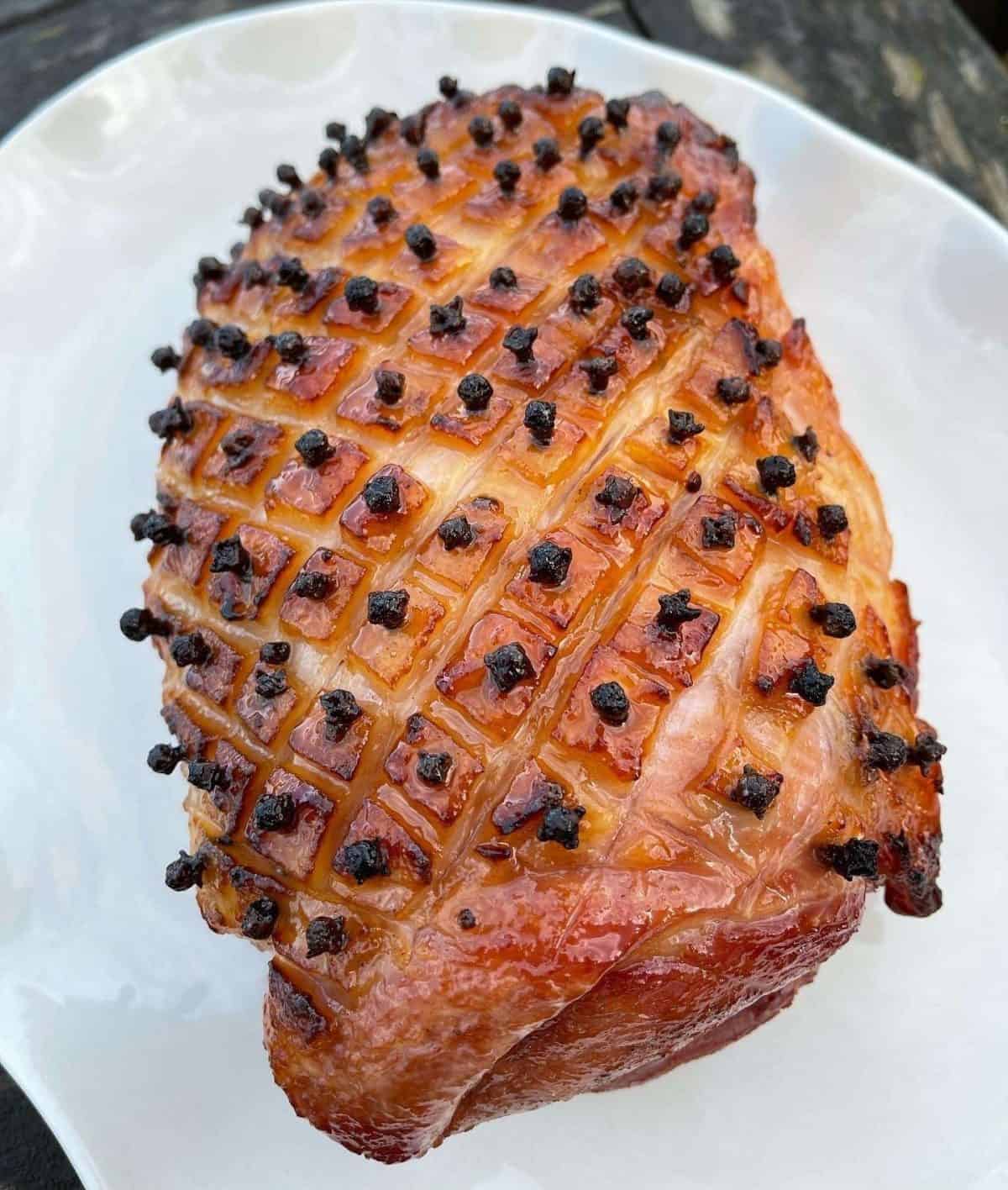
Irn Bru Ham With Apricot Maple Glaze
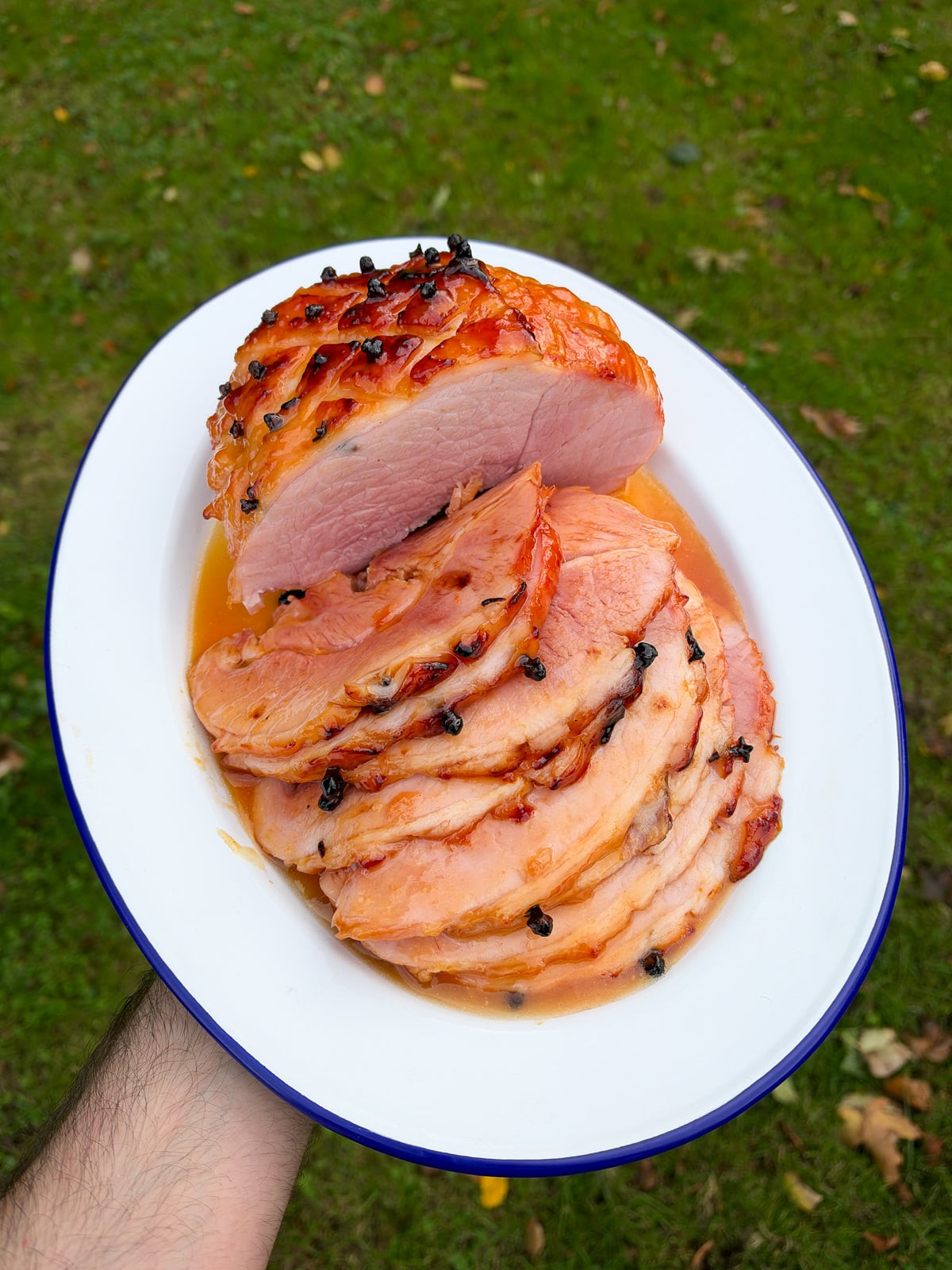
This Irn Bru ham is a fantastic festive centrepiece. Here a gammon joint is poached in tangy Irn Bru then roasted with a sweet apricot maple glaze.
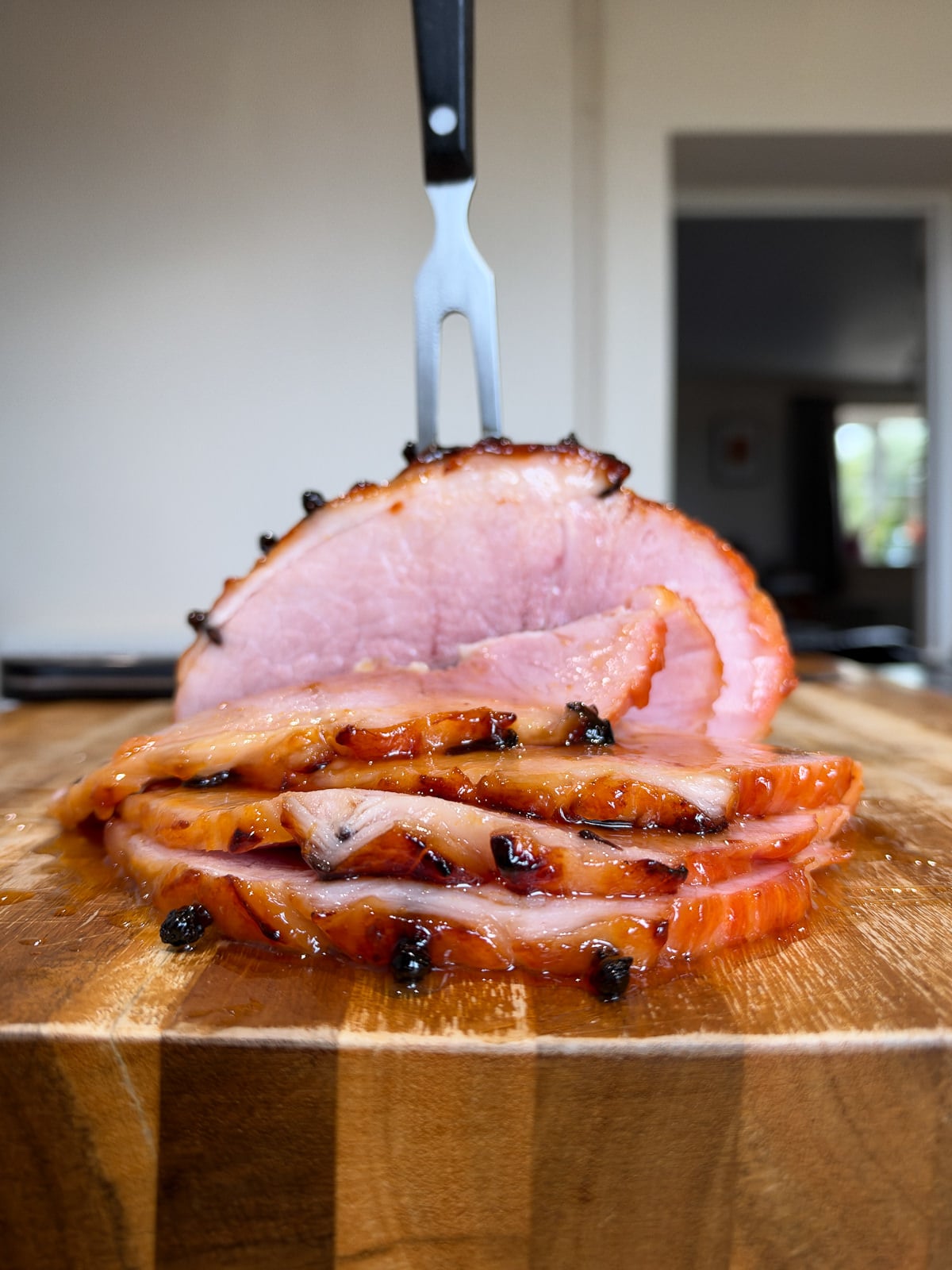
This Irn Bru glazed ham is perfect for the festive season and makes a great centrepiece for Thanksgiving and Christmas! If you’re a fan of the classic traditional Scottish drink then you’re going to love this glazed ham. The gammon is poached in original recipe Irn Bru until perfectly cooked then roasted in the oven, whilst being basted with a sweet and sticky apricot maple glaze.
The result is a pretty special homemade baked ham. It’s sweet, slightly salty and covered in a perfectly caramelised crust. You get the tangy flavour of the Irn Bru in every slice along with the fruity apricot maple glaze. It’s a real winner and can be served whilst it’s still hot or you can cook your ham ahead of time and serve it as a festive cold cut. It would make fantastic sliders too!
If you’ve never had Irn Bru before, it’s one of those flavours that’s hard to describe. In fact, this Scottish drink is made up of several different flavours and no one can really agree for definite what it is. Irn Bru is commonly described as having a tangy, creamy, tutti-frutti, bubblegum flavour. All I know is that this bright orange drink works incredibly well with ham…
For more festive recipes, take a look at our collection of Christmas recipes! There’s lots to choose from here, from festive main courses, classic desserts & all the trimmings.
Ingredients For Irn Bru Glazed Ham
- Boneless Gammon Joint – Ask your butcher for a rolled boneless gammon joint. This recipe uses a 3kg gammon, which will easily serve 8 people. Though as we’re cooking to temperature, you can use whatever size joint you like.
- Irn Bru – You’ll need Irn Bru for the poaching liquid and for the glaze. I’d highly recommend using 1901 Irn Bru, as this is made using the original recipe. You get more flavour this way and the higher sugar content helps with caramelisation. You can get this from most larger supermarkets or online, though regular Irn Bru will work too.
- Poaching Stock – Along with the Irn Bru, I flavour my ham poaching stock with fresh veg, herbs, a cinnamon stick, star anise and a few black peppercorns.
- Apricot Maple Glaze – This apricot glaze is made with apricot jam, Irn Bru, Dijon mustard and a pinch of sea salt.
How To Make Irn Bru Ham With Apricot Maple Glaze
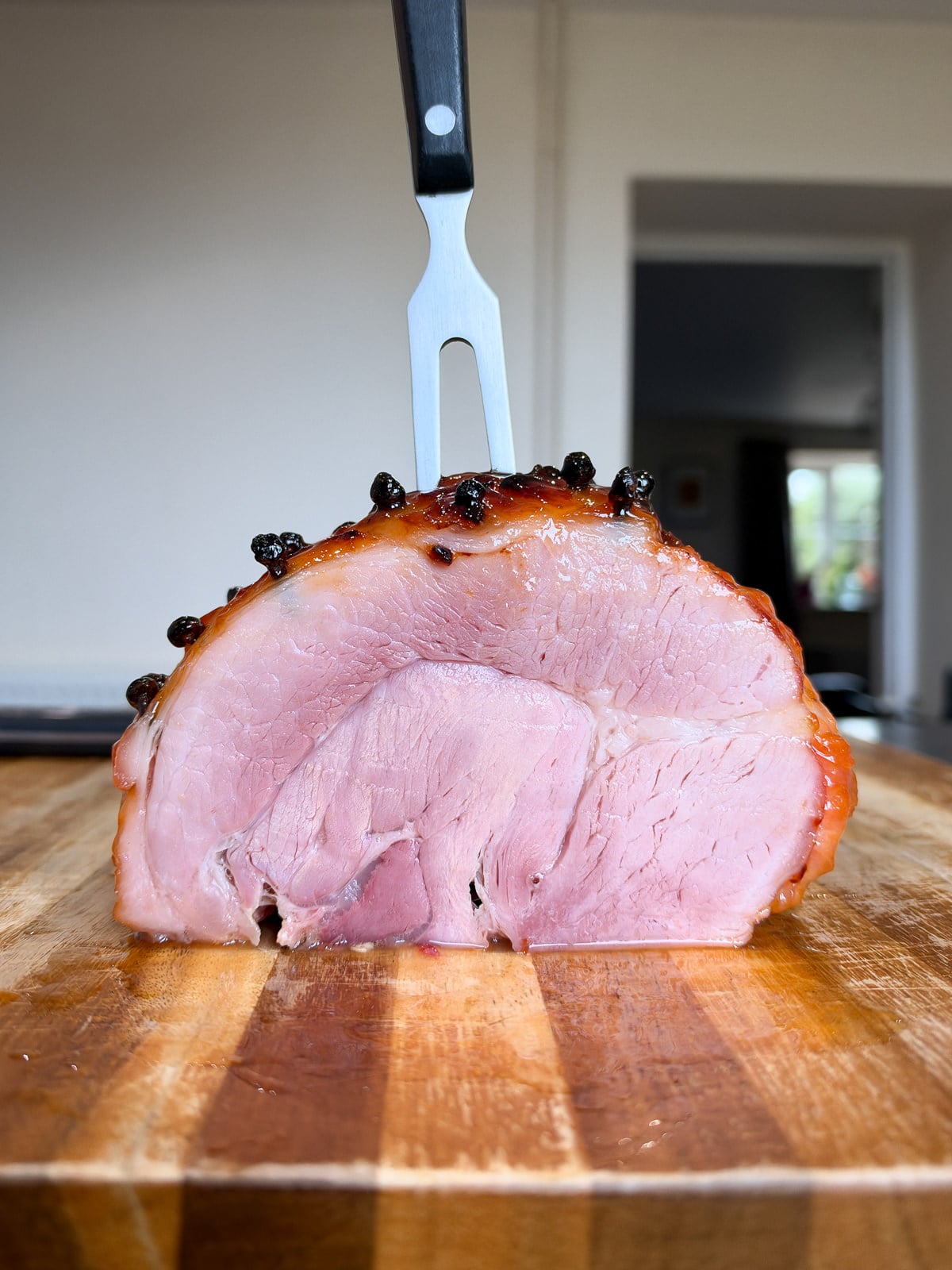
The process of making a glazed ham is super simply! You poach the gammon in liquid (in this case Irn Bru) until just cooked then trim off the skin, score the fat and roast in the oven whilst basting with glaze, to build up a caramelised crust. The result is a tender, juicy ham with a sweet, sticky glaze and loads of flavour.
A Note On Soaking Gammon Before Cooking
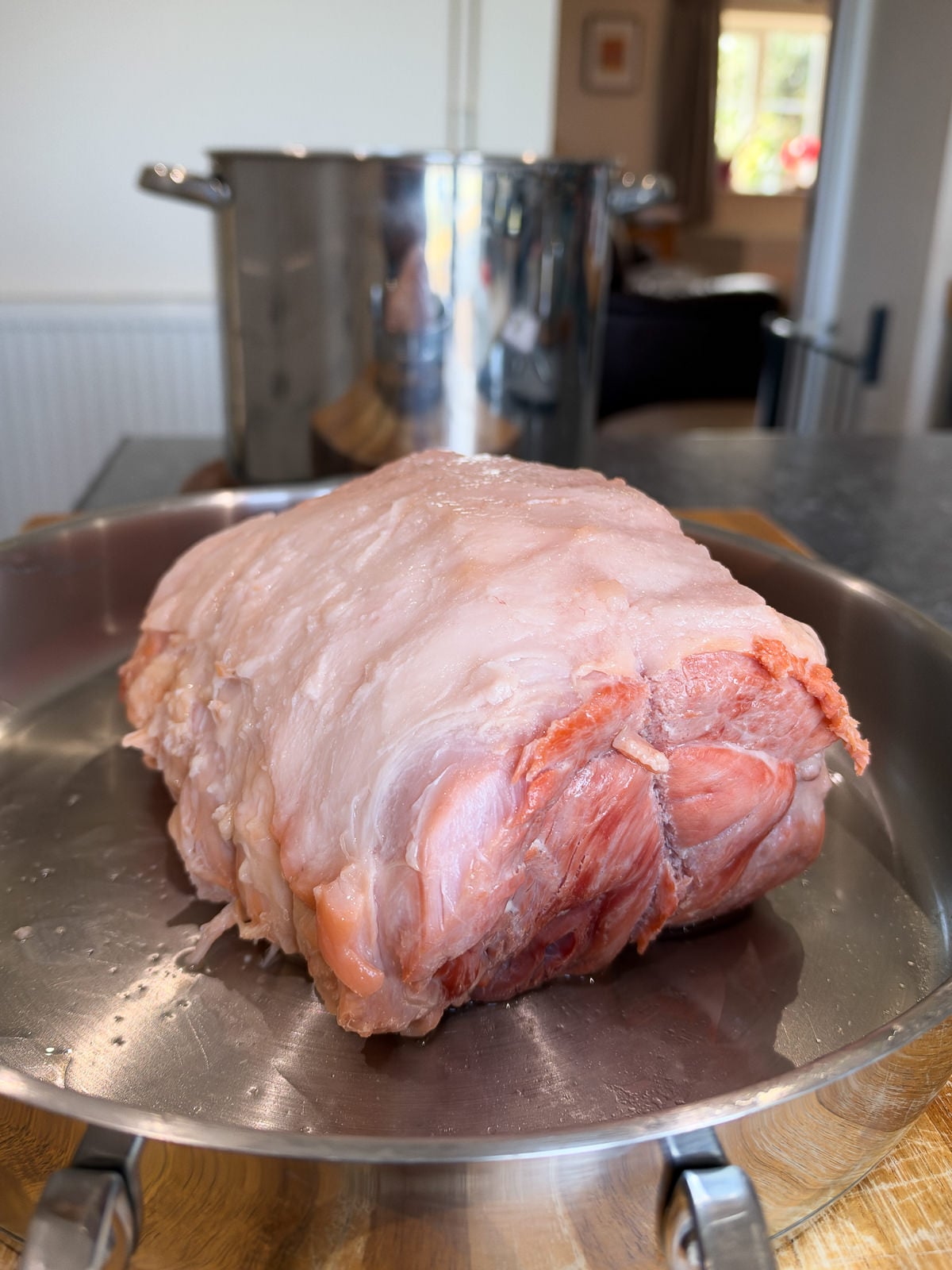
If you’ve got a salty piece of gammon, it will need an overnight soak in cold water before being cooked to reduce the salt content. I’d recommend asking your butcher whether your gammon needs soaking or not (some cures don’t require a soak). If you’re not sure whether your gammon needs soaking, it doesn’t hurt to soak it anyway!
Poaching The Gammon
The first stage of the cook, is to gently poach the gammon in Irn Bru until just cooked. A ham is cooked through once it reaches an internal temperature of 75°c/167°f, so I like to poach the gammon until it reaches a couple of degrees short of this (71°c/160°f), as it will also be roasted in the oven and you don’t want it to overcook.
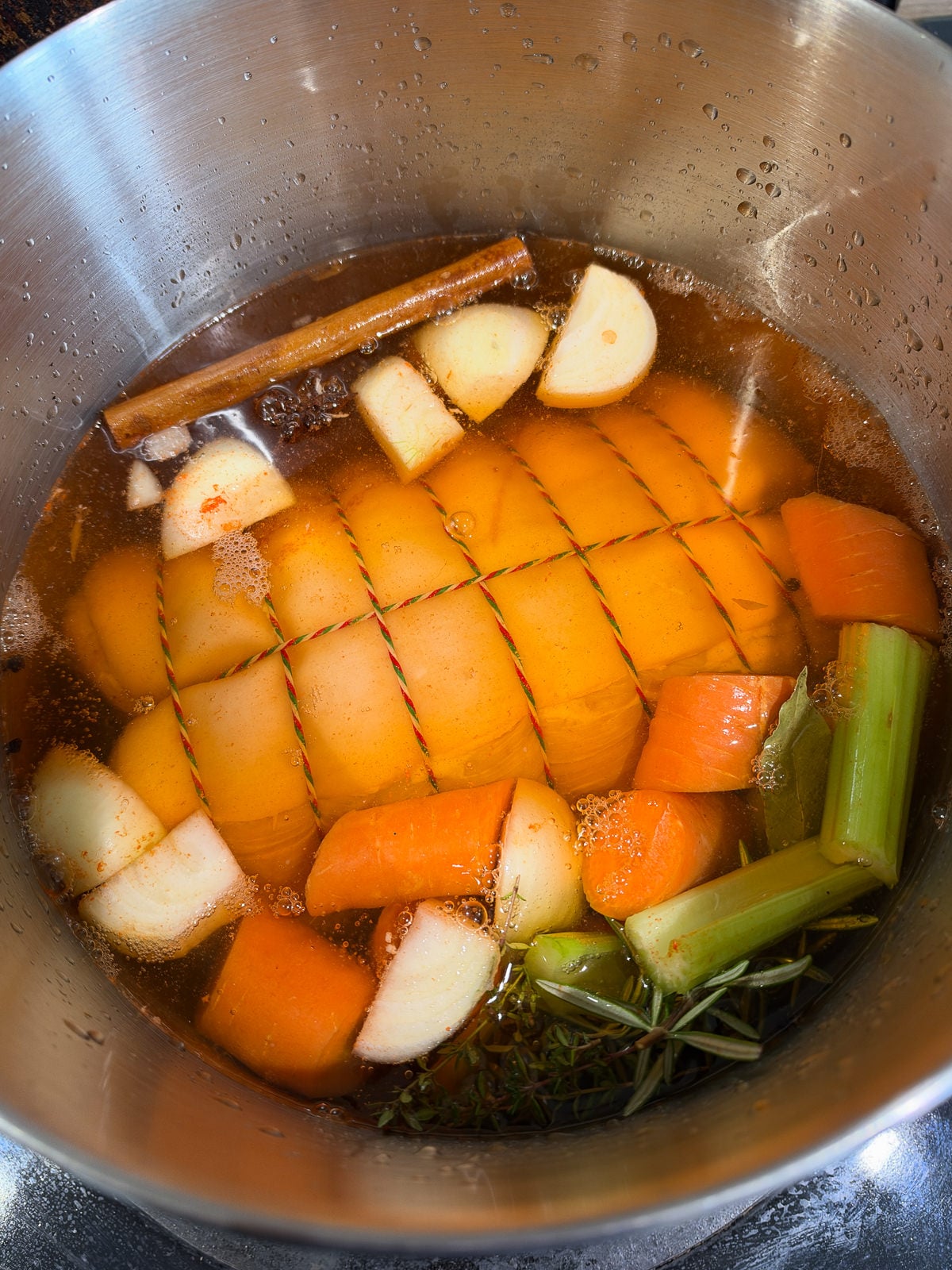
To poach, add your gammon into a large saucepan along with chopped veg, herbs, a cinnamon stick, start anise, black peppercorns and Irn Bru. If needed, you can add in some cold water as well, so that the gammon is completely covered in liquid. Set the pan over a medium heat, bring to a simmer then cook gently until just cooked. For a 3kg gammon joint, this will take around 2½ – 3 hours.
Once poached, you need to take the gammon (it’s cooked now so would technically now be ham!) out of the poaching liquid & place it into a large skillet, ready to glaze. This also gives the ham chance to cool slightly, which will make it easier to remove the skin.
Apricot Maple Glaze
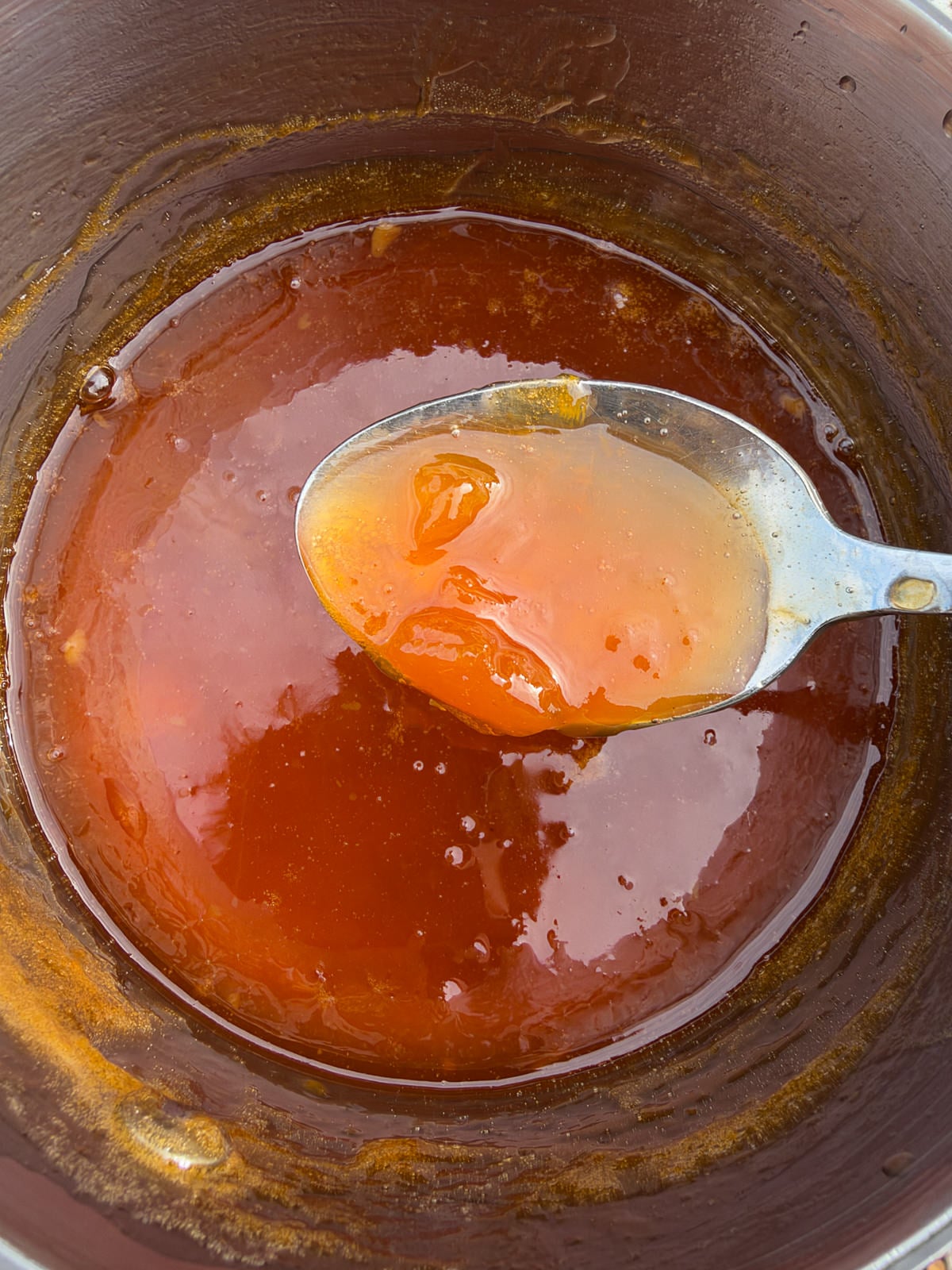
The glaze for this ham is made with Irn Bru, apricot jam, maple syrup, Dijon mustard and a pinch of sea salt. To make, you add all of the ingredients into a pan then cook over a medium heat, until the mix has reduced into a thick, sticky glaze. The glaze will only take around 5 minutes to cook, so I like to make it once the ham has finished poaching.
Once the glaze is ready, you’ll need to pass it through a sieve, into a jug ready to pour over the ham.
Roasting and Glazing
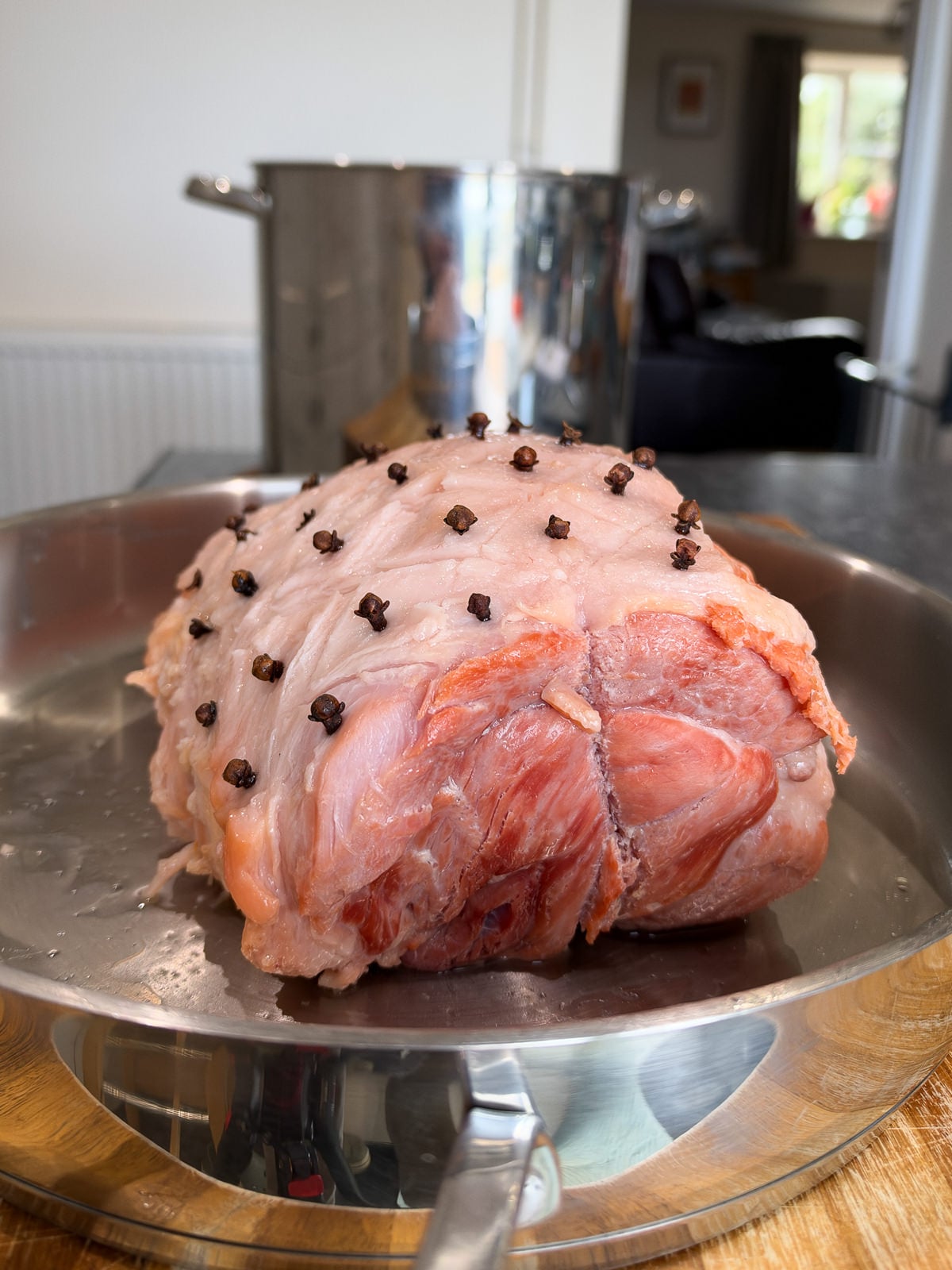
Before glazing the ham, we need to remove the rind/skin then score the fat in a criss cross pattern with a sharp knife. You’ll also need to preheat an oven to 200°c/392°f. Make sure to leave a thick, even layer of fat on top of the ham. As this is a Christmas style ham, we’re going to poke a whole clove into each of the scored diamonds.
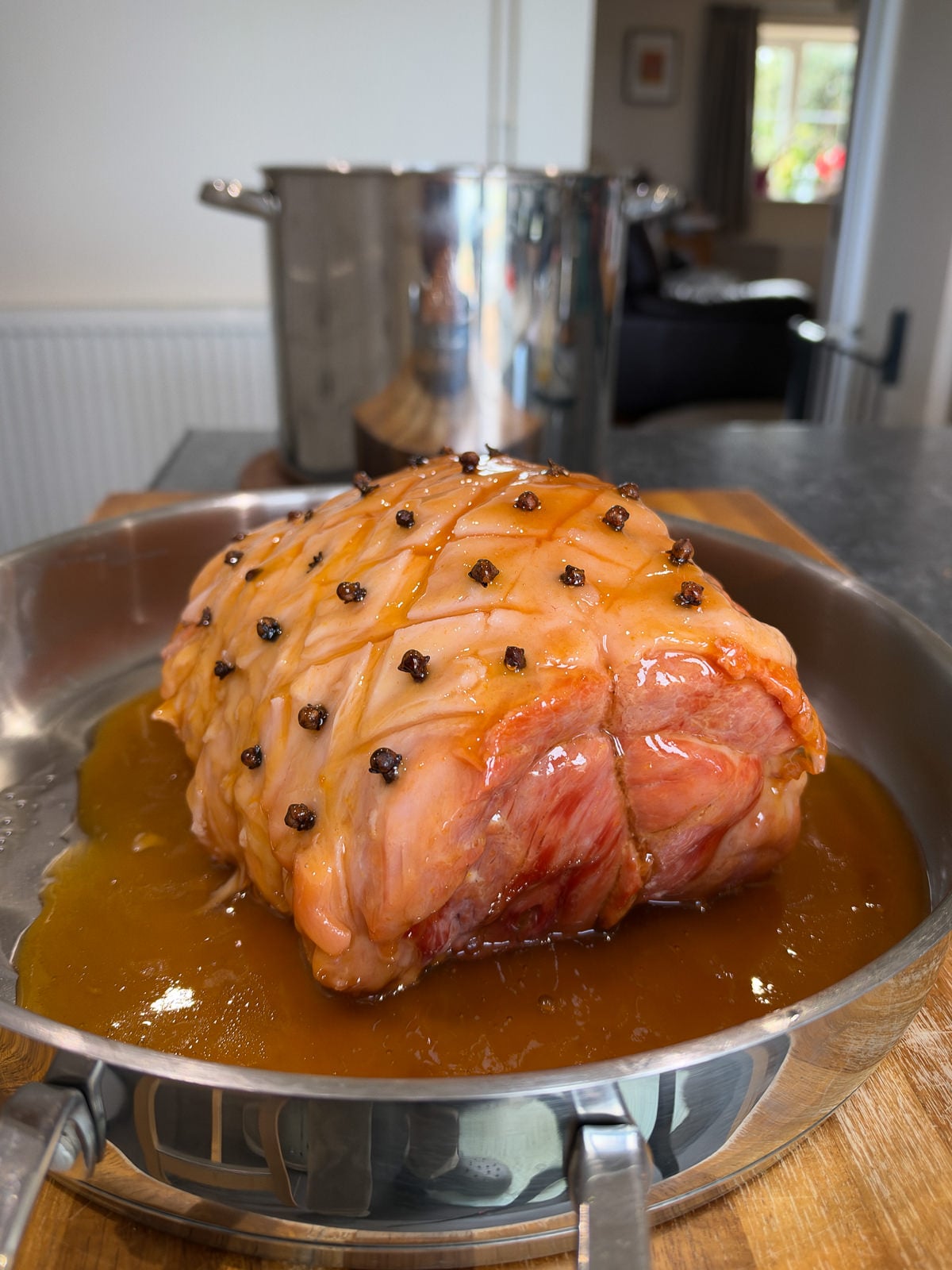
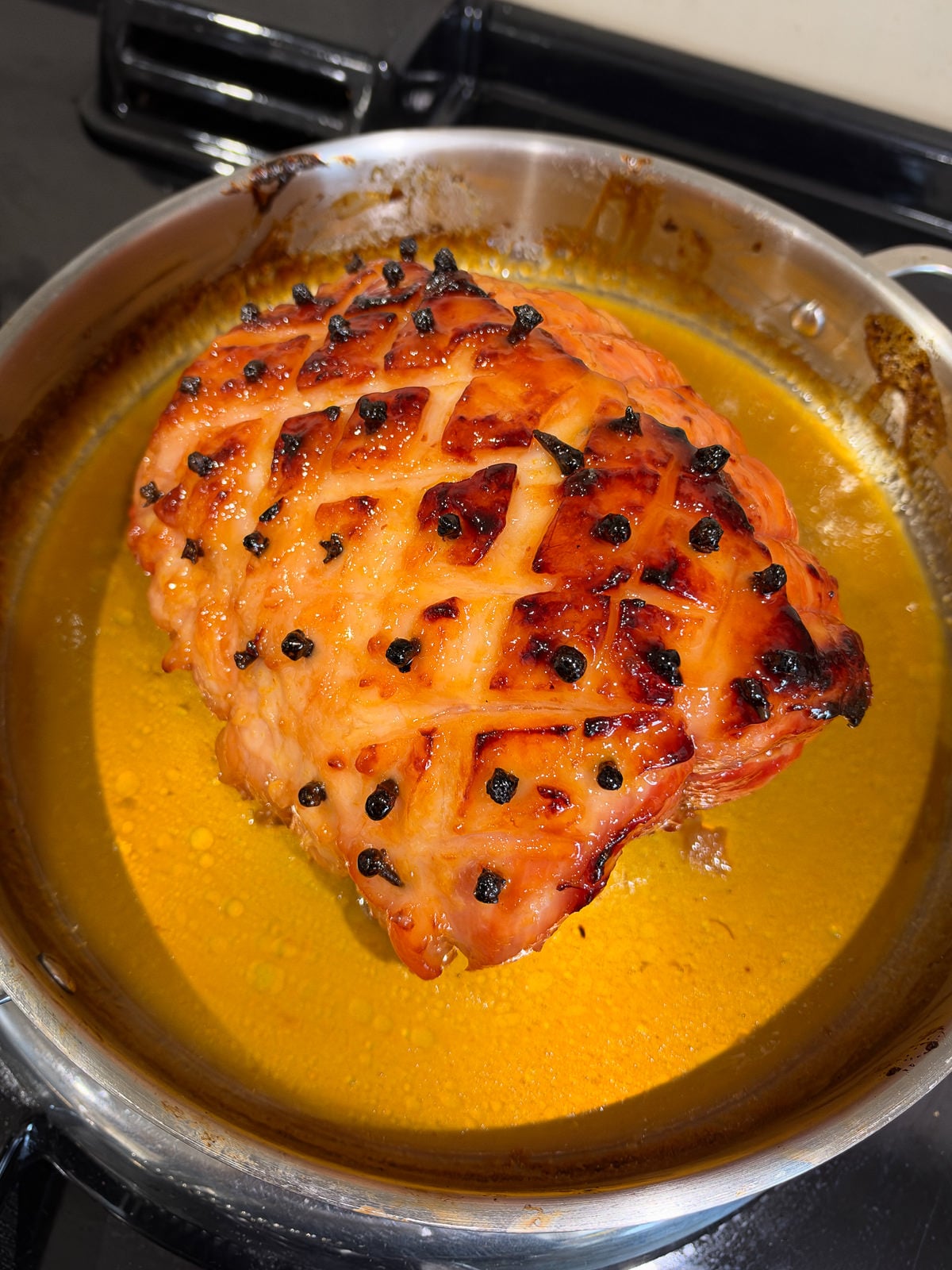
To glaze, pour the apricot and maple mixture over the ham then roast in the oven for 20-25 minutes until nicely caramelised. As the ham bakes, take it out of the oven every 5 minutes or so and baste with the glaze (this is why we roast the ham in a skillet!). This builds up an even layer of glaze & caramelisation!
Slicing and Serving
Once roasted and glazed, your ham needs to rest for 20 minutes then you can use a sharp knife to slice it. I like to spoon some of the excess glaze from the pan over the slices of ham, to serve.
What To Serve With Irn Bru Glazed Ham
An Irn Bru glazed ham is an easy centrepiece to make over the holidays, especially at Thanksgiving or Christmas. Most of the cooking is hands off so you can let it simmer away on the stove whilst you get on with your other dishes.
This style of glazed ham is super versatile so you can easily serve it as part of festive spread, alongside roast potatoes, stuffing and glazed roasted veg, with a selection of picky bits/nibbles at a Thanksgiving or Christmas gathering or inside a batch of homemade dinner rolls, to make sliders. Whatever you like really!
Irn Bru Glazed Ham Tips And Tricks
- Check with your butcher if your gammon needs soaking. This depends on the cure used for the gammon, so it’s always worth checking.
- Use 1901 original recipe Irn Bru for poaching the ham and for the glaze, as this has the best flavour and the higher sugar content helps the ham caramelise in the oven.
- Poach the ham until it is just cooked, to avoid making it dry after roasting.
- For perfectly cooked ham, use a digital food probe to check the meat’s internal temperature.
- Baste your ham with glaze as it roasts, to build up a thick, even layer of caramelisation. I like to roast the ham in a large skillet.
- Let your glazed ham rest for 20 minutes before slicing, to keep it juicy.
Frequently Asked Questions
To cook Irn Bru glazed ham in an Aga, poach the gammon on the simmering plate then roast on a grid shelf placed onto the floor of the roasting oven, to glaze. If your pan fits in the simmering oven, you can pop it in there once the gammon has been simmering for 10 minutes (though it might take a bit longer to poach like this).
1901 Irn Bru is the best choice for poaching ham, as it is made using the original recipe. This means that it has the best flavour and a higher sugar content, which is better for caramelisation.
Leftover Irn Bru ham needs to be stored in the fridge and is best eaten within 3 days.
The best way to reheat leftover glazed ham, is to place slices into a heatproof dish with any leftover glaze (or a splash of water) then cover with foil and bake at 180°c/356°f for 15-20 minutes until hot. You can serve leftover ham cold as well though, if you’d prefer.
To avoid making the ham dry, we poach the ham a few degrees short of being fully cooked as it will finish cooking in the oven. If you’re just poaching a ham, you’ll need to cook it to an internal temperature of 75°c/167°f for it to be fully cooked.
More Festive Recipes To Try
- Sticky Toffee Glazed Ham
- Slow Roasted Prime Rib (Reverse Seared)
- Roasted Spatchcock Turkey With Herb Butter
- Cherry Cola Ham With Hot Honey Glaze
- Turkey Porchetta
- Hot Honey & Sage Pigs In Blankets
- Goose Fat Roast Potatoes
If you have enjoyed this glazed ham recipe, it would mean a lot if you could leave a review & rating. And if you’d like to stay up to date with future recipes, follow us on Instagram & TikTok or subscribe to our newsletter!

Irn Bru Ham With Apricot Maple Glaze
Equipment
- Large Saucepan
- Large Skillet
- Small Saucepan
- Digital Food Probe
Ingredients
- 3 kg Boneless Gammon Joint (Soaked If Necessary – See Notes)
Poaching Liquid
- 2 Litres Irn Bru (Original Recipe Is Best – See Notes)
- 1 Brown Onion (Roughly Chopped)
- 2 Carrots (Roughly Chopped)
- 2 Sticks Of Celery (Roughly Chopped)
- 2 Bay Leaves
- 1 Cinnamon Stick
- 1 Star Anise
- 10 Black Peppercorns
- A Few Sprigs Of Rosemary & Thyme
Apricot Maple Glaze
- 300 g Apricot Jam
- 100 g Maple Syrup
- 1 tsp Dijon Mustard
- A Pinch Of Sea Salt
To Roast
- Whole Cloves (Optional)
Instructions
- First, measure out 150ml of the Irn Bru and set to one side. We'll be using this for the glaze.
Boiling The Ham
- Place the gammon joint into a large saucepan then add in the rest of the Irn Bru, plus the chopped veg, cinnamon, star anise, herbs & peppercorns.There's no need to peel the veg just make sure that they're all clean! Make sure to use a pan big enough to hold enough liquid to completely cover the gammon.
- Add enough cold water into the pan, to completely cover the gammon then cover the pan with a lid, set over a medium heat & bring to a gentle simmer.
- Gently simmer the gammon until it reaches an internal temperature of 71°c/160°f. This will take 2½ – 3 hours. Make sure to top the stock up with water if needed, so that the gammon is always covered. Turn the heat down slightly if necessary, to keep the stock at a gentle simmer.You'll need a digital food probe to check the internal temperature. Make sure to keep the liquid at a gentle simmer at all times – don't let it boil! I'd recommend checking the internal temperature of the gammon at frequent intervals after around 2 hours. The gammon needs to be just cooked once poached, as it will finish off in the oven.
- When your ham is almost ready, preheat an oven to 200°c/180°c fan (392°f/356°f).
- Once cooked, transfer the ham into a large, ovenproof skillet/pan then set to one side whilst you make the glaze.
Apricot Maple Glaze
- Add the apricot jam, maple syrup, reserved Irn Bru, Dijon mustard and salt into a small saucepan then set over a medium heat.
- Cook the glaze, stirring to melt them jam then bring to the boil. Cook for another 5 minutes or so until the mix has reduced into a thick, sticky glaze.
- Once cooked, pour the glaze into a jug through a sieve then set to one side.
Glazing The Ham
- Using a sharp knife, remove both the string & the skin from the ham, leaving a thick & even layer of fat then lightly score the fat in a criss-cross pattern.
- Poke a whole clove into each of the scored diamonds in the fat then pour the glaze all over the ham.
- Next, place the ham into the preheated oven then roast for 20-25 minutes until nicely caramelised. Take your ham out of the oven every 5 minutes or so and spoon the glaze in the skillet over the ham, to build up an even layer of caramelisation.
- Once cooked, let the ham rest for 20 minutes then use a sharp knife to cut it into slices. Spoon some of the excess glaze over the sliced ham then serve.
Salt Butter Smoke Magazine
Food that’s made for sharing.
The Christmas 2026 issue features 30 festive recipes, Christmas cooking guides, beautiful food photography and features on everything from the perfect cheeseboard to the art of trifle.
Discover the Christmas Issue →Notes
Enjoying This Recipe?
The Prep List is my free weekly newsletter with seasonal recipes, kitchen notes and behind-the-scenes from my kitchen. Add Salt Butter Smoke as a Google Preferred Source to see more of my recipes in Search.