Scottish Morning Rolls
Here’s how to make a batch of traditional Scottish morning rolls that are incredibly soft, with a deep, slightly chewy crust. They’re perfect for breakfasts!
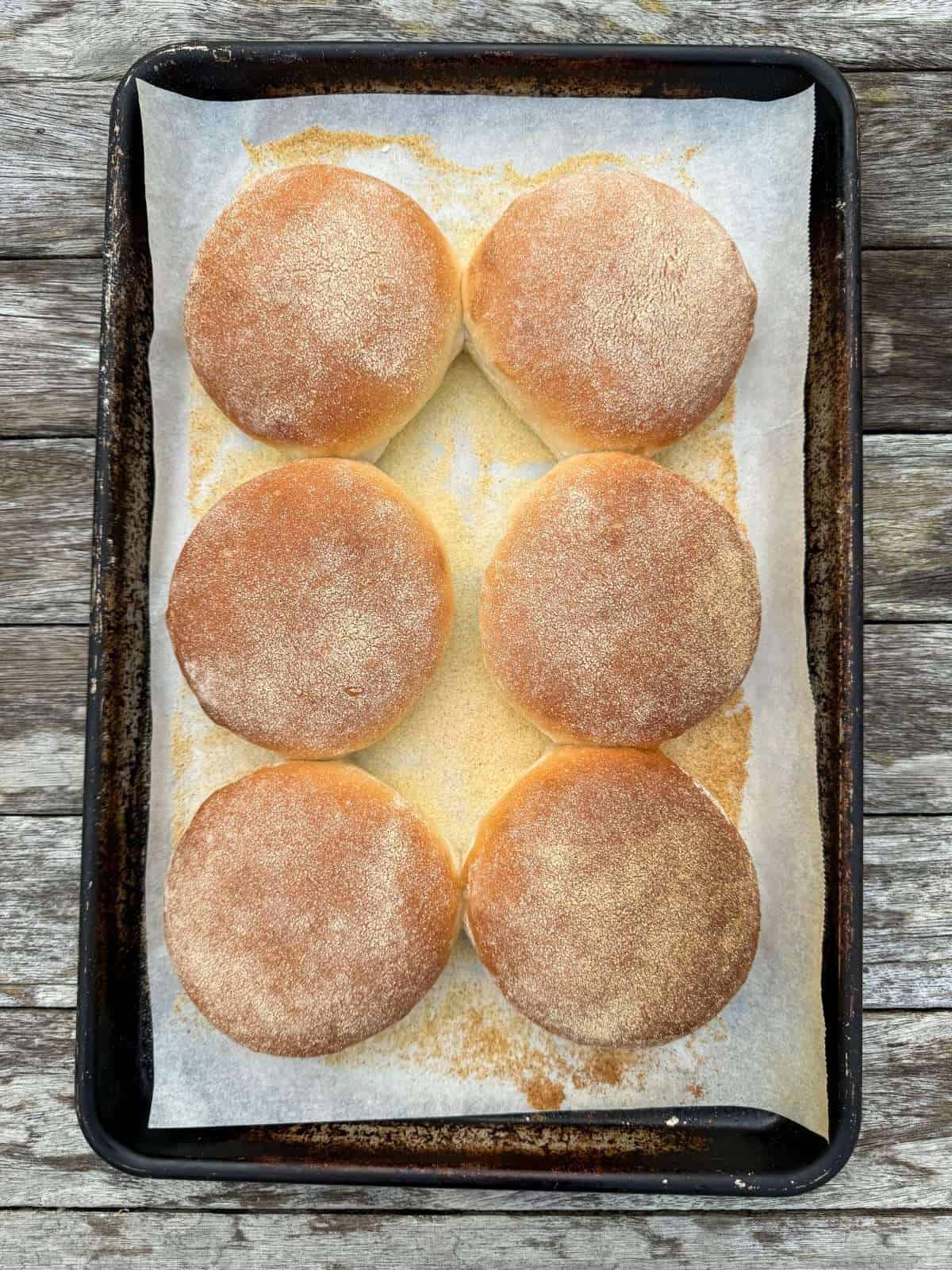
This recipe makes a batch of authentic Scottish morning rolls that have that signature soft, slightly chewy texture. They’re perfect for a breakfast sandwich but are just as good served at lunch or dinner. They’re super versatile! In Scotland, well fired rolls are traditionally filled with square sausage (Lorne), black pudding, bacon & a fried egg. You could even throw in haggis or some tattie scones for a proper full Scottish breakfast.
Although I’m not from Scotland, my neighbour is & I got their seal of approval before publishing this recipe! So if you’re after an authentic, bakery quality Scottish bread roll that’s perfect for a full Scottish breakfast, then you’re in the right place. If you’ve ever had a freshly baked roll from a Scottish bakery, this recipe replicates this at home.
We’ll be covering how to make the dough from scratch, proper shaping techniques for perfectly round rolls, the difference between soft morning rolls & well fired rolls and how to get that classic chewy texture and the floured top.
What Are Scottish Morning Rolls?
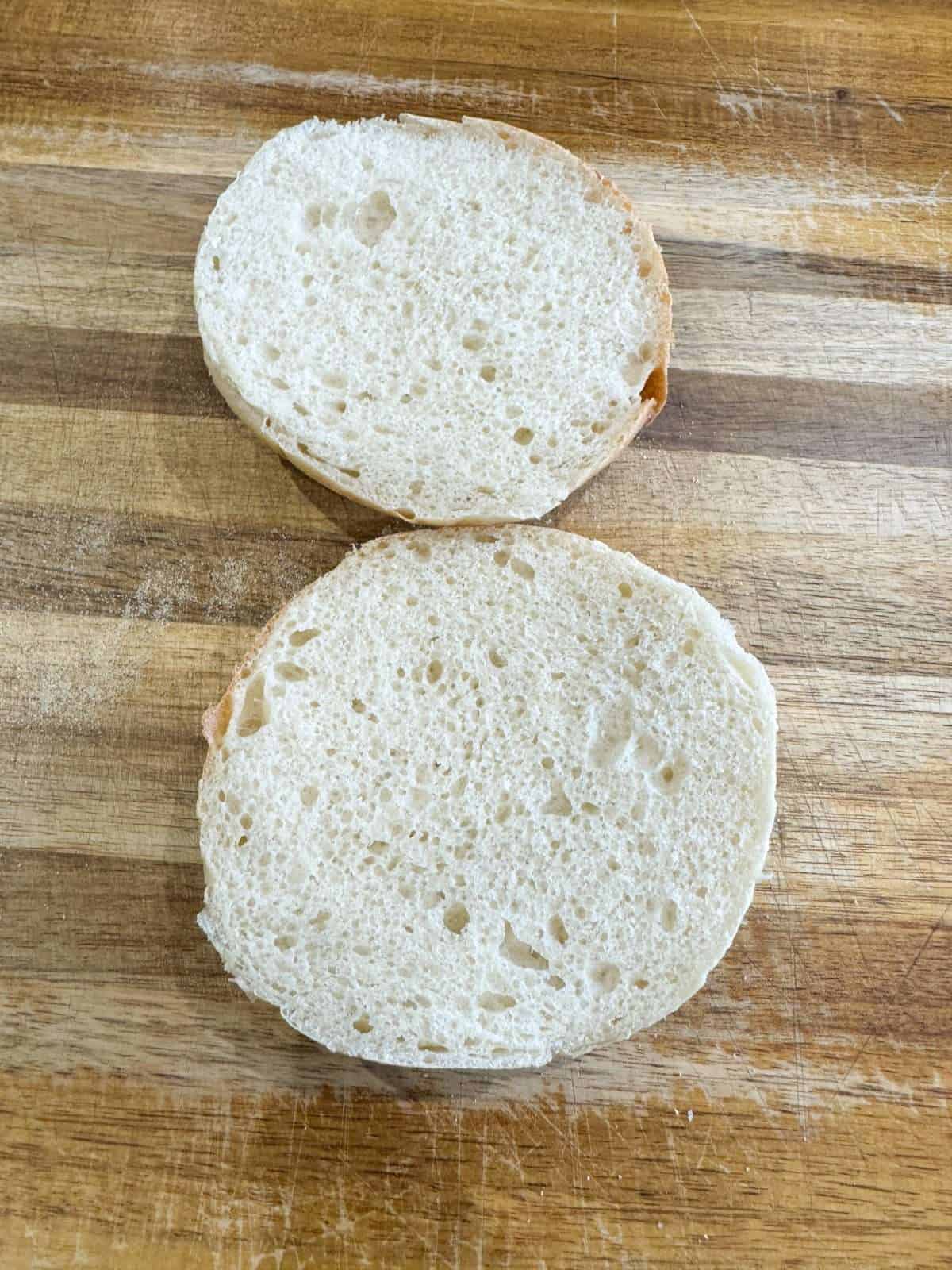
Scottish morning rolls get their name from the time of the day that are sold. These bread rolls are baked fresh daily in Scottish bakeries & are a staple part of a Scottish breakfast. They’re incredibly soft on the inside, have a deep, slightly chewy crust & make the most amazing fried breakfast sandwiches! Morning rolls can also be made into well fired rolls (another traditional Scottish bread roll) by baking them for slightly longer until they have a darker, crispier crust with a deeper flavour.
Depending on the region, these rolls are also known as Glasgow rolls, softies (or safties), baps, floury rolls & well fired rolls (if they’ve been baked for longer). All these names refer to a similar style of soft bread flour that’s been dusted with flour.
For more bread making, take a look at our ever growing collection of bread recipes! There’s loads to choose from here like buns, bagels, sourdough, pizza doughs, doughnuts & lots more…
Ingredients For Scottish Morning Rolls
Here’s what you’ll need to make a batch of Scottish morning rolls with the signature soft, chewy texture that they’re known for. I’ve used ingredients that are traditionally used for this style of roll but have included substitutions where possible.
- Bread Flour – You’ll need a strong white bread flour for these rolls. It’s best to use a flour with a protein content of at least 12%. I used a Canadian bread flour from Shipton Mill. Using the correct flour is key for proper gluten development. Avoid plain flour as this won’t give the rolls the proper texture.
- Yeast – We’re using dried active yeast for this recipe which needs to be activated in warm water (not hot!) before being used in the dough. Instant yeast will also work but won’t need to be activated, it can be added straight into the flour.
- Lard – Adding softened lard to our dough gives the rolls a softer texture & a savoury flavour. Butter would also work but lard is the more traditional fat to use.
- Sea Salt – A good quality sea salt is best for bread doughs. I like to use Maldon but any good fine sea salt will work.
- Sugar – A small amount of sugar adds flavour to the dough & gives the rolls a deeper colour once baked.
- Semolina – Sprinkling the rolls with semolina before baking gives them extra texture & a crisp crust once baked. Rice flour or a dusting of your bread flour will also work.

How To Make Authentic Scottish Morning Rolls
For homemade Scottish morning rolls to be authentic, they need to have a soft, slightly chewy texture, a deep golden brown finish (unless well fired) & a floured top. Here’s how to achieve this at home, step by step.
1. Activate The Yeast
We’re using dried active yeast which needs to be activated before being used. To do this, we take the water from our dough, warm it to 38°c/100°f then whisk in the dried yeast. We leave this somewhere warm for 5-10 minutes, until it goes frothy then it’s ready to use.
Tip – If your yeast doesn’t go frothy, it may be inactive. It’s best to start again with a new batch of yeast.
2. Mix The Dough
To make the dough, we mix bread flour with sea salt, sugar & the activated yeast (using a stand mixer with a dough hook attached), until a smooth dough forms that comes away from the sides of the mixing bowl.
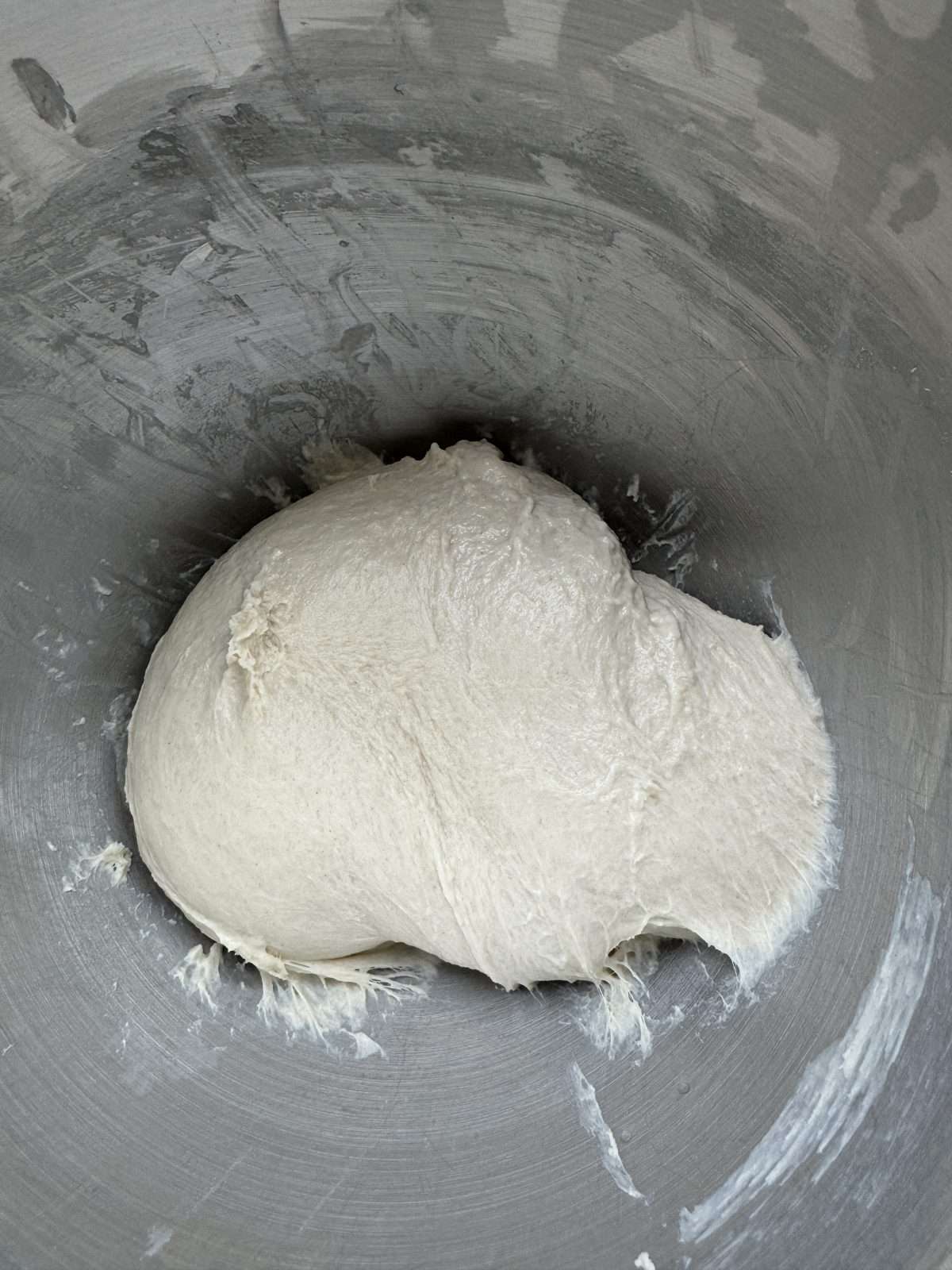
Then we mix in softened lard, a small amount at a time. We keep kneading the dough for another 5 minutes or so, until it passes the windowpane test then we transfer it to a lightly oiled bowl. You’re looking for a soft, slightly tacky dough.
The Windowpane Test – This is where you stretch a small portion of dough between your fingers, to test gluten development. If it stretches thin enough to see through, the dough is ready, if it tears the dough needs more kneading.
3. First Rise
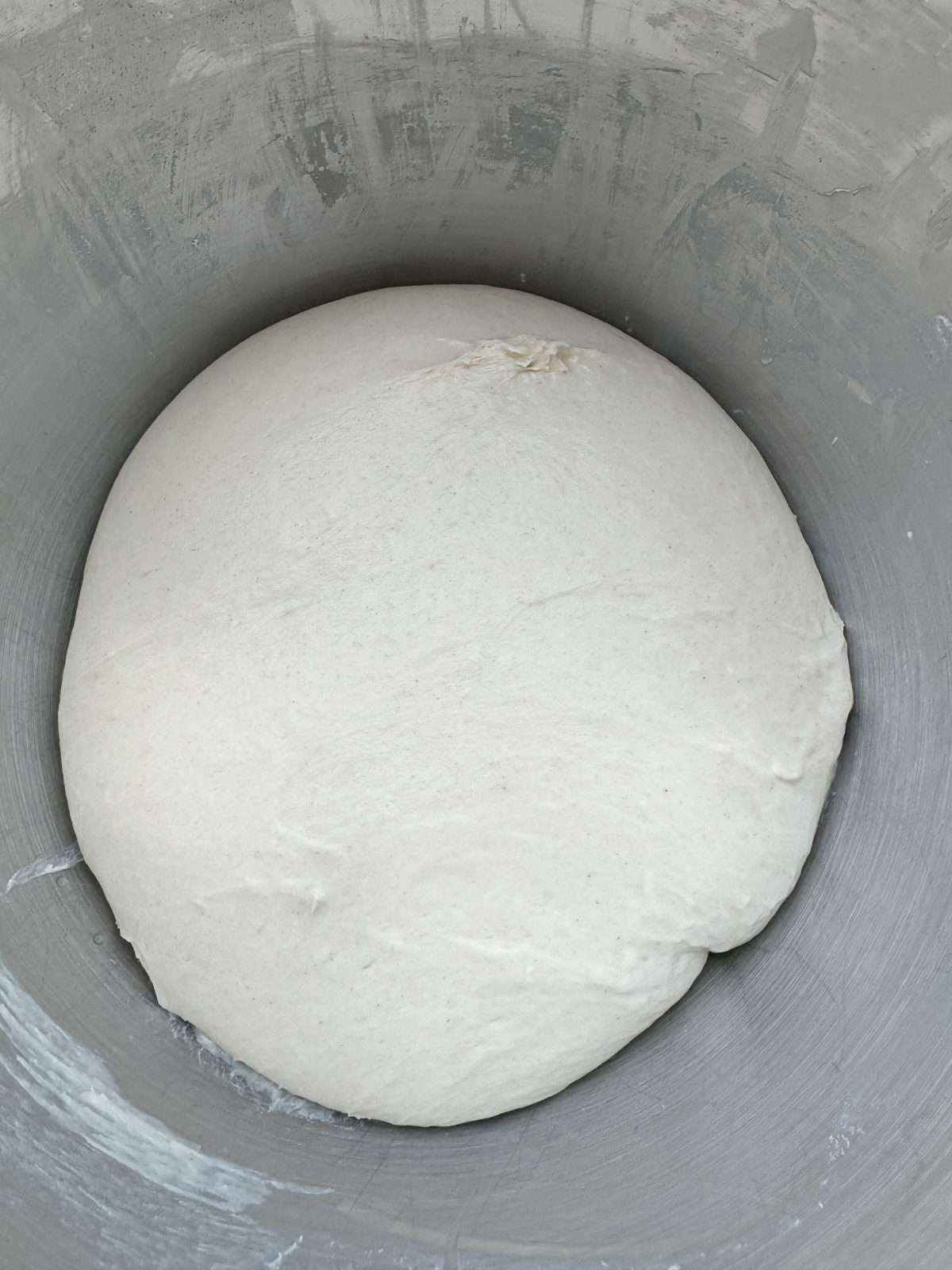
Once mixed, we let the dough prove at room temperature for 1-1½ hours, until it has doubled in size. Once proved, the dough will feel light & airy.
4. Shaping
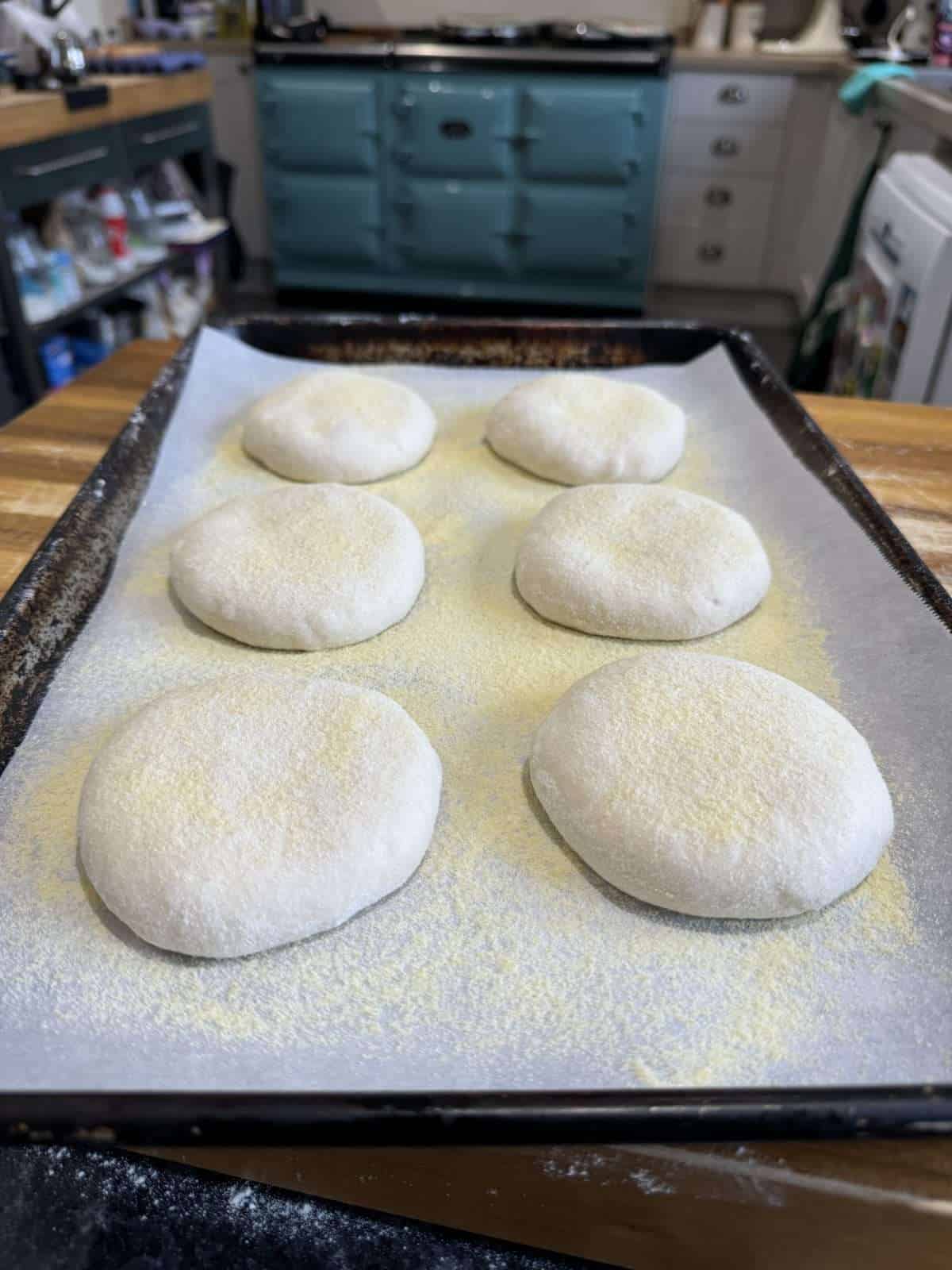
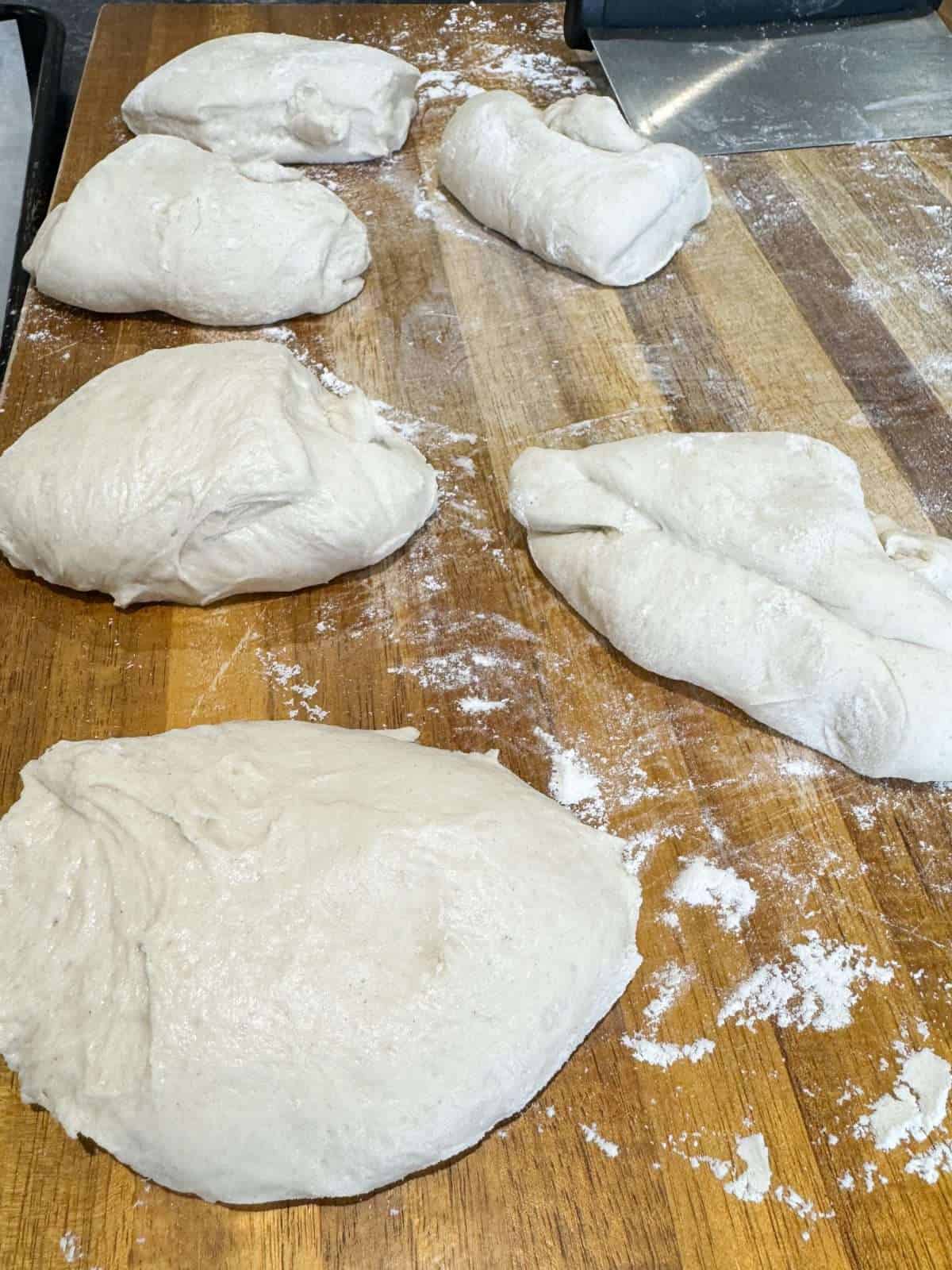
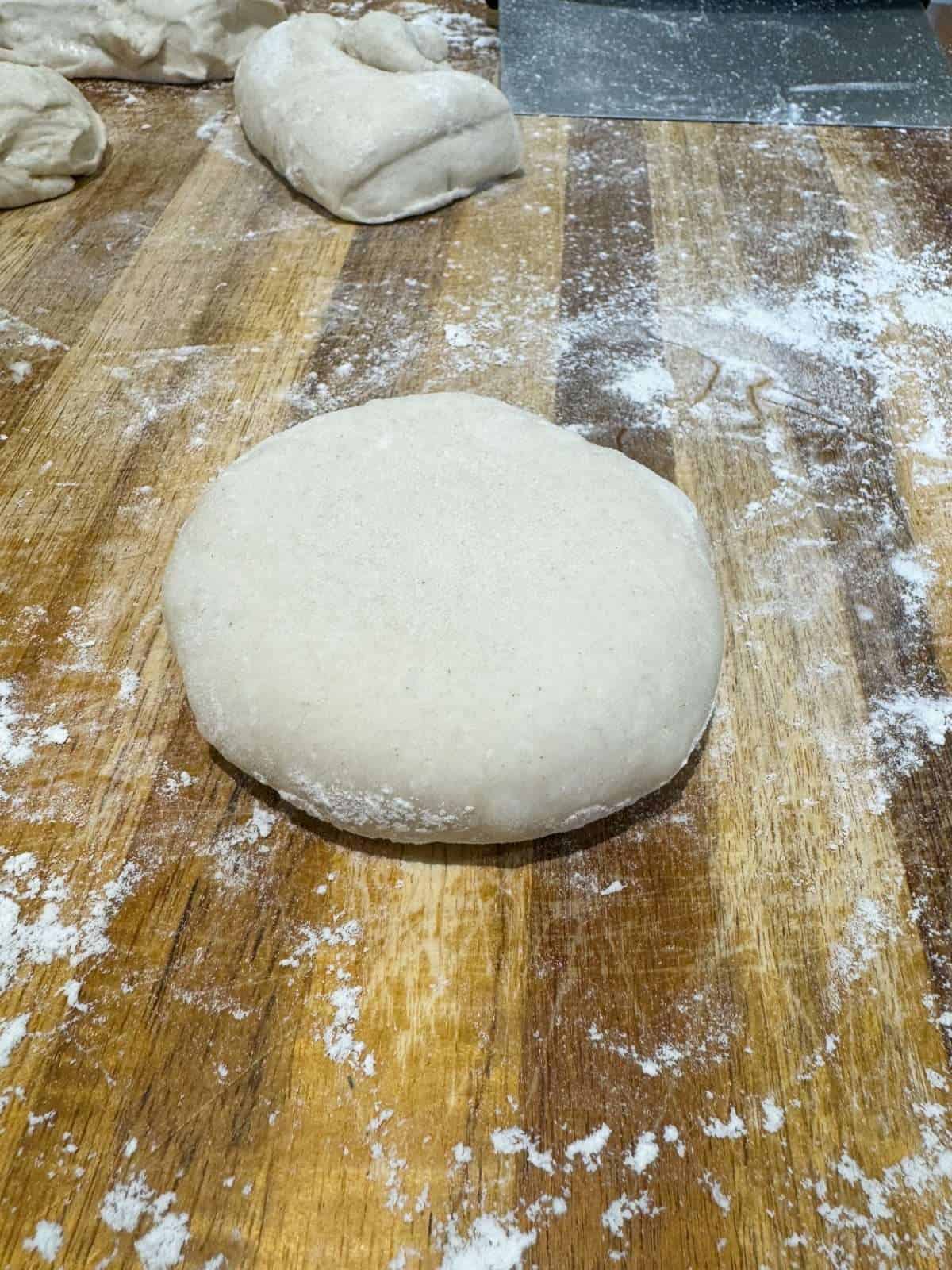
Once risen, we knock the dough back then portion into 6 equal pieces, each one weighing around 100 grams. Next, we take a piece of dough & shape into a ball using cupped hands. We then use a rolling pin to roll the dough out into a disc that’s roughly 8cm wide & 2cm thick. Once shaped, we place the rolls onto a tray dusted with semolina.
Tip – Rolling the dough flat gives the rolls their signature flatter shape. If you didn’t flatten the rolls, they’d have a more dome like shape like a regular burger bun or bread roll.
5. Second Rise
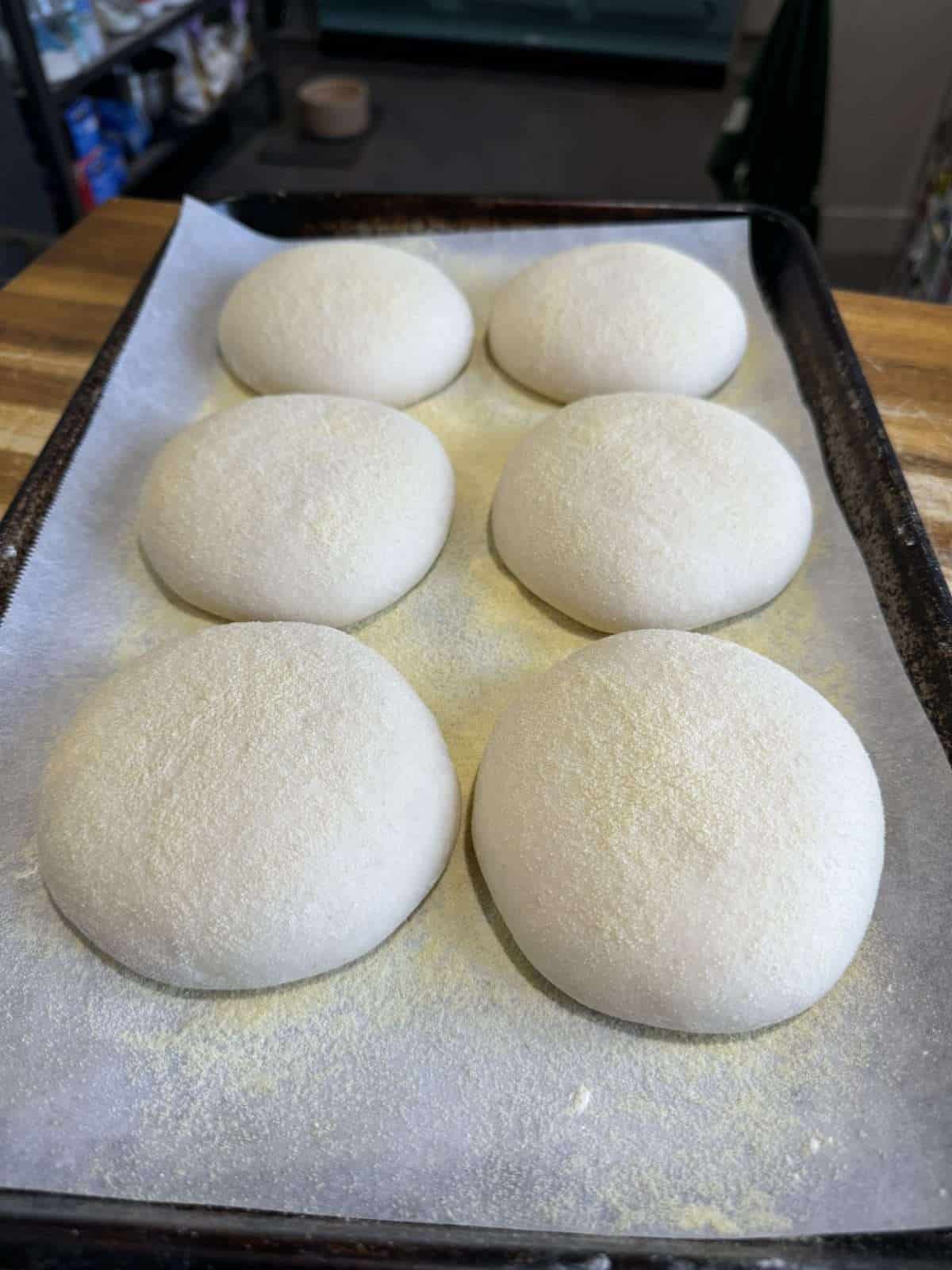
For the traditional finish, we dust the rolls with semolina before letting them rise for another 45 minutes or so, until they are well risen & touching each other.
6. Baking
We cook the morning rolls at 230°c/446°f for 10-12 minutes, until they are a deep, golden brown on top then let them cool on the tray before serving. For well fired rolls, bake them for an extra 5-10 minutes until the top is crisp, with a darker, deeper colour.
The Windowpane Test
The best way to assess the gluten development in your dough is by using the windowpane test. Here, you take a small piece of dough & stretch it between your fingers. If it stretches thin enough so that you are able to see through it, enough gluten has been developed. If it tears, more kneading is required.
This method of testing gluten development is used in most bread recipes so it’s a handy technique to know!
How To Shape Scottish Morning Rolls
Unlike regular bread rolls that are shaped completely by hand, morning rolls are flattened with a rolling pin to give them their signature shape. This step is also what gives morning rolls their crisp crust. Don’t be tempted to skip the flattening step, as your morning rolls will resemble a regular burger bun! This is a key step to making bakery style rolls at home.
Here’s how to shape them properly:
- Knock the dough back then divide into 100 gram pieces.
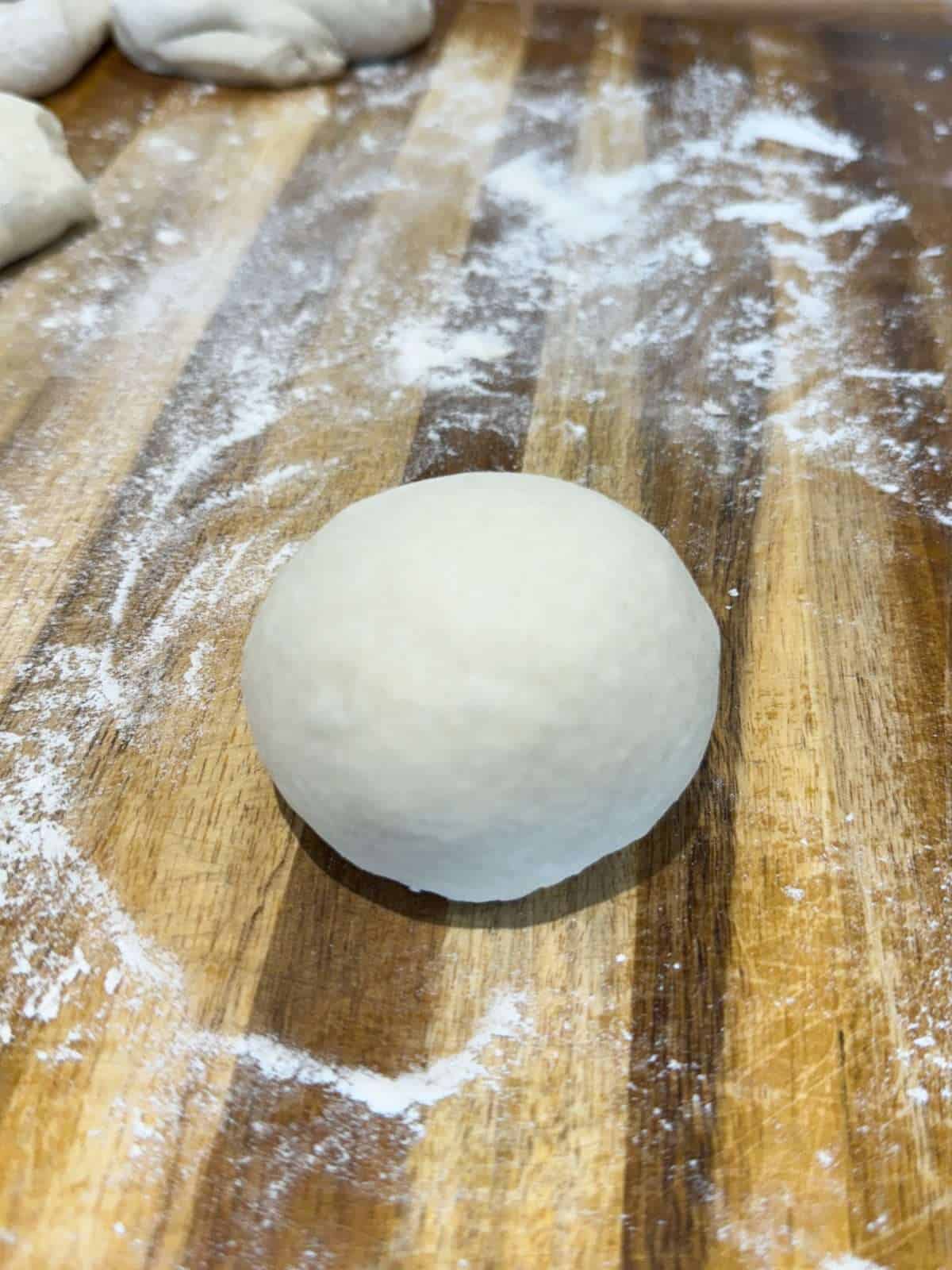
- Take a piece of dough & bring the edges into the middle. Flip the dough over & use cupped hands to shape into a tight ball. Dragging the seam on the work surface helps increase surface tension.
- Using a rolling pin, roll the ball of dough out into a disc that is roughly 8 cm wide & 2cm thick.
- Place the dough onto a lined baking tray (dusted with semolina as well) then repeat the shaping process with the remaining dough.
- Once shaped, lightly sprinkle the rolls with semolina then leave to rise before baking.
Morning Rolls Tips, Tricks & Troubleshooting
Tips & Tricks
- Use a strong bread flour (12-14% protein)
This ensures that the gluten develops properly, giving the rolls their signature soft, fluffy texture. - Use lard for a traditional flavour & texture
Add lard to the bread dough for a softer texture & a deep, savoury flavour. To make your rolls vegetarian, use butter instead! - Prove in a warm environment
Prove the dough in a warm environment for optimum fermentation. A cold environment will slow down the proving step significantly. - Dust rolls with flour
Sprinkle your morning rolls with semolina or rice flour before baking for a crisp crust. - Bake at a high temperature
Bake the morning rolls at a high temperature, to give their crust a deeper colour & flavour. For well fired rolls, bake them for longer! - Serve fresh
Serve your Scottish morning rolls whilst they’re fresh, with plenty of butter!
Troubleshooting
- The dough didn’t rise properly – This can happen if your yeast isn’t active. To avoid this, make sure to use a fresh packet of yeast & activate it in warm water before using.
- My rolls spread out too much in the oven – If your shaped rolls have been over proved before baking, they’ll lose structure & spread out in the oven. To avoid this, make sure to prove the rolls until they’ve increased in size by 50% & are just touching.
- My morning rolls are pale after baking – Your oven wasn’t hot enough! Make sure to preheat your oven thoroughly before baking the rolls.
- My morning rolls have a dense texture – This will happen if your dough wasn’t kneaded enough or didn’t prove properly. Make sure your dough passes the windowpane test & doubles in size before shaping.
- The texture isn’t soft & chewy – If you use a flour with a lower protein content, your morning rolls won’t have the proper texture. To avoid this, use a strong white bread flour with a protein content between 12-14%.
Serving Suggestions
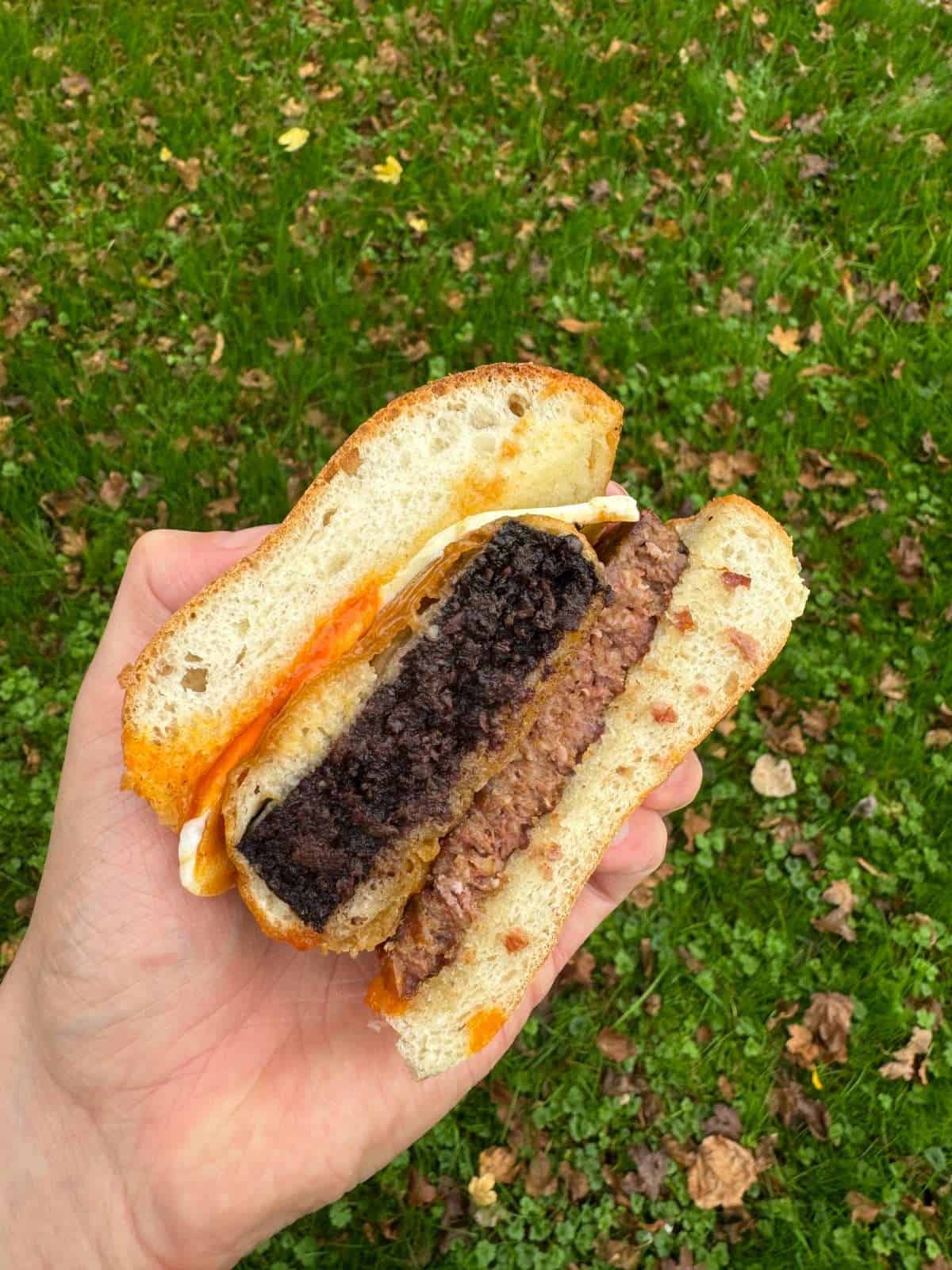
Morning rolls are a staple part of a Scottish breakfast table & are fantastic when filled with components of a Scottish fried breakfast. This includes crispy fried bacon, black pudding, square sausage (Lorne), fried eggs & haggis. Morning rolls aren’t just eaten at breakfast though, they’re great served at lunch or dinner as well.
I made a seriously tasty sandwich with my morning rolls! This was filled with square sausage, beer battered black pudding, a fried egg & plenty of brown sauce…
Frequently Asked Questions
Bake the morning rolls in the roasting oven, on the second from top set of runners. Turn the baking tray around after 10 minutes then bake for another 2 minutes, so that the rolls colour evenly.
Scottish morning rolls are best eaten on the day that they were made but will keep for another day or two when stored in an airtight container.
Yes, Scottish morning rolls can be frozen & will keep for up to 3 months in the freezer. Make sure to let your rolls cool down fully before freezing & store them in an airtight container/food bag to avoid freezer burn. You’ll need to let your rolls defrost fully before using & it’s best to reheat or toast them before serving.
Well fired rolls are morning rolls that have been baked at a high temperature until they get a blackened, overcooked crust that’s chewy & slightly bitter. You can find well fired rolls in most Scottish bakeries & newsagents.
To make Scottish morning rolls, you’ll need to use a strong white bread flour. Using a flour with a protein content between 12-14% is best.
More Bread Recipes To Try!
- Potato Burger Buns
- Tangzhong Dinner Rolls
- Potato Sandwich Bread
- Same Day Focaccia
- Overnight Tangzhong Doughnuts
- 3 Day Poolish Pizza Dough
If you have enjoyed this Scottish morning roll recipe, it would mean a lot if you could leave a review & rating. And if you’d like to stay up to date with future recipes, follow us on Instagram & TikTok or subscribe to our newsletter!
Scottish Morning Rolls
Equipment
- Digital Food Probe
- Stand Mixer
- Dough Scraper
- Rolling Pin
- Baking Tray
Ingredients
- 350 g Strong White Bread Flour (See Notes)
- 7 g Fine Sea Salt
- 10 g Caster Sugar
- 5 g Dried Active Yeast (See Notes)
- 230 g Water (@38°c/100°f)
- 30 g Lard (At Room Temperature)
- Fine Semolina (To Sprinkle On Top)
Instructions
Dough
- Add the flour, salt & sugar into the bowl of a stand mixer, whisk to combine then set aside.
- Next, add the water & yeast into a jug, whisk to combine then leave for 5-10 minutes, to go frothy.
- Give the activated yeast another whisk then pour into the flour. Mix on a medium speed, using the dough hook attachment until the dough is smooth & starting to come away from the sides of the bowl. This will take 3-4 minutes.
- With the mixer still going, add in the lard a small amount at a time, incorporating each piece fully before adding more. Once all the lard has been incorporated, keep mixing until the dough passes the window pane test. This will take another 5-10 minutes of kneading.
- Transfer the dough to a lightly oiled bowl, cover with clingfilm or a tea towel & leave to double in size at room temperature. This will take 1-1½ hours.
Shaping
- Line a large baking tray with baking parchment then dust with semolina. Set this aside for now.
- Once risen, knock the dough back then transfer to a lightly floured work surface. Using a bench scraper, divide the dough into 6 equal pieces, each weighing around 100 grams.
- Take a piece of dough & bring the edges into the middle. Flip the dough over & use cupped hands to shape into a tight ball. Dragging the seam on the work surface helps increase surface tension.
- Using a rolling pin, roll the ball of dough out into a disc that is roughly 8 cm wide & 2cm thick. Place the dough onto the lined baking tray then repeat the shaping process with the remaining dough.Make sure to leave a couple of centimetres space between each roll. Arrange the rolls so that they're in 3 rows of 2.
- Once shaped, lightly sprinkle the rolls with semolina then cover with another baking tray (flipped upside down) or loosely with clingfilm. Leave to rise at room temperature until they've increased in size by 50%. This will take 45 minutes – 1 hour.The rolls will be touching slightly once proved.
Baking
- Whilst your rolls are proving, preheat an oven to 230°c/210°c fan (446°f/410°f).
- Once your rolls are risen, bake them in the preheated oven for 10-12 minutes, until they're a deep golden brown on top.
- Let the rolls cool on the tray then serve!
Salt Butter Smoke Magazine
Food that’s made for sharing.
The Christmas 2026 issue features 30 festive recipes, Christmas cooking guides, beautiful food photography and features on everything from the perfect cheeseboard to the art of trifle.
Discover the Christmas Issue →Notes
Enjoying This Recipe?
The Prep List is my free weekly newsletter with seasonal recipes, kitchen notes and behind-the-scenes from my kitchen. Add Salt Butter Smoke as a Google Preferred Source to see more of my recipes in Search.