
2 Day Poolish Dinner Rolls
The absolute best dinner rolls you can make at home! The secret to making the softest, fluffiest rolls is swapping regular yeast for an overnight pre ferment.
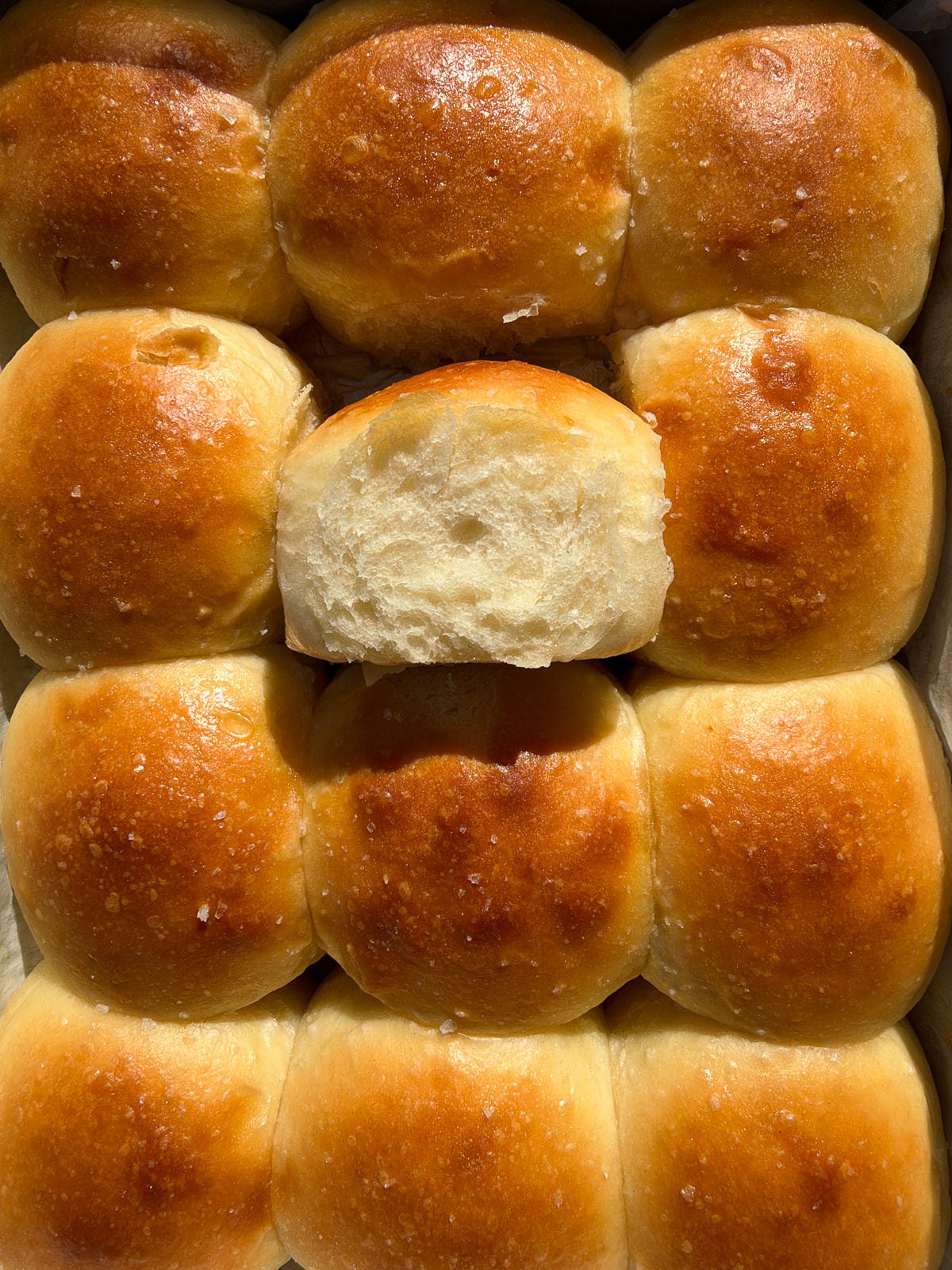
I’ve been working on converting my tangzhong dinner roll recipe to use a poolish pre ferment for a while now and I’ve finally perfected it! There was a lot of trial and error when I was developing this recipe but it sure was worth it. Swapping regular yeast for an overnight fermented poolish adds loads of flavour to these rolls, whilst giving them an even softer, fluffier texture.
Alongside the poolish, I’ve added a tangzhong to the dough as well. If you’re not familiar, this is an Asian technique where a small portion of the dough’s flour and liquid is cooked into a paste (like a roux) then once cooled, it’s mixed into the dough with the rest of the ingredients.
The main challenge I faced with this recipe was getting the amount of yeast in the poolish and the fermentation time just right. I went with a longer ferment in the fridge which gives you a bit more flexibility with the timings and also means that you can easily plan when your dinner rolls will be ready. This is especially handy at Thanksgiving when there’s lots to do!
For more bread & baking recipes, check out our ever growing collection of baking recipes! There’s a whole load of buns, rolls & loaves to make, as well as cakes, cookies, brownies & more…
What Is A Poolish?
A poolish ia a 100% hydration pre ferment that’s used instead of regular yeast in a bread recipe. As a poolish is made with 100% hydration, you’ll need equal quantities of flour and water, plus a tiny amount of yeast. Then it’s just a case of mixing it all together then letting the poolish ferment; either in the fridge or at room temperature (I use both!).
For dinner rolls, I’ve found that using 0.5% instant yeast (in relation to the flour in the poolish) paired with a 16-20 hour cold ferment in the fridge works best. I give the poolish 1 hour at room temp before the cold ferment, to kick start fermentation and 1 hour after as well, to temper the pre ferment so you’re not adding cold poolish into the dough!
Usually when you make bread dough with a poolish, you’d use just the pre ferment. But as the dough for these dinner rolls is enriched with butter, eggs, milk and a tangzhong, I found that adding a tiny amount of extra yeast is needed for a proper rise whilst also cutting down the proving time considerably and helping achieve that perfectly soft, fluffy crumb.
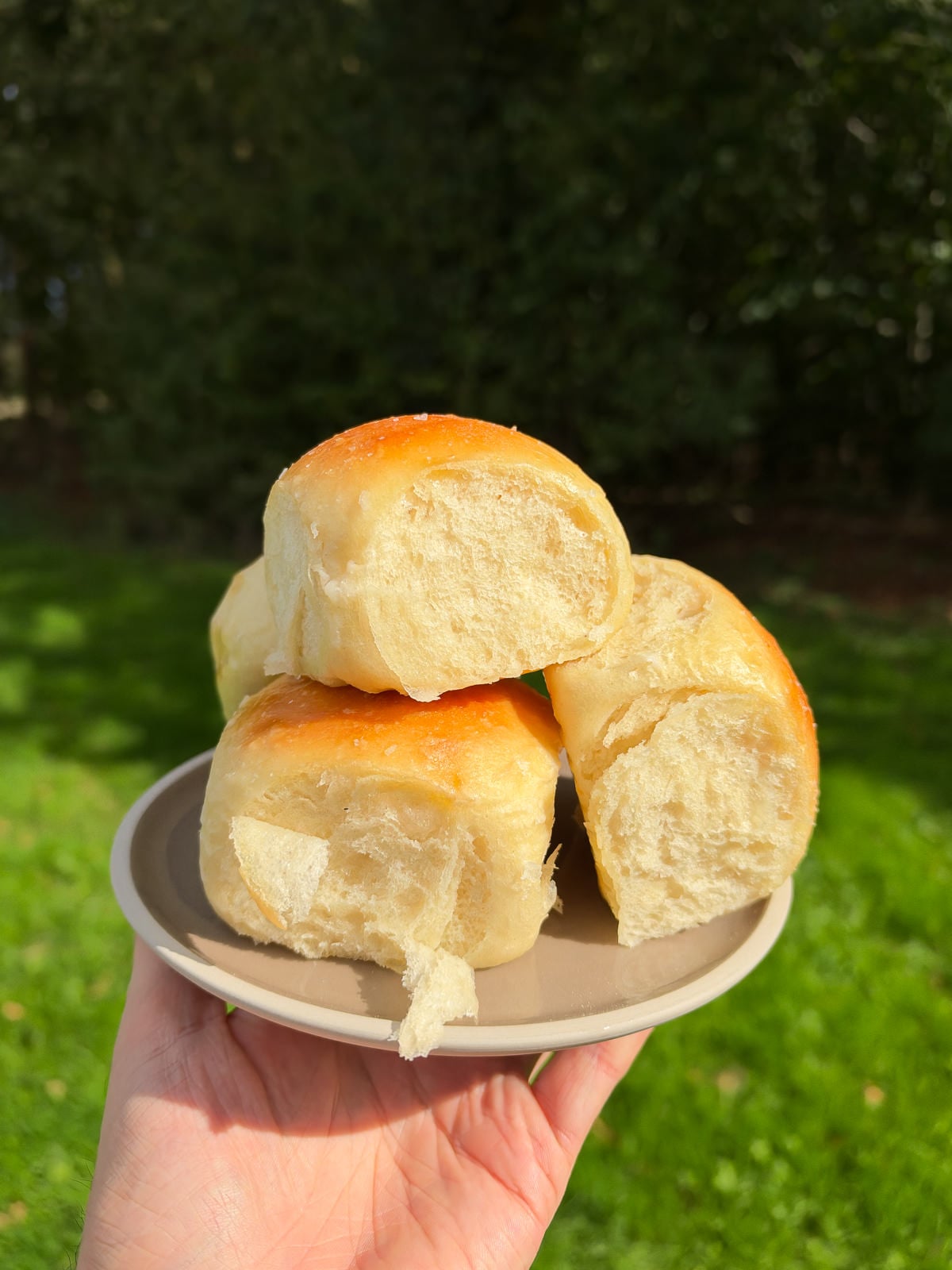
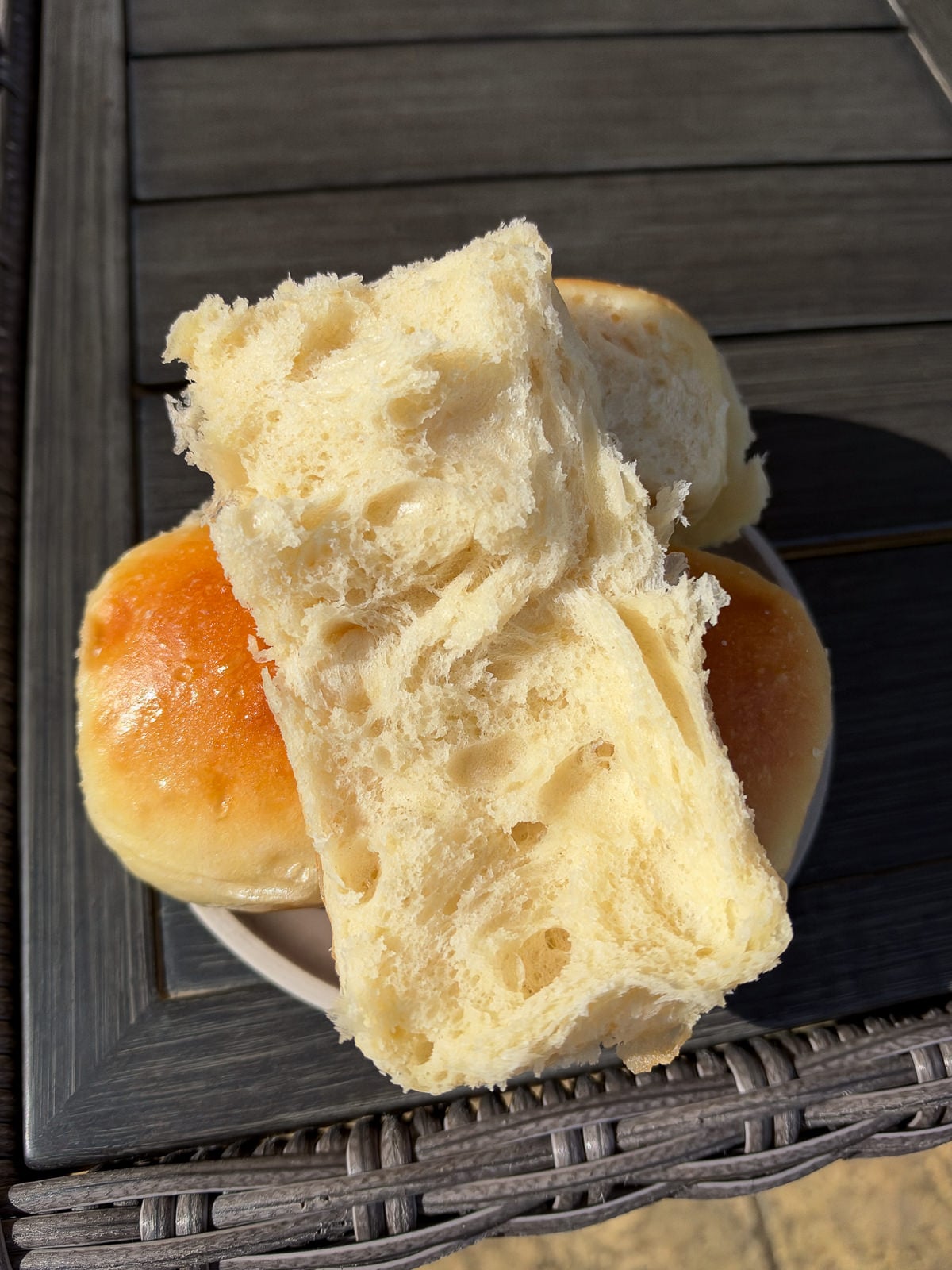
Ingredients For Poolish Dinner Rolls
- Bread Flour – For poolish dinner rolls, you’ll need a strong white bread flour with a protein content between 12-15%. I use a Canadian bread flour from Shipton Mill but other brands will work too.
- Yeast – I’ve got the best results making this recipe with instant/fast action yeast, so it’s what I’d recommend you use too! You will need a set of micro scales to weigh the yeast out, as we only use a tiny amount. As this dough is enriched with milk, butter, eggs and a tangzhong, we also add a tiny amount of yeast to the dough alongside the poolish, so that it rises properly.
- Tangzhong – A tangzhong is where a small amount of the flour & liquid from the dough is cooked on the stove (like a roux) then is added in with the rest of the ingredients.
- Salt – Using a good quality sea salt makes all the difference when making bread. I use Maldon salt.
- Sugar – Adding a small amount of caster sugar to the dough adds moisture, sweetness and helps the bread colour properly when baked.
- Milk Powder (Optional) – Adding milk powder to bread dough helps keep the bread soft & gives the rolls a deeper colour once baked. I use skimmed milk powder but whole will work as well. And don’t worry if you haven’t got any, these dinner rolls will still turn out great without milk powder!
- Butter – Make sure to use unsalted butter for this recipe, as we’re adding salt into the dough.
- Milk – I use whole milk for this batch of dinner rolls but semi skimmed will work too.
- Water – You’ll need water for the poolish and the tangzhong. Make sure to measure the temperature of the water for the poolish, for optimum fermentation.
Baker’s Percentages
Baker’s percentages are used to work out how much of each ingredient you need, in relation to the total amount of flour. However the amount of yeast in the poolish is calculated in relation to the flour used in just the pre ferment. If we’re going to be technical, 0.5% of the flour (for the yeast) in the poolish is actually 0.75g but a lot of micro scales don’t measure in 0.05g, so I went with 0.7g.
The Poolish
- Percentage Of Total Flour Used: 30%
- Hydration: 100%
- Yeast: 0.5%
Tangzhong
- Percentage Of Total Flour Used: 5%
- Ratio Of Flour To Liquid: 1:4
The Dough (Total Percentages Including Pre Ferment & Tangzhong)
- Hydration: 65%
- Salt: 2%
- Sugar: 5%
- Extra Yeast: 0.2%
- Total Yeast: 2.8%
- Butter: 10%
How To Make 2 Day Poolish Dinner Rolls
Although these dinner rolls take 2 days to make, most of this time is hands off! The longer fermentation actually gives you more control over the schedule too, so it’s easy to plan when you want them to be ready.
This dough is slightly more technical than a regular batch of dinner rolls, so I’d suggest starting with my tangzhong dinner rolls if you’re new to bread making. With this dough, you’ll need to know what signs to look for with the fermentation but I’ve broken this down into easy to follow steps.
1. Make The Poolish Pre Ferment
The day before making the dough, you need to make the poolish as it needs to ferment in the fridge overnight. To make the poolish, add water (at 25°c/77°f) into a mixing bowl then stir in the yeast, to dissolve. Add in strong white bread flour then stir until just combined. A poolish has a hydration level of 100%, so the mix will be a thick paste once mixed.
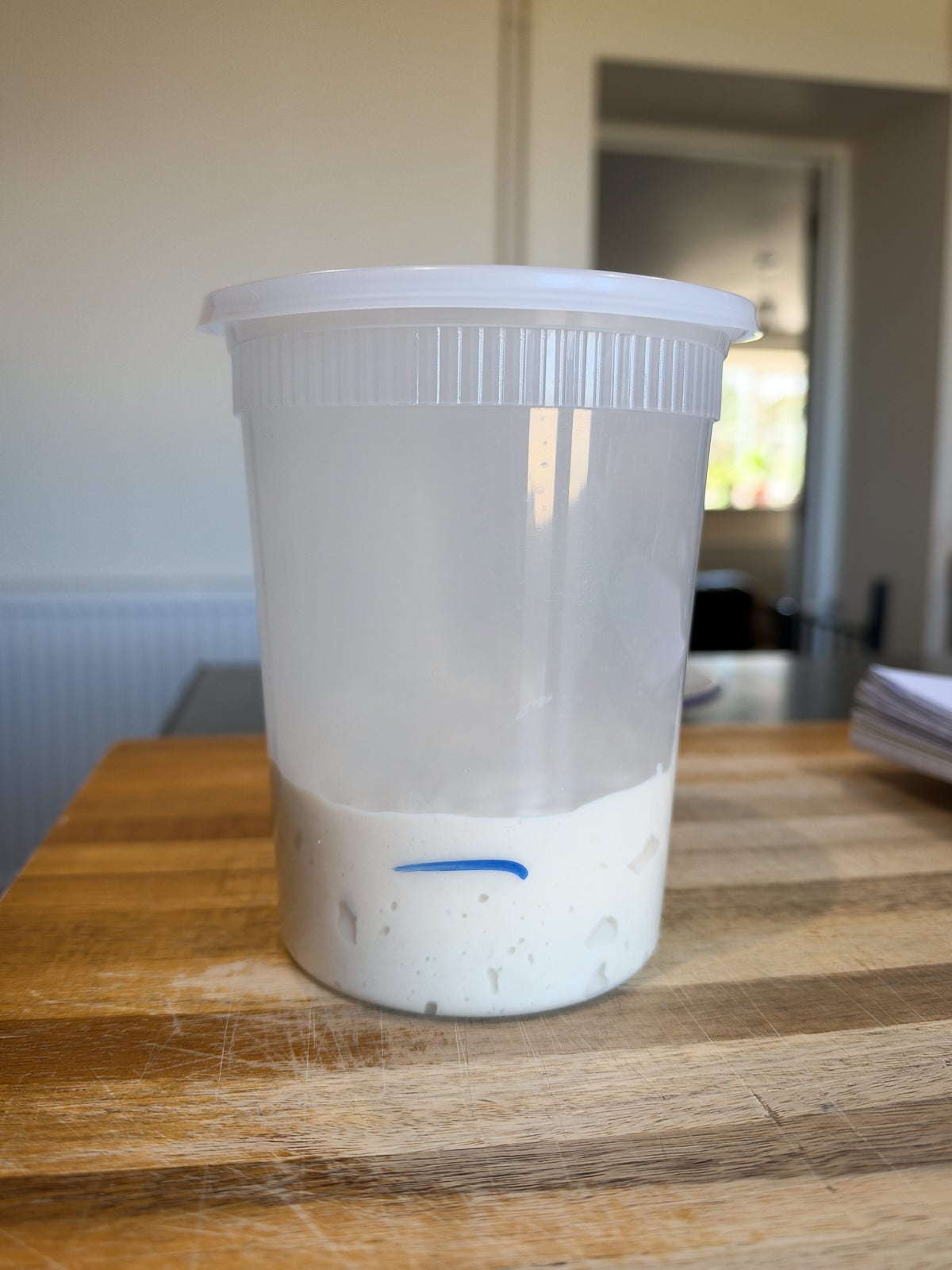
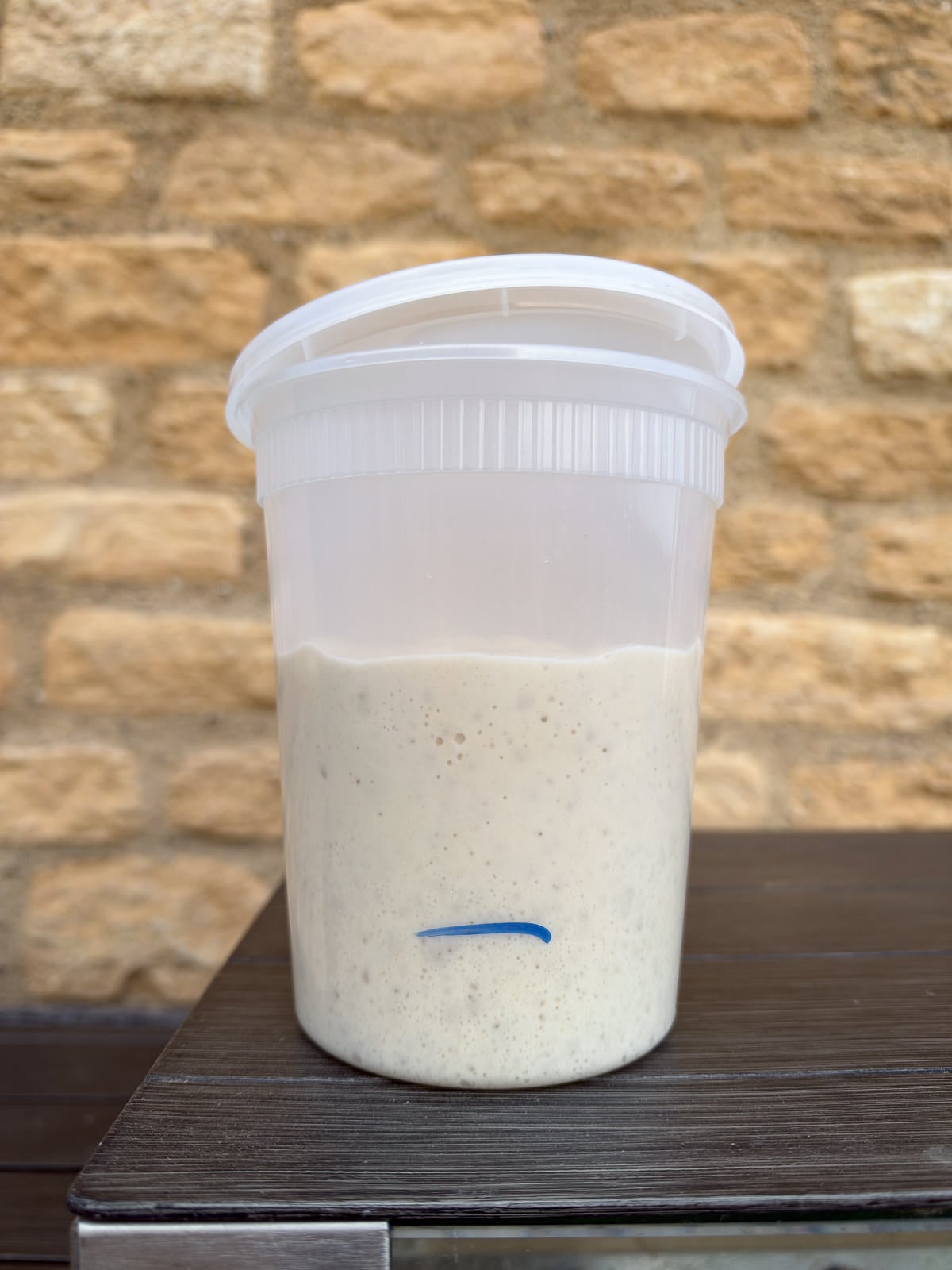
Transfer the poolish to a container that’s large enough to fit the pre ferment in once it has doubled in size (at least!) then cover loosely with a lid. Let the poolish sit at room temperature for 1 hour, to kick start the fermentation then chill in the fridge for 16-20 hours, until it has doubled in size and you can see lots of bubbles.
The next day, take the poolish out of the fridge and let it sit at room temperature for 1 hour. This tempers the pre ferment, meaning that it won’t be fridge cold when you add it to the dough.
2. Make A Tangzhong
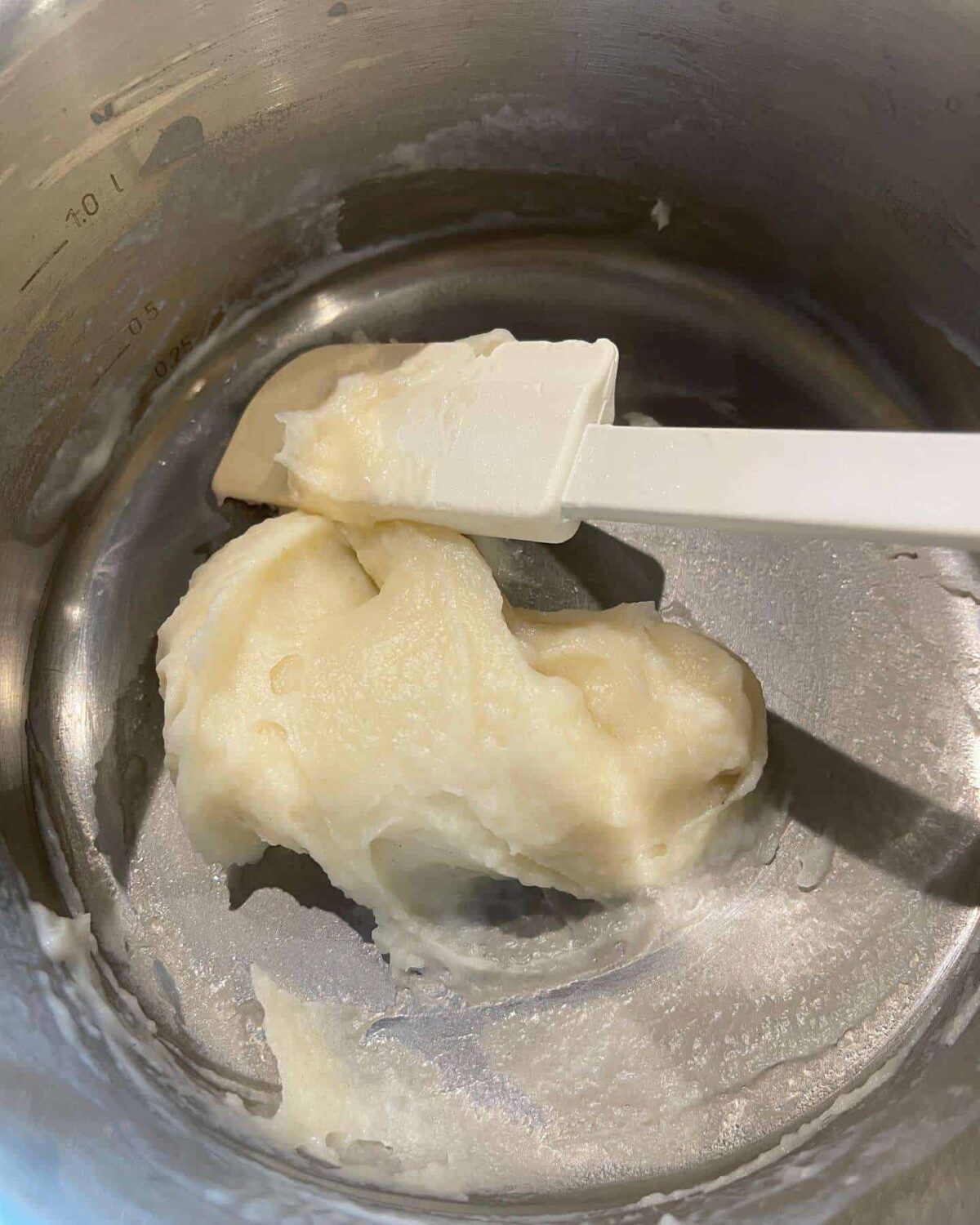
Whilst the poolish is tempering, make the tangzhong so it has time to cool down before using. To make, add white bread flour, milk and water into a small pan, whisk to combine then set over a low heat. Cook, stirring constantly for 2-3 minutes until a thick paste forms then transfer to a bowl and leave to cool to room temperature.
3. Mix The Dough
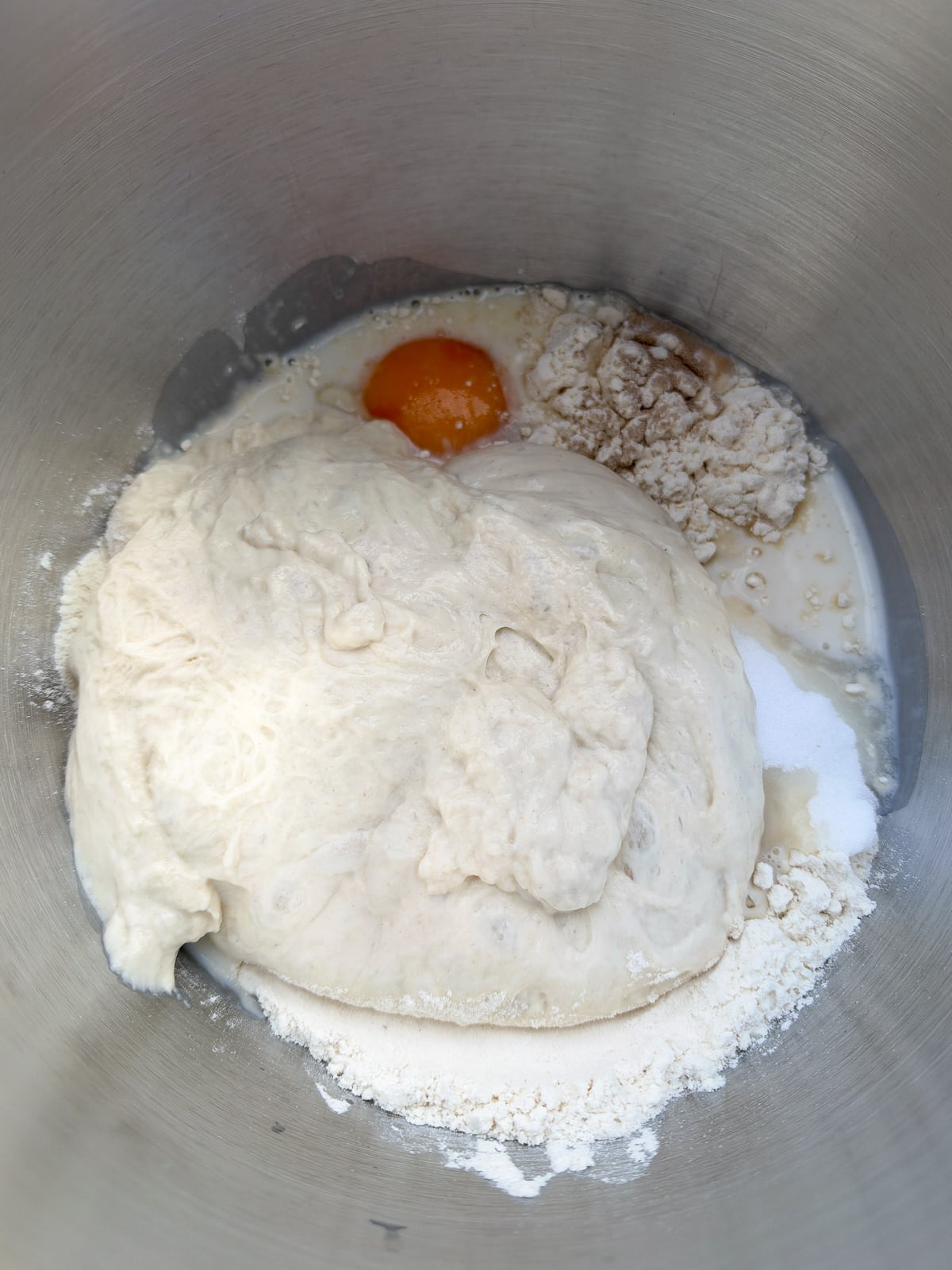
Next, add strong white bread flour into the bowl of a stand mixer along with caster sugar, sea salt, skimmed milk powder (if using), a tiny amount of yeast, a large egg, all of the poolish, the cooled tangzhong and milk you’ve warmed to 25°c/77°f.
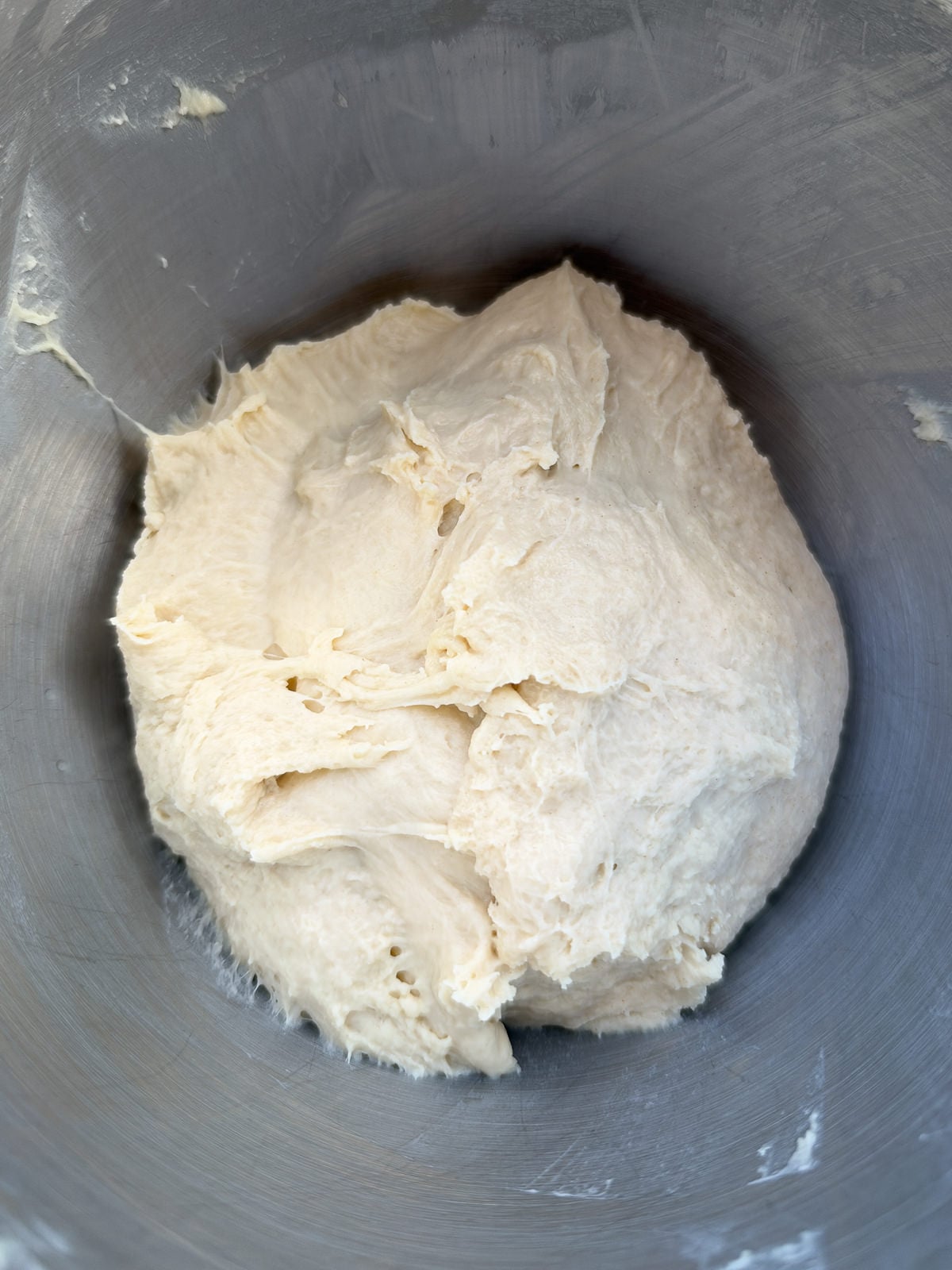
Mix the dough with a dough hook, on a low speed to first to bring together then on a medium speed for 3-4 minutes until smooth and coming away from the sides of the bowl. Then, gradually mix in softened butter before mixing for another 5 minutes or so, until the dough passes the windowpane test (see the faq section for more on this).
4. First Rise
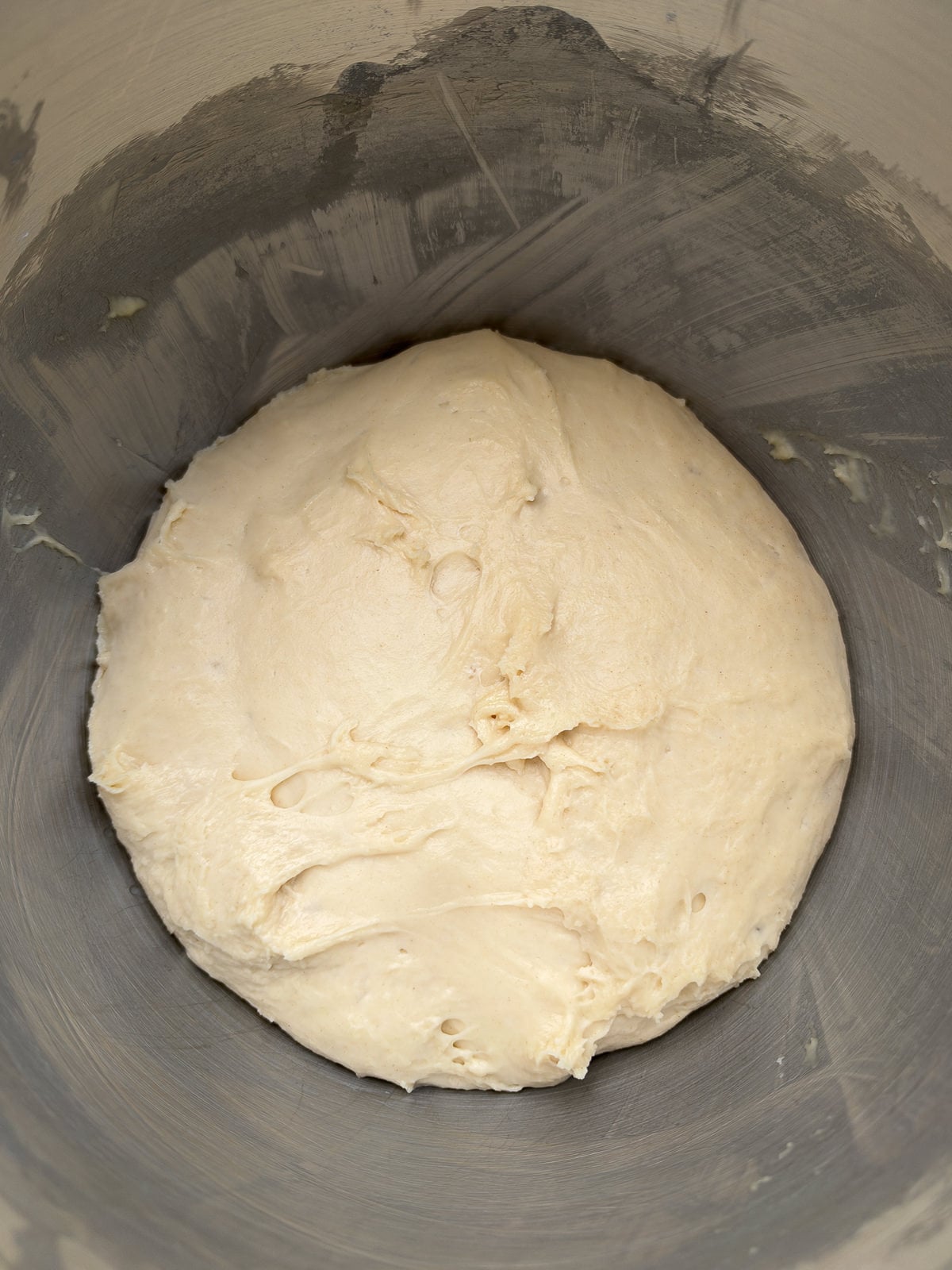
Once mixed, transfer the dough to a lightly oiled bowl, cover then leave to prove at room temperature until it has doubled in size. This will take between 1½-2 hours.
5. Shape Dough Into Balls
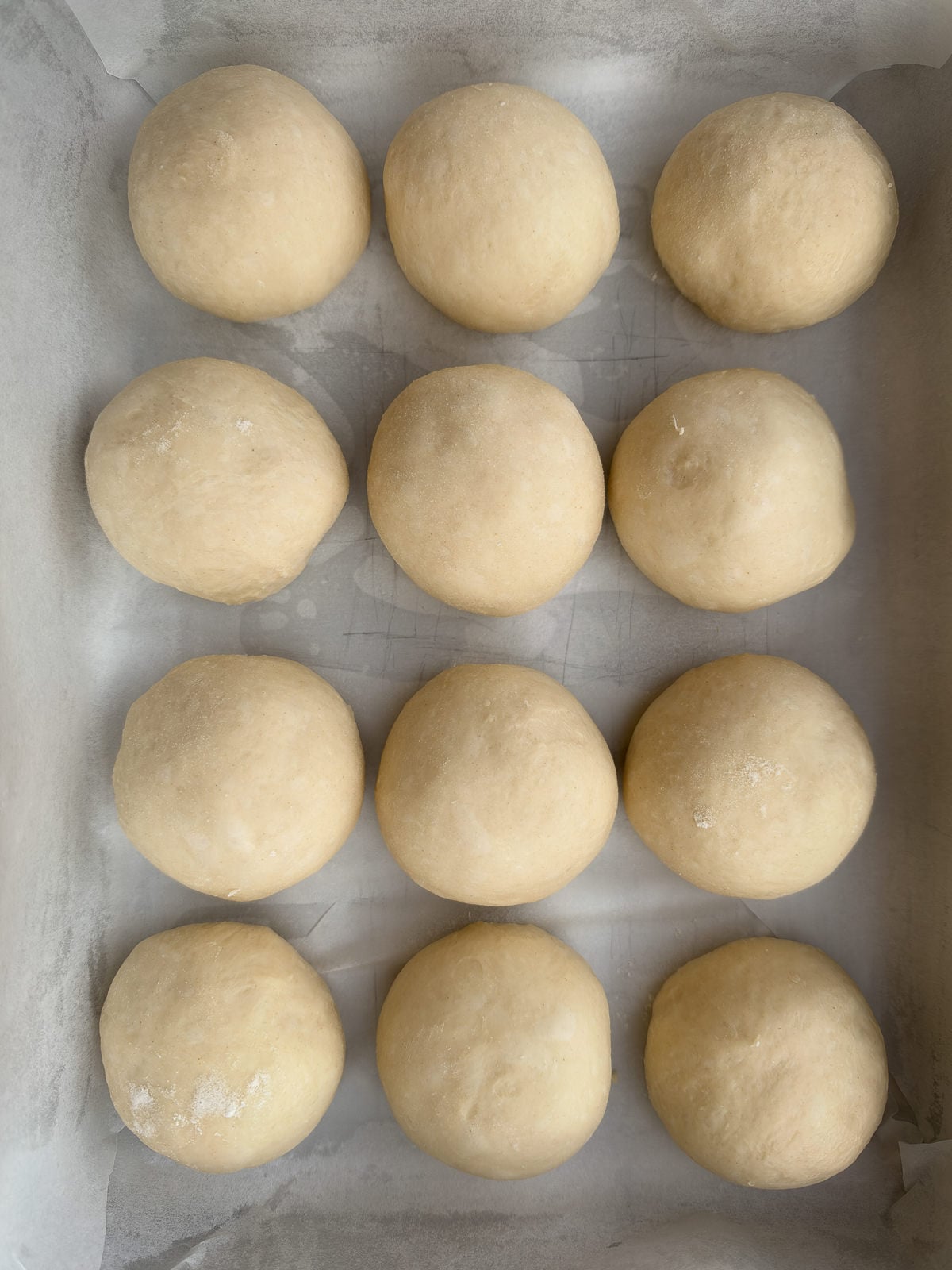
When your dough has risen, knock it back and transfer to a lightly floured work surface. Then use a dough scraper to divide the dough into 12 even pieces, each weighing around 75 grams.
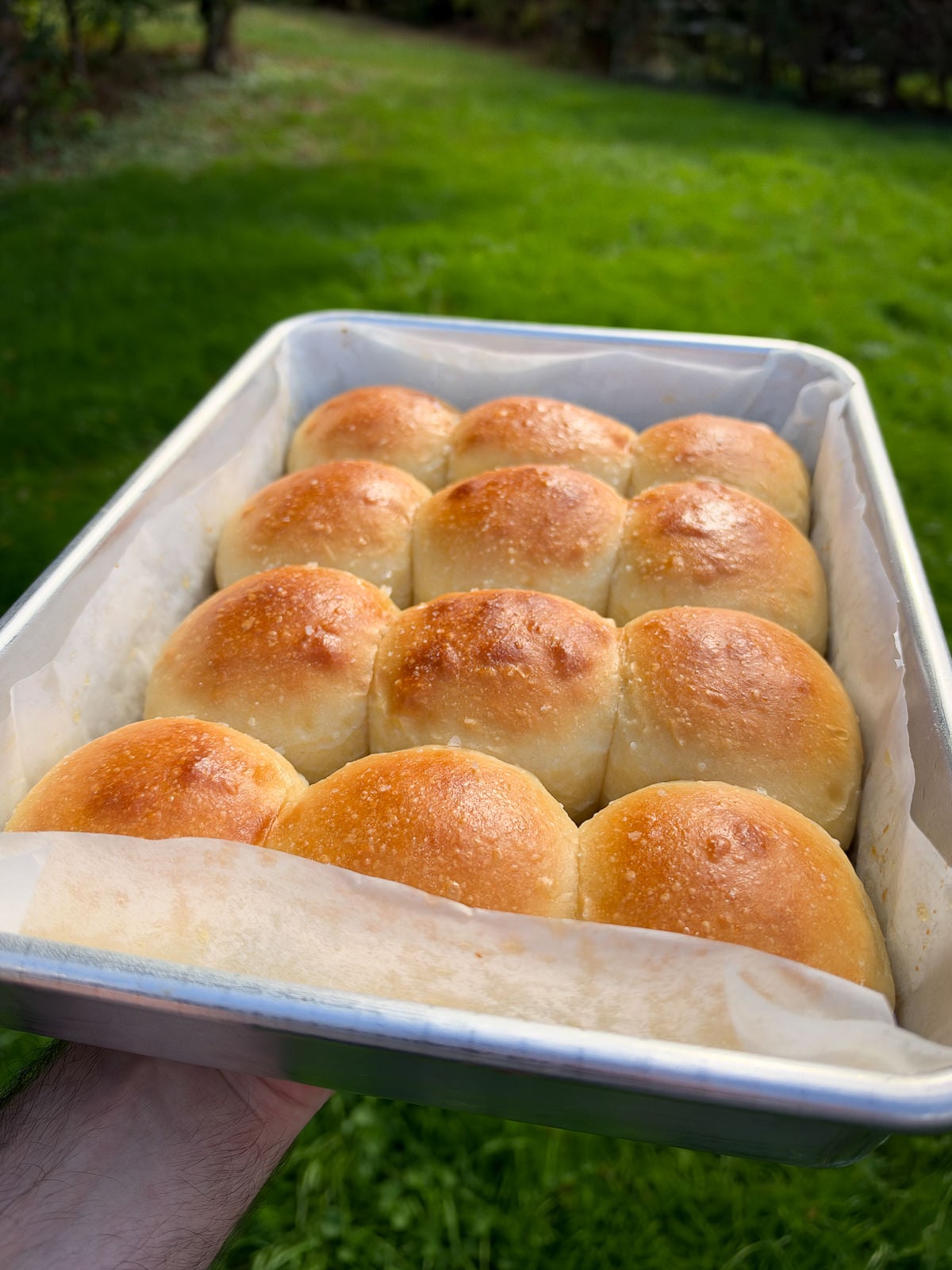
Shape the each piece of dough into a ball then place into a lined 9×13″ baking tin, in 4 rows of 3. Make sure to leave a centimetre or 2 between each roll, as they’ll rise as they prove.
6. Second Rise
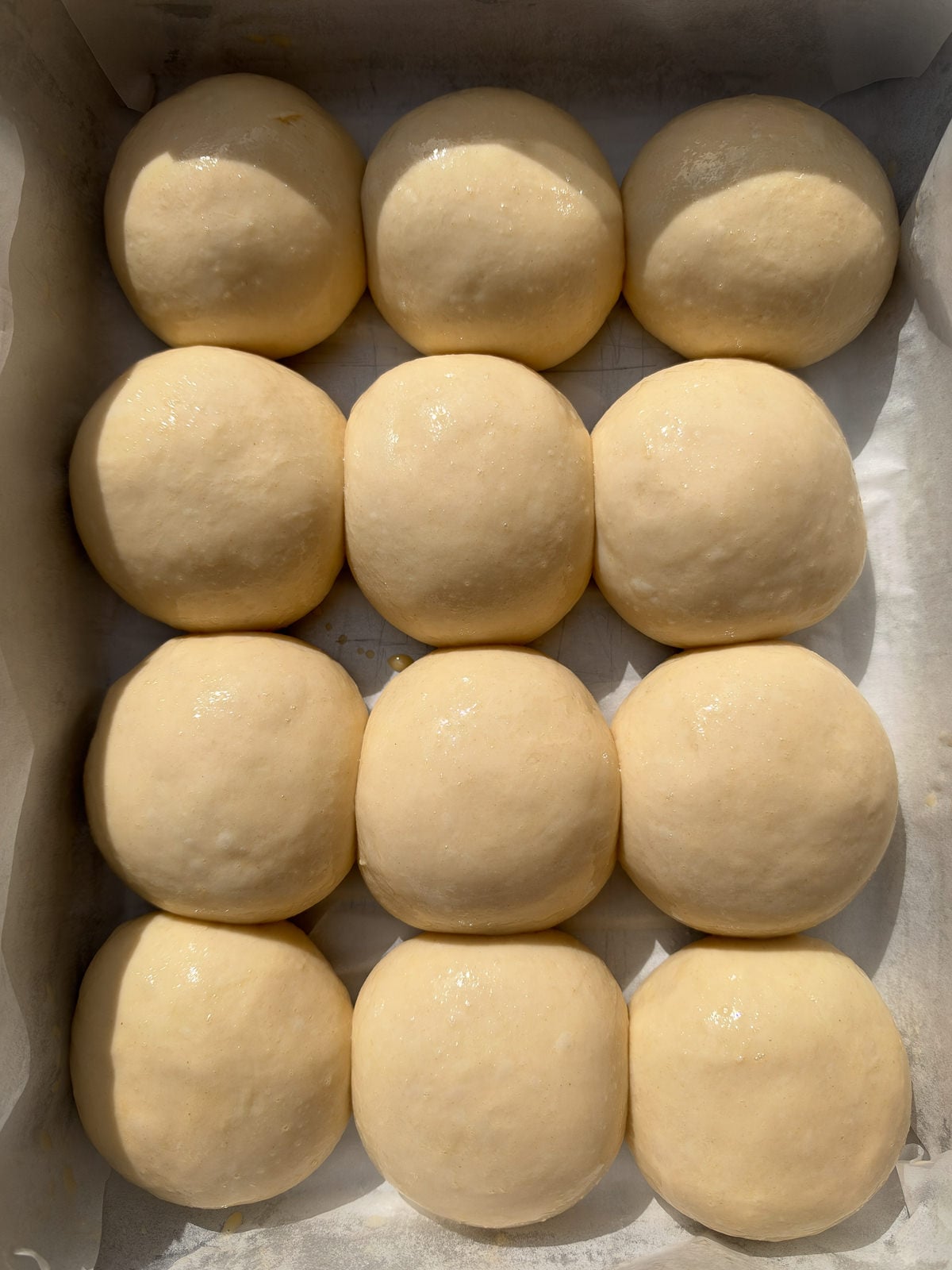
Cover the tin with cling film then leave to prove at room temperature until the rolls have risen by 50% and are all touching each other. This will take 1-1½ hours. Preheat an oven to 190°c/374°f in the meantime.
7. Bake Your Dinner Rolls
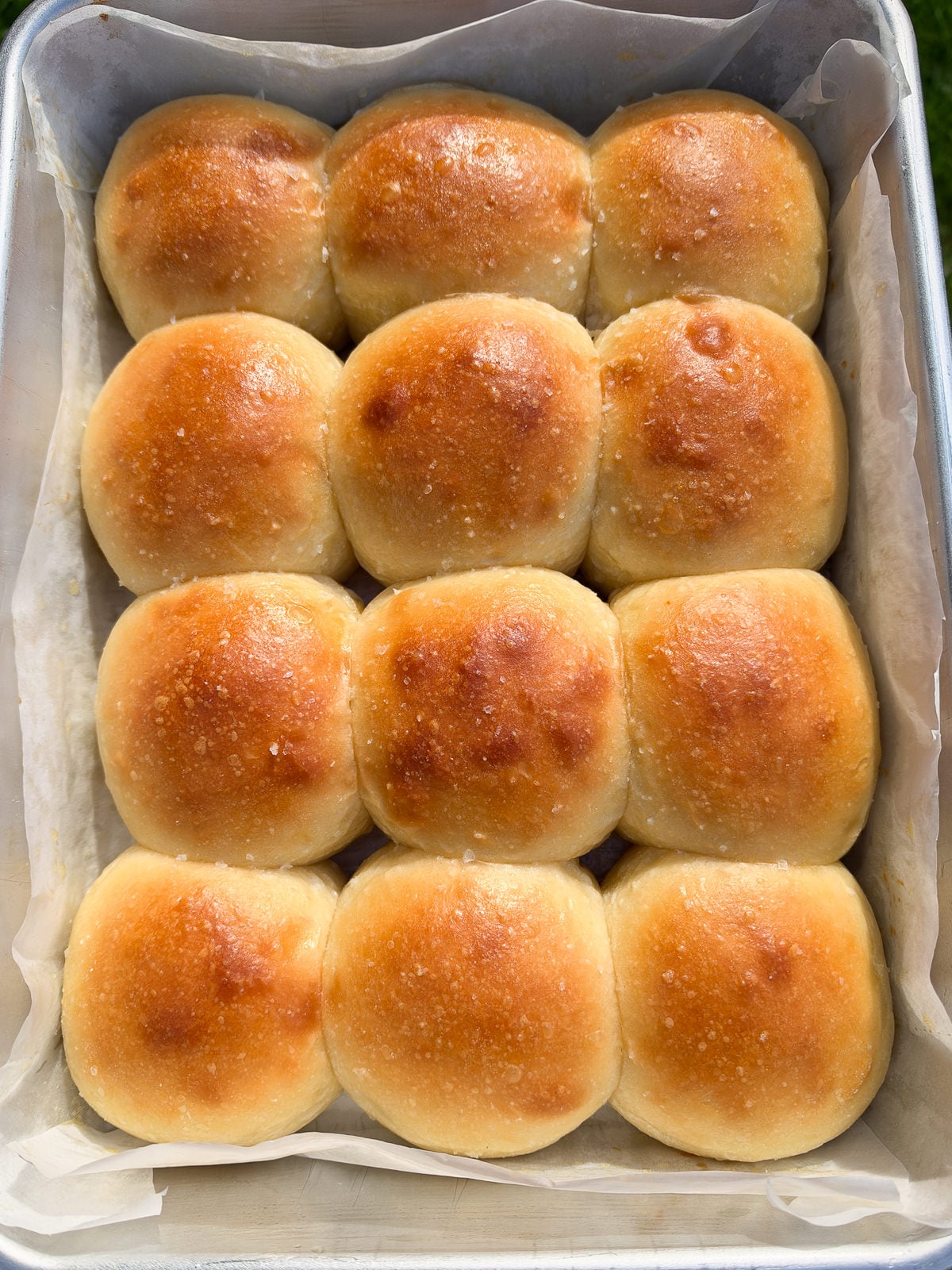
Once risen, brush each roll with a light, even layer of egg wash then bake for 25-30 minutes until they’re risen and a deep golden brown. As soon as the dinner rolls come out of the oven, brush each one with melted butter then leave to cool slightly in the tin before serving.
The Best Way To Shape Dinner Rolls
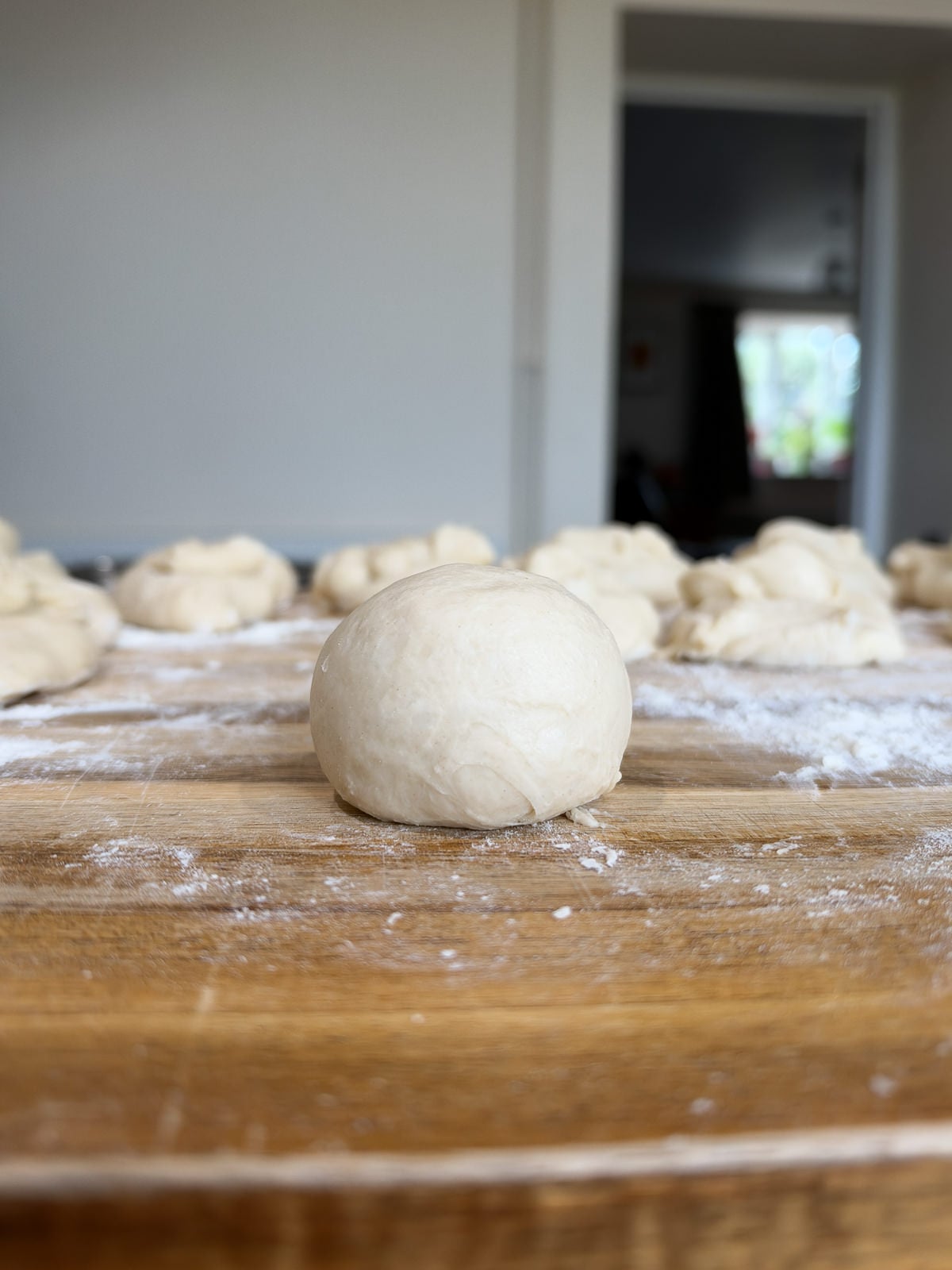
Shaping this dough into dinner rolls is super easy and is the same process as shaping burger buns. For evenly sized rolls, make sure to weigh the dough out using a set of scales.
- Using a dough scraper, cut your dough into equally sized pieces (a set of scales comes in handy here!).
- Take a piece of dough then stretch & pull the edges into the middle.
- Flip the dough over then use a cupped hand to shape into a tight ball, pressing down lightly as you shape the dough. Use an un floured section of work surface to do this. Dragging the seam on the work surface helps increase surface tension.
- Place your shaped dough into a lined baking tin then repeat with the remaining dough.
2 Day Dinner Roll Schedule
These dinner rolls are made over 2 days, which not only gives them a deeper, more developed flavour but also means you can plan the fermentation around your schedule. For a rough idea, here’s the timings.
Day 1
All you need to do on the first day is mix the poolish pre ferment, let it ferment for 1 hour at room temperature then chill in the fridge for 16-20 hours, during which time it will double in size (at least).
If you want your dinner rolls to be baked ready for lunch, I’d recommend mixing the poolish at around 12-2pm. If you wanted to bake them fresh for dinner, mix the poolish later in the day, at around 4-6pm.
Day 2
Day 2 is when we mix, prove and bake the dough. The process is pretty much the same as making regular dinner rolls, except as we’re using a pre ferment instead of regular yeast, the dough does take a bit longer to prove. To give you a rough guide on timings, here’s what my schedule looks like.
- 8am – Take the poolish out of the fridge and let it sit at room temperature.
- 8:30am – Make the tangzhong and let it cool to room temperature.
- 9am – Mix the dough, using the room temperature poolish and tangzhong.
- 9:15am – Let the mixed dough prove at room temperature until doubled in size.
- 10:45am – Knock the dough back, shape into rolls and placed into a lined tin.
- 11am – Prove the rolls for a second time, until risen by 50%. The rolls should be touching each other at this point.
- 12:30pm – Bake the rolls until they’re a deep golden brown.
- 1pm – Brush the rolls with melted butter and leave to cool slightly before serving.
- 1:30pm – Serve your rolls whilst they’re still slightly warm!
Tips & Tricks For Dinner Rolls
- Make a pre ferment with a portion of the flour, to give your bread a fluffier texture and a deeper flavour.
- Add a tangzhong to the dough, to give your dinner rolls a softer texture and extended shelf life.
- For optimum fermentation, make sure to accurately measure the temperature of the dough’s liquid with a digital food probe.
- Use the windowpane test to assess the gluten development in your dough as you knead it.
- Make sure to use a strong white bread flour with a protein content between 12-15%, for optimum gluten development.
- Brush your baked dinner rolls with melted butter to give them a glossy finish.
Serving Suggestions
Dinner rolls are a classic side dish to serve at Thanksgiving but they’re good all year round! These dinner rolls are so good, I’ve just been eating them on their own with some salted butter! They also make a fantastic side dish to serve with hearty stews, roasted meat (like prime rib at Thanksgiving) and homemade soup. You can also use dinner rolls to make sliders with leftover roasted meat or glazed ham at Christmas.
Frequently Asked Questions
To bake poolish dinner rolls in an Aga, bake them in the baking oven on the bottom set of runners. Use the simmering plate to cook the tangzhong.
Although it is possible to make these dinner rolls by hand. I’d definitely recommend using a stand mixer as it will be a lot easier to get proper gluten development in the dough.
Homemade dinner rolls are best eaten on the same day they were baked but will keep for up to 3 days when stored in an airtight container.
The windowpane test is a technique used to check the gluten development in bread dough. To do this, you stretch a small amount of dough between your fingers. If it stretches thin enough to see through, it’s ready. If the dough tears, it needs more kneading.
More Bread Recipes To Try
- Coconut Milk Dinner Rolls
- Leftover Roast Potato Burger Buns
- Garlic Butter Naan
- Baked Camembert Dough Ball Wreath
- Overnight Potato Focaccia
- Hot Honey & Cheddar Dinner Rolls
If you have enjoyed this recipe for poolish dinner rolls, it would mean a lot if you could leave a review & rating. And if you’d like to stay up to date with future recipes, follow us on Instagram & TikTok or subscribe to our newsletter!

2 Day Poolish Dinner Rolls
Equipment
- Stand Mixer
- 9"x13" Baking Tin
- Dough Scraper
- Digital Food Probe
Ingredients
The Poolish
- 150 g Water (25°c/77°f)
- 150 g Strong White Bread Flour (See Notes)
- 0.7 g Instant Yeast (See Notes)
Tangzhong
- 25 g Strong White Bread Flour
- 50 g Whole Milk
- 50 g Water
Dough
- 325 g Strong White Bread Flour
- 25 g Caster Sugar
- 10 g Fine Sea Salt
- 1 tsp Skimmed Milk Powder (Optional)
- 0.7 g Instant Yeast
- 1 Large Egg (50g Out Of The Shell, At Room Temp)
- 75 g Whole Milk
- 50 g Unsalted Butter (Softened)
Egg Wash
- 1 Egg
- 1 tsp Cold Water
To Finish
- 20 g Unsalted Butter (Melted)
- Sea Salt
Instructions
Poolish
- Pour the water into a mixing bowl, add in the yeast then stir to dissolve. Add the flour into the water then stir until just combined.Make sure to check the temperature of your water. You'll also need a set of micro scales to weigh out the yeast.
- Transfer the poolish to a container then cover with a lid, leaving it slightly open to allow any gas to escape.Make sure to use a container with plenty of extra room! The poolish will double in size, at least.
- Let the poolish ferment at room temperature for 1 hour then place in the fridge for 16-20 hours. The poolish will double in size during the cold ferment, so I like to make a mark on the side of the container where it comes up to before it ferments.
- The next day, take the poolish out of the fridge and let it sit at room temperature for 1 hour. This tempers the poolish, meaning it won't be cold when you add it to the dough.
Tangzhong
- Whilst the poolish is coming up to room temperature, make the tangzhong. To do this, place the flour, milk & water into a small saucepan & whisk to combine.
- Set the pan over a low heat and cook, stirring constantly until you get a thick paste.
- Once cooked, transfer the tangzhong to a bowl and leave to cool to room temperature.Make sure to cook the tangzhong at least 30 minutes before your poolish is ready, so it has time to cool down. Get the butter for the dough out of the fridge now as well, so it has time to soften.
Dough
- Place the flour, sugar, salt, milk powder (if using), yeast, egg, cooled tangzhong and all of the poolish into the bowl of a stand mixer.
- Place the milk into a jug, warm to 25°c/77°f then pour into the flour. This temperature is just above room temperature, so it will only take a few seconds to warm up in the microwave. If you haven't got a microwave, warm the milk in a pan set over a very low heat.
- Mix the dough with a dough hook, until it's smooth and coming away from the sides of the bowl. This will take 4-5 minutes. It's best to start mixing on a low speed then once everything's combined, mix on a medium speed.
- With the mixer still running, add in the butter a small amount at a time, incorporating each piece fully before adding more. Once all of the butter has been incorporated, keep mixing until the dough passes the window pane test. This will take another 5-10 minutes.
- Transfer the dough to a lightly oiled bowl, cover with clingfilm (or a tea towel) & leave to double in size at room temperature. This will take 1½-2 hours.
Shaping
- Grease a 9×13" baking tin then line with baking parchment.
- Next, knock the dough back, transfer to a lightly floured surface then divide into 12 even pieces. Each piece should weigh around 75 grams.
- To shape, take a piece of dough & bring the edges into the middle. Flip the dough over & use a cupped hand to shape into a tight ball. Place seam side down in the tin.Dragging the seam on the work surface helps increase surface tension.
- Repeat the shaping process with the remaining dough, placing them into the tin, spaced a centimetre or two apart, to form 4 rows of 3. Cover the tin with clingfilm then leave to prove at room temperature, until risen in size by 50%. This will take 1-1½ hours.The rolls should be touching once proved!
Baking
- Whilst your rolls are proving, preheat an oven to 190°c/170°c fan (374°f/338°f). Make sure to give your oven plenty of time to preheat.
- Once your rolls are ready, add the egg & water in a small mixing bowl, whisk to combine then gently brush a thin layer onto each roll.
- Bake the dinner rolls for 25-30 minutes, until they have risen and are a deep golden brown on top.
- As soon as your rolls come out of the oven, brush them with the melted butter and sprinkle over a pinch of sea salt. Leave to cool in the tin then serve.
Salt Butter Smoke Magazine
Love seasonal cooking?
Issue 001 features over 20 original autumn recipes, seasonal features, preserving guides and beautiful photography.
Take a Look Inside →Notes
Enjoying This Recipe?
The Prep List is my free weekly newsletter with seasonal recipes, kitchen notes and behind-the-scenes from my kitchen. Add Salt Butter Smoke as a Google Preferred Source to see more of my recipes in Search.

These look fabulous- thanks for sharing! Breads are very intimidating for me so I appreciated the details. I hope to make these one day, but I wonder because they are SO SOFT- will they freeze OK?
Not sure I would want to go through such effort if I halve the recipe. (nor sure if it would even turn out that well)
—>found you on r/breadit. can’t wait to see other posts!
I’ve not tried freezing them, they don’t usually last long in my house! I’m sure they’d be fine to freeze though, as long as they’re kept airtight.
Does this recipe double well? I’m having dinner with a party of ten on Saturday, and four of them are kids who LOVE bread. >D
Hi, yes this recipe will be fine to double!