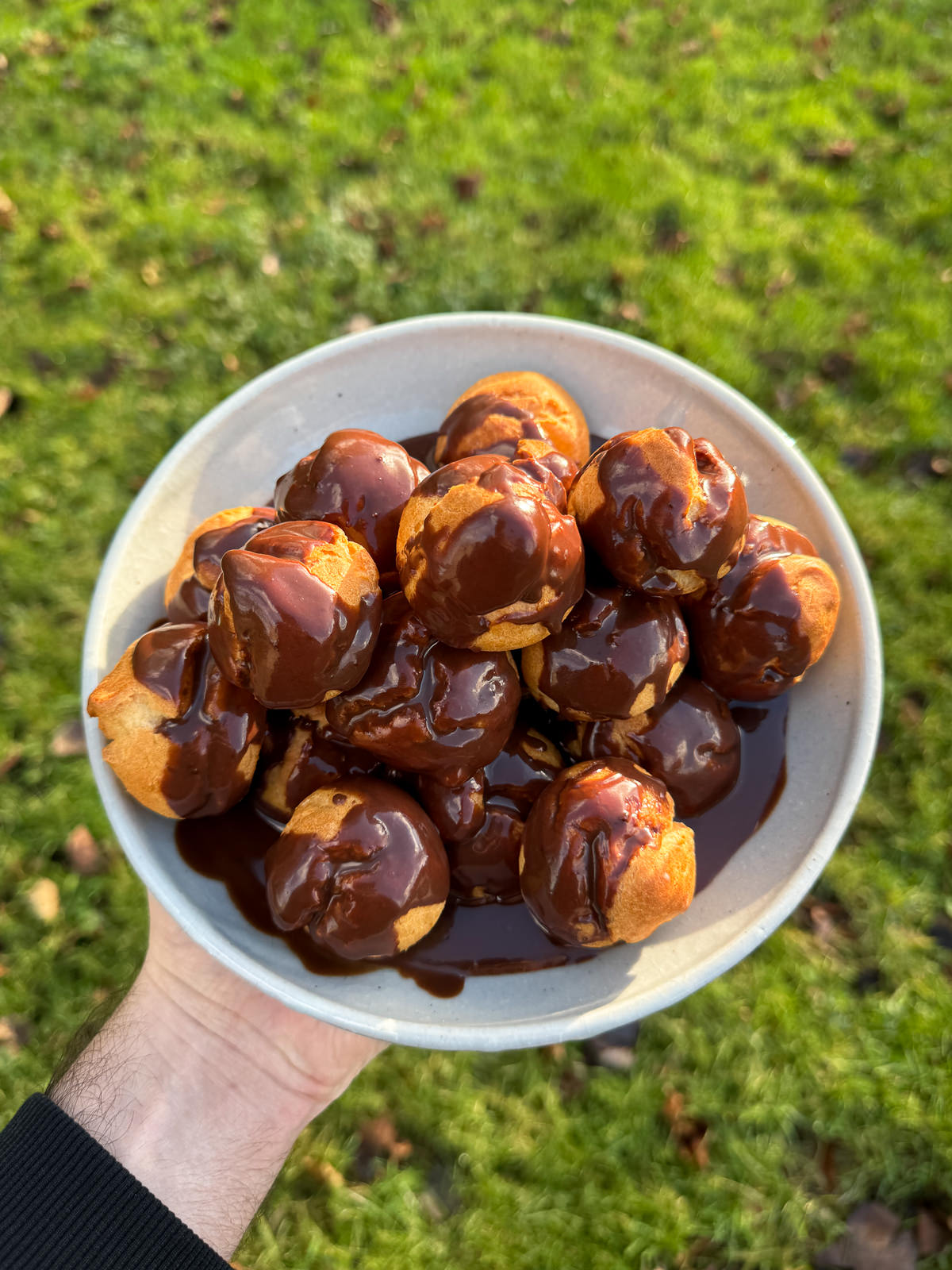
Profiteroles With Chocolate Sauce
Classic choux pastry profiteroles served with a rich, homemade chocolate sauce. There’s 2 choices of filling to use for these; a creamy vanilla pastry cream or fluffy vanilla whipped cream.

Crisp, light homemade profiteroles filled with either vanilla pastry cream or fluffy vanilla whipped cream then served with a rich, warm chocolate sauce. Sounds good right?! Well the good news is that they’re surprisingly easy to make! This includes every component that we’re making from scratch, including the choux pastry, fillings & chocolate sauce.
If you’re not familiar with profiteroles, these are crisp, hollow balls of choux pastry that are traditionally filled with pastry cream or whipped cream then served with a rich chocolate sauce. I’ve chosen to serve these profiteroles with a warm chocolate sauce as I find that the warmth from the sauce provides a pleasant contrast with the cold filling & crisp pastry. Then for the filling, I’ve given the option to use either pastry cream or whipped cream, so you can use whichever one you’d prefer! This is an impressive dessert to make at home that’s surprisingly, not too tricky to prepare.
For more easy to follow dessert recipes, take a look at our dessert recipe collection! There’s something for everyone here, including homemade ice creams, chocolate cake, sticky toffee pudding, panna cottas & lots more.
What You’ll Need For Profiteroles
- Flour – We’re using strong white bread flour for our choux pastry & you’ll need one with a protein content between 12-15%. I prefer to use strong white bread flour instead of plain flour for profiteroles as it gives the pastry a sturdier texture & thicker crust. This makes them perfect for filling! I’d recommend sifting the flour before using, to avoid any lumps in your choux pastry.
- Butter – You’ll need unsalted butter for the choux pastry, as we’ll be adding salt in ourself.
- Milk & Water – We’re using a mix of whole milk & water, which gives our profiteroles a crisp texture, golden colour & plenty of flavour.
- Sugar – Adding a small amount of caster sugar to our choux pastry adds sweetness & helps it colour in the oven.
- Salt – It’s important that we season our choux pastry with sea salt, otherwise they’ll taste bland!
How To Make Choux Pastry
Choux pastry is one of those things that seems like it’s really difficult to make but once you’ve got the hang of it, couldn’t be easier! As long as you follow the process correctly & know what to look at for (texture, appearance, etc.) this really shouldn’t give you any trouble.
- Heat Up Milk, Water & Butter
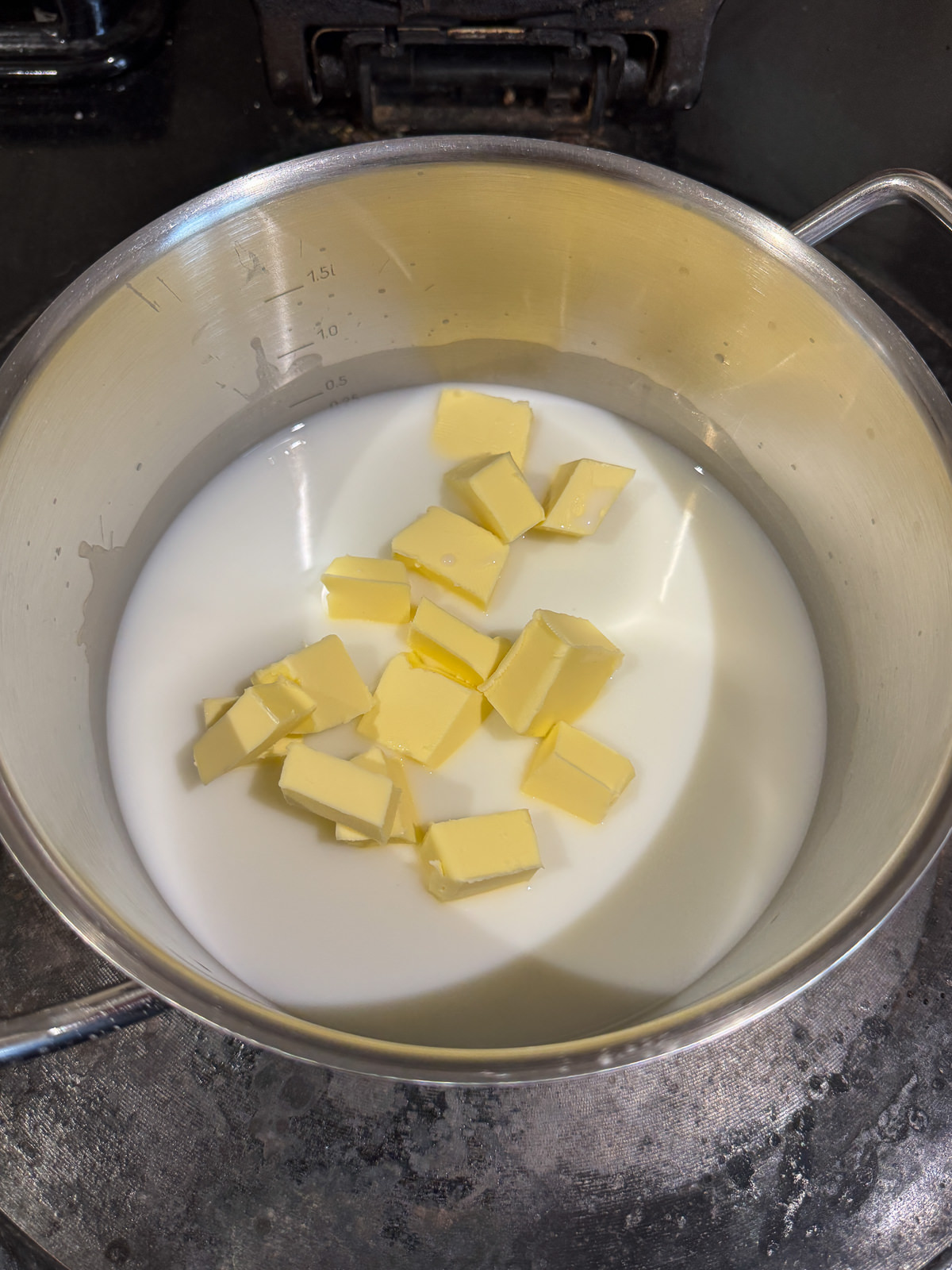
The first step is to place milk, water, butter, sugar & salt into a saucepan then warm over a low heat until the butter is melted. As soon as that happens, we turn the heat up to medium-high & bring the liquid to the boil. - Add In Flour
As soon as the milk & water is boiling, we take the pan off the heat then add in sifted flour all in one go. Then we use a wooden spoon to immediately stir the flour into the liquid until a rough dough forms. - Cook Out Moisture
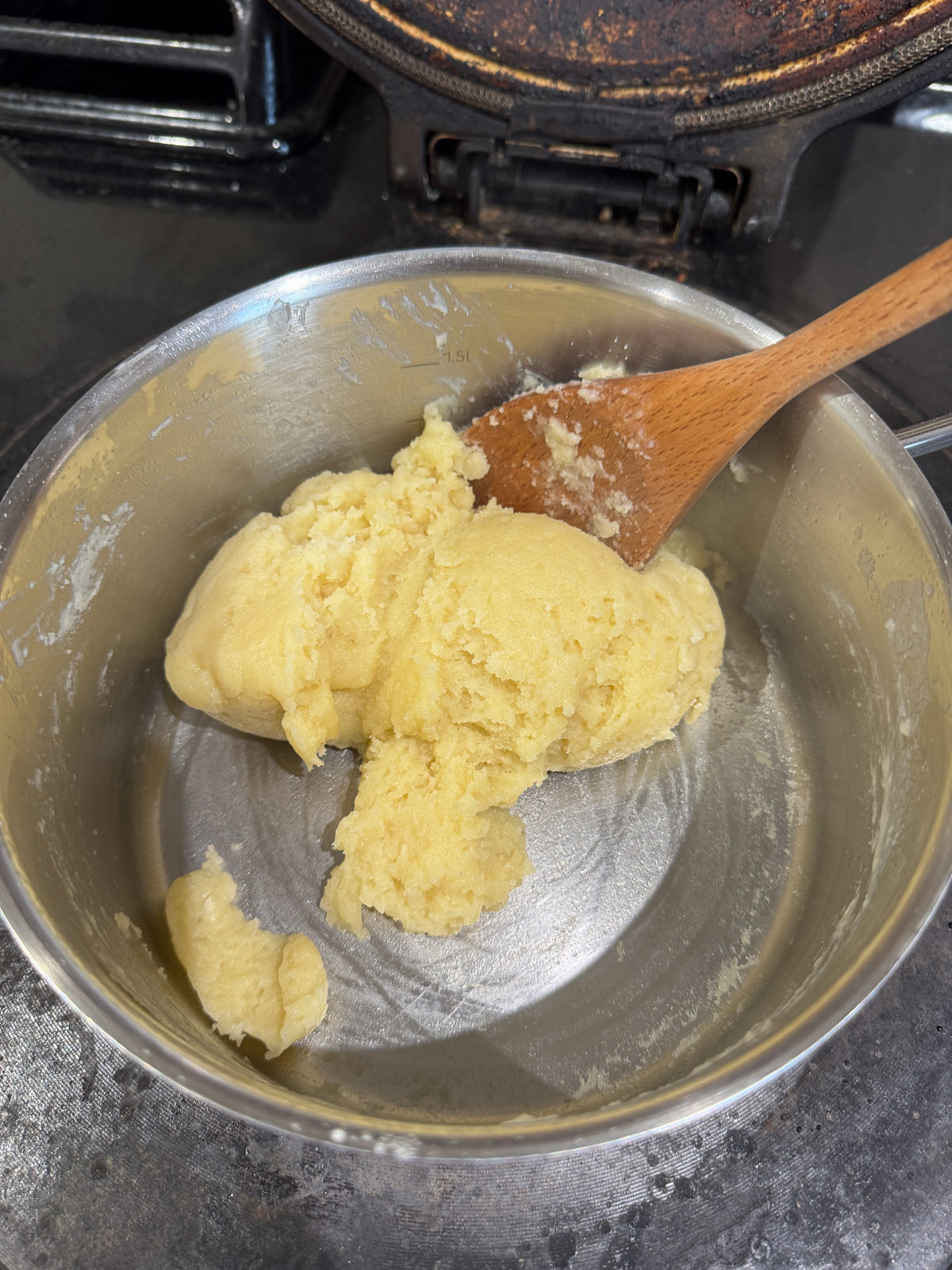
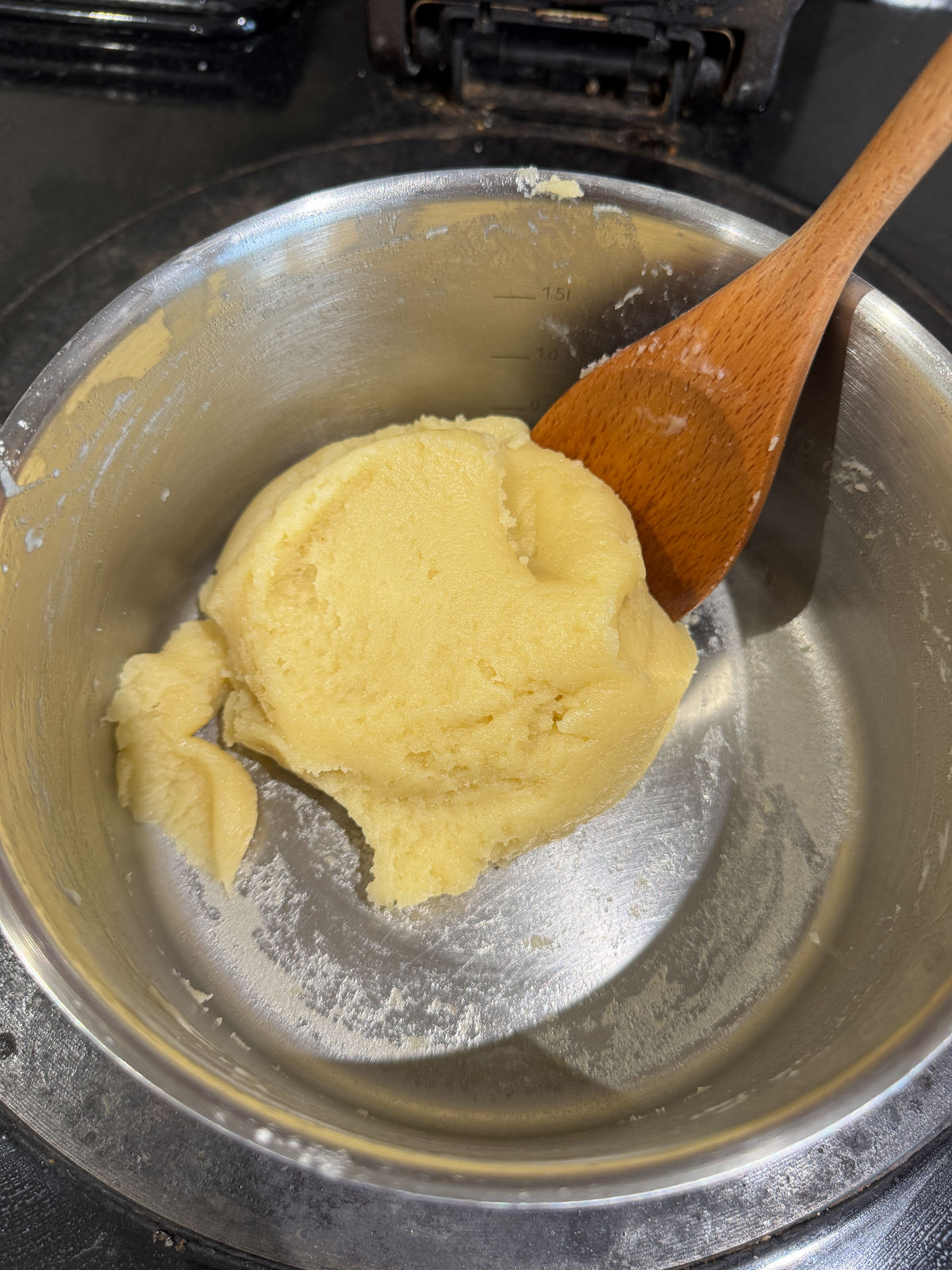
Next, we cook the dough over a low heat, stirring constantly until it comes away from the sides of the pan & has formed one cohesive mass (a smooth ball of dough). There should also be a thin film layer in the bottom of the pan. This step will only take around 1-2 minutes. - Leave To Cool
Once cooked, we transfer the dough to a bowl then let it cool down until it is slightly warm. If you take the temperature of the dough with a food probe, it should be around 55°c/131°f when cooled enough. - Add In Eggs
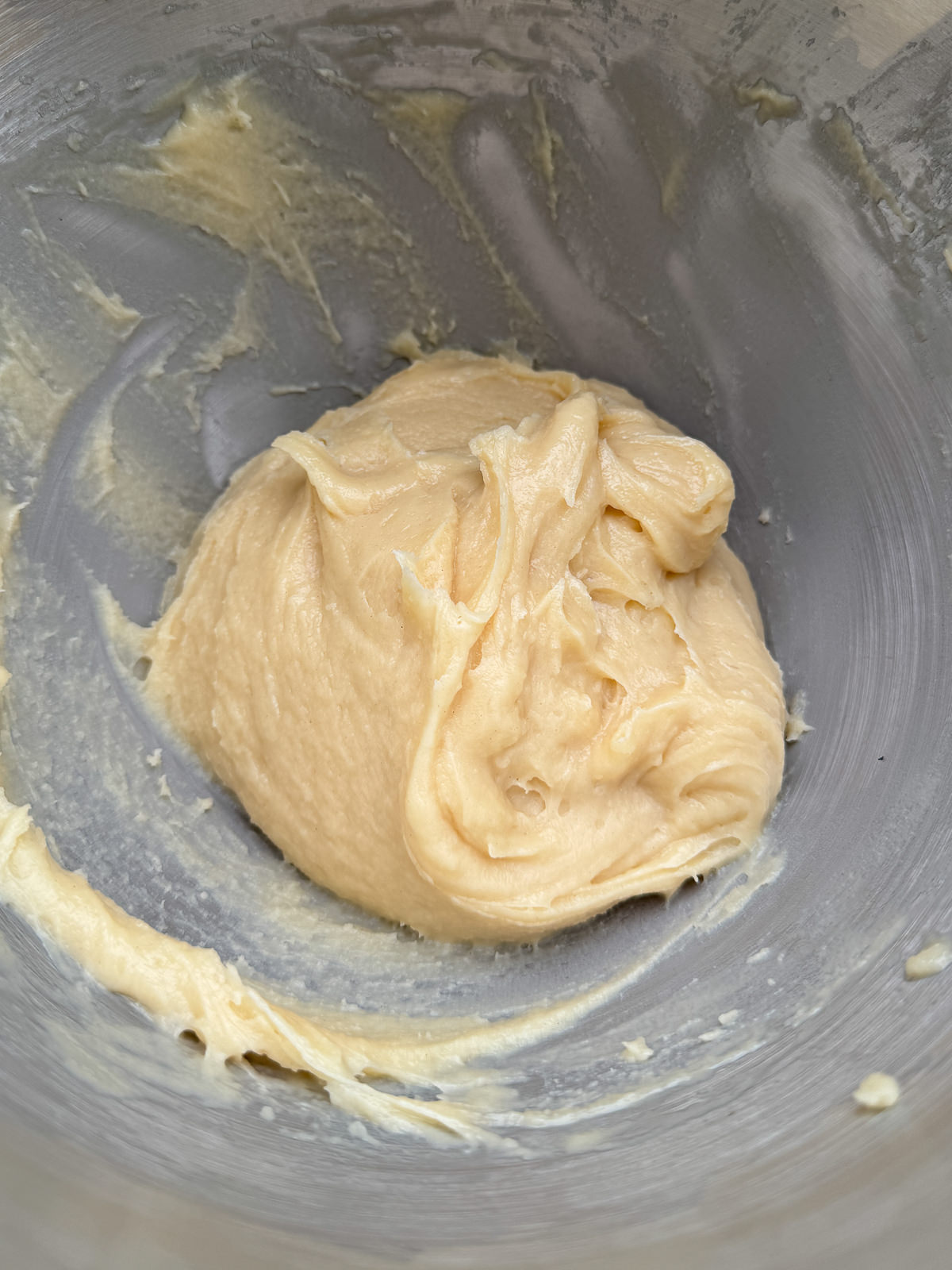
The last step is to mix eggs into the dough. To do this, we place the dough into the bowl of a stand mixer then mix with the paddle attachment on a medium speed whilst gradually adding in beaten eggs. There isn’t an exact amount of eggs that you’ll need to add, instead you add in enough eggs to give the dough a “dropping consistency”. This is where the dough slowly falls off the paddle & forms a V shape when you lift it out of the dough. The dough will also look very shiny when it’s ready. I’d recommend watching the video for this recipe, to see a visual guide for this step!
Just a quick note on the dropping consistency of choux pastry. If you do add too many eggs to your dough, unfortunately you will have to start again as there isn’t really a good way to fix it. This is why it’s important to add the eggs in gradually & check the dough frequently as you mix it.
Piping Profiteroles
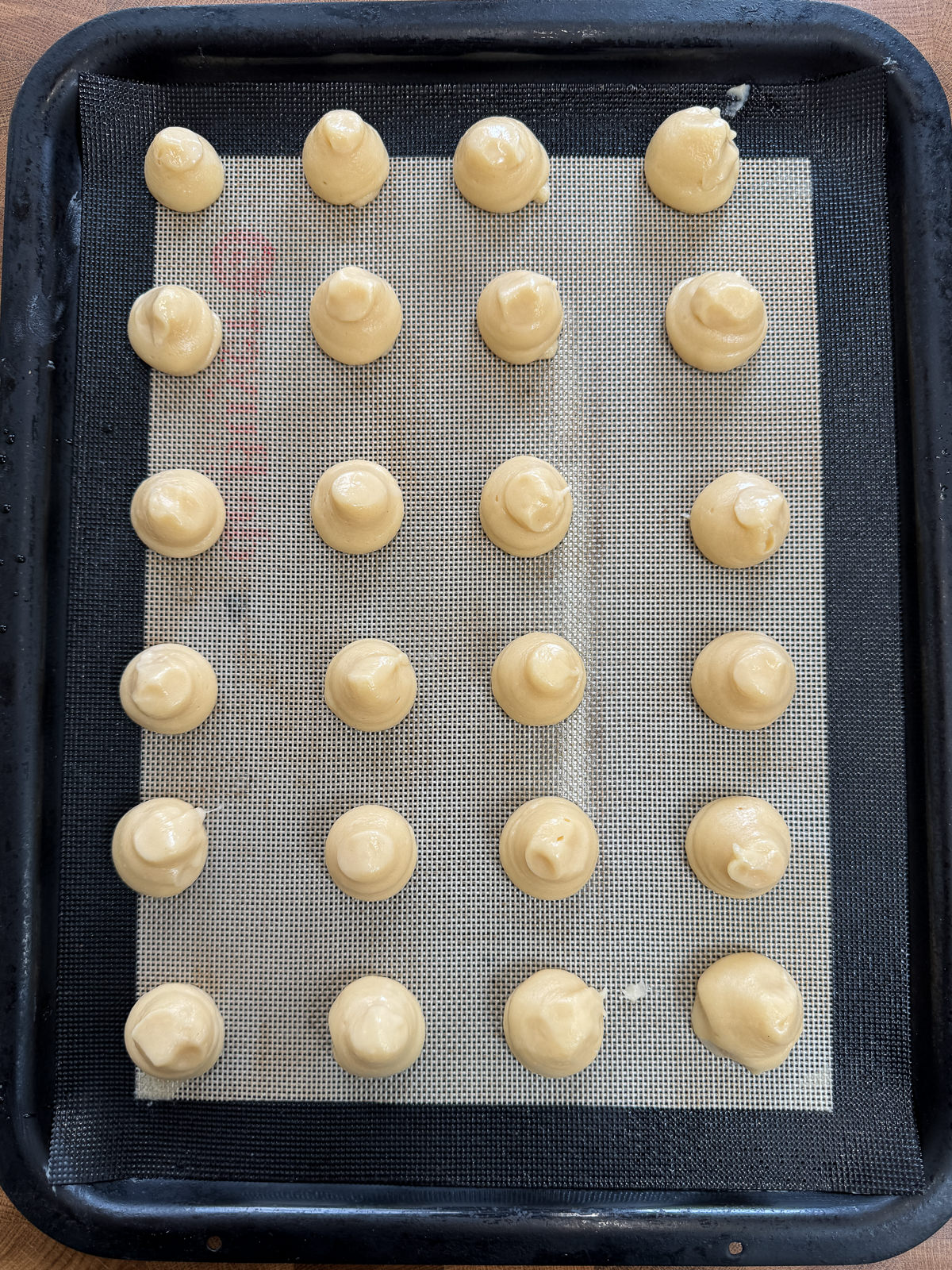
For the neatest profiteroles, you’ll want to pipe them! This is really easy to do, we simply pipe 1 inch domes onto a baking tray then use a finger dipped in water to gently press down the peaks on top, from where we piped the pastry. This makes the pastry form a neater dome shape, which is what we’re looking for! Then before baking, we’re going to lightly dust the top of each profiterole with icing sugar. This helps the crust crisp up & prevents cracking.
Speaking of baking trays, you’ll need to line yours, ideally with a silicone baking mat as this helps the profiteroles crisp up in the oven & prevents soggy bottoms. This is because these mats have tiny holes in them which allows better air circulation which lets the steam to escape from the pastry as it bakes. However, if you haven’t got one, baking parchment will work as well. I like to add a tiny amount of the choux pastry under each corner of the mat, so that it doesn’t move as you pipe the profiteroles on top.
Baking Profiteroles
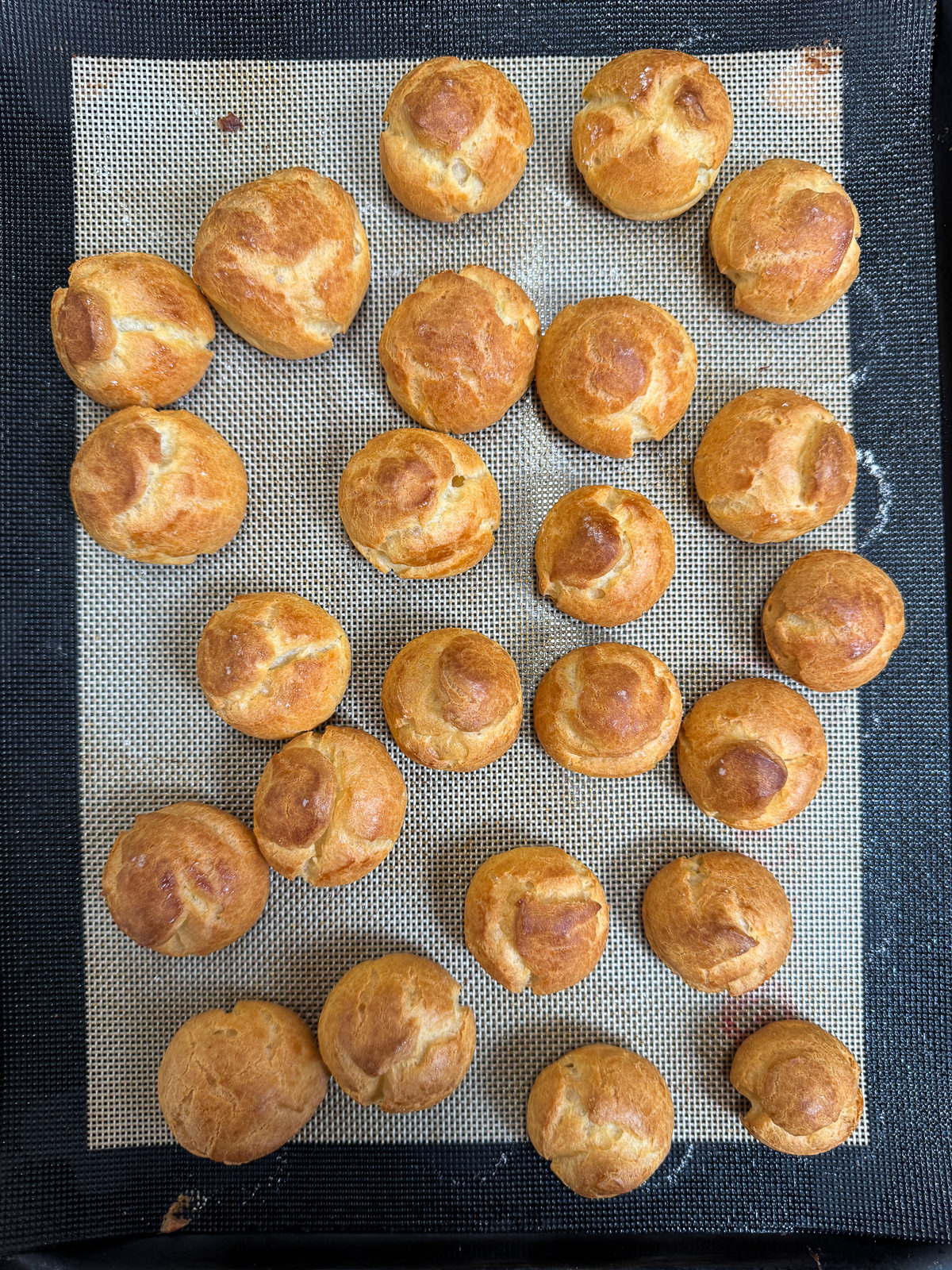
We’re baking our profiteroles at 2 different temperature/stages. First, there’s a blast of high heat which makes the choux pastry rise & crisps up the outside. After that, we turn the oven to a slightly lower temperature then continue baking until the profiteroles are a deep golden brown & the inside has dried out. Remember that it’s key not to open the oven door too early, as this can cause the choux to sink!
Once cooked, there’s 1 more step to do that ensures that the profiteroles are fully dried out inside. So once the profiteroles are a deep golden brown colour, we take them out of the oven then use the tip of a small knife to pierce a small hole in the bottom of each one, to let the steam out. Once we’ve done this, we place the profiteroles upside down on the tray, bake for another 10 minutes then take them out of the oven & let them cool completely on the tray.
Fillings For Profiteroles – 2 Options!
I’ve included 2 different classic profiterole fillings, so you can choose which one to make for your batch of profiteroles! Option 1 is a traditional vanilla pastry cream, which is basically a cold vanilla custard. Option 2 is a simple whipped cream that’s sweetened with icing sugar & flavoured with vanilla. The recipes for both of these makes enough to fill the amount of profiteroles that we’re making.
Vanilla Pastry Cream
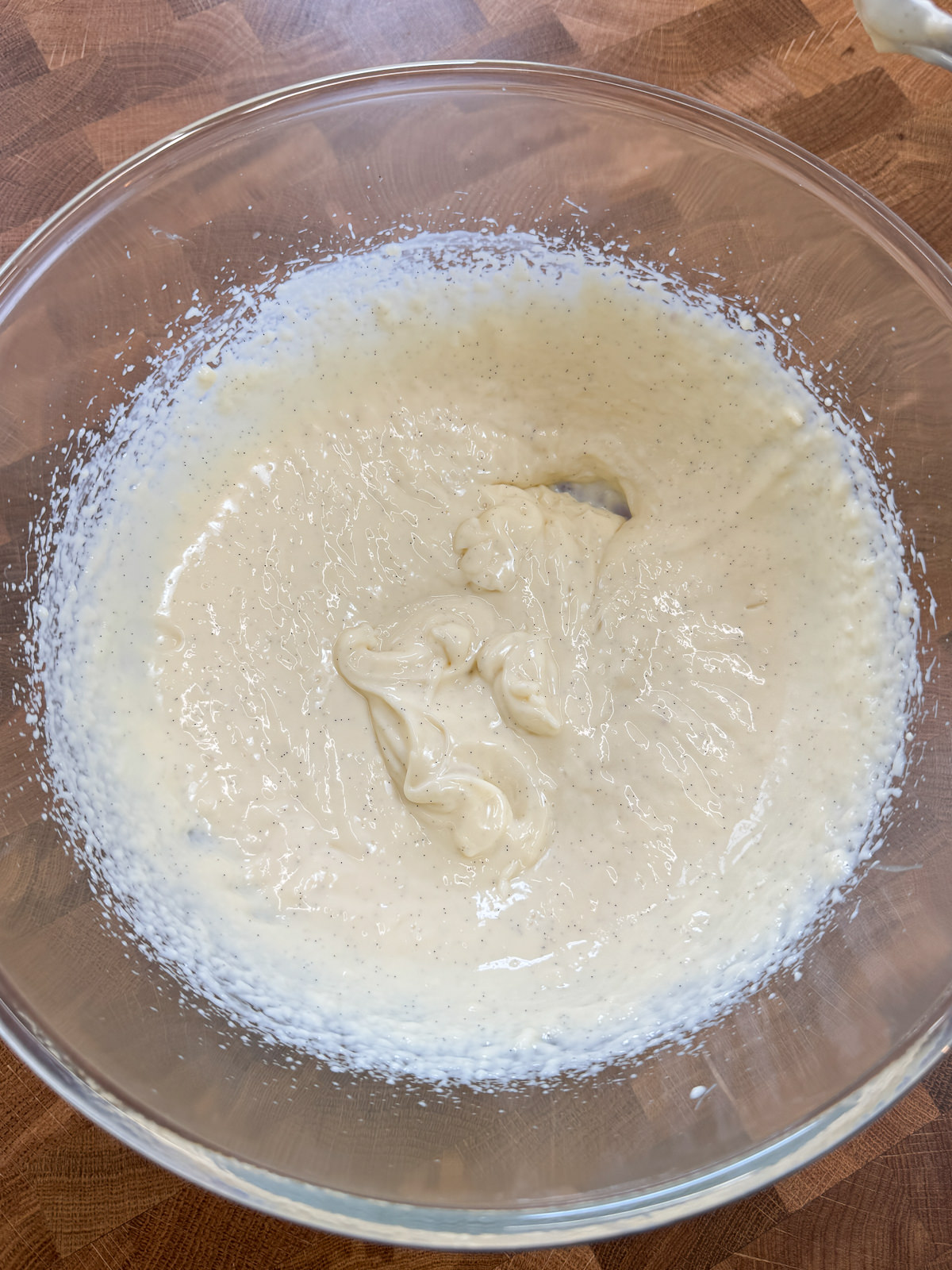
Pastry cream is a type of custard that’s thickened with cornflour & enriched with butter. It’s served cold and has a pipeable consistency which makes it ideal for filling profiteroles with. Pastry cream is made like most other egg custards, where we warm milk, sugar & vanilla on the stove then add in egg yolks & cornflour then cook out to thicken. Where it differs, is that we whisk butter into the custard at the end then let it cool completely in the fridge before using.
There’s a couple of key steps to do when making a batch of pastry cream to guarantee success! First, the egg yolks must be tempered before being added into the warm milk, to prevent them curdling. To do this, we simply whisk some of the milk into the yolks off the heat before adding them back in. Then secondly, the custard must be cooked until it’s just starting to boil, so that the cornflour thickens it properly. Once cooled down & chilled, you’ll need to give the custard a whisk by hand to make it smooth & a more pipeable consistency.
Vanilla Whipped Cream
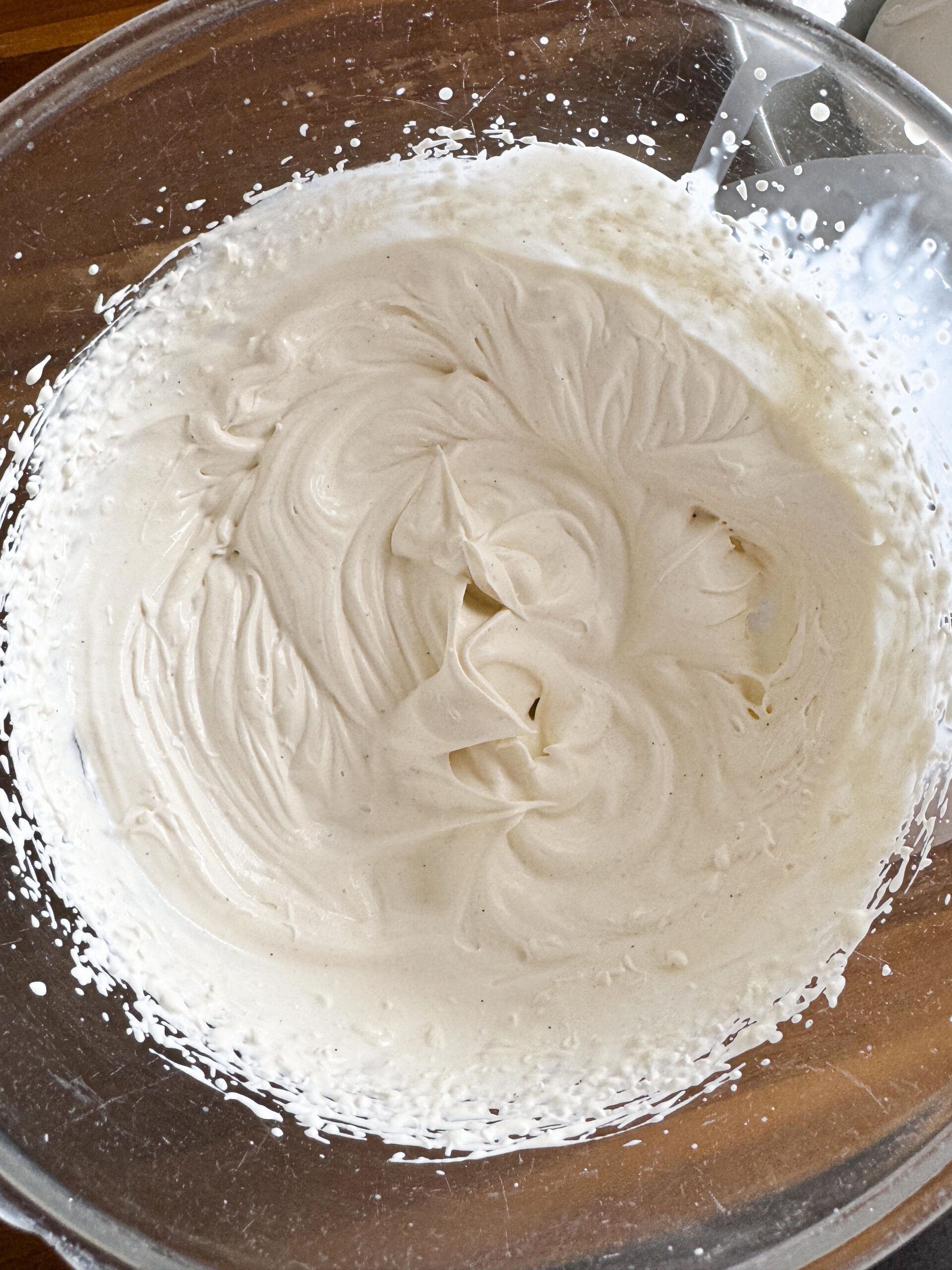
There’s not much that I can say about whipped cream! It’s a super simple profiterole filling that’s quick & easy to make. We’re simply whipping double cream (heavy cream) with icing sugar & some good quality vanilla paste, to firm peaks. The icing sugar sweetens the cream & the vanilla adds flavour.
Dark Chocolate Sauce
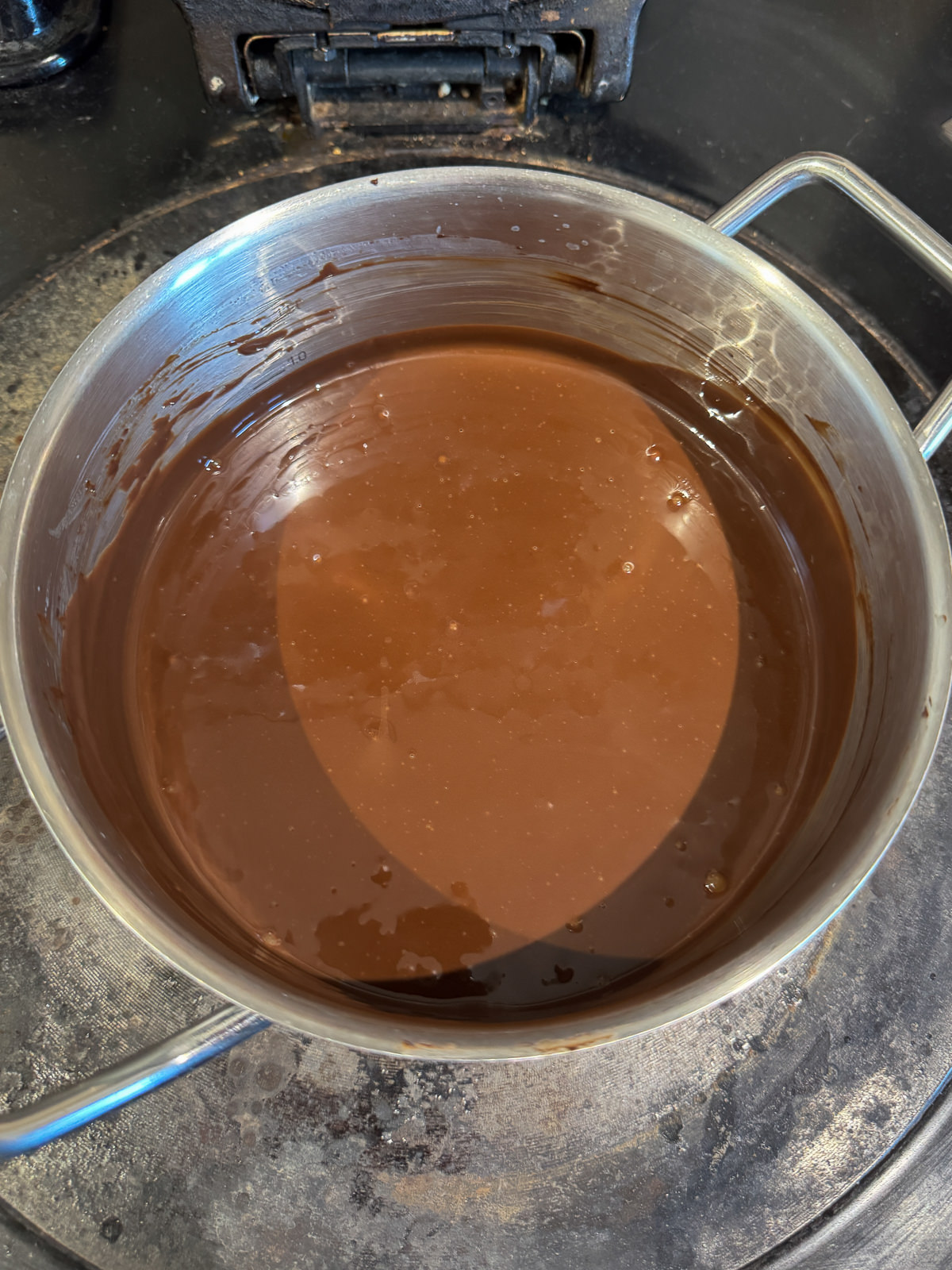
The dark chocolate sauce that we’re serving with our profiteroles is super easy to make & is designed to be served warm. It’s rich, thick, smooth & velvety! To make it, we warm cream & milk over a low heat along with some golden syrup (for sweetness & a glossy finish) & a pinch of sea salt. Once hot, we add in chopped dark chocolate & butter then whisk to melt. That’s all there is to it! With this sauce, I’d recommend using a good quality dark chocolate as it really does make a difference.
Serving Profiteroles
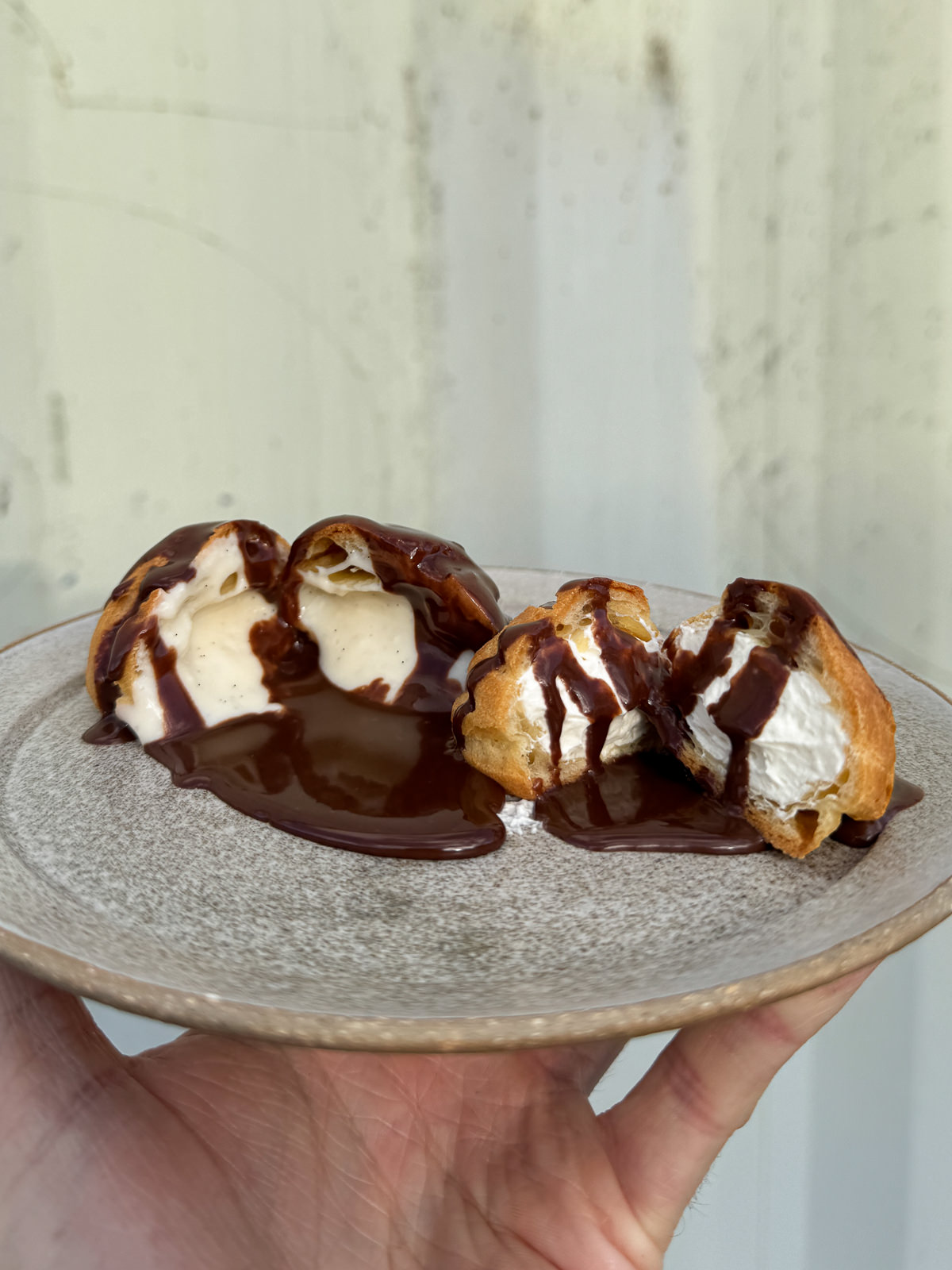
To assemble & serve our profiteroles, it’s simply a case of piping a generous amount of filling inside each one then drizzling over the warm chocolate sauce! The easiest way to fill the profiteroles is to use a small knife to make a small hole in the bottom of each one. Then we transfer our filling into a piping bag, cut a small amount off the tip then pipe the filling inside the choux, being careful not to over fill them or pipe the filling too quickly. This could cause the filling to leak out!
Tips & Tricks
- Use strong white bread flour for the choux pastry to give your profiteroles a sturdier texture & thicker crust. This makes the profiteroles perfect for filling with cream!
- Dust your profiteroles with icing sugar before baking, to give them a crisp crust. This also prevents the choux pastry from cracking & helps the profiteroles rise more evenly.
- Don’t open your oven door too early! This is probably the most important part of making choux pastry because if you open the oven too earlier, the pastry will sink.
- Poke a hole in the bottom of each profiterole once they’re cooked, to let steam out & dry the insides out.
- Serve your profiteroles as soon as possible, as they’ll start to lose their crisp texture as they sit.
- Use a good quality dark chocolate for the chocolate sauce, for the best flavour!
How To Cook Profiteroles In An Aga
With all of my recipes, I provide cooking instructions for conventional & fan ovens, as well as Agas. You’ll find the Aga cooking instructions in the notes section in the recipe card!
To cook profiteroles in an Aga, melt the butter for the choux on the simmering plate then move over to the boiling plate to bring it to the boil. Cook the choux out on the simmering plate after you’ve mixed in the flour.
To bake the profiteroles, cook on the bottom set of runners in the roasting oven for 20 minutes, turning the tray around after 15 minutes then poke a hole in the bottom of each profiterole. Leave the profiteroles facing cut side up then place the tray onto the floor of the simmering oven & cook for 15 minutes, to dry out the insides.
Frequently Asked Questions
You can use either plain flour or strong white bread flour for choux pastry & it comes down to personal preference for which one you use. Choux pastry made with plain flour will be more soft & delicate whereas choux made with strong white bread flour will be more sturdy & will have a thicker crust.
Although you can use one or the other, it’s best to use a mix of both water & milk for choux pastry for the best balance of texture, flavour & colour. Using more milk will make choux with a softer texture whereas more water will make choux with a crisper texture. You can play around with different ratios of water & milk to find the texture that you like the best!
Having a stand mixer definitely makes it easier to make choux pastry but if you haven’t got one, you can use an electric hand mixer instead or mix your choux by hand, with a wooden spoon. You’ll only need a mixer when adding in the eggs though!
Profiteroles are best served as soon as possible, ideally on the same day as they were baked as they will soften over time. Unfilled profiteroles should be stored in an airtight container & will keep for a day or two at room temperature. Filled profiteroles need to be stored in the fridge & are best eaten within a day.
Choux pastry will start to soften & lose its’ crisp texture pretty quickly after it has been baked, this can be as quickly as a few hours! If your profiteroles have softened, you can bake it for 2-3 minutes at 180°c/356°f to crisp them back up. Make sure to let them cool down before filling them.
More Dessert Recipes To Try!
- Salted Brown Butter Toffee Sauce
- Brown Butter Sticky Toffee Pudding
- Dark Chocolate Mousse
- Classic Cherry Pie
- Greek Yogurt Panna Cotta With Poached Rhubarb
- Individual Tiramisu
Watch How To Make Profiteroles
If you have enjoyed this profiterole recipe, it would mean a lot if you could leave a review & rating. And if you’d like to stay up to date with future recipes, follow us on Instagram & TikTok or subscribe to our newsletter!
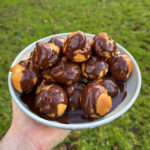
Profiteroles With Chocolate Sauce
Equipment
- Saucepan
- Stand Mixer
- Digital Food Probe
- Piping Bag
- ½ Inch Piping Nozzle
- Large Baking Tray
- Silicone Baking Mat
Ingredients
Profiteroles
- 120 g Strong White Bread Flour (See Notes)
- 140 g Water
- 70 g Whole Milk
- 85 g Unsalted Butter (Chopped Into Small Pieces)
- 10 g Caster Sugar
- 3 g Fine Sea Salt
- 3 Large Eggs
- Icing Sugar (For Dusting)
Fillings (Choose 1 – Either Pastry Cream Or Whipped Cream)
Vanilla Pastry Cream
- 400 g Whole Milk
- 60 g Caster Sugar
- ½ A Vanilla Pod
- A Pinch Of Sea Salt
- 50 g Egg Yolks
- 30 g Cornflour
- 25 g Unsalted Butter
Vanilla Whipped Cream
- 300 g Double Cream
- 40 g Icing Sugar (Sifted)
- 1 tsp Vanilla Paste
Chocolate Sauce
- 200 g Double Cream
- 100 g Whole Milk
- 50 g Golden Syrup
- A Pinch Of Sea Salt
- 180 g Dark Chocolate (See Notes)
- 25 g Unsalted Butter
Instructions
Profiteroles
- Sift the bread flour into a bowl then set to one side.
- Add the water, milk, butter, sugar & salt into a medium saucepan then set over a low heat. Cook, stirring frequently until the butter has melted.
- Once the butter has melted, turn the heat up to medium-high & bring the mix to the boil.
- As soon as the mix is boiling, take the pan off the heat then add in the flour all in one go. Use a wooden spoon to immediately stir the flour into the liquid until a rough dough forms then set the pan back over a low heat.
- Next, cook the dough, stirring constantly until it comes away from the sides of the pan & has formed one cohesive mass (a smooth ball of dough). There should also be a thin film layer in the bottom of the pan. This step will only take around 1-2 minutes.
- Once the dough is ready, transfer it to a bowl then leave to cool, until slightly warm. If you take the temperature of the dough with a food probe, it should be around 55°c/131°f when cooled enough.The choux will take around 20 minutes to cool. If you press it into a slightly thinner layer (not a ball), it will cool more evenly.
- Whilst your dough is cooling, preheat an oven to 210°c/190°c fan (410°f/374°f). At the same time, line a large baking tray with a silicone mat then set to one side.It's important that you let your oven preheat thoroughly otherwise the choux won't bake properly! If needed you should preheat it earlier. Using a silicone mat is best but using baking parchment will work as well.
- Next, crack the eggs into a jug, beat lightly with a fork then set to one side.
- Once the dough is cool, transfer it into the bowl of a stand mixer then mix with the paddle attachment on a medium low speed for 30 seconds or so. This ensures that the dough is an even temperature throughout.
- Next, gradually add enough of the beaten egg into the dough (whilst mixing on a medium-low speed) until it reaches "dropping consistency" & is smooth and glossy. Make sure to give the bowl a scrape down regularly!Dropping consistency is reached when the choux falls slowly off the paddle when it's lifted out of the mix. It should form a V shape on the end of the paddle when held upside down. There's a visual guide to this in the post above.
- Transfer the choux pastry into a piping bag fitted with a ½ inch piping nozzle then pipe 24 x 1 inch wide rounds onto the prepared baking tray. Make sure to leave a few centimetres between each profiterole. They'll rise as they bake!
- Use a finger dipped in cold water to gently press down the peak that is on top of each profiterole (from where we piped them) then lightly dust the top of each profiterole with icing sugar The top of each profiterole should be smooth. The icing sugar gives the profiterole a crisp texture & helps them rise more evenly. Make sure to sift the icing sugar when dusting.
- Bake the profiteroles for 15 minutes, until they've risen & are starting to turn golden brown then turn the oven down to 175°c/375°f & bake for another 20-25 minutes until the pastry is crisp & a deep golden brown.Once baked, the profiteroles should a deep golden brown with a crisp texture. Make sure not to open the oven door during the first 30 minutes otherwise the profiteroles will sink.
- Next, take the profiteroles out of the oven & use a the tip of a small knife to poke a small hole in the bottom of each one (in the middle). Place the profiteroles back onto the tray so that they're facing bottom side up.
- Return the profiteroles to the oven, bake for a final 10 minutes then take out of the oven & leave to cool completely.This step dries the insides out fully & prevents the profiteroles from sinking as they cool.
Vanilla Pastry Cream
- Add the milk, vanilla, salt & half of the caster sugar into a medium saucepan then set over a low heat. Warm gently, stirring occasionally until steaming hot.If you're using a vanilla pod, scrape the seeds out then add both the pod & seeds to the milk.
- Whilst your milk is warming up, place the yolks, cornflour & remaining sugar into a mixing bowl & whisk by hand until pale, smooth & combined. This will take a minute or so.
- Once the milk is steaming hot, pour half of it into the yolks, whisking as you do so. Pour the now tempered yolks into the pan of milk.
- Cook over a medium heat, whisking constantly until the custard is thick & starting to boil. If you take the temperature of the custard with a food probe, it should be around 85°c/185°f once cooked.To check if the custard is ready, stop whisking every 20-30 seconds once it has thickened. If a few bubbles appear & pop, the custard is ready. Be careful not to overcook it though!
- Once the custard is cooked, take the pan off the heat, whisk in the butter then pass through a sieve, into a bowl. Place a piece of baking parchment onto the custard’s surface, leave to cool slightly then refrigerate until completely cold. This will take at least 2 hours.
- Just before using, give the custard a quick whisk by hand, to loosen it off then transfer to a piping bag. The pastry cream should be nice & smooth. If there's any tiny lumps, pass the custard through a sieve.
Vanilla Whipped Cream
- Add the cream, sugar & vanilla into the bowl of a stand mixer then whisk on a medium speed until firm peaks form. Transfer to a piping bag before using.Be careful not to over whip the cream! You can also use a handheld electric mixer or whisk the cream by hand instead. I'd recommend making the whipped cream just before you need it.
Chocolate Sauce
- Add the cream, milk, golden syrup & salt into a medium saucepan then warm over a low heat until steaming hot.Don't let the cream boil!
- Whilst your cream is heating up, chop the dark chocolate & butter into small pieces.
- Once the cream is hot, add in the chocolate & butter then continue cooking, whisking frequently until the chocolate has fully melted & you've got a thick & smooth chocolate sauce.This sauce is designed to be served warm, so you can make it just before serving or reheat it on the stove/in a microwave before using.
To Serve
- Use a small knife to make a hole in the bottom of each profiterole. The hole needs to be big enough to fit the tip of a piping bag in!
- Pipe a good amount of filling (either pastry cream or whipped cream) inside of each profiterole then place into bowls. Only cut a small hole in the end of your piping bag, as this will make it easier to pipe the filling inside the profiteroles.
- Drizzle a generous amount of warm chocolate sauce over the profiteroles then serve immediately.