Gochujang Fish Cakes
Here’s a batch of homemade spicy gochujang fish cakes with a crispy sesame breadcrumb coating & a flavourful filling that’s made with potato, white fish, chilli paste, lime, garlic & dill.

It’s surprisingly easy to make your own homemade fish cakes & I’ve flavoured these ones with some spicy gochujang, lime zest, garlic & fresh dill! There’s sesame seeds in the breadcrumbs, as well for extra crunch & flavour. They’re packed full of flavour & have the crispiest coating possible. Plus, you can make them as spicy as you like & they can be prepared up to 2 days ahead of time. They make for a really good homemade meal & I paired mine with a really simple gochujang mayo which only takes a couple of minutes to make!
Now let’s talk about the filling. There’s your usual mashed potato of course, which we’ve left quite chunky for some added texture. Then’s there’s pan fried fish which we’ve broken up into chunks, a fried garlic & gochujang butter which flavours our fish cake mixture, some finely chopped dill & lime zest. All of these ingredients work fantastically well together & they’re all mixed to make a balanced, flavourful fish cake filling.
The other component for a fish cake is the crispy breadcrumb coating. For the crispiest, crunchiest fish cake coating, we’re using panko breadcrumbs for this then we’re adding a generous amount of sesame seeds in with them as well. I used both black & white sesame seeds but you can use whatever type you have available.
For more dinner recipes, take a look at our ever growing collection of main courses! And for something to serve with your fish cakes, check out our side dish recipes.
What You’ll Need
- Fish – We’re using a firm, white fish for these fish cakes. I used a 50/50 mix of cod & haddock but other white fish like hake & pollock will work as well. Make sure to use fish fillets that’ve had the skin & any bones removed.
- Potatoes – I used Maris Piper potatoes for my fish cakes but other floury potato varieties will work. Russets & King Edward potatoes would be some good alternatives. We’re going to be baking the potatoes for better flavour & to avoid making the fish cake mix too wet.
- Gochujang – Gochujang is a Korean fermented chilli paste that adds spice to our fish cakes. I added enough in to give our fish cakes a mildly spicy flavour but you can add more in if you’d prefer a hotter flavour.
- Flavourings – We’re going to be flavouring our fish cakes with some lime juice, fried garlic & fresh dill, which all complement the gochujang’s flavour perfectly.
- Breadcrumbs – For the crispiest coating, I’d recommend using panko breadcrumbs. You can get these from most supermarkets but regular dried breadcrumbs will work as well.
- Sesame Seeds – I added some white & black sesame seeds into the breadcrumbs, for extra crunch!
How To Make Fish Cakes
There’s only a few steps to do when making homemade fish cakes & there’s some handy tips & tricks included which will take yours to the next level! This includes baking the potatoes in the oven & pan frying the fish in butter.
- Cook Potatoes
First, we’re going to bake whole potatoes in the oven until the insides are tender, like when you cook a jacket potato! This will take around an hour. To check if the potatoes are cooked, give them a poke with a knife. If it slides in with little to no resistance, it’s cooked. Once cooked, we’ll let the potatoes cool slightly whilst we cook the fish. - Cook Fish
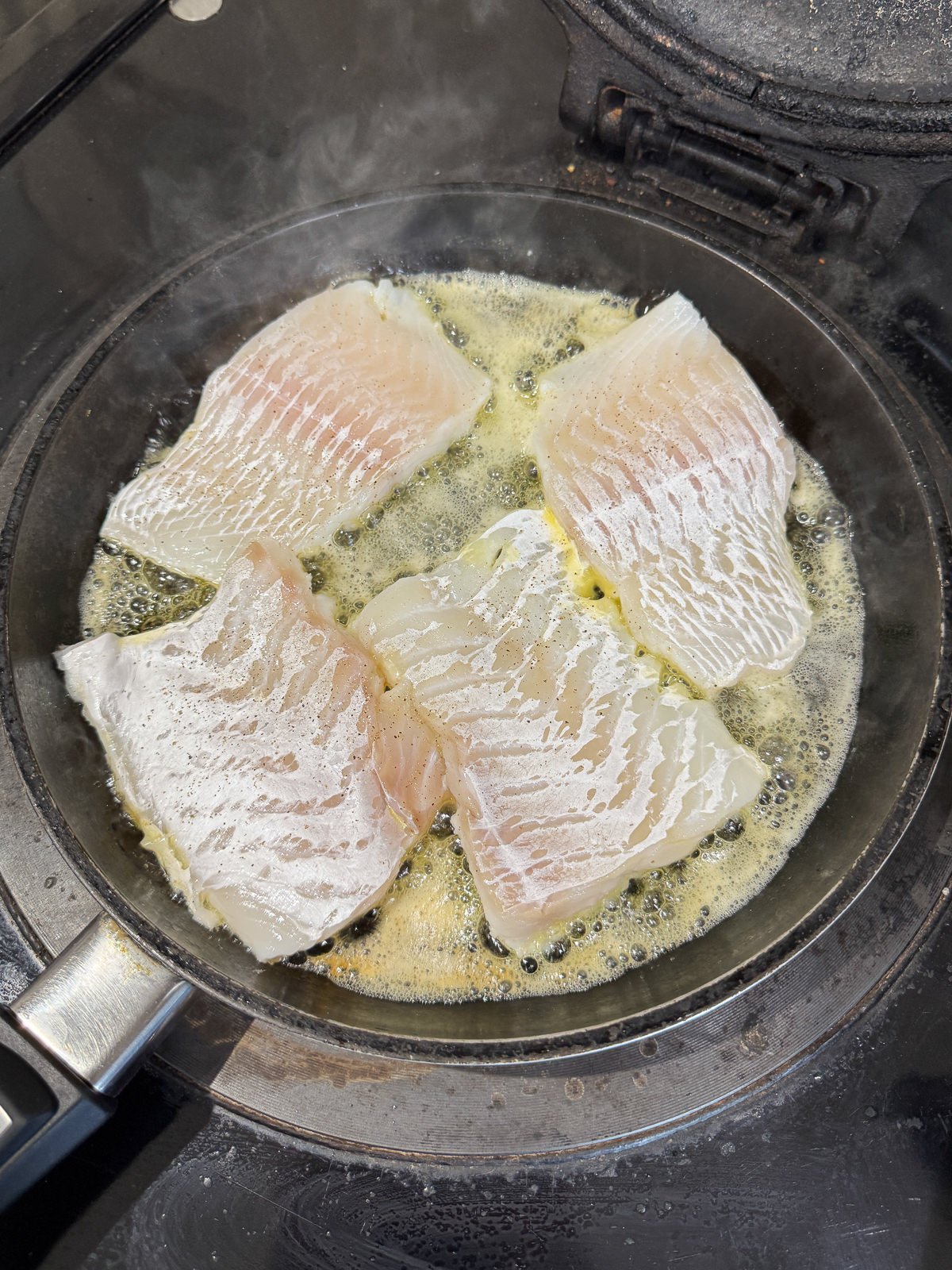
To cook the fish, we’re going to be frying it in butter instead of poaching it, which is a tip that I picked up from Nagi from RecipeTin Eats! To do this, we season our skinless fish fillets with salt & pepper then simply fry for 2-3 minutes on both sides, until just cooked. Once cooked, the fish should opaque & firm but not falling apart! - Gochujang Butter
Now that the fish is cooked, we take it out of the pan then add some grated garlic into the butter then fry for 30 seconds. Next, we take the pan off the heat then stir in a spoonful of gochujang paste, to melt. The gochujang butter gets poured into a bowl & left to cool. This is how we’re going to flavour our fish cake mixture! - Mash Potatoes
For the best texture, we need to keep the mashed potatoes fairly chunky. So, we’re going to be scooping the flesh out of the skins then using a fork to roughly mash. - Fish Cake Mix
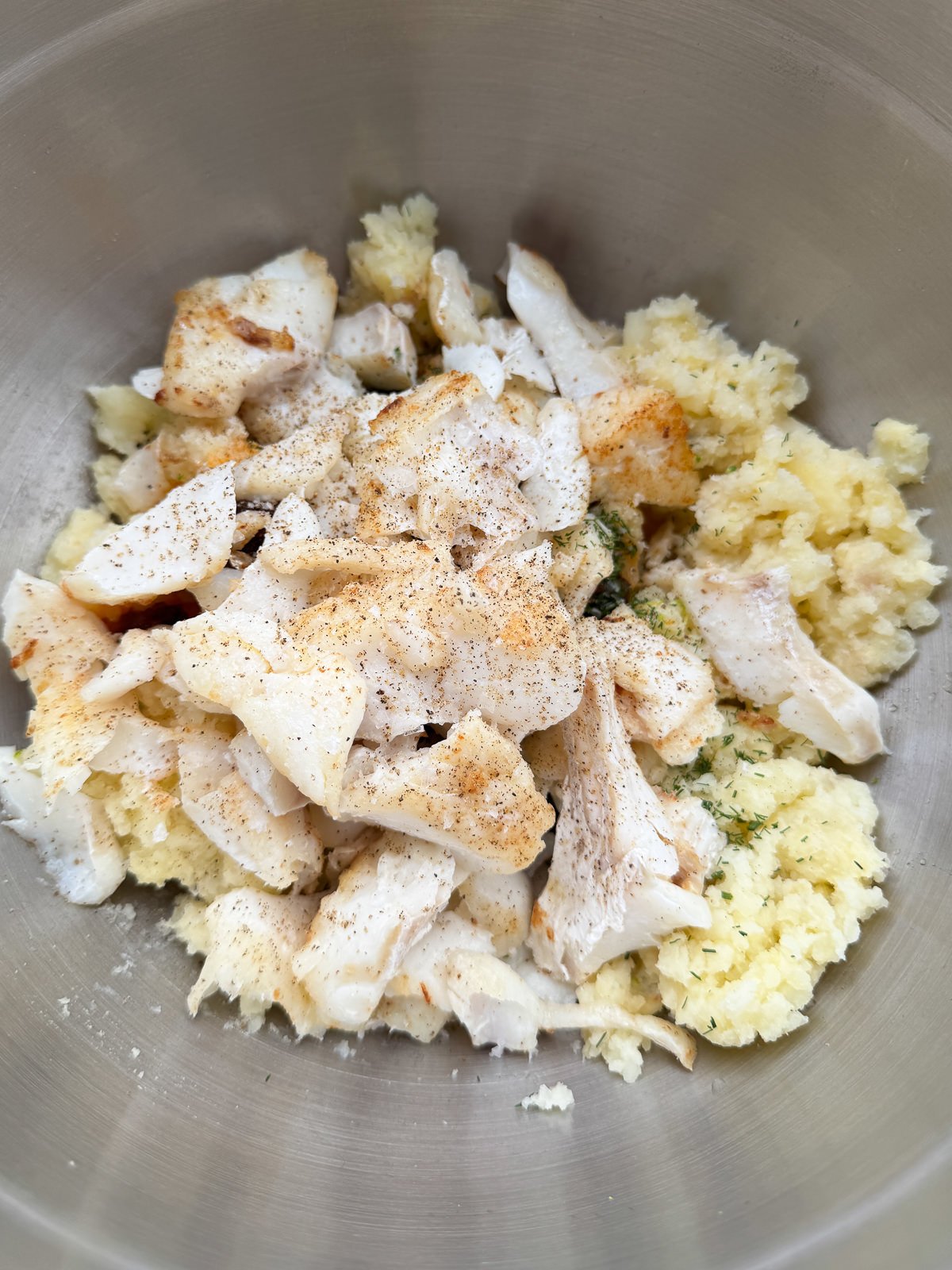
Our actual fish cake mix is super straight forward to make. To our mashed potatoes, we add in the gochujang garlic butter, lime zest, a beaten egg & finely chopped dill. Then we break the fish up into chunks, season the mix with salt & pepper then mix by hand, to combine. - Form Patties
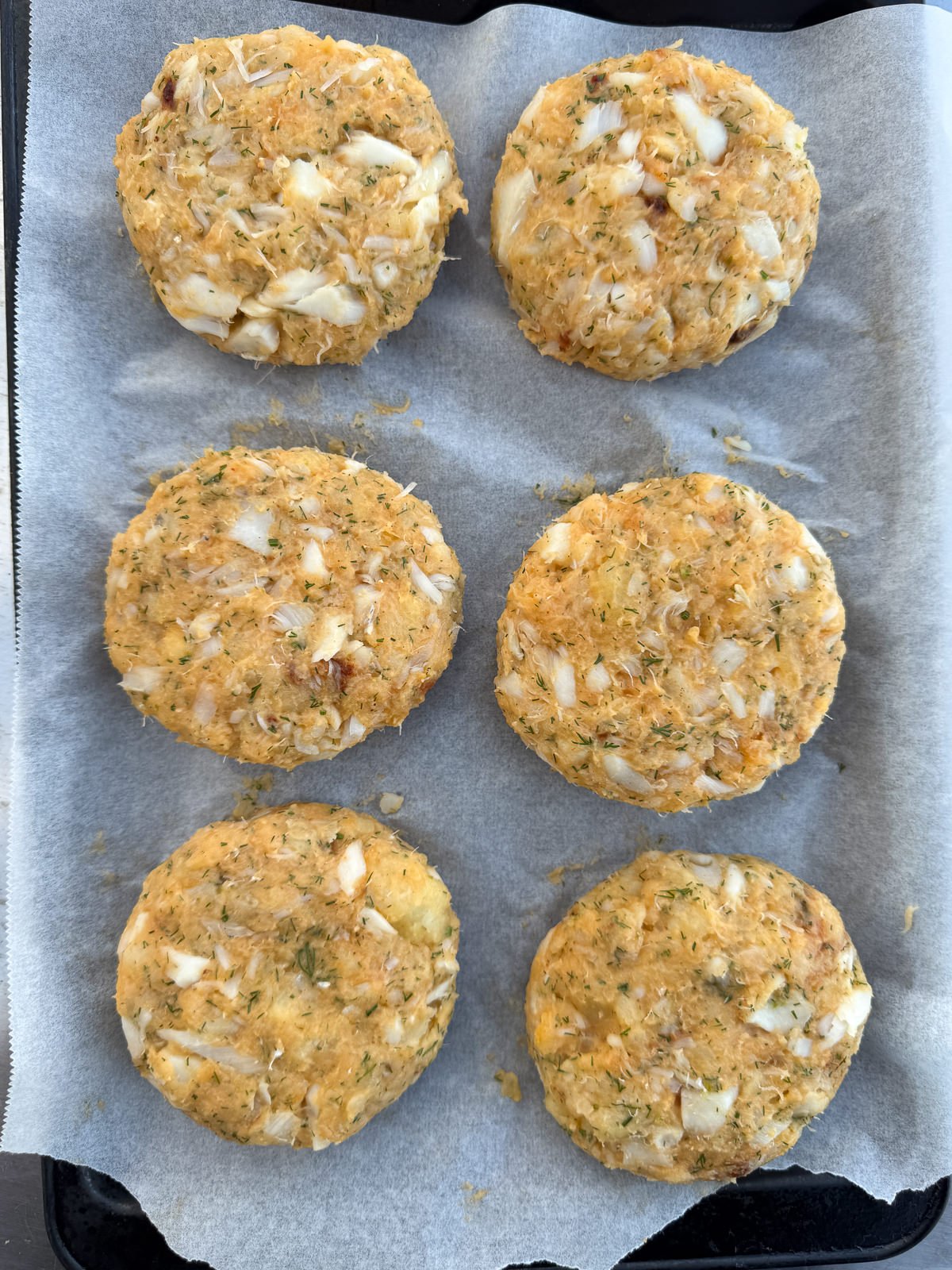
Next, we take our fish cake mix & form them into 6 patties by hand. Each one should weigh around 200 grams & should roughly be 8 cm wide & 3 cm thick. At this point, I’d recommend chilling the patties in the fridge for an hour, so that they can firm up slightly. - Breadcrumb
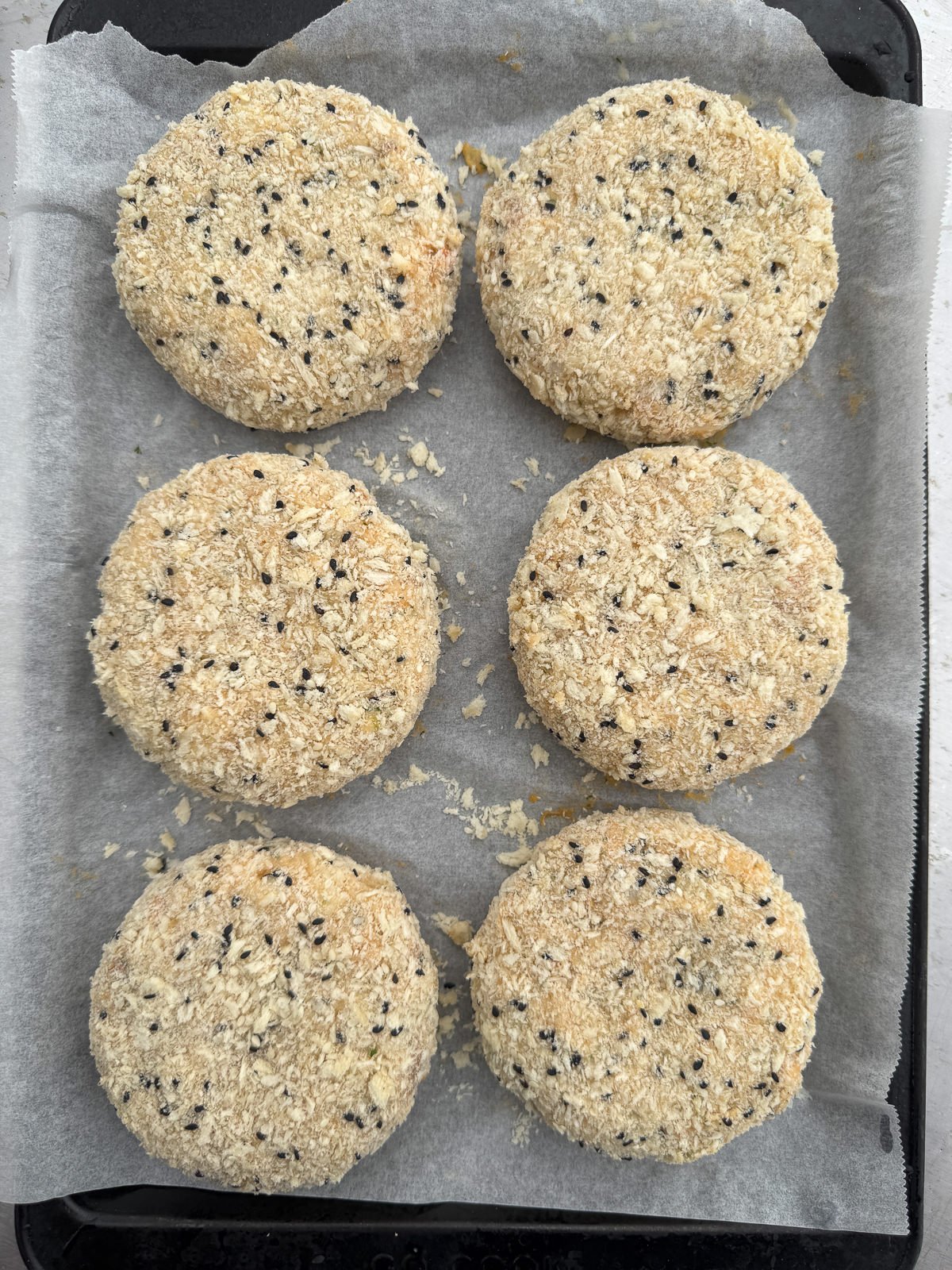
These fish cakes are breadcrumbed the usual way, by coating them in flour, egg then breadcrumbs. We’re going to be adding sesame seeds into the breadcrumbs as well, for some extra crunch & flavour. Plus they look pretty cool, you know?!
How To Cook Fish Cakes – 2 Options!
There’s 2 different ways to cook these fish cakes, depending on the equipment that you have available. For the crispiest fish cakes, I’d highly recommend deep frying them but if you haven’t got a deep fat fryer, you can pan fry them as well.
Deep Frying
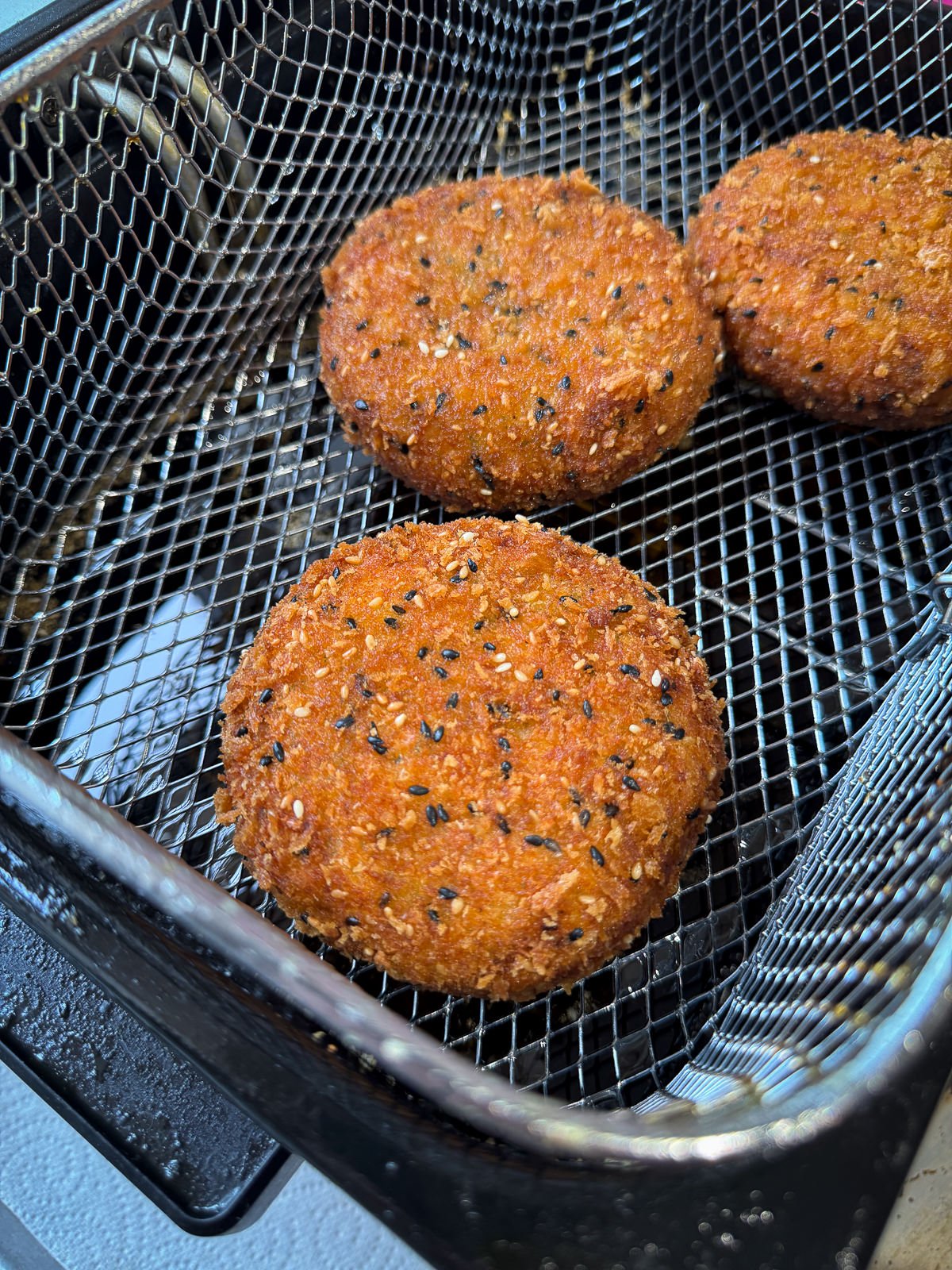
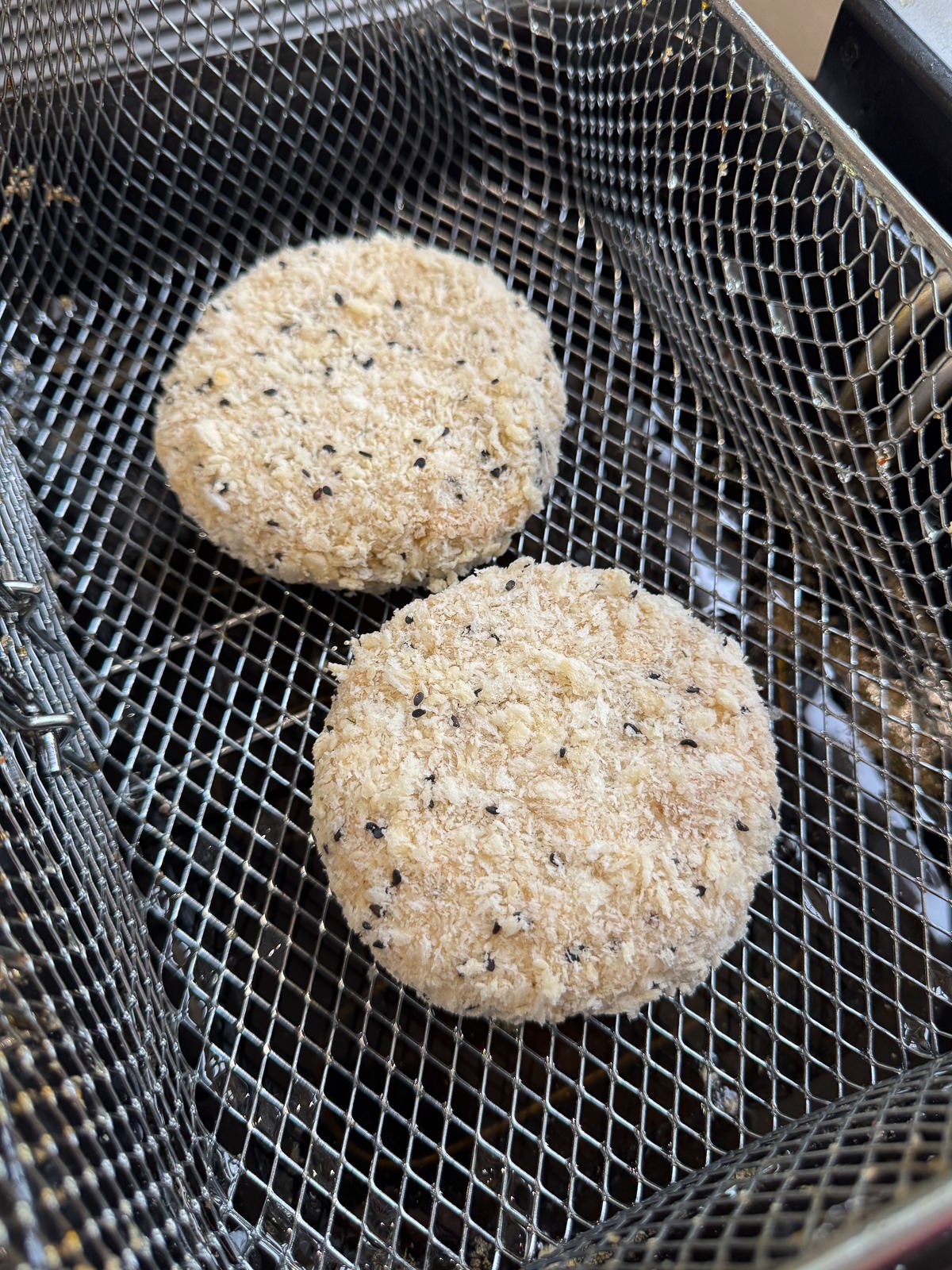
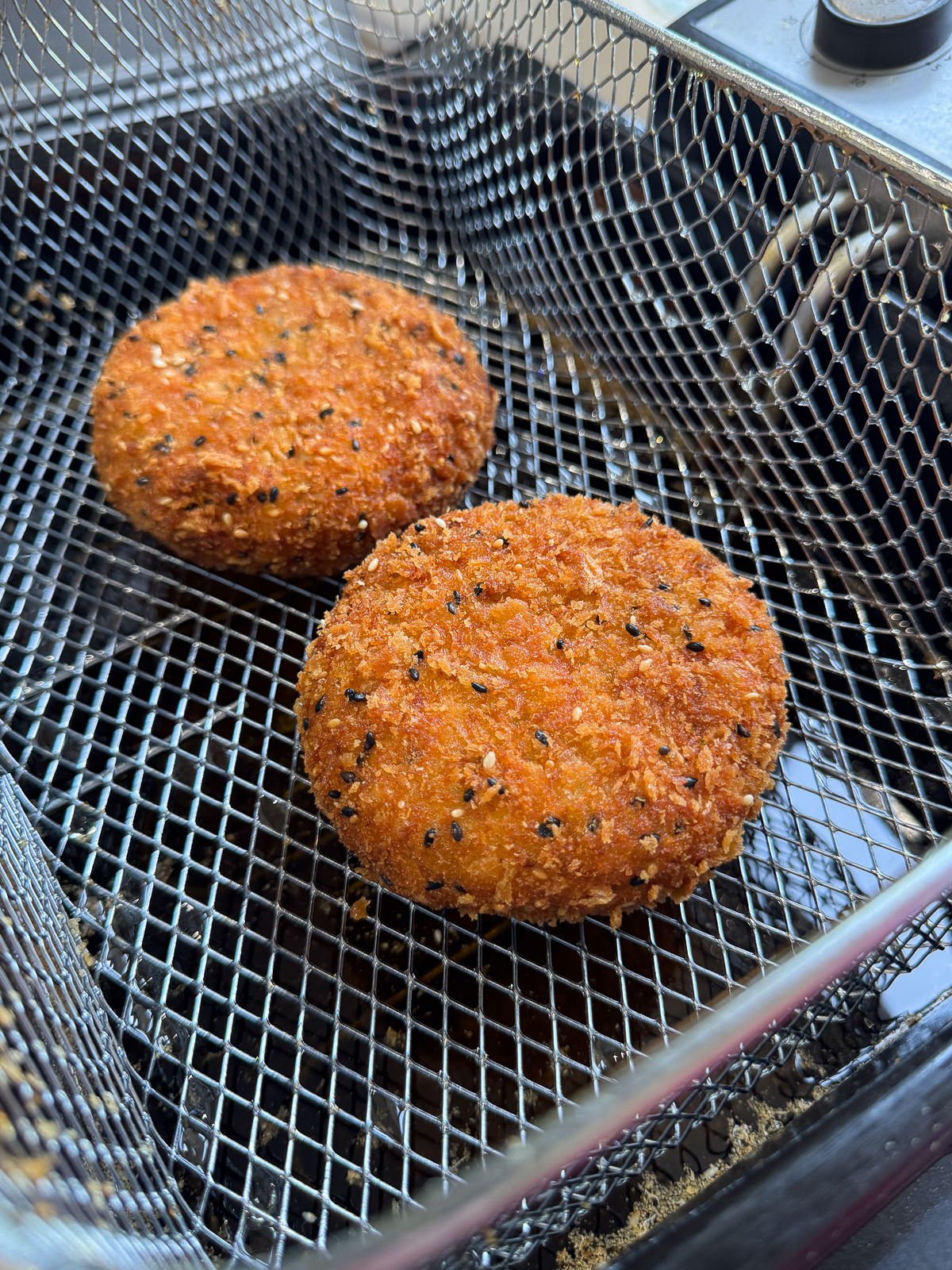
This is my preferred method for cooking fish cakes. Here, we deep fry our fish cakes in batches at 180°c/356°f for 5-6 minutes until the breadcrumbs are crisp & a deep golden brown colour. Then once all of the fish cakes are fried, we bake them in the oven (set to the same temperature as the fryer) for another 6-8 minutes until the inside is piping hot. To check this, use a digital food probe to measure the internal temperature in the middle. It should be at least 75°c/167°f.
Pan Frying
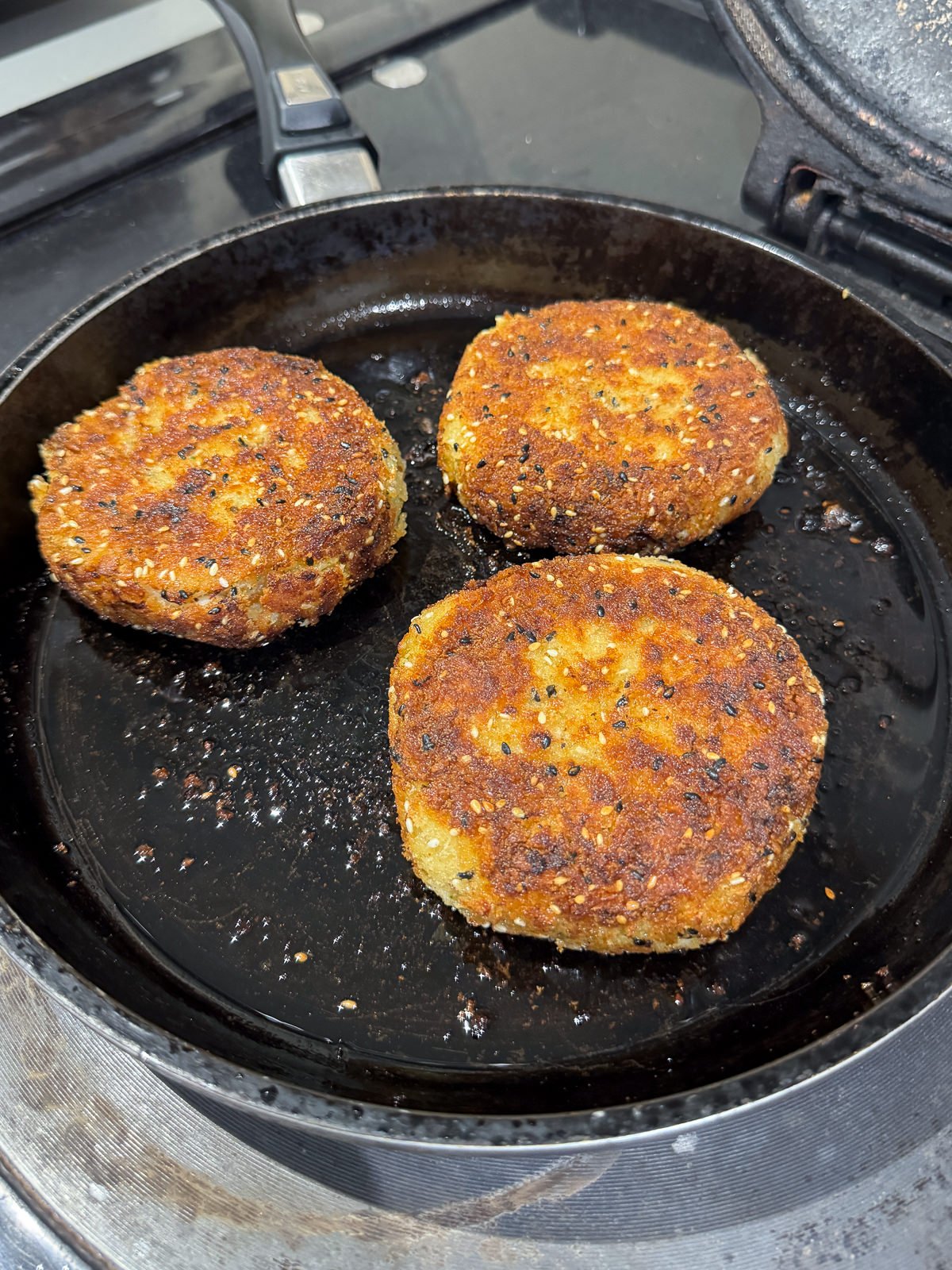
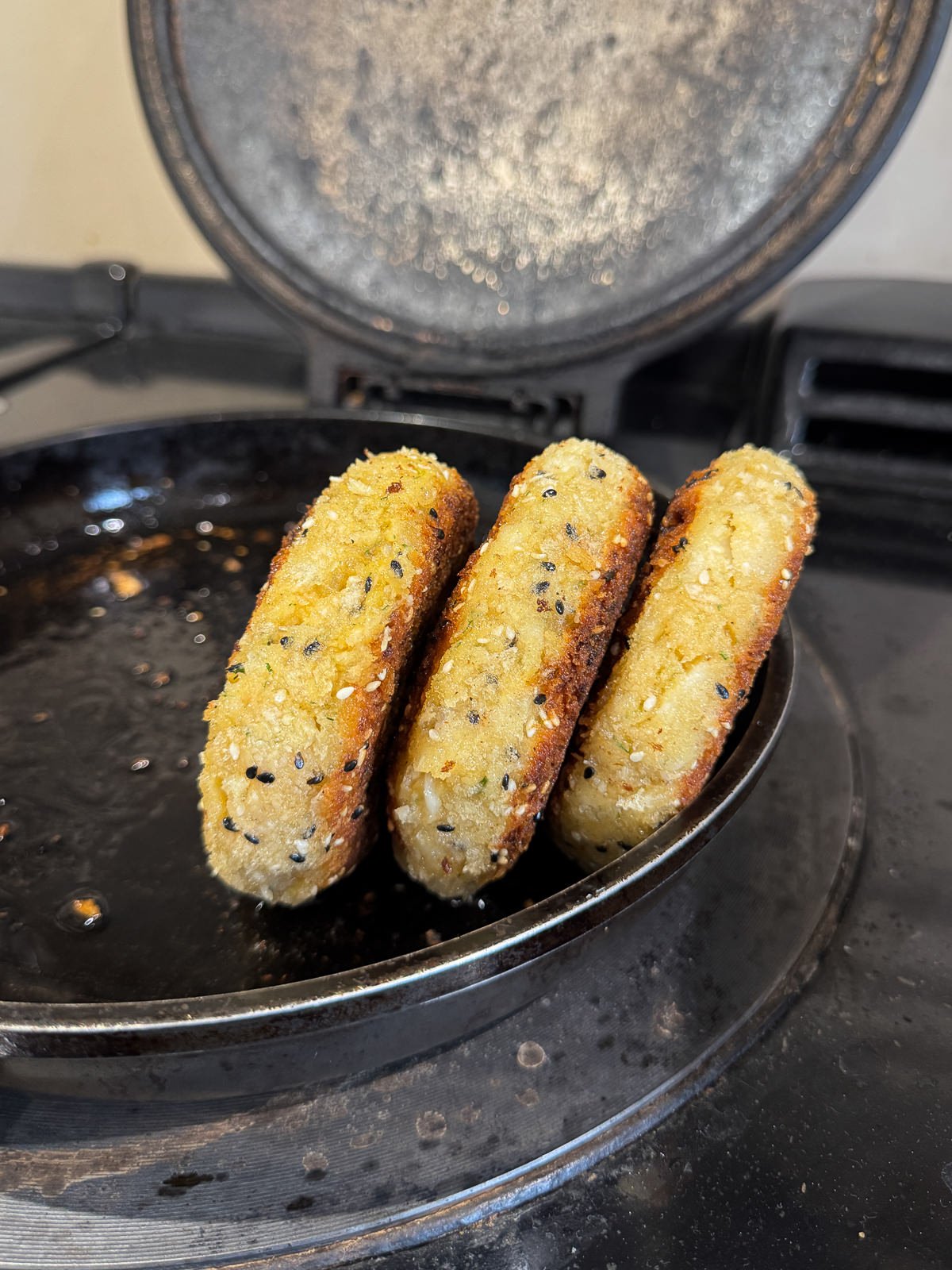
If you haven’t got a deep fat fryer, another way to cook homemade fish cakes is to pan fry them in a 1cm layer of vegetable oil. This is a 2 step cooking process like when we deep fry the fish cakes. First, we fry the fish cakes for 1-2 minutes on each side over a medium-high heat until the bread crumbs are crisp & golden brown then bake them in the oven until they’re piping hot throughout. If you like, you can fry the edges of the fish cakes as well so that they’re crispy all over.
Gochujang Mayo
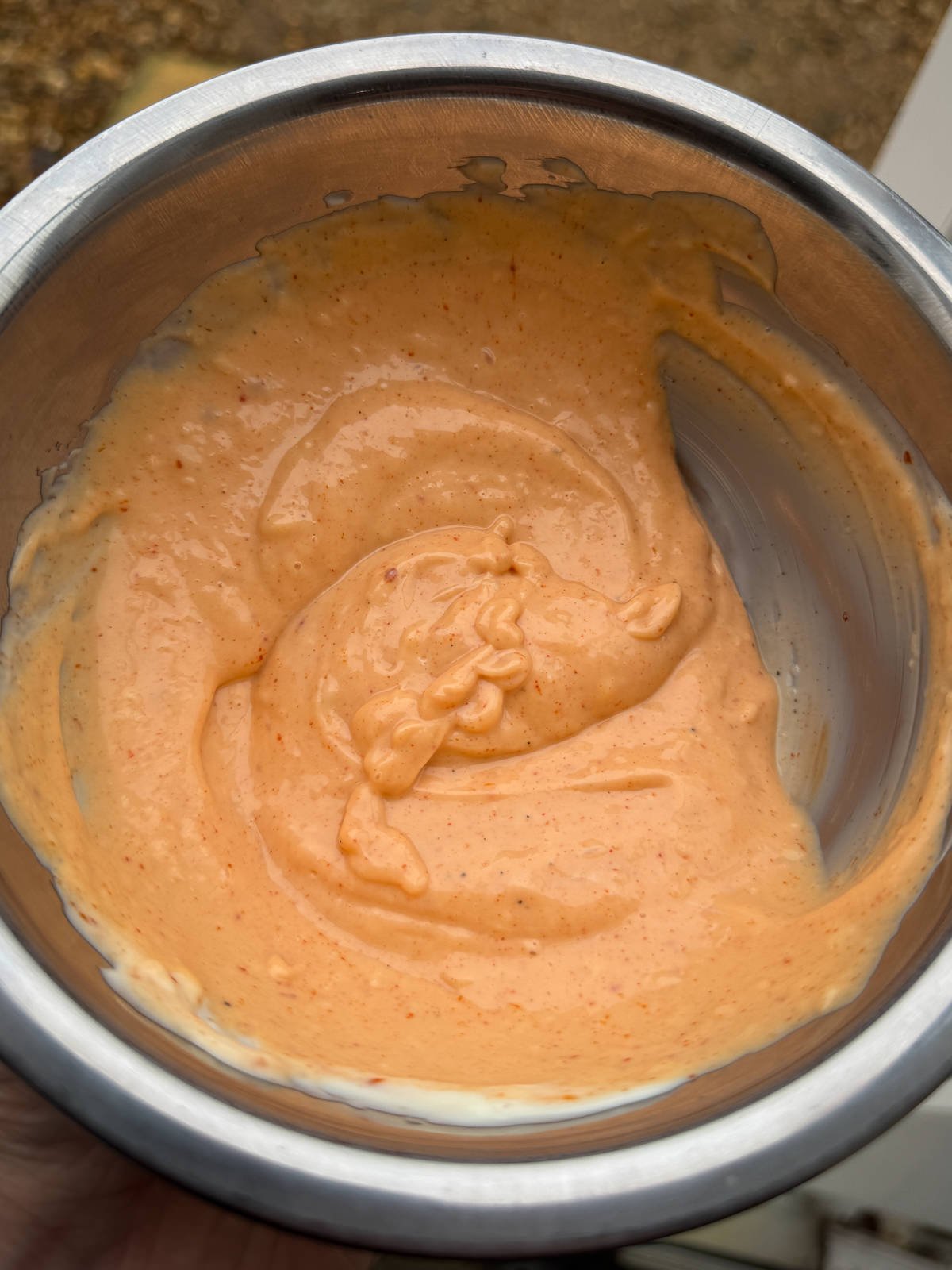
Normally, you’d serve fish cakes with tartar sauce but as these are spicy gochujang fish cakes, I’ve paired them with a really easy gochujang mayo! This is super simple to make; all we need to do here is mix mayonnaise with gochujang, lime juice, a grated garlic clove & some finely chopped dill. Don’t forgot to season the sauce with salt & pepper as well.
Serving Suggestions
Probably the most popular sides to serve with fish cakes is chips & peas, either fresh garden peas or mushy peas like you would get in a fish & chip shop. However, homemade fish cakes also go really well with a fresh salad or some roasted or grilled veg. They’d also work really well as a sandwich/burger style filling!
Frequently Asked Questions
White fish is the classic choice of fish for fish cakes, typically this would be cod, haddock, hake or pollock. The best choice of fish for fish cakes is a firm, white fish that’s been filleted with the skin & any bones removed. However oily fish like salmon or tinned tuna will also work.
A good substitute for gochujang in fish cakes would be a hot sauce like sriracha or some tangy miso paste! However if you’re not a fan of spice, you could leave the gochujang out completely.
Once coated in breadcrumbs, fish cakes need to be stored in the fridge & are best eaten within 2 days. Fish cakes can also be stored in the freezer for several months & should be defrosted fully before being cooked. If freezing, make sure to separate the fish cakes with baking parchment so that they don’t stick together.
To cook fish cakes on an Aga, bake the potatoes in the roasting oven, on the bottom set of runners & cook the fish on the boiling plate. Fry the fish cakes on the boiling plate then cook in the baking oven, on the second from bottom set of runners.
Once fully cooked, fish cakes will have a crisp, golden brown outside and the inside should be piping hot. If you take the internal temperature with a food probe, the fish cakes should be at least 75°c/167°f in the centre.
More Dinner Recipes To Try!
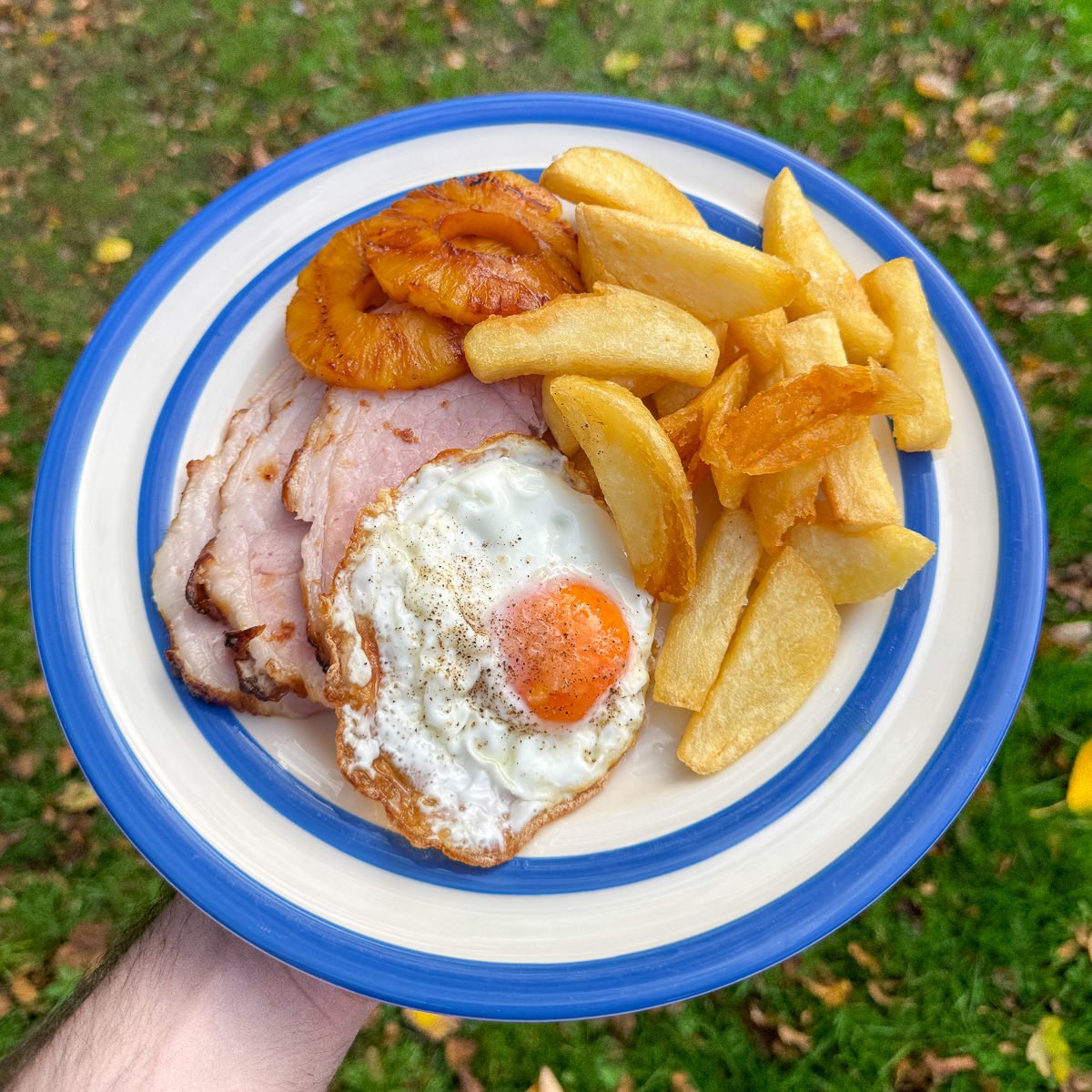
- Honey Roast Ham, Egg & Chips
- Korean Style Buttermilk Fried Chicken
- Beef Burritos
- Gnocchi Alla Vodka With Burrata
- Teriyaki Roast Pork Noodles With Crispy Fried Eggs
- Classic Fish Pie
If you have enjoyed this recipe for gochujang fish cakes, it would mean a lot if you could leave a review & rating. And if you’d like to stay up to date with future recipes, follow us on Instagram & TikTok or subscribe to our newsletter!
Gochujang Fish Cakes
Equipment
- Baking Tray
- Mixing Bowls
- Large Frying Pan
- Deep Fat Fryer
Ingredients
Fish Cake Mix
- 1.4 kg Maris Piper Potatoes (For 750g Mash – See Notes)
- 500 g Skinless White Fish Fillets (Cod, Haddock, Hake Or Pollock)
- 2 tsp Vegetable Oil
- 50 g Unsalted Butter
- 3 Garlic Cloves (Grated)
- 1 tbsp Gochujang (See Notes)
- 1 Lime (Zested)
- 1 tbsp Finely Chopped Dill
- 1 Large Egg (Lightly Beaten)
Breadcrumbing
- 75 g Plain Flour
- 2 Large Eggs
- 2 tbsp Milk (Whole Or Semi Skimmed)
- 100 g Panko Breadcrumbs
- 4 tsp Sesame Seeds (I Used 50/50 Black & White)
Gochujang Mayo
- 150 g Mayonnaise
- 10 g Gochujang
- 2 tsp Lime Juice
- 1 Garlic Clove (Grated)
Instructions
Fish Cakes
- Preheat an oven to 200°c/180°c fan (392°f/356°f).
- Place the potatoes onto a baking tray, pierce the skins in a couple of places with a knife then bake in the preheated oven until the inside are tender. This will take around 1-1½ hours. Once cooked, let the potatoes cool slightly before mashing.To check if the potatoes are done, poke them with a small knife. If it slides in with little to no resistance, they're ready!
- Whilst the potatoes are cooling, cook the fish. To do this, first take the fish out of its' packaging, pat dry with kitchen paper then season with salt & pepper.
- Next, set a large frying pan over a medium heat, leave to heat up for a couple of minutes then add in the vegetable oil & butter. Once the butter has melted, carefully add in the fish then cook for 2-3 minutes on each side, until just cooked.You'll know when your fish is cooked when it turns opaque white. It should feel firm but shouldn't be falling apart.
- Once the fish is cooked, transfer it to a tray & set to one side. Add the grated garlic into the pan, fry for 30 seconds then take the pan off the heat & stir in the gochujang to melt it into the butter. Pour the butter into a bowl then set aside to cool slightly.
- Next, cut the potatoes in half & scoop out the flesh with a spoon. Weigh 750 grams of the potato into a large mixing bowl then roughly mash with a fork. Try to keep the mashed potato fairly chunky.
- Add the gochujang butter, lime zest, chopped dill & egg into the mashed potato. Gently break the fish up into chunks then add into the potato as well.The chunks of fish should be left fairly large.
- Season the potato mix with salt & pepper then gently mix by hand to combine. Don't be too rough, as you don't want to break the fish up too much.
- Divide the fish cake mix into 6 portions, each weighing around 200 grams then use your hands to form the mix into patties that are roughly 8cm wide & 3 cm thick. Place onto a lined baking tray then chill in the fridge for at least an hour.Chilling the fishcakes firms them up slightly, making it easier to breadcrumb them.
Bread Crumbing
- Once the fish cakes have been chilled, prepare the bread crumbing station. To do this, take 3 bowls, fill one with the flour, another with the eggs & milk and the last with the breadcrumbs & sesame seeds. Beat the eggs with a fork then season each bowl with salt & pepper & mix to combine.
- Next, place a fish cake into the flour then roll to coat. Shake off any excess flour then dip the fish cake into the eggs so that it gets completely coated. Let any excess egg drip off then roll the fish cake in the bread crumbs, to evenly coat.
- Place the bread crumbed fish cake onto a lined baking tray then repeat the bread crumbing process with the remaining fish cakes. Once they're all done, chill the fish cakes in the fridge until needed or cook them straight away.
Gochujang Mayo
- Place all of the mayo ingredients into a bowl, season with salt & pepper then stir to combine. Chill in the fridge until needed.Feel free to add in more gochujang if you'd prefer a spicier flavour.
Deep Frying
- Preheat a deep fat fryer to 180°c/356°f. Preheat an oven to the same temperature as well.I'd recommend using a digital food probe to double check the temperature of the oil, as domestic fryers tend to be a bit inaccurate!
- Once the oil is up to temperature, fry the fish cakes for 5-6 minutes until the bread crumbs are crisp & a deep golden brown.You'll probably need to fry the fish cakes in batches. It's important not to over crowd the fryer. Make sure to let the oil heat back up between batches.
- Once fried, let the fish cakes drain for a minute or so, to remove excess oil then transfer to a baking tray & bake in the preheated oven for a further 6-8 minutes until the inside is piping hot. If you take the internal temperature with a food probe, the fish cakes should be at least 75°c/167°f in the centre.
- Once cooked, season the fish cakes with sea salt then serve with the gochujang mayo.
Pan Frying
- If you haven't got a deep fat fryer, the fish cakes can also be pan fried. To do this, first set a large frying pan over a medium-high heat then add in a 1cm layer of vegetable oil & leave to heat up for 2 minutes.
- Next, carefully add fish cakes into the hot oil then fry for 1-2 minutes on each side, until crisp & golden brown then transfer to a baking tray lined with kitchen paper & leave to drain momentarily. You'll need to fry the fish cakes in batches. I like to fry the edges as well, so the fish cakes are crispy all over!
- Once all of your fish cakes have been fried, discard the kitchen paper then bake the fish cakes for 6-8 minutes until the inside is piping hot.If you take the internal temperature with a food probe, the fish cakes should be at least 75°c/167°f in the centre.
- Once cooked, season the fish cakes with sea salt then serve with the gochujang mayo.