Classic Confit Duck Legs
French style confit duck legs, prepared & cooked the classic way! Here duck legs are lightly cured to season, slow cooked in fat until tender then roasted to crisp up the skin.
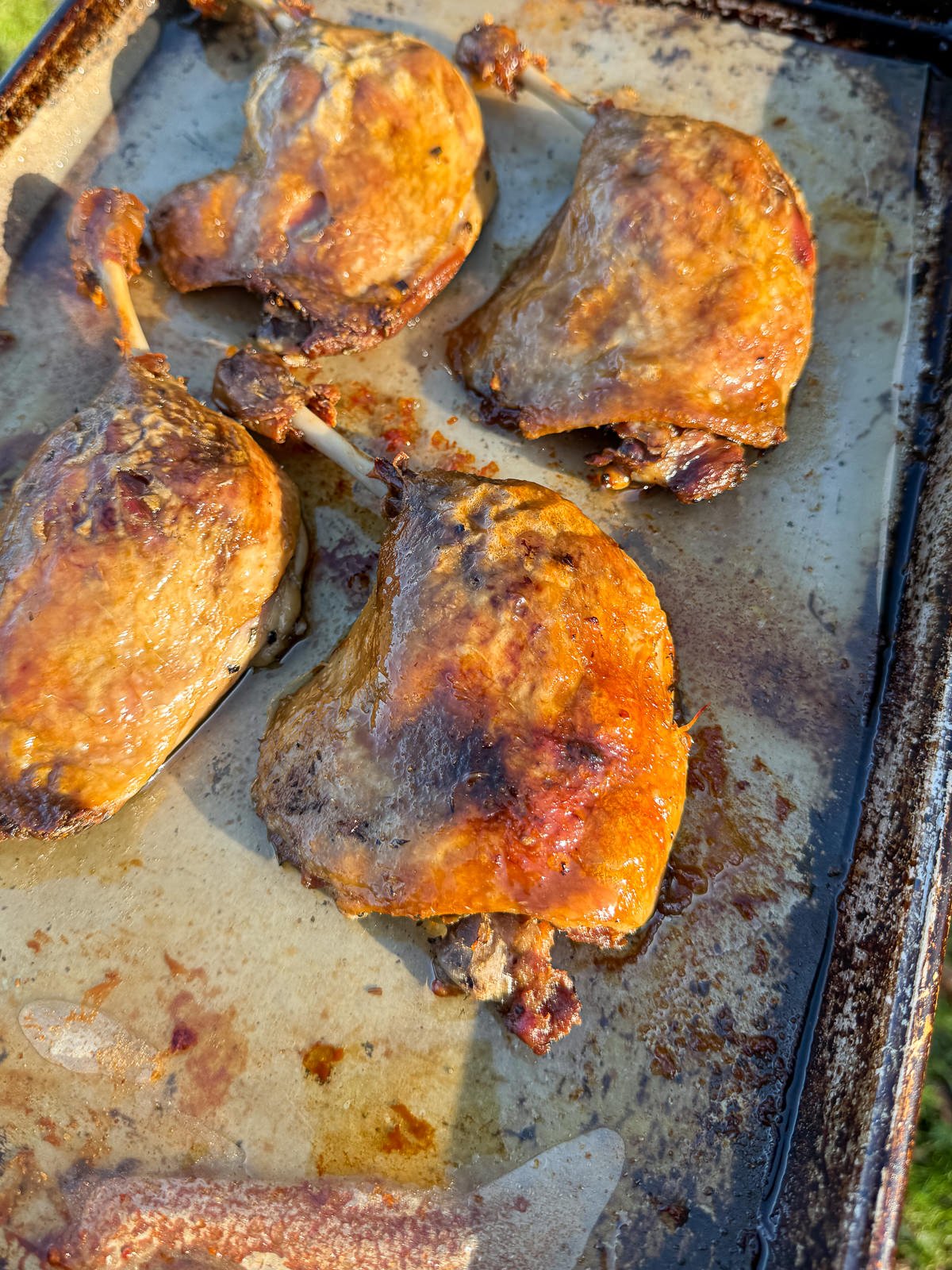
Cooking confit duck legs is super easy & guarantees tender, melt in your mouth meat & crispy golden skin! This is a classic French method of cooking, dating back to Medieval times where an ingredient (in this case duck legs) are submerged in fat, cooked gently until perfectly cooked then roasted to crisp up. Traditionally this method of salting & slow cooking food in fat was used as a way of preserving food when refrigeration wasn’t available. Years ago, confit duck legs would be submerged in the cooled down confit fat for storage, where they would keep for several months!
Confit duck legs are an incredibly popular dish in restaurants around the world & for good reason, they’re absolutely delicious & really easy to prepare! In fact, the process can be broken down into just 4 steps.
First, we’re going to cure the duck in a really simple cure mix, to season & flavour the meat. The following day, we wash the cure off, cover the duck legs completely in fat then slow cook in the oven until perfectly tender. The duck legs are then left to cool in the fat before being chilled overnight to give the flavours time to develop. To reheat, the duck legs are taken out of the fat then are roasted at a high temperature to crisp up the skin! Easy stuff right?!
The confit process goes like this;
- Cure the duck for 12-24 hours.
- Wash the cure off then slow cook the duck in fat until tender.
- Let the duck legs cool in the fat then chill in the fridge overnight.
- Take the duck out of the fat then roast until the skin is crisp & golden.
For more dinner recipes, check out our ever growing collection of main courses! There’s something for everyone here, from classic pasta dishes, to roasted meats, fried chicken, stews & lots more…
What Is Confit?
To confit is to slow cook food completely submerged in fat. This is a traditional French cooking technique that dates back to Medieval times, where food needed to be preserved without refrigeration. This is a popular way of cooking meat, duck is of course one of the meats that can be cooked confit, as well as pork, chicken & turkey. However it can also be used to cook fish, seafood & vegetables. Think confit garlic, cod that’s been lightly cured then cooked confit & slow cooked, confit tomatoes.
What You’ll Need
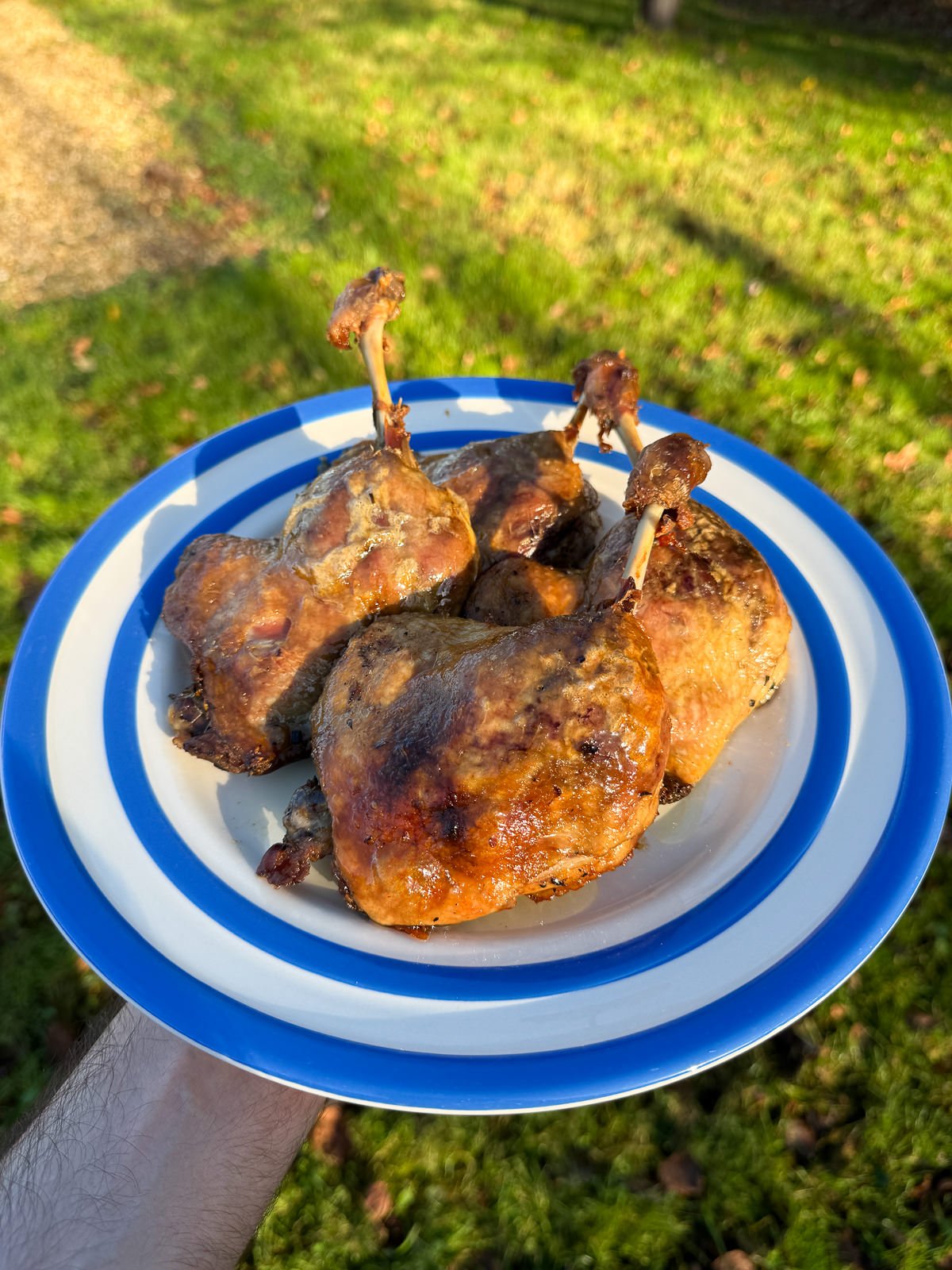
- Duck Legs – I used Gressingham duck legs but other varieties/breed of duck will work as well. Just make sure to use bone in legs with the skin still attached!
- Duck Fat – The classic way to cook confit duck legs is in duck fat. This is available in most supermarkets & butcher’s shops.
- Vegetable Oil – Duck fat is pretty expensive, so I like cook my confit duck legs in a mix of duck fat & vegetable oil. Feel free to use just duck fat if you’d prefer though.
- Homemade Cure – We’re curing our duck legs before cooking them, to season the meat & to add flavour. For the cure you’ll need sea salt & your choice of flavourings. I used garlic, fresh herbs, orange zest, toasted fennel seeds & black pepper.
How To Make Confit Duck Legs The Classic Way
A classic duck leg confit is made over 3 days. First, we cure the duck legs overnight, next we slow cook them in duck fat to confit then we chill the legs in the fridge overnight to develop the flavour. To reheat & serve, the confit duck legs are roasted in a high temperature oven to crisp up the skin. Don’t get rid of the confit fat as well, you can use it to make some next level roast potatoes!
The Cure
We only need to lightly cure the duck legs before cooking them, to thoroughly season them & to add extra flavour. I use a 1.75% cure which means that we use 1.75% of the duck’s total weight in sea salt. So I had 880 grams of duck legs & used 15 grams of salt. To work this out, you multiply the weight of the duck by 0.0175.
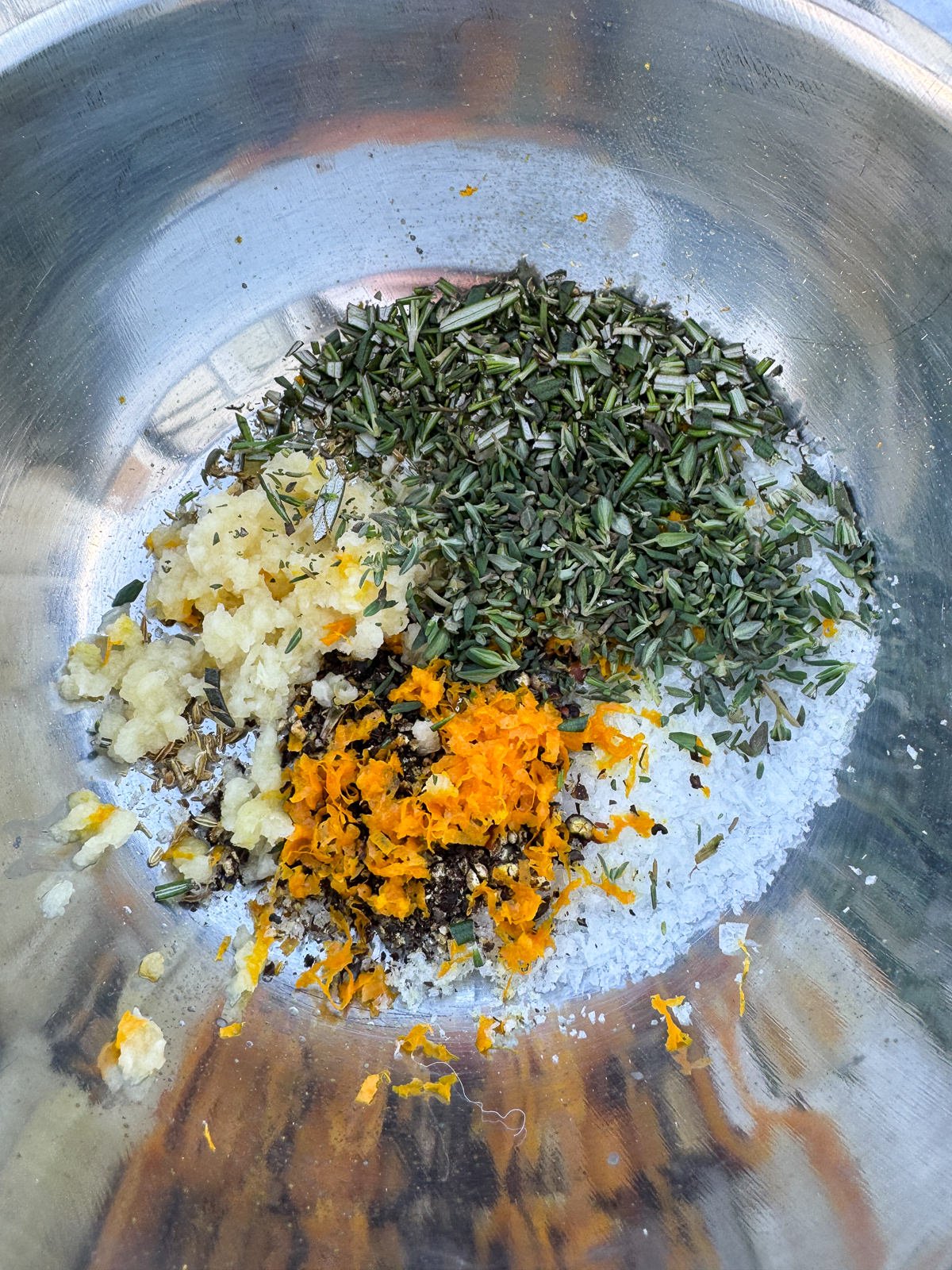
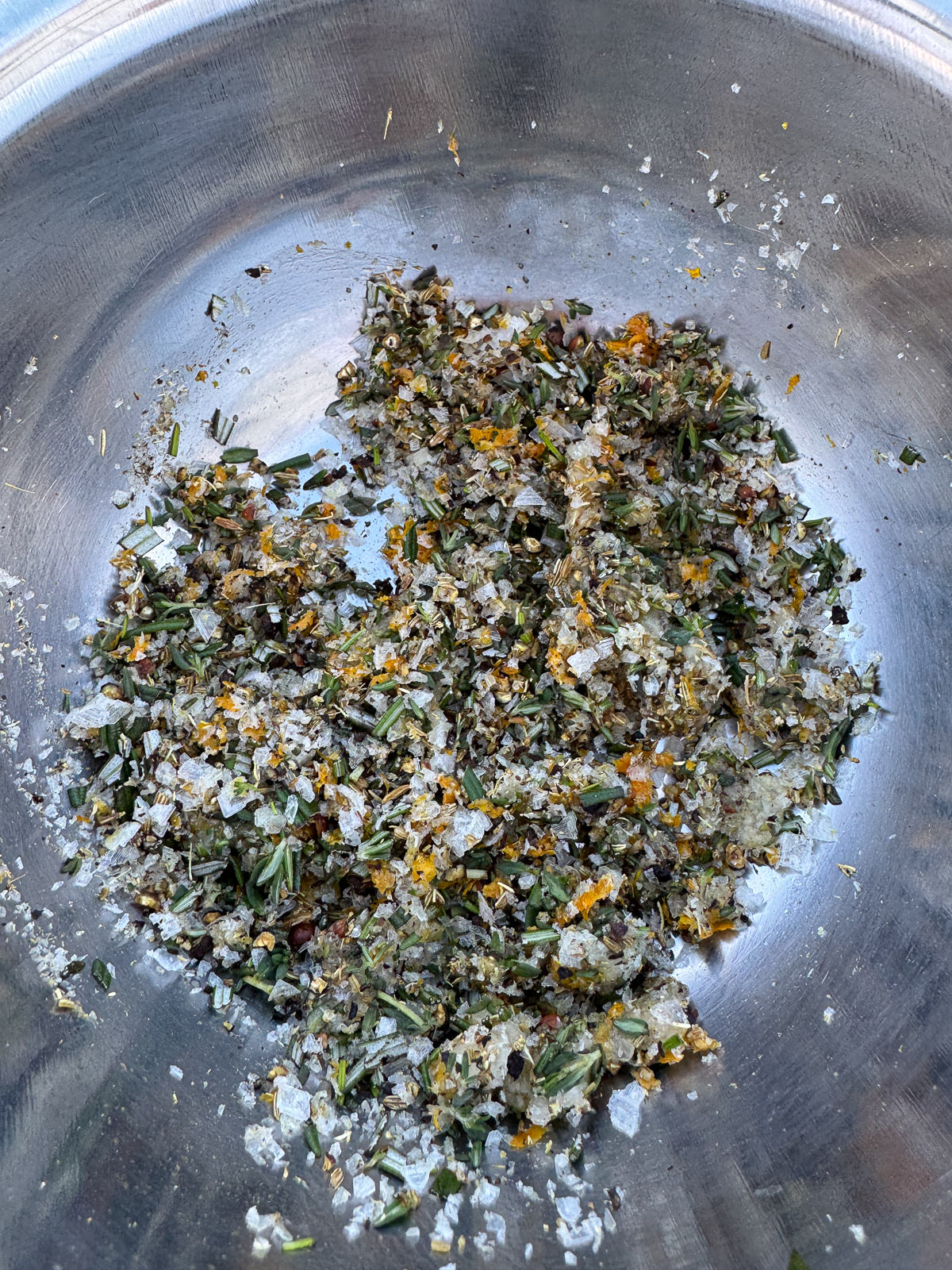
You can flavour your salt cure pretty much however you like but I’m using flavourings that traditionally work really well with duck. We’re talking garlic, fresh herbs, orange, toasted fennel seeds & black pepper! To make the cure, you simply mix everything together in a bowl.
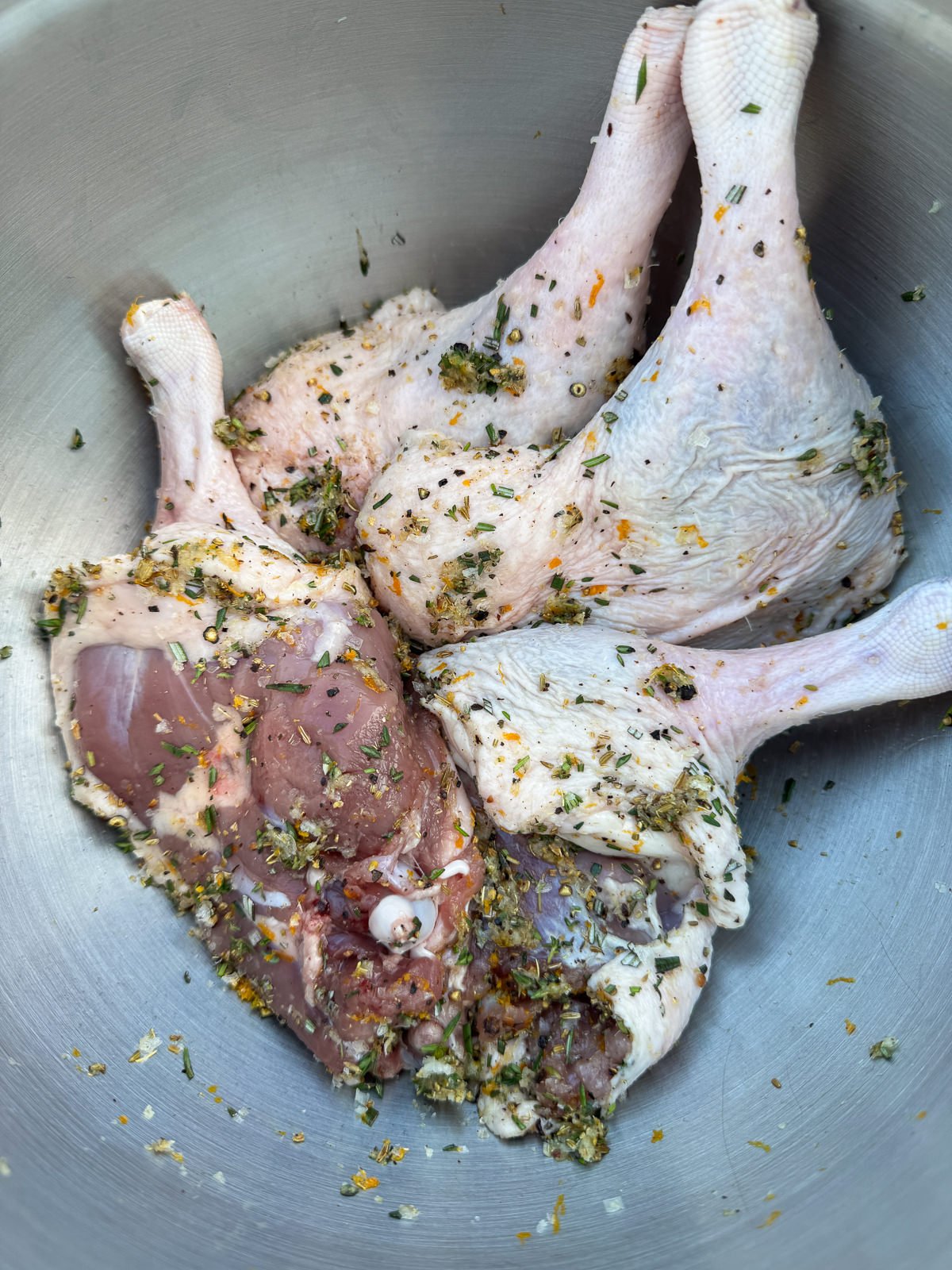
To cure the duck legs, we place them into a mixing bowl, sprinkle over the cure then toss everything together by hand so that the legs are completely coated in the cure. Next, we transfer the duck & cure into an airtight container then chill in the fridge for at least 12 hours but no more than 24, otherwise the duck might be too salty.
Confit (Slow Cooking In Fat)
The next day, it’s time to confit the duck legs! But before doing this, we need to rinse the cure off the duck under cold water then dry them well with kitchen paper. If you left the cure on the duck, the confit fat & the meat will become too salty & the fat won’t keep as long.
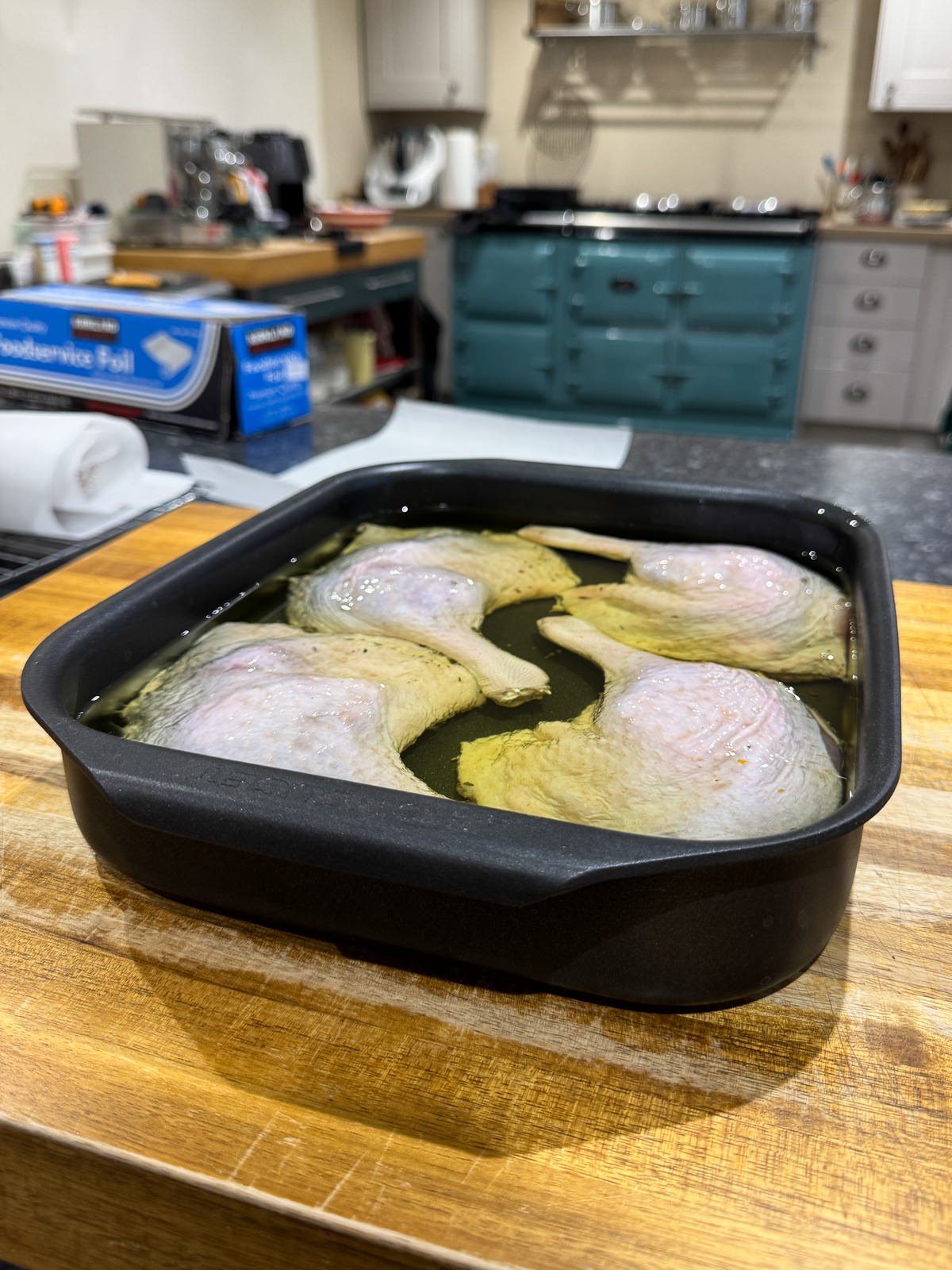
So once the duck legs have been dried, we place them into a roasting tin. They need to fit quite snugly in the tin, so that they’ll be completely covered in the fat. If they’re too spread out, you’ll need to use a larger amount of fat! Next, we warm duck fat & vegetable oil in a pan, to melt then pour over the duck legs, to cover completely.
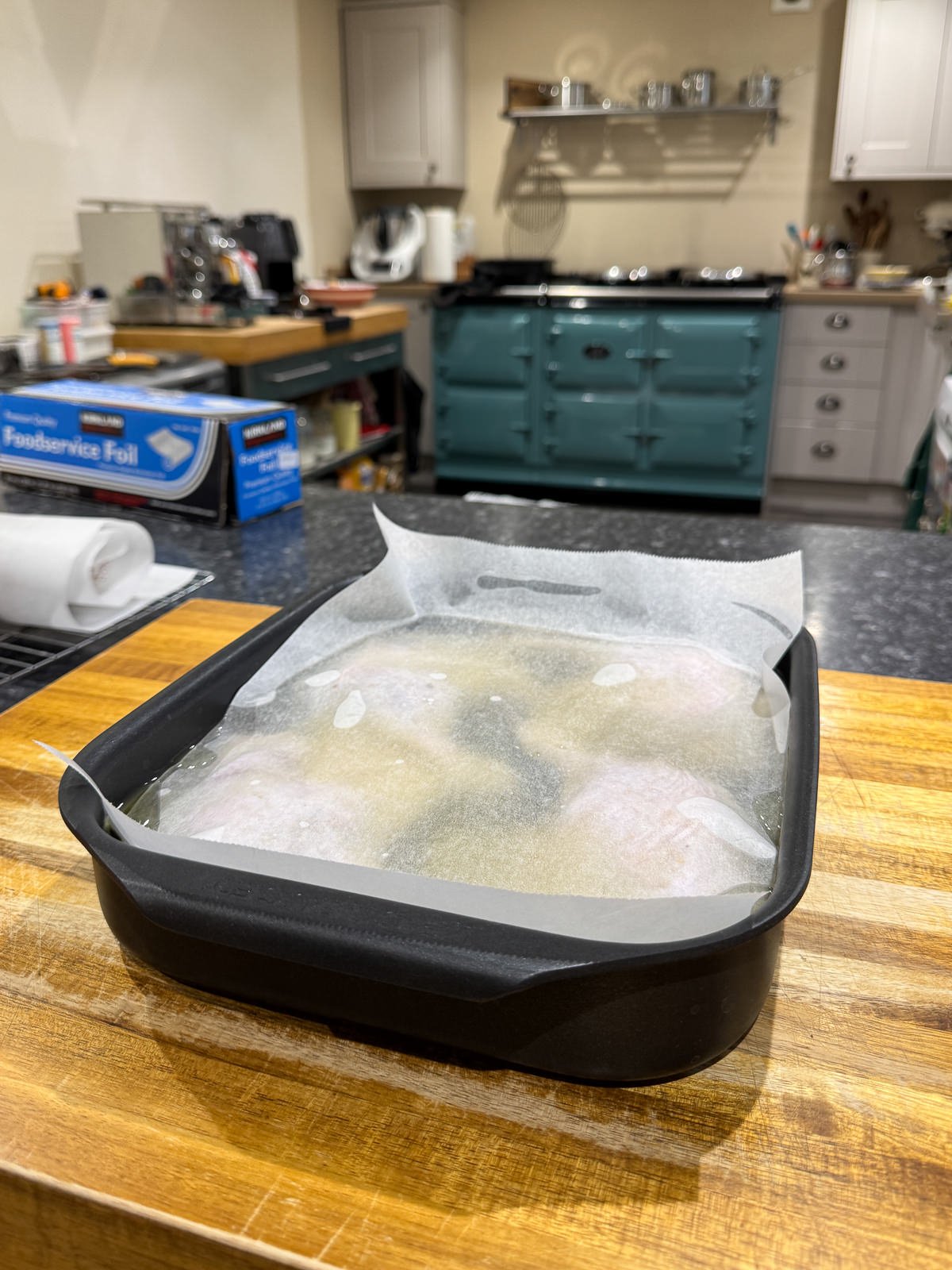
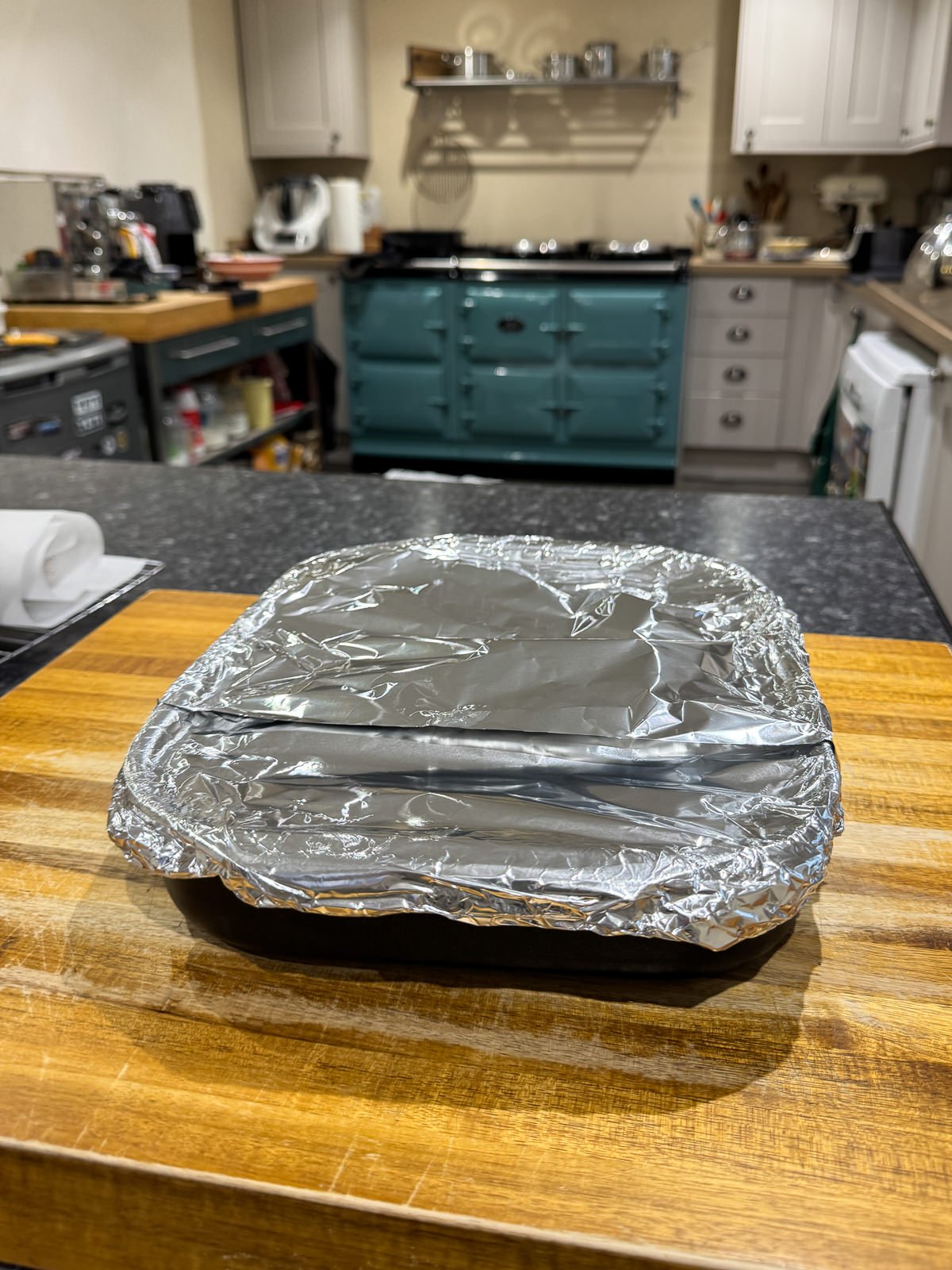
Now to cook. To do this, we need to cover the fat with a piece of baking parchment (this helps with even cooking!) then cover the tin with foil. Now we slow cook the duck in an oven set to 100°c/212°f until tender. At this temperature, confit duck legs typically take between 5-6 hours to cook.
Checking To See If The Duck Is Cooked
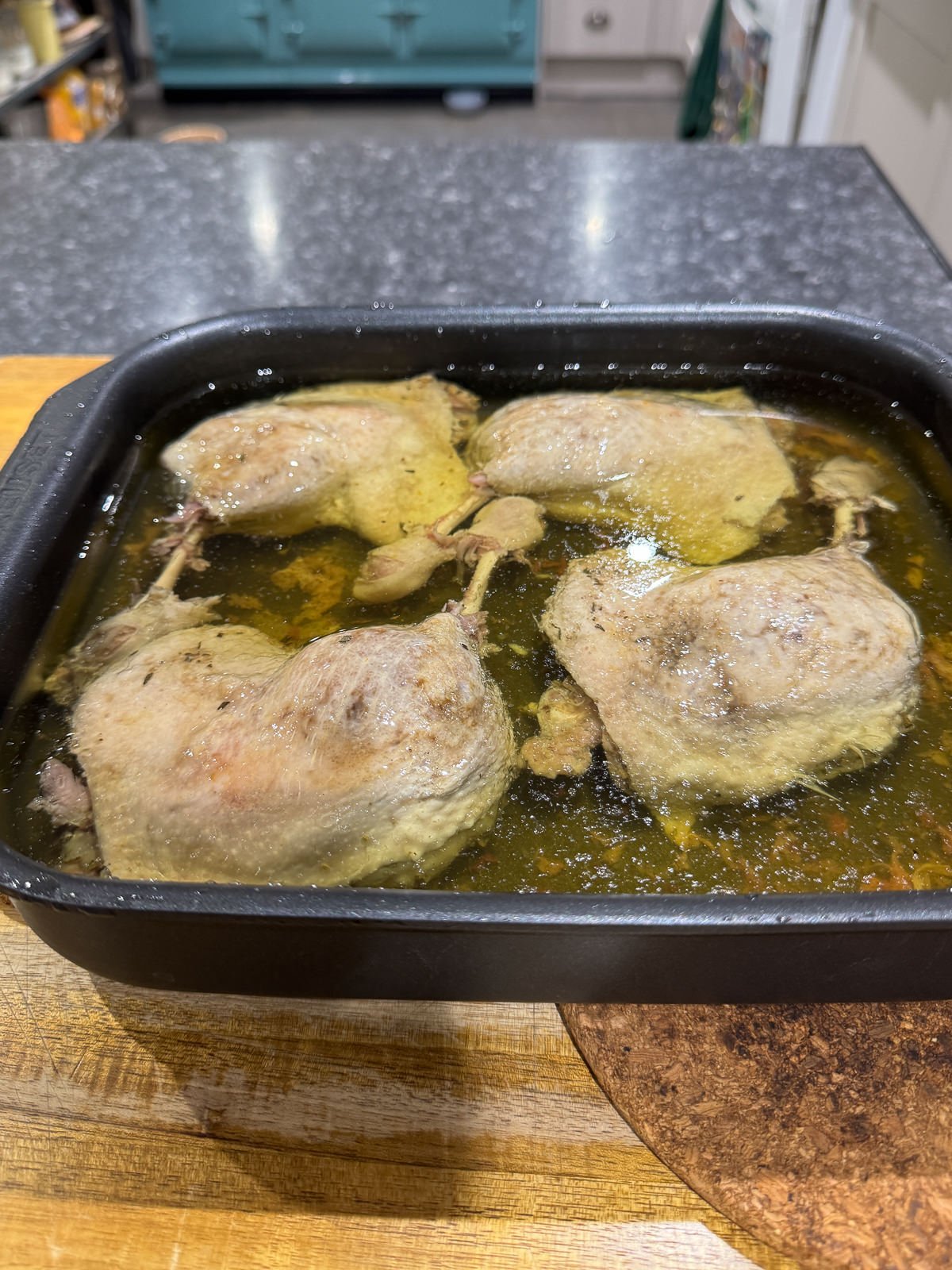
The best way to check if confit duck is cooked, is by feel, not temperature. To check your duck legs, insert a skewer into the meat near the bone. If it slides into the meat with little to no resistance the duck is ready. The meat needs to be tender but it shouldn’t be falling off the bone!
Overnight Chill
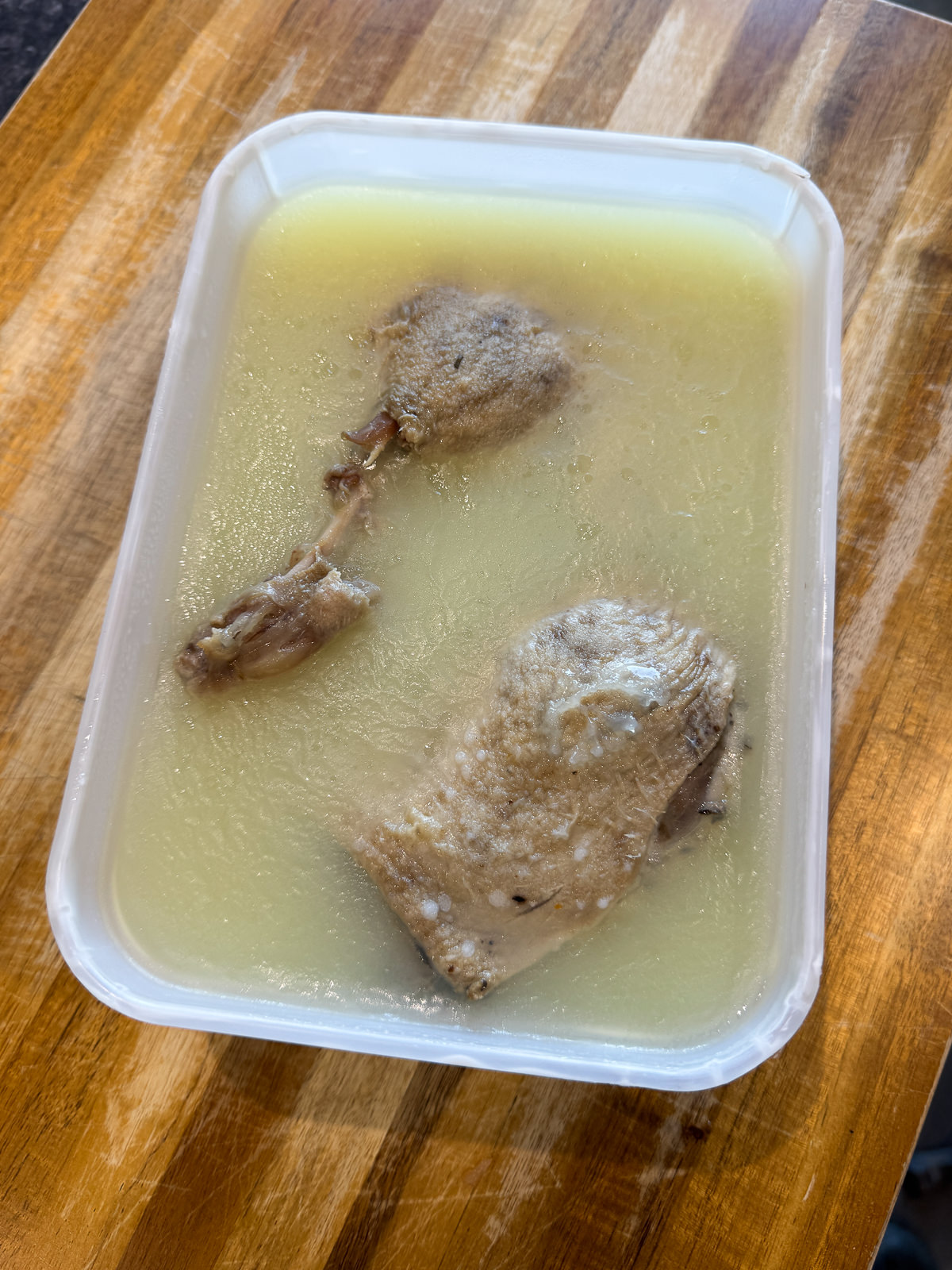
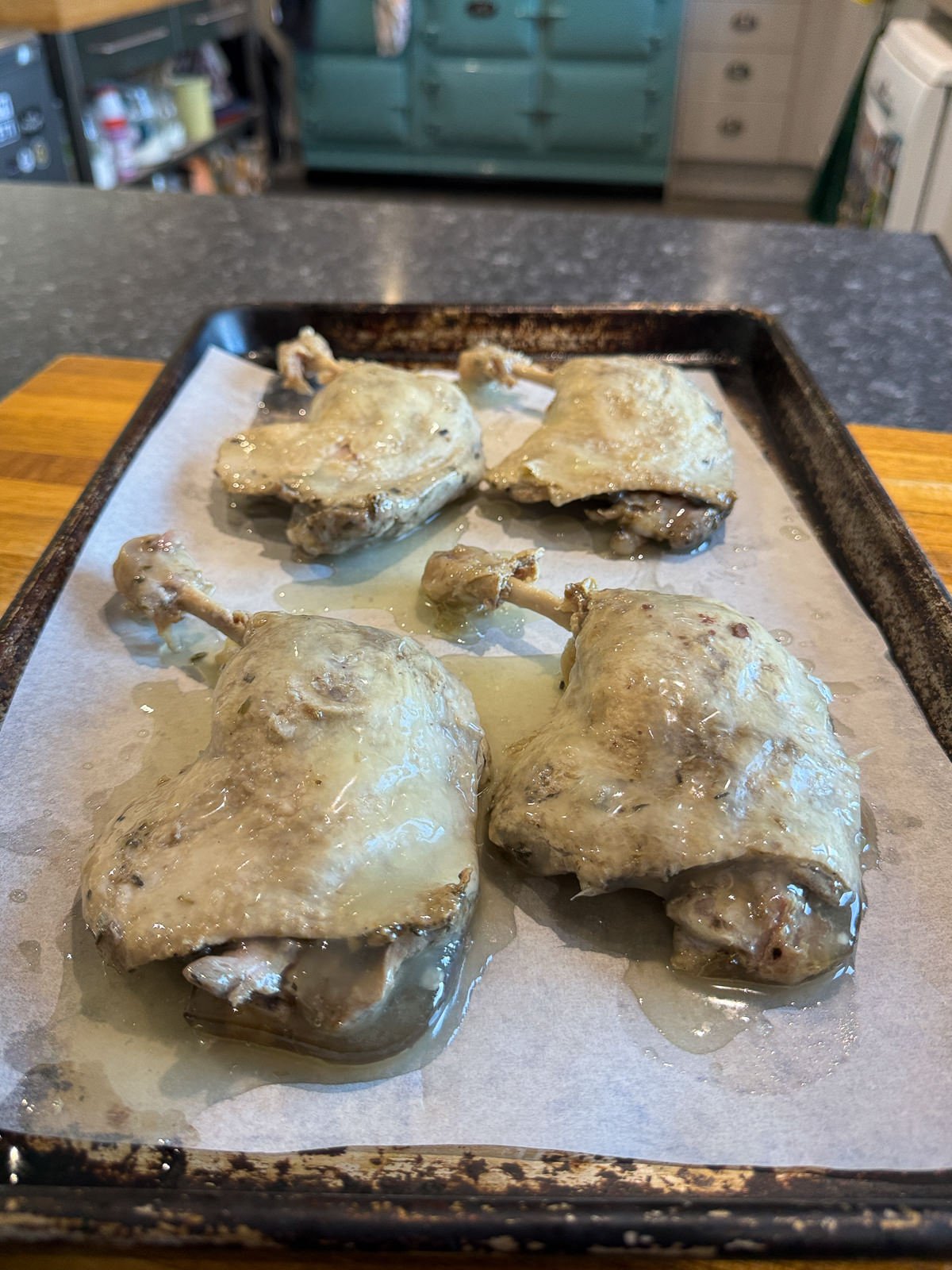
Once the duck is cooked, we need to let it cool to room temperature whilst still in the fat (take the foil off the tin though!). If you take the duck straight out of the fat, it can dry out! Once cool, we then transfer the duck legs & the fat into an airtight container & chill in the fridge overnight before roasting & serving. This gives the flavours time to develop, meaning that you’ll end up with a better tasting batch of duck confit.
Roasting To Crisp Up The Skin
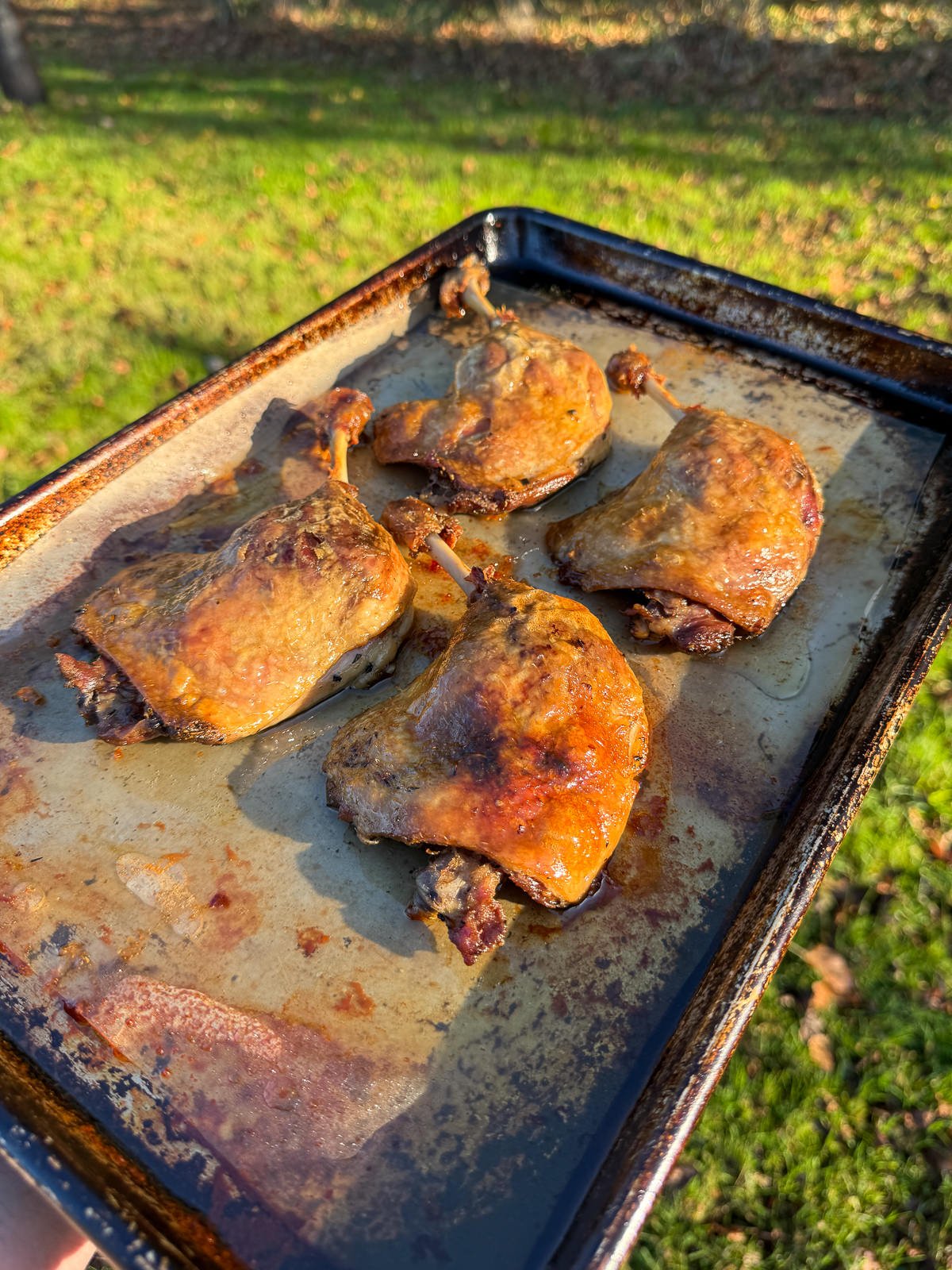
The best part of confit duck legs is the crispy, golden skin that you get by roasting the legs in the oven (or in a pan!). To roast our duck legs, we take them out of the fat, wipe off any excess, place onto a lined baking tray then roast at 220°c/428°f for 25-30 minutes. Once roasted, your duck legs will have the crispiest skin ever & the meat will be nicely reheated.
Serving Suggestions
You can serve confit duck legs with pretty much whatever you like! This style of duck has a really rich flavour so is best served with something to cut through the richness, like roasted veg, steamed rice, salad, braised red cabbage or lentils. For an extra comforting dish, serve your confit duck legs with some creamy mashed potatoes, crisp roast potatoes or classic fondant potatoes!
Confit duck legs will also be tender enough to shred into small bitesize pieces. I like to mix the meat up with some hoisin sauce then serve them in wraps with cucumber & spring onions!
Tips & Tricks
- Cure your duck legs before cooking them, to season the meat & to add extra flavour. You can flavour your cure how you like but I like to add in fresh herbs, garlic, orange, fennel seeds & black pepper.
- To save money, use a mix of duck fat & vegetable oil to confit the duck. You’ll still get the flavour of the duck fat but you won’t have to buy as much; it’s pretty pricey!
- Confit your duck legs in a smaller roasting tin so you won’t need as much fat to completely cover them.
- Confit the duck legs at a really low temperature, to make them as tender & flavourful as possible.
- Let your confit duck legs chill in the fridge overnight, whilst still stored in the fat as this will develop the flavours in the meat.
- To serve, roast the confit duck legs in a high temperature over to crisp up the skin!
Frequently Asked Questions
To cook confit duck legs in Aga, slow cook the confit duck in the simmering oven, on a grid shelf placed onto the floor. To crisp up the skin, cook the duck legs on the second from top set of runners in the roasting oven.
When confit duck legs are ready, a skewer inserted into the meat will slide in with little to no resistance. It’s best to check the duck by feel as appose to an internal temperature. The meat should be tender but it shouldn’t fall off the bone!
How long your confit duck legs need to cure for depends on the percentage of salt in the cure. A typical confit duck cure will contain 1.5% – 2% of the duck’s total weight in salt & will need to cure for 12-24 hours.
Confit duck would traditionally be stored submerged in duck fat for several months as the fat is a preservative. However, I would recommend serving it within 3 days just to be on the safe side! You’ll need to store your duck in the fridge, in an airtight container.
Leftover confit duck fat is packed full of flavour & can be used to make another batch of confit duck or you can use it to cook vegetables in or for a roast chicken. Confit duck fat is especially good for roast potatoes!
More Dinner Recipes To Try!
- Slow Roasted Prime Rib (Reverse Seared)
- Smoked Beef Short Rib, Guinness & Bone Marrow Pie
- Honey Roast Ham, Egg & Chips
- Korean Style Buttermilk Fried Chicken
- Roast Chicken, Bacon & Mushroom Pies
- Tikka Masala Roast Chicken
If you have enjoyed this recipe for confit duck legs, it would mean a lot if you could leave a review & rating. And if you’d like to stay up to date with future recipes, follow us on Instagram & TikTok or subscribe to our newsletter!

Classic Confit Duck Legs
Equipment
- Small Frying Pan
- Mixing Bowl
- Pestle & Mortar
- Large Container
- Roasting Tin
Ingredients
- 4 Duck Legs (220g Each – See Notes)
Cure
- 1 tsp Fennel Seeds
- 15 g Fine Sea Salt
- 6 Garlic Cloves (Grated)
- 1 Orange (Zested)
- 1 tsp Finely Chopped Thyme
- 1 tsp Finely Chopped Rosemary
- 1 tsp Black Peppercorns
Confit
- 500 g Vegetable Oil
- 250 g Duck Fat (See Notes)
Instructions
Cure
- Place the fennel seeds into a small frying pan then cook over a medium heat until toasted & fragrant. This will only take 1-2 minutes. Once toasted, place the seeds into a pestle & mortar then lightly crush.
- Add the sea salt into a small mixing bowl along with the grated garlic, orange zest, chopped herbs & crushed fennel seeds. Lightly crush the peppercorns in the pestle & mortar then add into the bowl as well.
- Give the cure a mix to combine then set to one side.
- Next, pat the duck legs dry with kitchen paper then place into a large mixing bowl. Sprinkle the cure over the duck legs then use your hands to make sure that all the duck is coated in cure.
- Transfer the duck & cure to an airtight container then chill in the fridge for 12-24 hours. I wouldn't recommend curing the duck for any longer than 24 hours, as it might become too salty.
Confit
- Preheat an oven to 100°c/80°c fan (212°f/176°f).
- Next, wash the cure off the duck legs under cold water, pat dry with kitchen paper then place into a small roasting tin. They should fit quite snugly & there should be plenty of room above the legs, so that we can completely cover then in fat.Make sure to get as much cure off the duck as possible!
- Place the vegetable oil & duck fat into a large saucepan then warm over a medium heat until melted. The fats should be warm but not boiling hot!
- Pour the warm fat over the duck legs, to completely cover them. Place a sheet of baking parchment over the fat then cover the tin with foil.
- Carefully place the tin into the preheated oven then cook gently for 5-6 hours until tender. To check the duck, give the meat a poke with a skewer. If it slides in with little to no resistance it's ready.It's best to start checking the duck at regular intervals after 4 hours.
- Once cooked, let the duck cool completely in the fat then transfer the duck legs & the fat to an airtight container. Chill in the fridge overnight before using.Chilling the duck overnight improves its' flavour! The duck legs should be completely submerged in the fat when you store them. Make sure to leave any juice that's not fat in the tray (it will at the bottom of the tin under the fat) as this will spoil the fat.
Roasting – To Crisp Up The Skin!
- Take the duck legs out of the fat, wipe off any excess fat from the meat with kitchen paper then place onto a baking tray lined with baking paper. Let the duck sit at room temperature whilst you preheat your oven.Make sure to wipe as most of the fat off the duck legs otherwise it will smoke in the oven! If it's easier, you can gently microwave the tub of duck & fat, to melt the fat & make it easier to take the duck out. Don't heat it up too much though!
- Preheat an oven to 220°c/200°c fan (428°f/392°f).
- Place the duck into the preheated oven then roast for 25-30 minutes, until the skin is crisp & golden and the meat is hot. Let the duck rest for 5 minutes then serve.